Schouten Island By Sea Kayak: Crossing, Camping And Conditions
Schouten Island sits just across Schouten Passage from the Freycinet Peninsula, and paddling there is a multi-day expedition, not a day tour out of Coles Bay.
Short answer
No day kayak tour from Coles Bay reaches Schouten Island. The only route on record is Tasmanian Expeditions' 6 day Freycinet Peninsula Kayak Expedition, which puts in at Richardsons Beach and paddles through Schouten Passage to Schouten Island and back to Hazards Beach. The Freycinet Paddle, 3 hours from Muirs Beach, stays on Great Oyster Bay.
Schouten Island lies off the southern tip of the Freycinet Peninsula, separated from the mainland by the channel called Schouten Passage. Every year, paddlers look at a map of the east coast and ask the same question: can that island be reached by kayak on a tour? The short answer is yes, but not on a day trip out of Coles Bay, and not on any tour sold on this site. What follows lays out exactly what the sources hold: the one expedition route on record, the wildlife the operators and the park service describe, the safety rules that apply to open water paddling in Tasmania, and what to ask before committing six days to a crossing.
Start with the parent overview if you want the full picture of Coles Bay kayak tour options first.
Quick Facts
| Question | Answer |
|---|---|
| Does any day kayak tour reach Schouten Island? | No. The Freycinet Paddle stays on Great Oyster Bay |
| Which trip paddles to Schouten Island? | Tasmanian Expeditions' 6 day Freycinet Peninsula Kayak Expedition |
| Where does the expedition put in? | Richardsons Beach, Freycinet National Park |
| What route does it take? | Through Schouten Passage to Schouten Island and back to Hazards Beach |
| Is the expedition bookable here? | No. It is a multi-day trip sold by its operator |
| How long is the day paddle by comparison? | 3 hours total, about 2 hours of paddling (operator FAQ) |
Can You Paddle To Schouten Island On A Day Tour?
No guided day kayak tour from Coles Bay reaches Schouten Island, and none is sold here that does. The Freycinet Paddle, the only guided day sea kayak tour on this site, launches from Muirs Beach in Coles Bay township and paddles on Great Oyster Bay; the operator's own tour pages make no claim of reaching Schouten Island or Wineglass Bay. Getting there is a multi-day expedition proposition, with one named operator running that route.
That distinction matters more than it might look on a map. Coles Bay sits at the foot of the Hazards, the granite range the Tasmania Parks and Wildlife Service describes as "a spectacular granite mountain range that rises dramatically from the sheltered turquoise bays". The town is where Great Oyster Bay meets the Tasman Sea, as the operator's own wording puts it. From the sheltered launch at Muirs Beach, the day paddle explores the bay side of the peninsula. Schouten Island is beyond Schouten Passage at the peninsula's southern end, and a three hour tour with a beach stop and a coffee break does not attempt that distance.
The park service's own advice points the same way. PWS says tour companies in the area run a variety of sea kayaking experiences and are recommended if you are new to paddling, and that the relatively sheltered waters of Coles Bay allow for all experience levels. That is a description of the bay waters a day tour uses, not the more exposed country south of the peninsula. For a fuller picture of the bay a day tour actually covers, see Great Oyster Bay sea kayaking.
If a map of Tasmania's kayak country is what you are after, the broader question of where to sea kayak in Tasmania comes back to one honest split: sheltered day paddling in Great Oyster Bay, or committed multi-day expeditions on the peninsula's southern reaches. Schouten Island belongs firmly to the second category.
What The Six Day Expedition Route Actually Does
Tasmanian Expeditions runs a 6 day Freycinet Peninsula Kayak Expedition whose page states the full route: a drive of about two and a half hours from Hobart, a put-in at Richardsons Beach, then a paddle through Schouten Passage to Schouten Island and back to Hazards Beach. The operator's page says the trip is mostly on Great Oyster Bay, "sheltered from the open ocean swell". It is not bookable on this site.
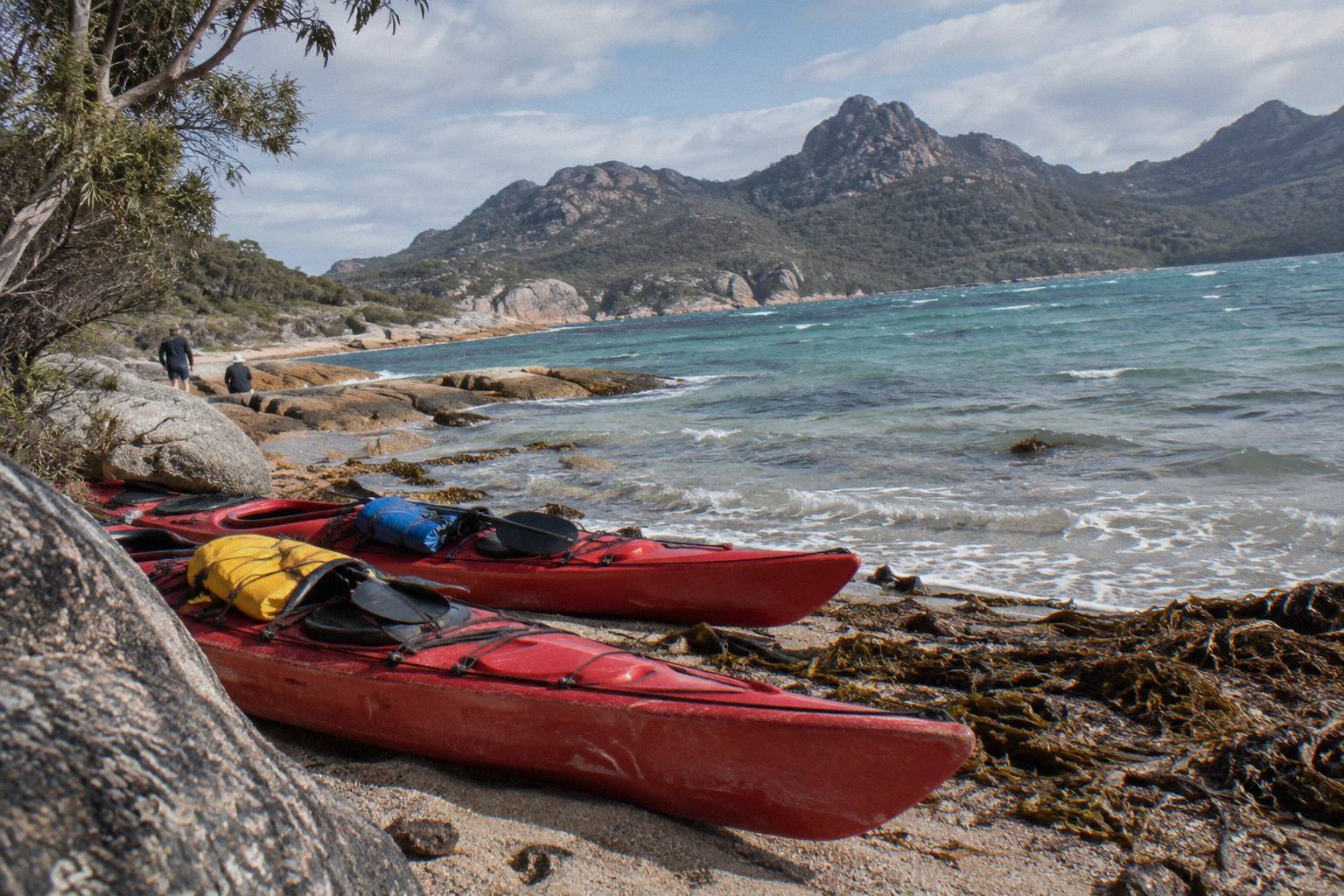
That route is the only published account the sources hold of how a guided group actually paddles to Schouten Island. Richardsons Beach, the put-in, is one of the beachfront camping areas the park service names in Freycinet National Park, along with Honeymoon Bay and Ranger Creek. From there the expedition crosses to the island through Schouten Passage, the channel between the peninsula and Schouten Island, then returns along the coast to Hazards Beach. The expedition operator's own page describes the waters as mostly Great Oyster Bay and sheltered from the open ocean swell, which tells you the route deliberately works the protected side rather than the exposed Tasman Sea coast.
No price is given here for that expedition. Its own page carries two different totals, so the figure to trust is the one on the operator's page when you enquire. The details that matter for planning, the duration, the put-in, the route and the character of the water, are stated plainly above; anything else, from gear lists to group sizes to campsite nights, is a question for the expedition operator directly.
The two ends of the Freycinet paddling spectrum, side by side from the stated facts:
| Feature | The Freycinet Paddle (Day Tour) | 6 Day Expedition |
|---|---|---|
| Operator | Freycinet Adventures | Tasmanian Expeditions |
| Duration | 3 hours, about 2 hours paddling | 6 days |
| Put-in | Muirs Beach, Coles Bay | Richardsons Beach |
| Reaches Schouten Island | No | Yes, via Schouten Passage |
| Waters paddled | Great Oyster Bay | Mostly Great Oyster Bay, via Hazards Beach return |
| Bookable here | Yes | No, sold by its operator |
| Rating | 4.8 across more than 1,000 reviews | Not held |
For the contrast that frames every Schouten Island decision, here are the three tours sold on this site, none of which paddles to the island:
- Half-Day Wineglass Bay Cruise
- 3-Hour Kayak Paddle
- Wineglass Bay Cruise, Lunch Included
- Full-Day Tour From Hobart, Pickup
- Walking Tour, Meal Included
The comparison is worth stating plainly. The Freycinet Paddle is a 3 hour tour with about 2 hours of cumulative paddling, rated 4.8 across more than 1,000 reviews on its main booking page, from A$155 per person. The Wineglass Bay cruise is about 4 hours 30 minutes on the water, boarding at 61 Jetty Rd, Coles Bay, rated 4.7 across more than 1,000 reviews. The Freycinet Walking Tour covers the peninsula on foot. Each shows you a different face of Freycinet; none of them crosses Schouten Passage.
What Is The Schouten Passage Crossing Like?
The only description on record comes from the expedition operator's own page, which says the trip is mostly on Great Oyster Bay and sheltered from the open ocean swell. Nothing is held on crossing times, tidal behaviour in the passage or sea states between the peninsula and the island, so none is stated here. Ask the expedition operator those questions directly before booking.
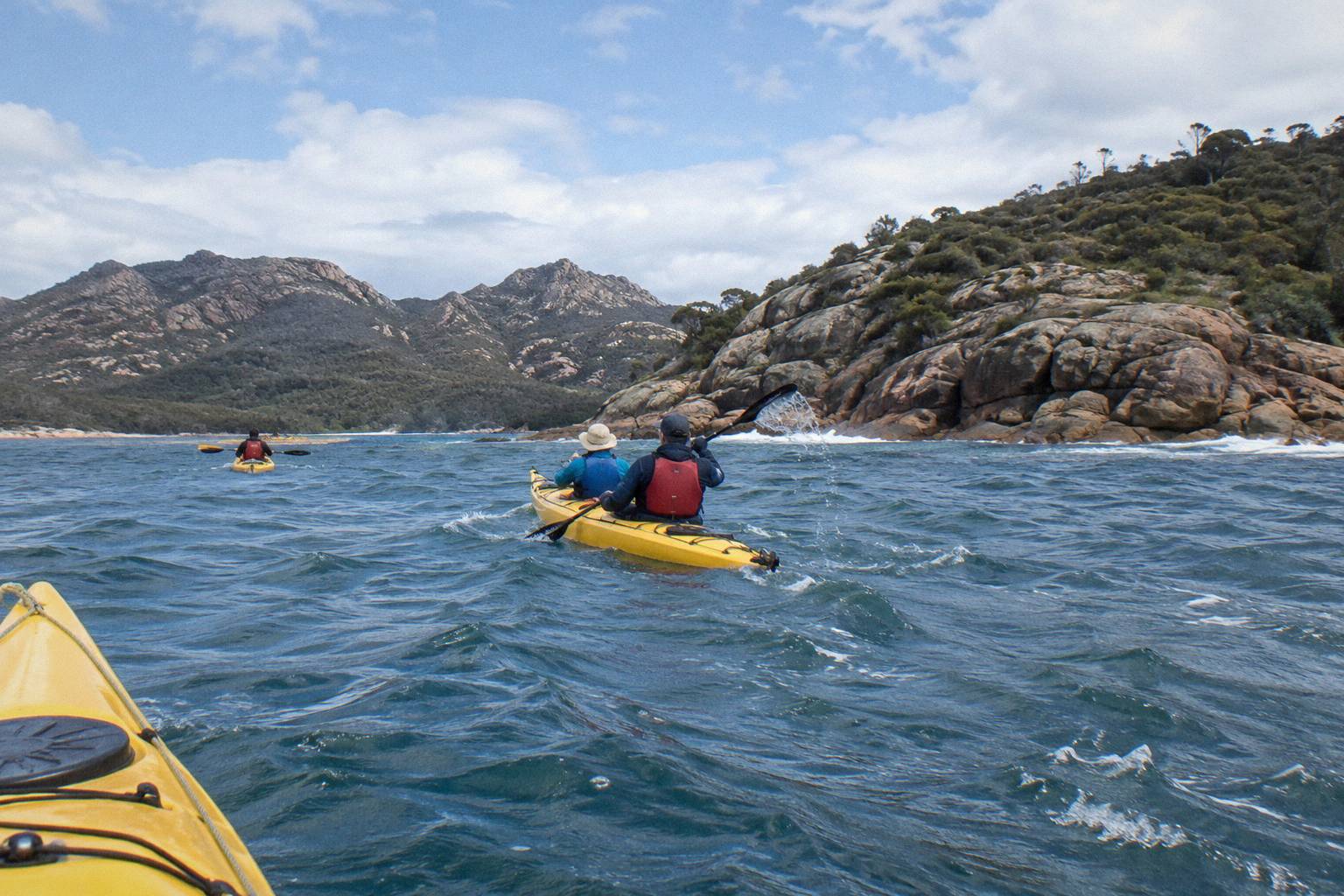
That is not an evasion, it is the state of the sources. A channel between an island and a mainland peninsula is exactly the kind of water where local detail matters, tide, wind direction, swell wrapping in from the Tasman Sea, and where a generic answer would be worse than none. What can be said is structural: Schouten Passage separates the Freycinet Peninsula from Schouten Island at the peninsula's southern end, and the published expedition route threads it in both directions over six days rather than treating it as a dash. The wider set of guides lives on Freycinet Kayaking.
For anyone weighing the day paddle against the expedition, the safety framing from Marine and Safety Tasmania gives useful context on what open water demands. MAST's paddle craft rules state that a life jacket is compulsory in a lightweight craft, which includes kayaks, and the lightweight craft table requires a white strobe or all-round light, lit between sunset and sunrise and when visibility is limited, plus a tether when more than 200 m offshore. Its advice is blunt: "Never venture too far offshore", mind tides and wind, and "Unless you are an experienced surf paddler, stay out of the surf". Guided tours supply their kayaking equipment; the day paddle operator says all kayak equipment is provided. The equipment a six day crossing demands beyond that is a question for the expedition operator.
The MAST equipment rules in summary form:
| Requirement | What MAST Says |
|---|---|
| Life jacket | Compulsory in lightweight craft, including kayaks |
| Life jacket level | AS 4758 Level 50 or 50S in sheltered waters only; Level 100 or 150 for sheltered and open waters |
| Light | White strobe or all-round light, lit between sunset and sunrise and in limited visibility |
| Tether | Mandatory when more than 200 m offshore |
| Phone | Mobile phone in a waterproof pouch recommended |
Seals, Whales And Wildlife Around Schouten Island
The geography of those sightings matters for anyone planning around Schouten Island. Whales, on both the operator's and PWS's wording, are usually described on the eastern, Tasman Sea side of the peninsula, not the Great Oyster Bay side where the day paddle and much of the expedition route sit. NRE Tasmania says southern right whales can be reliably seen in Tasmania between May and November each year, and names sheltered east coast waters including Great Oyster Bay on its page. No month range for humpbacks in Great Oyster Bay is held, so none is given. The seal colonies on Schouten Island are an operator statement, and even on an expedition route past the island, seals resting on rocks are a possibility, never a schedule.
| Species | What The Source Says | Who Says It |
|---|---|---|
| Seals | Colonies on Schouten Island and Ile des Phoques; may be spotted resting on rocks | Operator park page; PWS |
| Whales | Often seen during annual migration, usually on the eastern side of the peninsula; regularly visited in winter months | Operator park page; PWS |
| Southern right whales | Reliably seen in Tasmania between May and November; Great Oyster Bay named | NRE Tasmania |
| Dolphins | Listed with whales and fur seals "on occasion" | Operator sunrise page |
| Sting rays, sea eagles | Listed on the sunrise paddle page | Operator |
Approach rules exist and are worth knowing before any island trip. NRE Tasmania's whale and dolphin viewing guidelines state that in a vessel the approach distance is no closer than 100 m to a whale or 50 m to a dolphin, with greater distances for vessels under steam; the page does not name kayaks, so treat it as the vessel guideline rather than a kayak rule, and never assume a paddler may close the distance. For seals, boats must stay no closer than 100 m to a seal colony in November and December, the pupping months, and 50 m at other times. On land, PWS says keep 2 m from native animals and do not feed wildlife. Report whale strandings or entanglements to the PWS whale hotline on 0427 WHALES (0427 942 537).
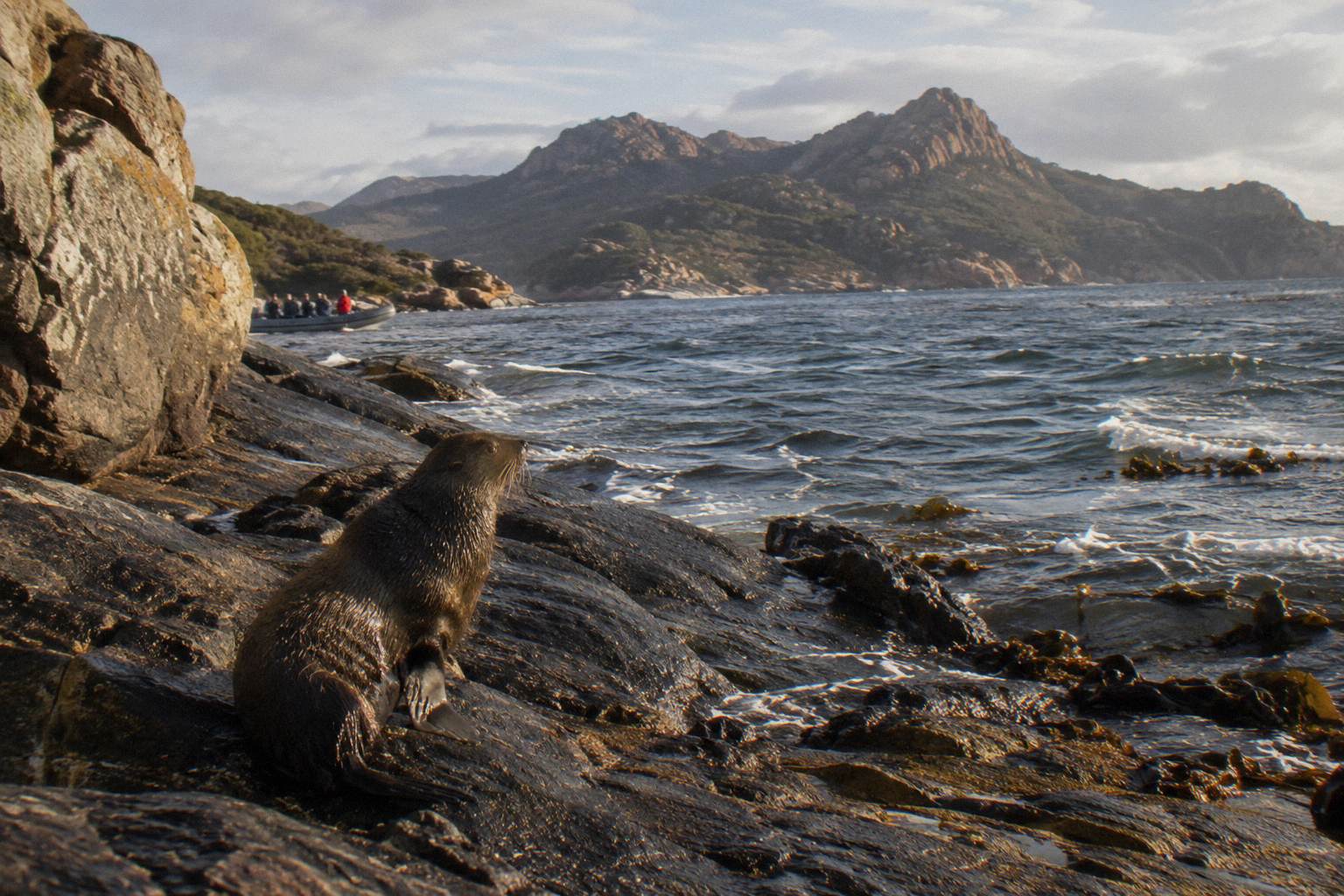
The sunrise paddle page of the day tour operator lists "sting rays, white bellied sea eagles, and even larger marine species like dolphins, whales, and fur seals on occasion". That qualifier, on occasion, is the operator's own, and it is the honest register for every wildlife conversation on this coast. For a fuller treatment of what the bay itself holds, see Freycinet wildlife from a kayak.
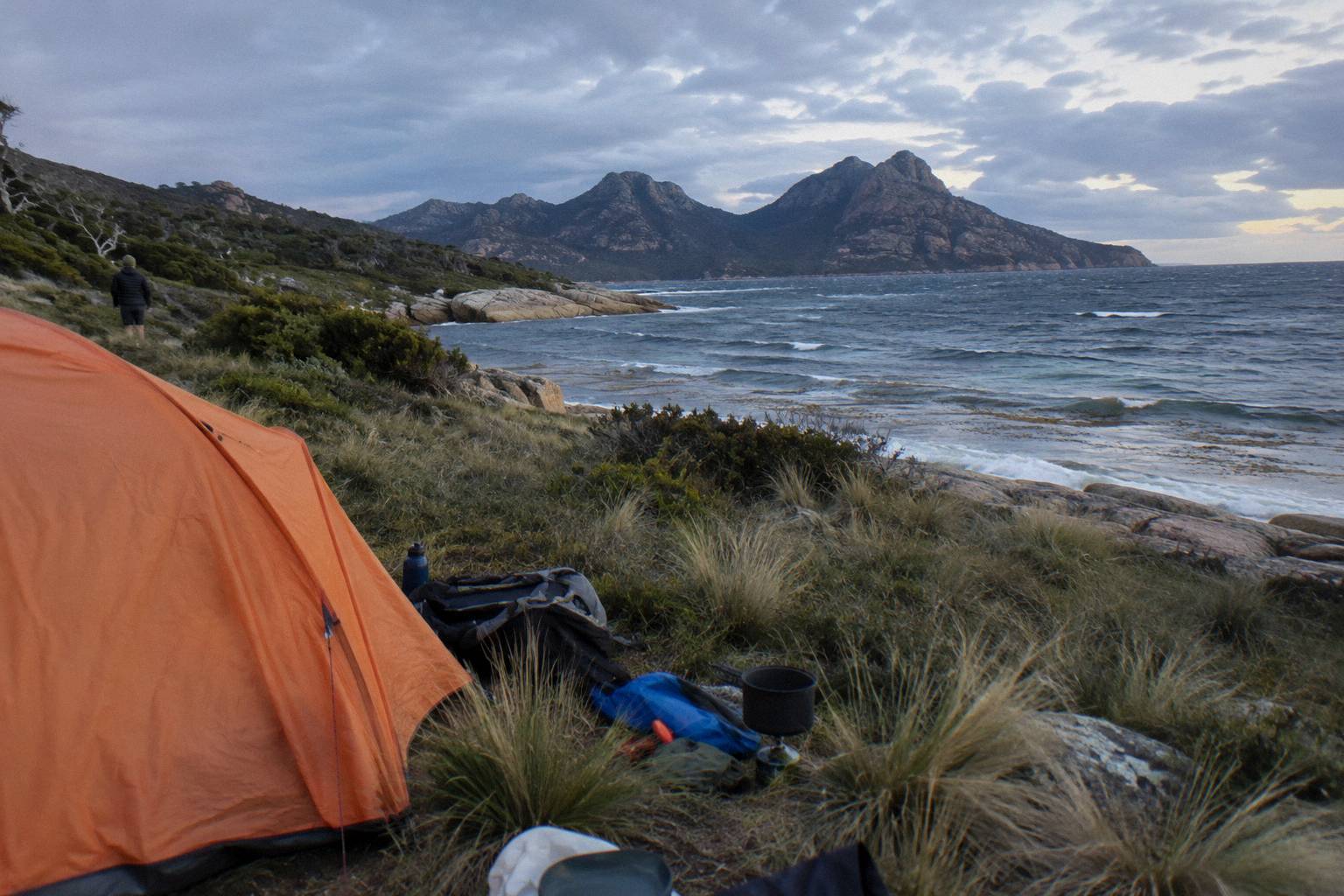
Camping, Permits And Island Conditions: What To Ask
No camping rules, permit requirements, landing conditions or island-specific regulations for Schouten Island are held in the sources here, so none is stated. What is held: PWS names Richardsons Beach, Honeymoon Bay and Ranger Creek as beachfront camping areas in Freycinet National Park, passes are sold at the visitor centre and online, and a valid parks pass is required for park entry. The rest is for the expedition operator and PWS to confirm.
The park pass deserves its own note. PWS states plainly that a valid parks pass is required for entry to all of Tasmania's national parks, with a daily pass at AUD 49.15 per vehicle or AUD 24.55 per person on foot, bus or bicycle, and longer Holiday, Annual and Two Year passes also sold. Whether the expedition price includes that pass is not held here; ask when booking.
The pass options, as PWS gives them:
| Pass | Vehicle | Person On Foot, Bus Or Cycle |
|---|---|---|
| Daily Pass (up to 24 hours) | AUD 49.15, up to 8 people | AUD 24.55 |
| Holiday Pass (all parks, up to 2 months) | AUD 98.35 | AUD 49.20 |
| Annual Park Pass | AUD 104.75 (concession AUD 83.85) | Not held |
| Two Year Pass | AUD 133.80 | Not held |
If the six day trip tempts you, the questions below are the ones the published pages do not settle. Take them to the expedition operator and, for park matters, to the visitor centre, which PWS says is open daily 9am to 4pm and sells park passes at its shop.
- How many nights are spent on which beaches, and what camping gear is carried in the kayaks?
- Does the trip price include a national parks pass, and if not, which pass should each traveller hold?
- What is the minimum and maximum group size, and what experience or fitness standard is expected?
- What is the weather call process: which conditions delay the Schouten Passage crossing, and what is the alternate plan?
- What is included: kayaks, tents, meals, and what does each paddler bring?
- What is the cancellation and refund policy if the expedition cannot run?
For the water itself, temperature is one planning number that is published. Long-run sea surface data from seatemperature.org puts Coles Bay at a monthly average of about 17.2 degrees Celsius in February, the warmest month, down to about 13.0 degrees Celsius in August, the coldest. The day tour operator provides warm jackets; no wetsuit is stated on the pages read. What the expedition supplies is, again, a question for its operator.
| Month | Avg Sea Temp (Coles Bay) |
|---|---|
| February (warmest) | About 17.2 degrees Celsius |
| May | About 14.8 degrees Celsius |
| August (coldest) | About 13.0 degrees Celsius |
| November | About 14.8 degrees Celsius |
Which Tour Fits If Six Days Is Too Much?
If a six day crossing does not fit your trip, the realistic Freycinet options are the 3 hour Freycinet Paddle on Great Oyster Bay, the about 4 hour 30 minute Wineglass Bay cruise from Coles Bay, or the Freycinet Walking Tour on land. Each shows a different side of the peninsula. None reaches Schouten Island, and it is better to choose one honestly than to expect a day tour to attempt a crossing it was never designed for.
Matching the tour to the traveller is straightforward with the facts held. Families with children from 7 fit the day paddle, since the operator takes children from 7 with an accompanying adult for under 16s, and its FAQ says complete beginners are welcome if you are fit enough for a leisurely two hour recreation activity. Travellers without a car can look at the Wineglass Bay Day Tour From Hobart, a full day tour run by Wineglass Bay Discovery Tours, which covers the Hobart to Freycinet journey for you. Walkers who want the famous view take the Freycinet Walking Tour; the park service grades the Wineglass Bay Lookout walk at Grade 3, 6 km and 2.5 to 3.5 hours return, for context on what a walking day there involves.
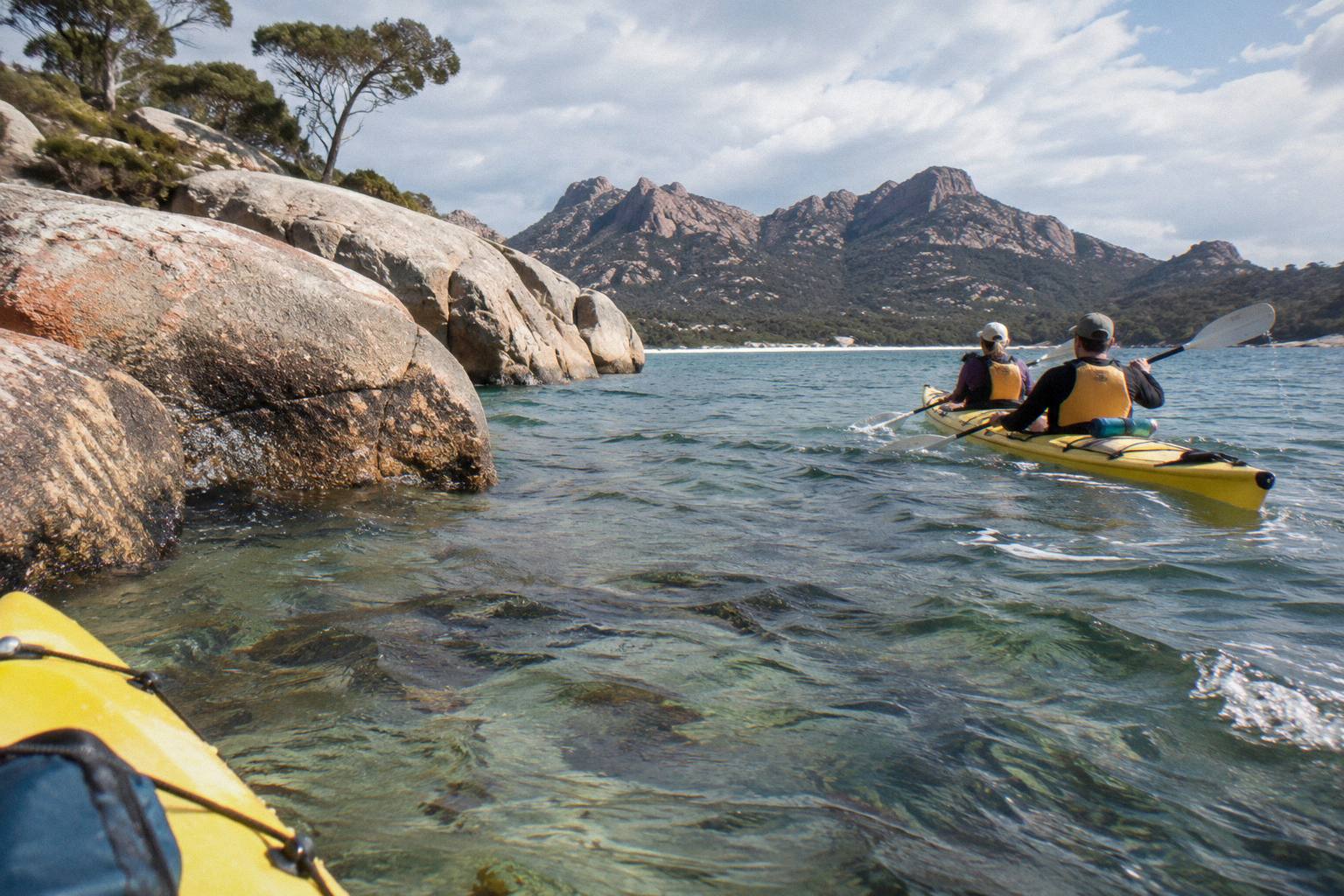
The decision logic, in short: want to paddle and only have a morning? Book The Freycinet Paddle, link through to the tour page and Check availability; it runs year round with seasonal departure times, from A$155 per person on its booking page, with free amendments and cancellations up to 24 hours in advance. Want Wineglass Bay itself rather than the bay side? The cruise or the walk is the honest answer, since no kayak tour sold here reaches it, a point worth weighing against the question of kayaking Wineglass Bay. Want an island under your hull? That is the six day expedition, booked with its operator, planned with the questions above.
The park itself rewards either choice. Freycinet is the oldest national park in Tasmania, and PWS describes its landscape as effectively two eroded blocks of granite, with the Hazards rising straight from sheltered turquoise bays. More on the park's access and facilities is on the PWS Freycinet page, which notes the drive is about 2.5 to 3 hours from either Launceston or Hobart. The crossing to Schouten Island, when you finally make it, starts from that same granite country.
What Trips People Up When Planning A Schouten Island Paddle
The common trap is assuming the day tour goes part of the way to Schouten Island, or that any operator here sells the crossing. Neither is true. The second trap is expecting a kayak tour to deliver Wineglass Bay and the island in one morning; the day paddle reaches neither. Third, travellers under-plan the park pass and the drive. Ask before you book, and the traps disappear.
Concretely: the meeting point of the day paddle is Muirs Beach, Coles Bay, as the operator records it, with free public parking and public toilets nearby; one booking page notes the meeting point can shift to the Coles Bay boat ramp in some weather. Book the paddle expecting Great Oyster Bay, not the island. Book the cruise at 61 Jetty Rd, Coles Bay, expecting about 4 hours 30 minutes on the water. And if the expedition is the goal, confirm the pass, the gear and the weather process with its operator before paying anything. The full question of whether a guided paddle is worth it versus going alone has its own treatment, and PWS's advice that tour companies are recommended for new paddlers is a fair tiebreaker.
Common Questions About Schouten Island Kayak Trips
Can You Kayak To Schouten Island On A Day Tour From Coles Bay?
No. No day kayak tour from Coles Bay reaches Schouten Island. The Freycinet Paddle paddles Great Oyster Bay for about 2 hours of a 3 hour tour and does not cross Schouten Passage.
Which Tour Actually Paddles To Schouten Island?
Tasmanian Expeditions' 6 day Freycinet Peninsula Kayak Expedition. Its page states the put-in is Richardsons Beach and the route goes through Schouten Passage to Schouten Island and back to Hazards Beach. It is not bookable on this site.
Are There Seals On Schouten Island?
The day tour operator's park page says there are seal colonies on Schouten Island and Ile des Phoques, and PWS says seals may be spotted resting on rocks. Sightings are never guaranteed, and NRE Tasmania's seal guidelines keep boats 100 m from a colony in November and December and 50 m at other times.
Can You See Whales Near Schouten Island?
The operator's park page says whales are often seen during their annual migration, usually on the eastern side of the Freycinet Peninsula, more commonly southern right and humpback. NRE Tasmania says southern right whales can be reliably seen in Tasmania between May and November. No sighting is promised on any tour.
Do You Need A Parks Pass For A Schouten Island Trip?
PWS says a valid parks pass is required for entry to all Tasmanian national parks, sold at the Freycinet Visitor Centre and online. Whether any specific tour price includes the pass is a question for the operator when booking.
What Safety Gear Does A Kayak Need In Tasmania?
MAST says a life jacket is compulsory in kayaks, a tether is required more than 200 m offshore, and a white all-round light must be lit between sunset and sunrise and in limited visibility. Guided tours supply their kayaking equipment, the day tour operator says all equipment is provided.