Great Oyster Bay Sea Kayaking: Conditions, Routes And Launch Points
Great Oyster Bay is the sheltered sheet of water that makes Coles Bay one of Tasmania's most accessible places to paddle. Here is what the official sources and the operator actually say about the bay, the launch points and the tours that run on it.
Short answer
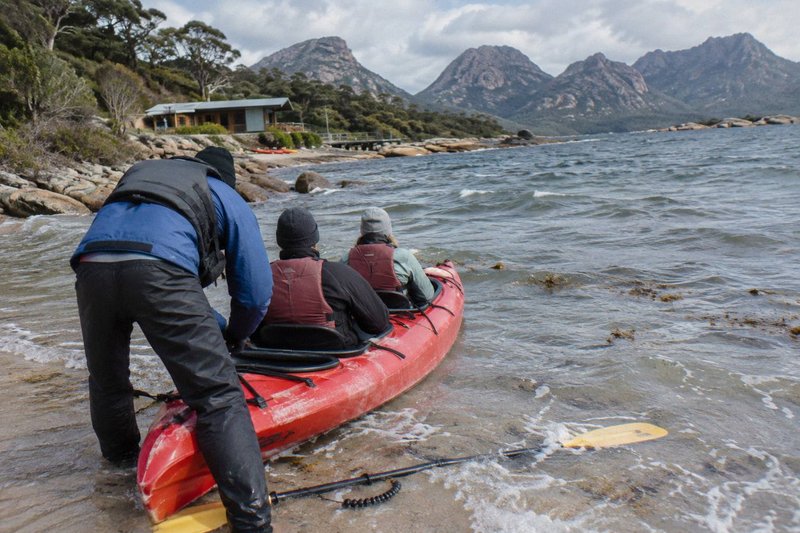
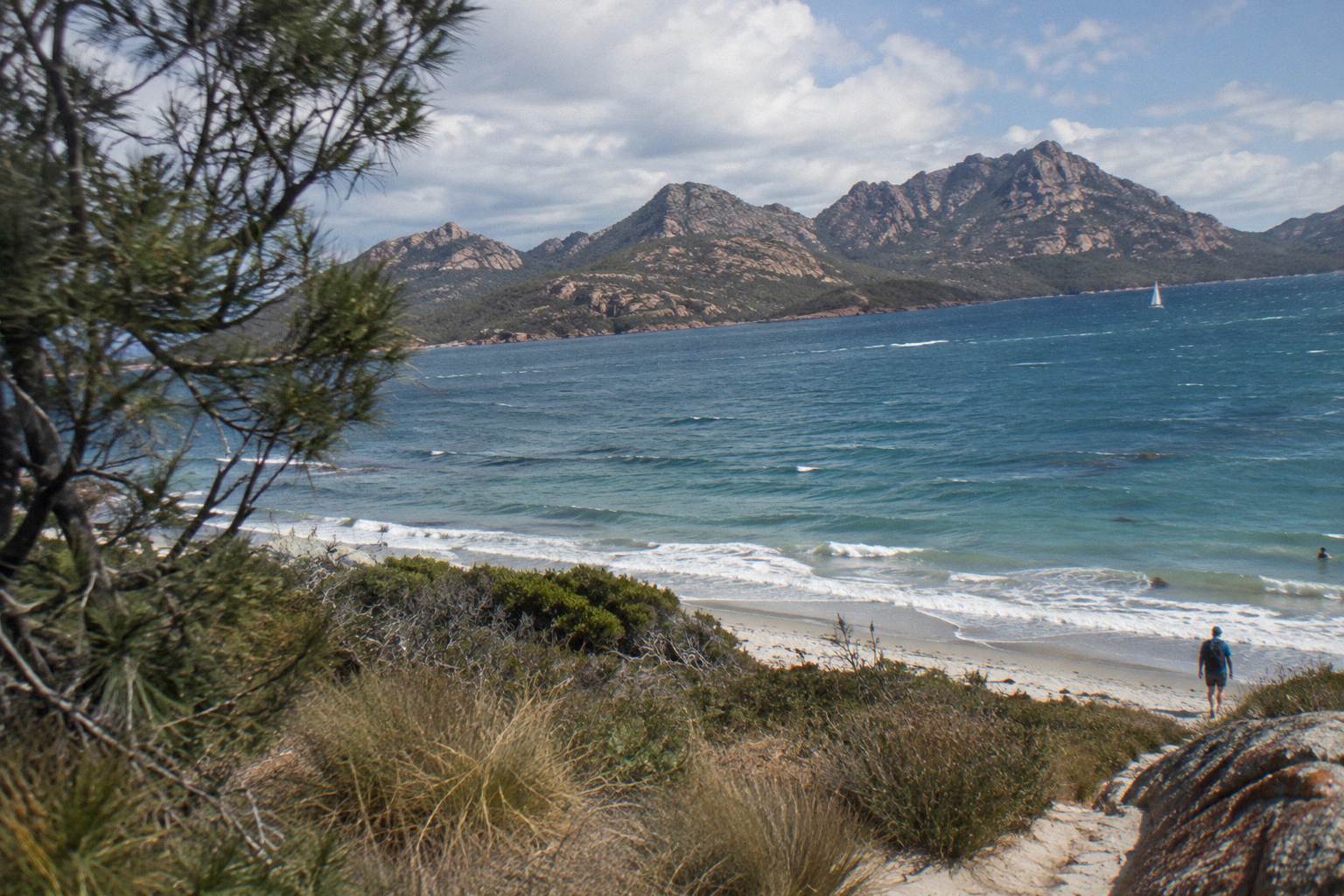
Great Oyster Bay runs along the western side of the Freycinet Peninsula, and Coles Bay township at its foot is where the guided paddling happens. The Freycinet Paddle launches from Muirs Beach, runs 3 hours with about 2 hours of paddling, and does not reach Wineglass Bay or Schouten Island. PWS describes Coles Bay's waters as relatively sheltered and suitable for all experience levels.
In short: Great Oyster Bay is the sheltered water between the Tasmanian mainland and the Freycinet Peninsula, and Coles Bay, the township at the foot of the Hazards, is where the guided sea kayaking runs. The only guided day paddle on the bay is The Freycinet Paddle, a 3 hour trip with about 2 hours of paddling, launching from Muirs Beach. PWS calls the relatively sheltered waters of Coles Bay suitable for all experience levels, and recommends guided tours for anyone new to paddling.
For the full run of options, start with the Coles Bay kayak tours overview and the guide to when to sea kayak at Freycinet.
| Quick fact | Detail |
|---|---|
| The bay | Great Oyster Bay, western side of the Freycinet Peninsula |
| Guided day paddle | The Freycinet Paddle, Freycinet Adventures, 3 hours with about 2 hours of paddling |
| Launch | Muirs Beach, Coles Bay, free public parking and toilets (operator) |
| Kayaks | Double sit-in sea kayaks, solo guests paired with a guest or guide |
| Groups | Minimum 2, maximum 16 per tour (operator FAQ) |
| From price | From A$155 per person, changes by date |
| Rating | 4.8 across more than 1,000 reviews on the main booking page |
| Age and swimming | Children from 7, guests need to be able to swim (operator) |
What Is Great Oyster Bay And Why Does It Suit Sea Kayaking?
Great Oyster Bay is the sheltered body of water between the east coast of Tasmania and the western shore of the Freycinet Peninsula, and its western end at Coles Bay is where almost all the accessible paddling happens. Freycinet Adventures describes Coles Bay as the town at the foot of the Hazards, the granite mountain range, where Great Oyster Bay meets the Tasman Sea.
The geography matters for anyone choosing where to paddle. The bay faces west and north, away from the open Tasman Sea that pounds the peninsula's eastern side, and that is the practical difference between the water at Coles Bay and the water at Wineglass Bay. PWS describes the Hazards as a spectacular granite mountain range that rises dramatically from the sheltered turquoise bays, and the park as effectively two eroded blocks of granite. Freycinet National Park itself, reserved in 1916 alongside Mount Field, is Tasmania's oldest national park, and the visitor centre at the Coles Bay entrance is open daily from 9am to 4pm according to the PWS Freycinet National Park page.
On the question of suitability, the park service is direct. PWS says tour companies in the area run a variety of sea kayaking experiences and are recommended if you are new to paddling, and that the relatively sheltered waters of Coles Bay allow for all experience levels. That is the strongest official statement available about the bay's character, and it lines up with what the multi-day expedition operator says about the same water: its page describes the Great Oyster Bay portion of its route as sheltered from the open ocean swell.
Two honest limits on what that means for you. Sheltered is a relative word, not a promise of glassy water, and MAST, Tasmania's marine safety body, still lists wind and tides among the things every paddle craft operator must mind. And the shelter belongs to the bay, not the peninsula's east coast, which is where the whale watching is described by the operator and PWS. The distinction runs through everything on the bay: what you paddle on, what you might see from it, and what you cannot reach in three hours.
Where Can You Launch A Sea Kayak On Great Oyster Bay?
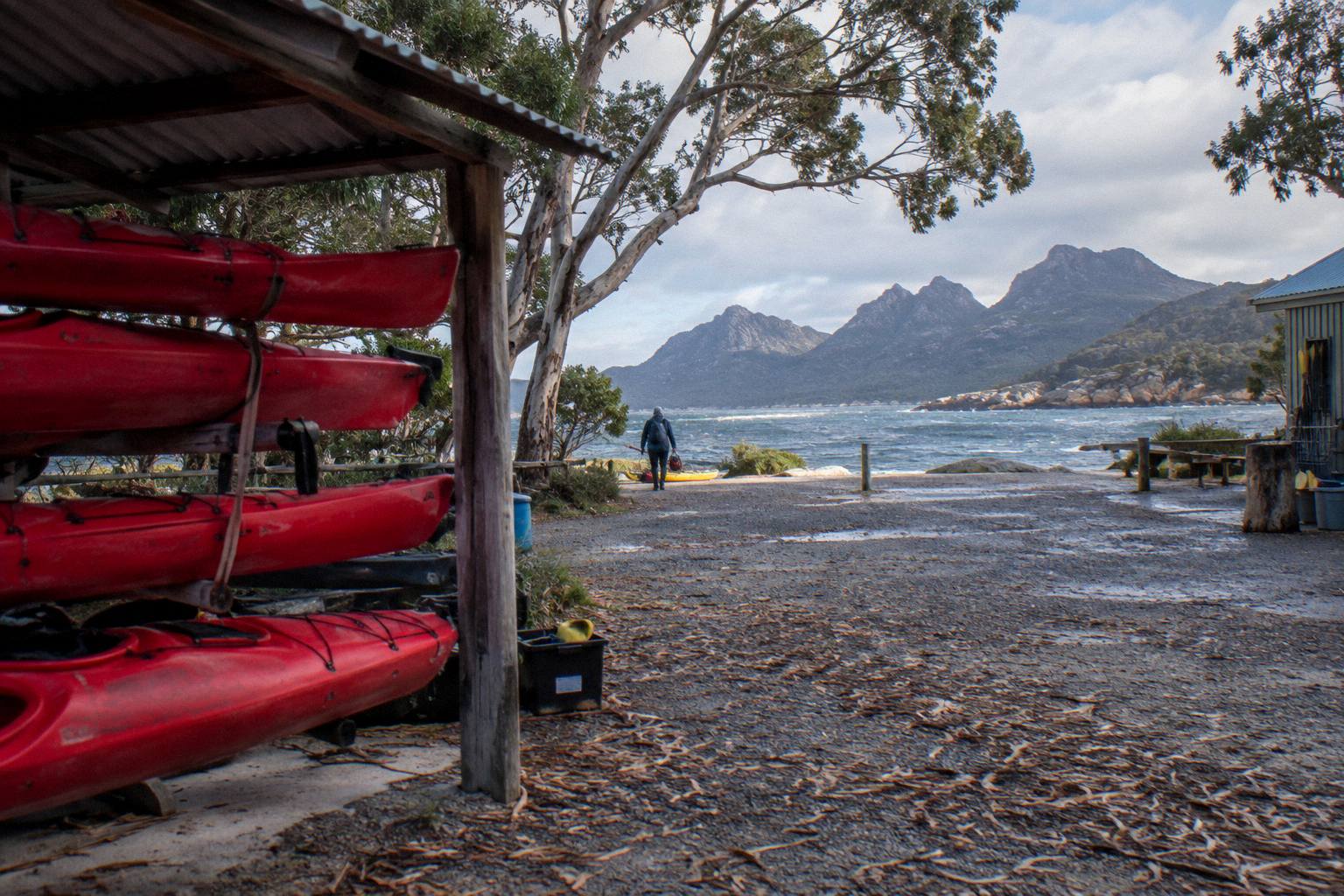
The launch point that matters for guided tours is Muirs Beach at Coles Bay. Freycinet Adventures says The Freycinet Paddle departs from Muirs Beach, where free public parking and public toilets are available, and the booking page gives the same meeting point, using the Iluka Tavern on The Esplanade as the nearest landmark, with the beach directly opposite it.
The booking page says the meeting point can shift to the Coles Bay boat ramp depending on the weather, so check your confirmation before you go. That single sentence saves the most common morning frustration, because arriving at the wrong end of a small township still costs you the briefing.
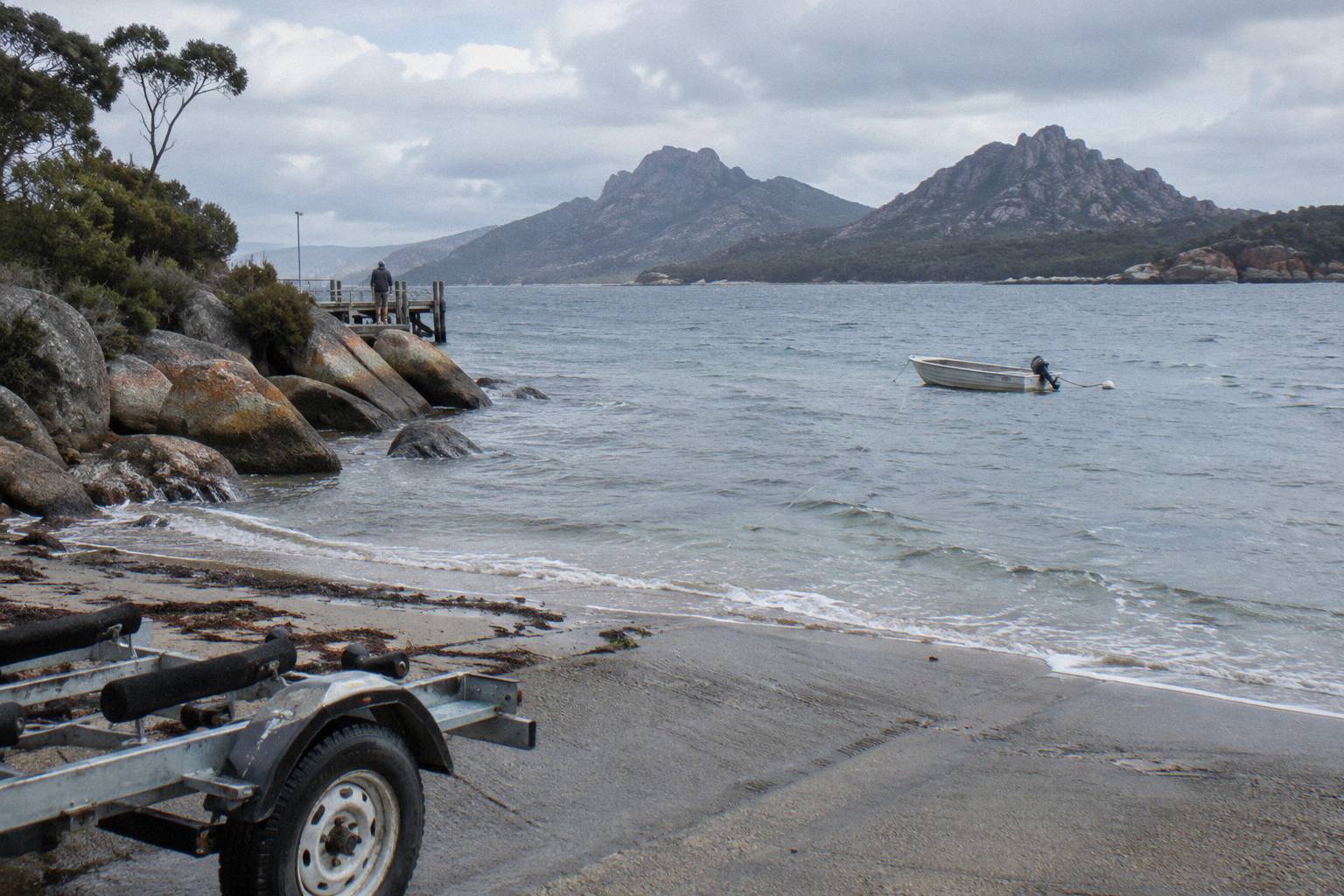
Muirs Beach is in Coles Bay township, on the Great Oyster Bay side, which is why the tour is a bay paddle rather than an ocean one. PWS gives the drive to the area as about 2.5 to 3 hours from either Launceston or Hobart, turning off the Tasman Highway onto Coles Bay Road 12 km south of Bicheno, then 28 km of sealed road through the township to the park entrance. If you are working out the drive in detail, the guide on reaching Coles Bay from Hobart for a kayak day covers the logistics.
Two launch points that are not yours. Honeymoon Bay, inside the national park, is only the beach stop of the operator's separate sunrise paddle, not the launch of the day tour. And Wineglass Bay is not a kayak launch at all: it faces the Tasman Sea and is seen from the cruise, the walk or the Hobart day tour, never from a guided kayak. If you were hoping to paddle to it, the plain answer is that the day paddle does not reach Wineglass Bay or Schouten Island, and nothing sold here puts a kayak inside that beach.
For people who own a craft, the picture is thinner. No hire operator could be verified in Coles Bay, and the state tourism body's Coles Bay kayaking page describes self-launch paddling with your own kayak, with Richardsons Beach and Honeymoon Bay mentioned as stops. PWS camps at Richardsons Beach, Honeymoon Bay and Ranger Creek, all beachfront. The kayak hire at Coles Bay guide works through what that means for a traveller without a car full of gear: in short, bring your own or take the guided tour.
| Launch or access point | What the sources say |
|---|---|
| Muirs Beach, Coles Bay | The Freycinet Paddle departure point, free public parking and toilets (operator) |
| Coles Bay boat ramp | Alternate meeting point in some weather, per the booking page |
| Richardsons Beach | Beachfront camping (PWS); put-in of the multi-day expedition (that operator) |
| Honeymoon Bay | Beachfront camping (PWS); sunrise paddle breakfast stop, not a day tour launch |
| Wineglass Bay | Not a kayak launch; seen from the cruise, the walk or the Hobart day tour |
How Does The Guided Freycinet Paddle Work On The Bay?
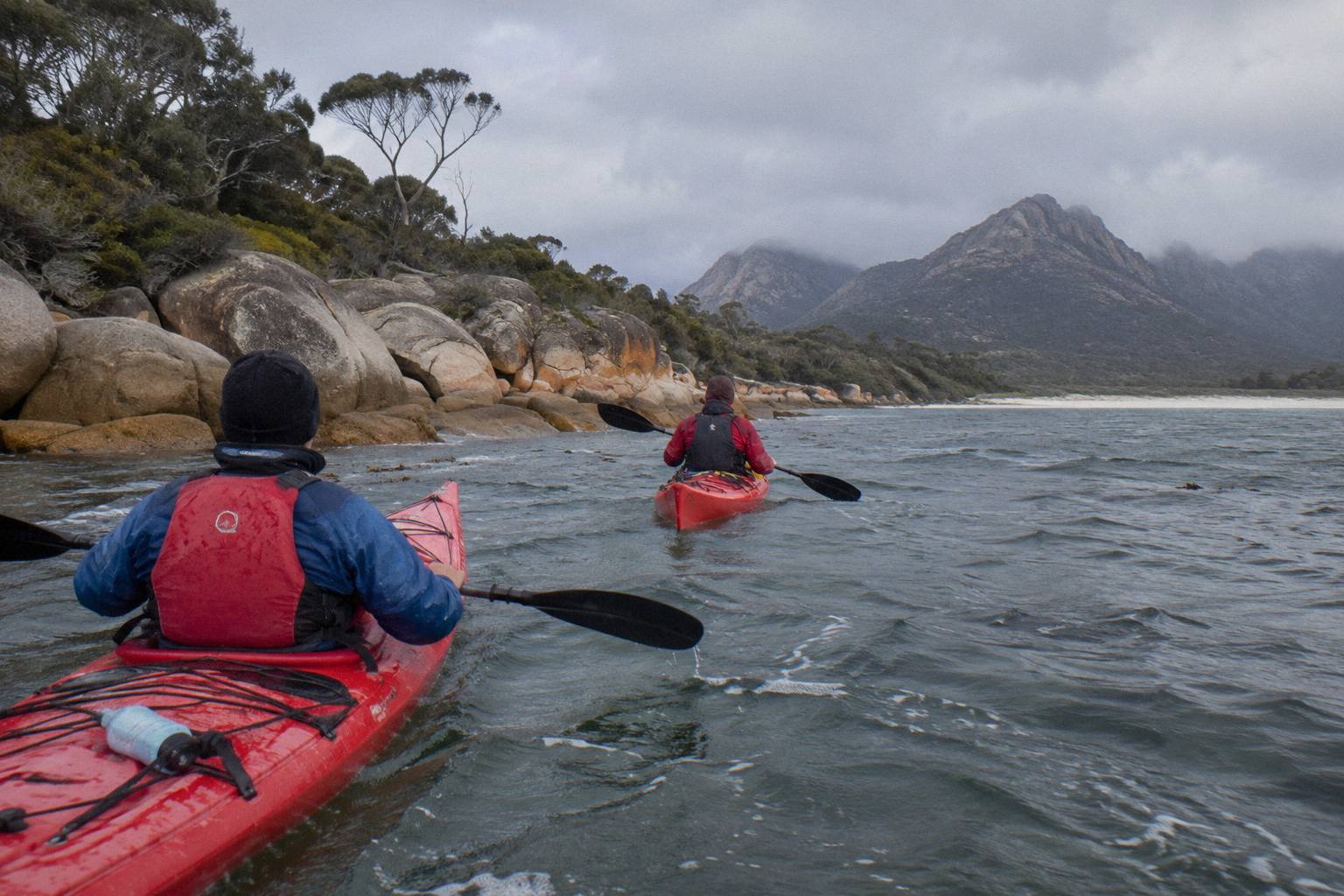
The guided Freycinet Paddle is a 3 hour trip run by Freycinet Adventures out of Muirs Beach, with about 2 hours of cumulative paddling in double sit-in sea kayaks and a halfway rest stop at a secluded sandy beach for a hot drink and a snack. The safety briefing comes first, groups run from 2 to 16 people, Morning and Twilight sessions follow the same route, and the Twilight finish lands right on sunset.
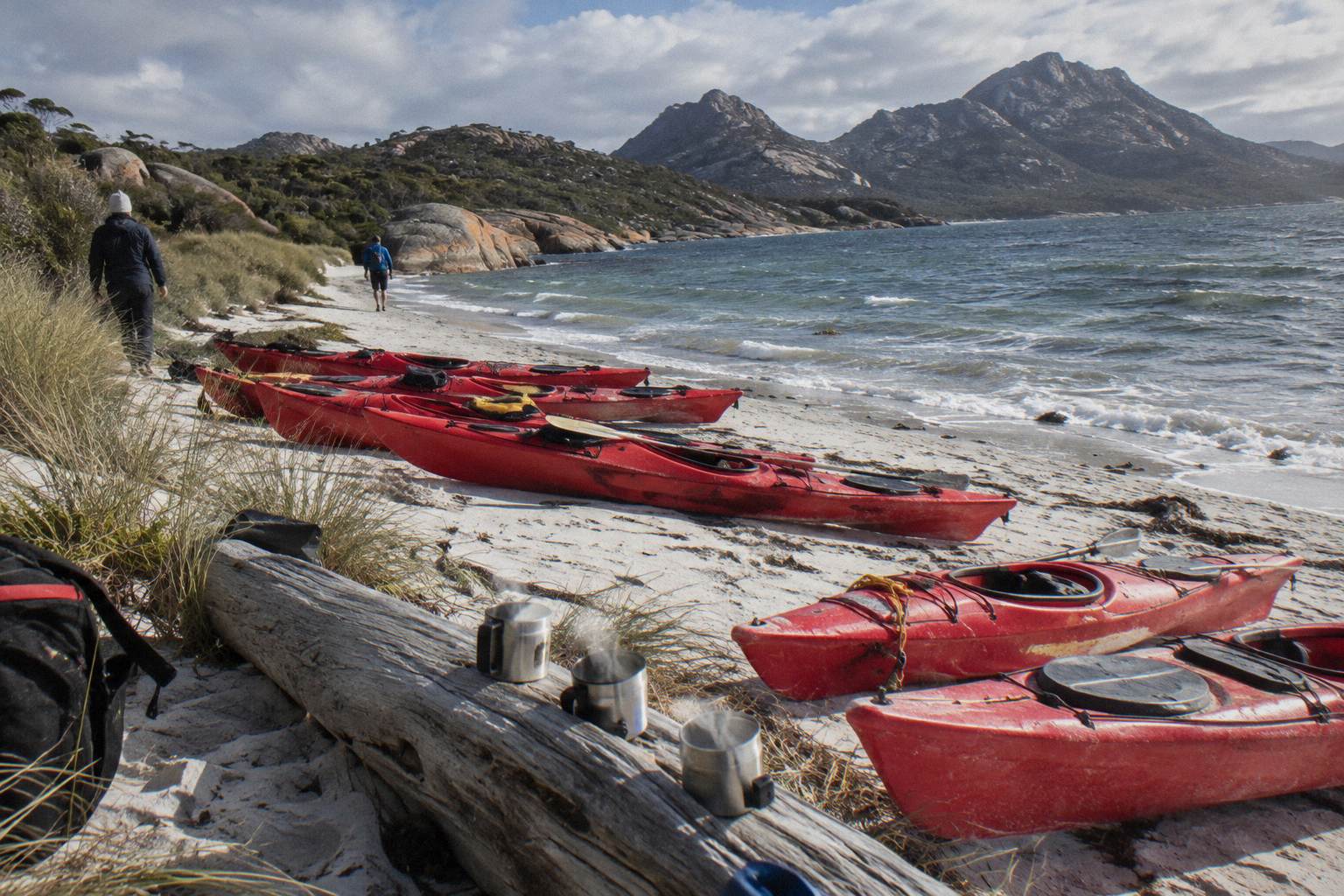
The double kayaks shape the experience more than most first-timers expect. The operator FAQ calls them sit-in tandem sea kayaks, with a cockpit seat about 45 cm across, suiting people up to 195 cm and approximately 120 kg, and guides may decline a booking if body size does not fit the cockpit. Solo travellers paddle with another guest or with a guide, so nobody paddles alone. The booking page adds that a hot drink and a gourmet cookie are served at the stop, and that hotel pick-up and drop-off is not included, which matters if you are staying outside Coles Bay.
Who can come is the operator's own rule: children from 7 who are, in the operator's words, happy to sit still for 2 to 3 hours, all under 16s with an accompanying adult. The operator FAQ is also plain that you need to be able to swim to take part. On fitness, the FAQ says that if you are fit enough for a leisurely two hour recreation activity, the tour suits, and complete beginners are welcome. None of those numbers belong to any other Tasmanian kayak operator, so treat them as this tour's rules, not an industry standard.
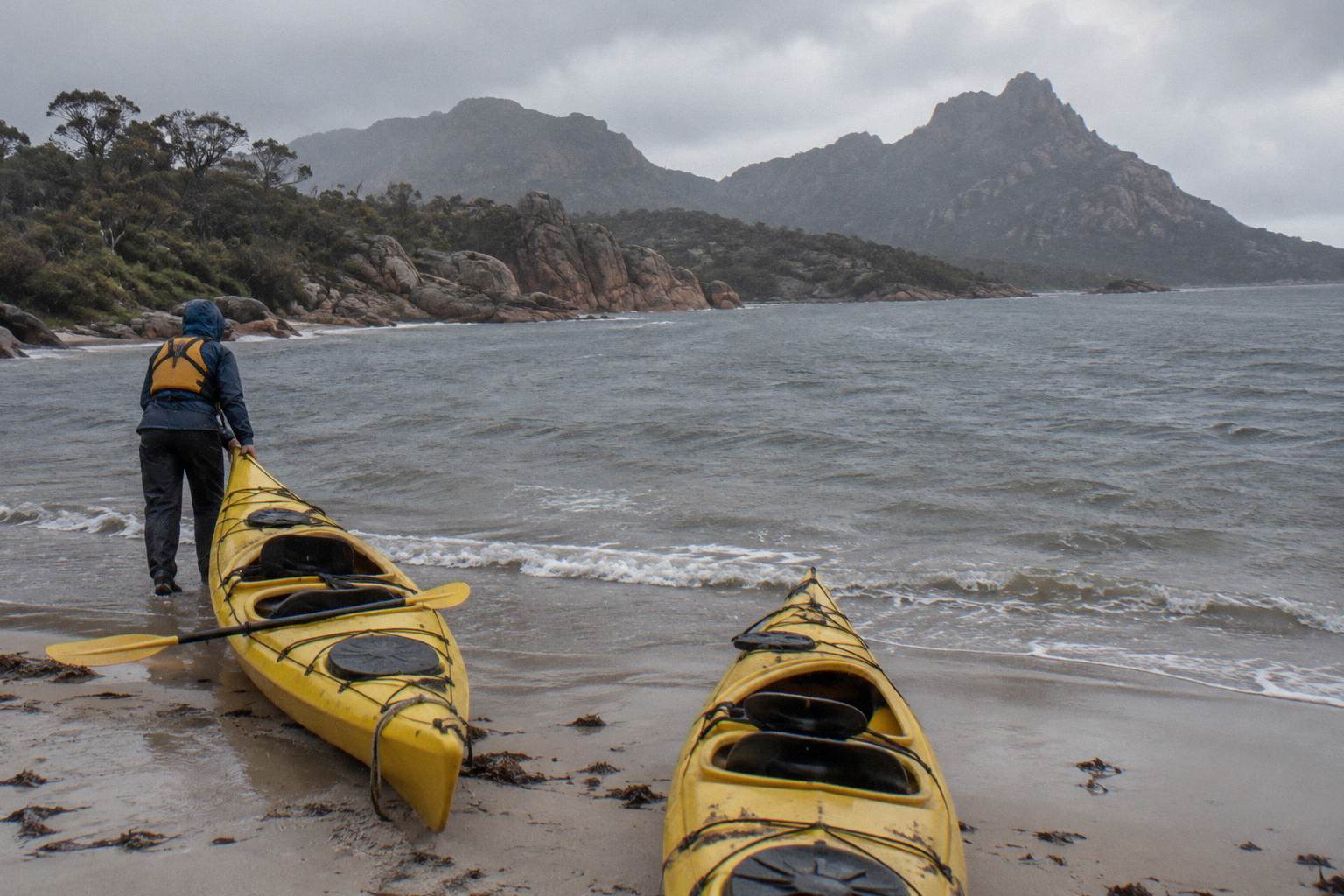
Booking mechanics are worth knowing before you commit. Online bookings close 3 hours before departure for the day paddle, 12 hours before for the sunrise tour. Guest cancellations need 24 hours notice for a refund, with free amendments and cancellations up to 24 hours in advance per the operator's terms. If the operator cancels for weather or safety, the FAQ says you get a full refund or a reschedule, and in challenging wind the operator may contact guests beforehand and may require previous sea kayaking experience and moderate fitness, otherwise the same refund applies. The trip runs year round with seasonal departure times, so no timetable applies across the year.
The tour's own card is at The Freycinet Paddle tour page, where you can also check availability for your dates. The from price on the booking page is A$155 per person, changing by date, and weekend and public holiday surcharges apply on the operator's own site, so the final figure depends on where you book and which day you pick. The main booking page shows a rating of 4.8 across more than 1,000 reviews.
Can You Paddle Beyond Coles Bay: Schouten Island And The Peninsula?
Yes, but only via a multi-day expedition: Tasmanian Expeditions runs a 6 day Freycinet Peninsula Kayak Expedition that paddles much further afield, starting with a drive of about two and a half hours from Hobart to a put-in at Richardsons Beach, then heading through Schouten Passage to Schouten Island and back to Hazards Beach. No day tour sold here does anything comparable, and this expedition is not bookable through this site.
That expedition page describes most of the route as being on Great Oyster Bay, sheltered from the open ocean swell, in that operator's own words. It is the only sourced answer to a question many readers arrive with: can a kayak reach Schouten Island or cross to the far side of the peninsula? Yes, with that operator, over six days, with camping logistics that its own page covers and that nothing in the sources here details. No facts are held on Schouten Island crossings, camps, permits or conditions beyond that page, so treat any further detail as a question for that operator directly. The multi-day Freycinet kayak expedition guide and the page on Schouten Island sea kayak trips set out the honest boundary between what a 3 hour bay paddle does and what a 6 day expedition does, and no day paddle should be read as doing the same route.
For most travellers the practical comparison is not kayak versus kayak but kayak versus the other ways of seeing the peninsula. The Wineglass Bay cruise, about 4 hours 30 minutes boarding at 61 Jetty Rd, Coles Bay, is rated 4.7 across more than 1,000 reviews and puts you on the water with a deck under your feet, reaching the coastline the paddle does not. The Freycinet Walking Tour covers the land side, including the lookout over Wineglass Bay that no kayak tour reaches. A full worked comparison lives in the guide on Wineglass Bay by kayak, cruise or walk, and pairing options are covered in walking and kayaking on the same day.
What Wildlife Might You See From A Kayak On The Bay?
Nothing is guaranteed, and every wildlife claim here belongs to the operator, PWS or NRE Tasmania. The operator's sunrise paddle page lists sting rays, white bellied sea eagles, and even larger marine species like dolphins, whales and fur seals on occasion, with that qualifier intact. PWS says these waters are regularly visited by whales, particularly humpback whales, during the winter months, and that seals may be spotted resting on rocks.
NRE Tasmania adds that southern right whales can be reliably seen in Tasmania between May and November each year, naming sheltered east coast waters including Great Oyster Bay. The geography caveat matters more than any species list. The operator's own park page says whales are often seen during their annual migration, usually on the eastern side of the Freycinet Peninsula, more commonly southern right and humpback, with Cape Tourville named as a great observation site. The day paddle is on Great Oyster Bay, the western, sheltered side, so never read a whale claim as a promise on the three hour tour. The operator's park page also records seal colonies on Schouten Island and Ile des Phoques, both beyond the day paddle's reach. The wildlife from a kayak guide gathers the full set of attributed claims in one place.
Distances are regulated, and the rules apply to vessels. NRE Tasmania's whale and dolphin viewing guidelines say a vessel may approach no closer than 100 m to a whale or 50 m to a dolphin, 300 m and 150 m respectively when the vessel is under steam, with a maximum of three vessels in the caution zone. The page does not name kayaks, so do not assume the word vessel settles anything for a paddler; the safe reading is to keep well back and let the guide decide. On land, PWS asks visitors to keep 2 m from native animals and never feed wildlife. If you see a whale in trouble, PWS runs the whale hotline on 0427 WHALES, 0427 942 537.
What Safety Rules Apply To Kayaking On Great Oyster Bay?
MAST, Tasmania's marine safety authority, makes a life jacket compulsory in a lightweight craft, which includes kayaks, canoes and stand-up paddle boards, and its lightweight craft rules also require a white strobe or all-round light, lit between sunset and sunrise and when visibility is limited, plus a tether when more than 200 m offshore. A mobile phone in a waterproof pouch is recommended.
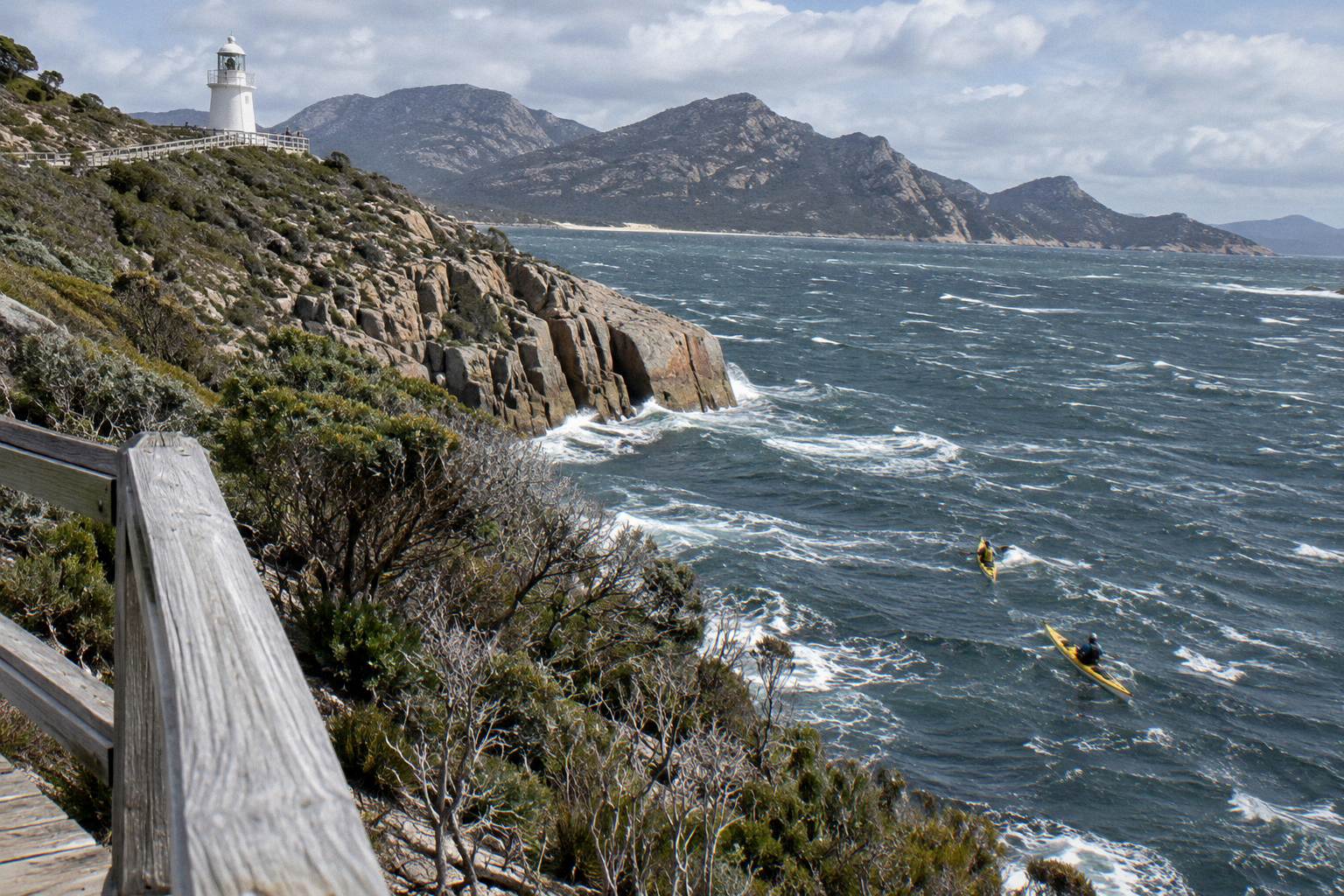
Life jacket levels follow the Australian standard AS 4758: Level 50 and 50S are acceptable for kayak operators in sheltered waters only, with Level 100 or 150 covering sheltered and open waters. On a guided tour, the operator's page says all kayaking equipment is provided, so the compliance burden sits with the operator; life jackets are not named item by item on the pages read, so ask when booking if you want that confirmed. For anyone paddling their own craft on the bay, the MAST paddle craft rules are the reference, and its advice is blunt: never venture too far offshore, mind tides and wind, and unless you are an experienced surf paddler, stay out of the surf. PWS adds its own cautions for the area's beaches and cliffs: they are unpatrolled, the cliffs are hazardous, and children should be supervised.
| Requirement or rule | What MAST or PWS says |
|---|---|
| Life jacket | Compulsory in kayaks, canoes and stand-up paddle boards |
| Life jacket level | Level 50 or 50S in sheltered waters only; Level 100 or 150 for sheltered and open waters, per AS 4758 |
| White light | Strobe or all-round light, lit between sunset and sunrise and in limited visibility |
| Tether | Required when more than 200 m offshore |
| Phone | Mobile phone in a waterproof pouch recommended |
| Offshore advice | Never venture too far offshore; stay out of the surf unless an experienced surf paddler |
| Beaches and cliffs | Unpatrolled beaches, hazardous cliffs, supervise children (PWS) |
The weather cancellation rules on the guided side sit alongside these. The operator's FAQ says guides can cancel at any time for safety, and in challenging wind the operator may contact guests beforehand and may require previous experience and moderate fitness, otherwise a full refund or reschedule. That is the practical safety net for a beginner: you are not being asked to judge the bay yourself. For independent paddling, no such net exists, which is a fair part of why PWS recommends guided experiences for newcomers to the sport.
How Cold Is The Water And What Should You Wear?
Coles Bay's sea surface averages 17.2 degrees in February, the warmest month, and 13.0 degrees in August, the coldest, with monthly averages moving between those two points. The operator supplies warm jackets and all kayak equipment, asks guests to bring drinking water, a hat or sunglasses and comfortable clothing, names no wetsuit on its gear list, and states that footwear will get wet, so flip flops or bare feet are the stated choices.
| Month | Min C | Avg C | Max C |
|---|---|---|---|
| Jan | 15.9 | 16.8 | 17.7 |
| Feb | 16.6 | 17.2 | 17.9 |
| Mar | 16.1 | 16.6 | 17.2 |
| Apr | 15.2 | 16.0 | 16.8 |
| May | 13.7 | 14.8 | 15.9 |
| Jun | 13.3 | 14.0 | 14.7 |
| Jul | 12.5 | 13.2 | 13.9 |
| Aug | 12.5 | 13.0 | 13.5 |
| Sep | 12.6 | 13.1 | 13.7 |
| Oct | 12.8 | 13.5 | 14.2 |
| Nov | 13.8 | 14.8 | 15.7 |
| Dec | 15.4 | 16.3 | 17.2 |
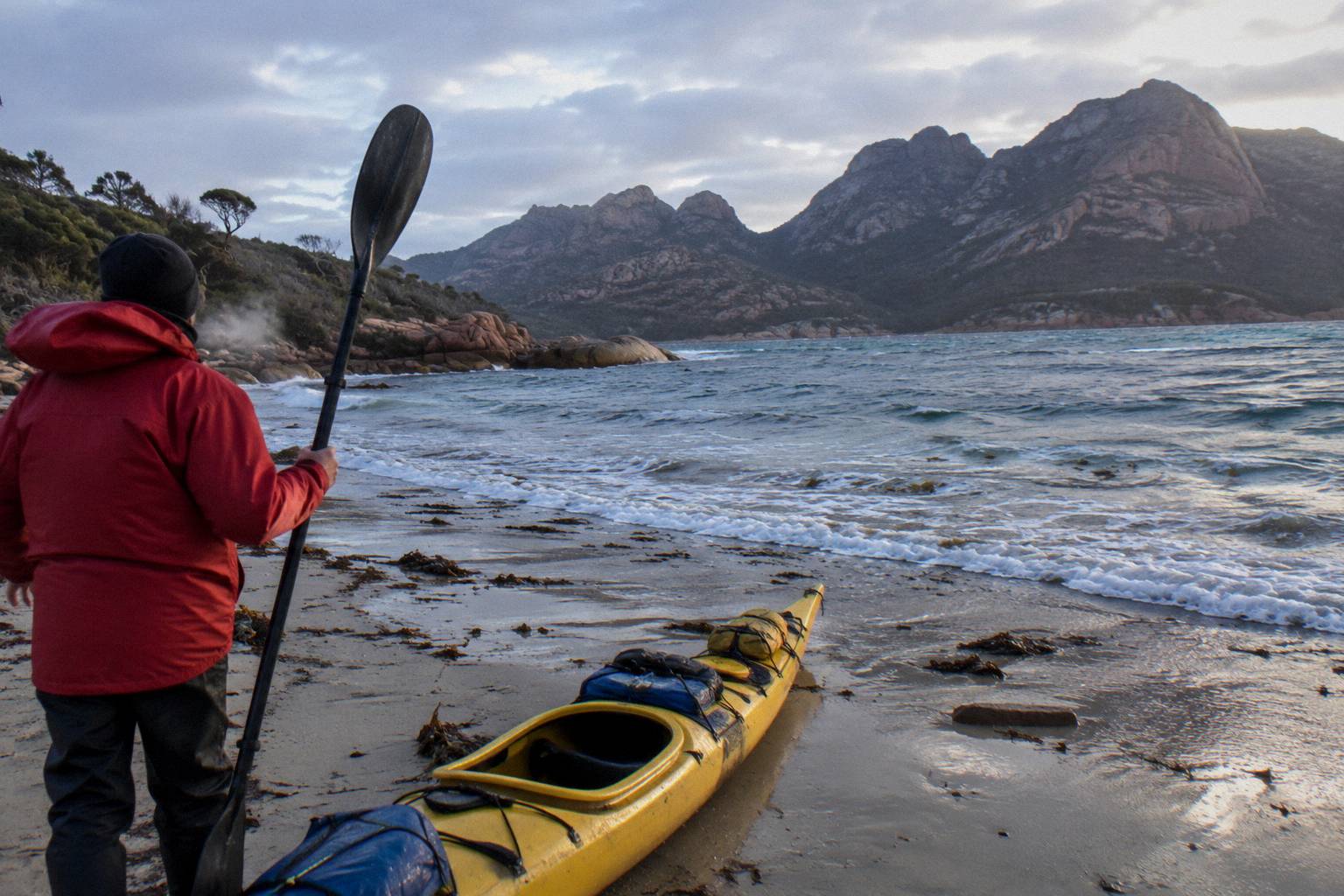
The numbers come from long-run historical data rather than a live reading, so treat them as a planning guide, not a forecast. Even the summer averages sit well below pool temperature, which is why the operator's warm jackets are on the gear list rather than offered as a courtesy. For a fuller packing discussion, including dry bags for phones and cameras, the what to wear sea kayaking guide and the page on winter kayak tours at Freycinet work through the seasons. The operator supplies dry bags for phones and cameras, which answers the question most people ask after booking.
Which Trip On Great Oyster Bay Fits Which Traveller?
Great Oyster Bay offers three distinct trips: the 3 hour guided paddle, the cruise of about 4 hours 30 minutes along the coastline, and a walking tour to the Wineglass Bay lookout. Families with children from 7, beginners and anyone who wants to actually paddle should choose The Freycinet Paddle, travellers keen to see Wineglass Bay itself belong on the cruise, and visitors who would rather stand above the bay than float on it should take the walking tour.
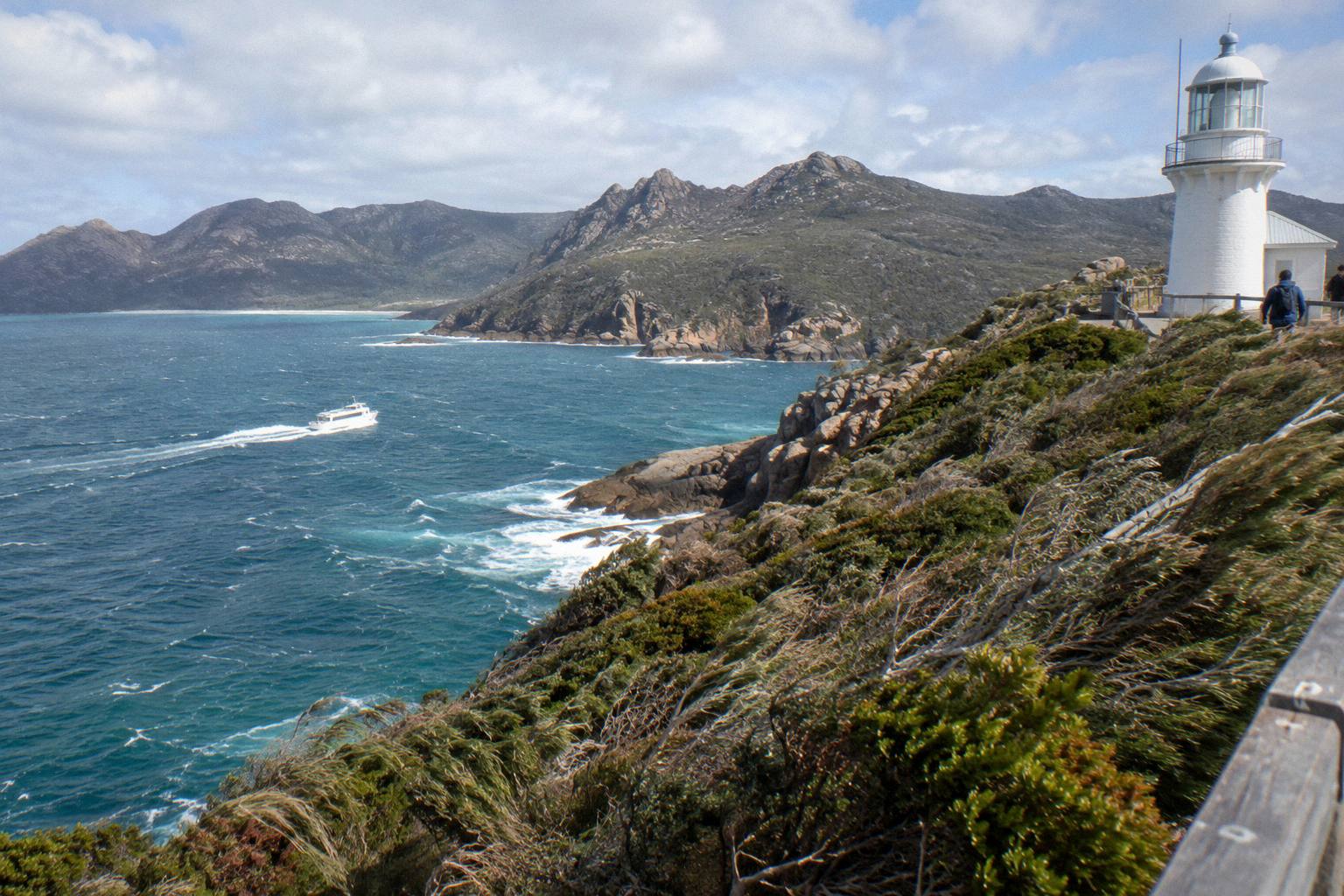
Worked through by traveller type, using only the figures the sources hold. A solo traveller takes the paddle and gets paired with a guest or a guide, with groups capped at 16. A couple with a 9 year old clears the operator's minimum age of 7 and books a double, with the child alongside an adult. A visitor without a car can reach Coles Bay by other means, covered in the guide on reaching a Coles Bay kayak tour without a car, or takes the Wineglass Bay day tour from Hobart, a full day trip run by Wineglass Bay Discovery Tours, which solves both the drive and the park in one booking. Someone nervous about the swimming rule, which the operator FAQ states plainly, should read whether you need to swim for the tour before deciding.
| Traveller | Best fit | Why, from the stated facts |
|---|---|---|
| First-time paddler | The Freycinet Paddle | Complete beginners welcome, sheltered bay water, guide supplied |
| Family with children 7 to 15 | The Freycinet Paddle | Children from 7 with an adult, doubles, 3 hour format |
| Visitor who wants Wineglass Bay itself | The cruise | About 4 hours 30 minutes, boards at 61 Jetty Rd, Coles Bay |
| Keen walker | Freycinet Walking Tour | The land side, including the lookout no kayak reaches |
| Traveller without a car | Wineglass Bay Day Tour From Hobart | Full day from Hobart, run by Wineglass Bay Discovery Tours |
| Multi-day adventurer | The 6 day expedition | Richardsons Beach put-in, Schouten Island, not bookable here |
Money, briefly, because it drives real decisions. The paddle's from price on the booking page is A$155 per person, changing by date, and the operator's own site carries weekend and public holiday surcharges, so compare the final figure on the booking page for your specific day. The cruise and the walking tour carry no price in the sources here, so ask at the booking desk. A park pass question sits behind all of it: a valid parks pass is required for entry to Tasmania's national parks, at AUD 49.15 per vehicle for a 24 hour daily pass per the PWS pass and entry fees page, but the kayak tour pages read do not say whether the pass is needed or included, so confirm with the operator. The park pass guide for kayak tours unpacks the options, including the holiday and annual passes.
What Trips People Up When Planning A Great Oyster Bay Paddle?
The recurring mistakes are all about geography and fine print. Travellers book expecting to kayak Wineglass Bay, which the day paddle never reaches. They assume the launch is at Honeymoon Bay, when it is Muirs Beach in Coles Bay township, occasionally the boat ramp in some weather. They overlook the operator's swim requirement and minimum age of 7, or the 24 hour cancellation window. Each of these is checkable in minutes before booking.
A price mistake sits in the same basket: travellers print one figure in their head when weekend and public holiday surcharges, and the date itself, shift the final total, so always read the booking page for your specific day. The fix for all of it is a short checklist. Confirm the meeting point on your booking confirmation, since the booking page says it can shift to the Coles Bay boat ramp in some weather. Tell the operator at booking about any swimming confidence, body size or mobility question, since the FAQ notes guides may decline a booking if the cockpit does not fit. If you are combining the paddle with a Wineglass Bay walk on one day, read the same-day pairing guide first, because the timings only work one way around. And if your heart is set on paddling to Schouten Island, accept that the six day expedition is the only sourced way to do it.
Everything on the bay funnels back to one practical truth, and Freycinet Kayaking keeps the whole set of options in one place: Great Oyster Bay is the sheltered half of the peninsula, the guided paddle is the way onto it, and the east coast's famous views belong to the cruise, the walk and the day tour from Hobart.
Common Questions About Great Oyster Bay Sea Kayaking
Where Is Great Oyster Bay?
It is the sheltered bay between Tasmania's east coast and the western shore of the Freycinet Peninsula. The operator describes Coles Bay, at its foot below the Hazards, as the town where Great Oyster Bay meets the Tasman Sea.
Can You Kayak To Wineglass Bay?
Not on any tour sold here. The Freycinet Paddle stays on Great Oyster Bay and does not reach Wineglass Bay or Schouten Island. Wineglass Bay is seen from the cruise, the walking tour or the day tour from Hobart.
Is Great Oyster Bay Good For Beginner Kayakers?
PWS says the relatively sheltered waters of Coles Bay allow for all experience levels and recommends guided tour companies for anyone new to paddling. The operator FAQ says complete beginners are welcome on The Freycinet Paddle.
Where Do Great Oyster Bay Kayak Tours Launch From?
Muirs Beach, Coles Bay, with free public parking and public toilets, per the operator and the booking page. The booking page says the meeting point can move to the Coles Bay boat ramp in some weather, so check your confirmation.
Do You Need To Be Able To Swim?
Yes, for The Freycinet Paddle. The operator FAQ states that, as a safety precaution, you need to be able to swim to take part in its tours.
Can You See Whales From A Kayak On Great Oyster Bay?
No operator guarantees it. The operator lists whales among species seen on occasion, and its park page says whales are usually seen on the eastern side of the peninsula during migration. PWS says these waters are regularly visited by whales, particularly humpbacks, during the winter months.