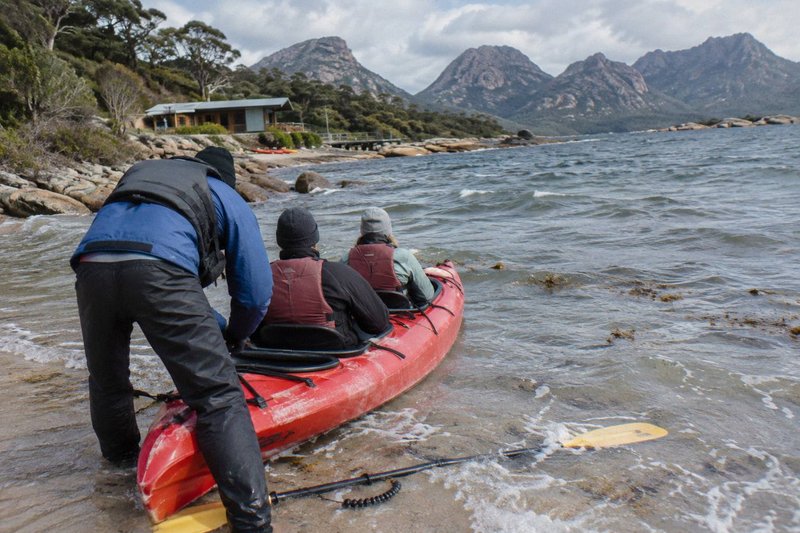
Freycinet Wildlife From A Kayak: Dolphins, Seals And Sea Eagles
Dolphins, fur seals, sea eagles and sting rays all live around the Freycinet coast, but no tour promises any of them. Here is exactly what the operator and the park service say, where each animal is actually found, and the rules that apply when you meet one.
Short answer
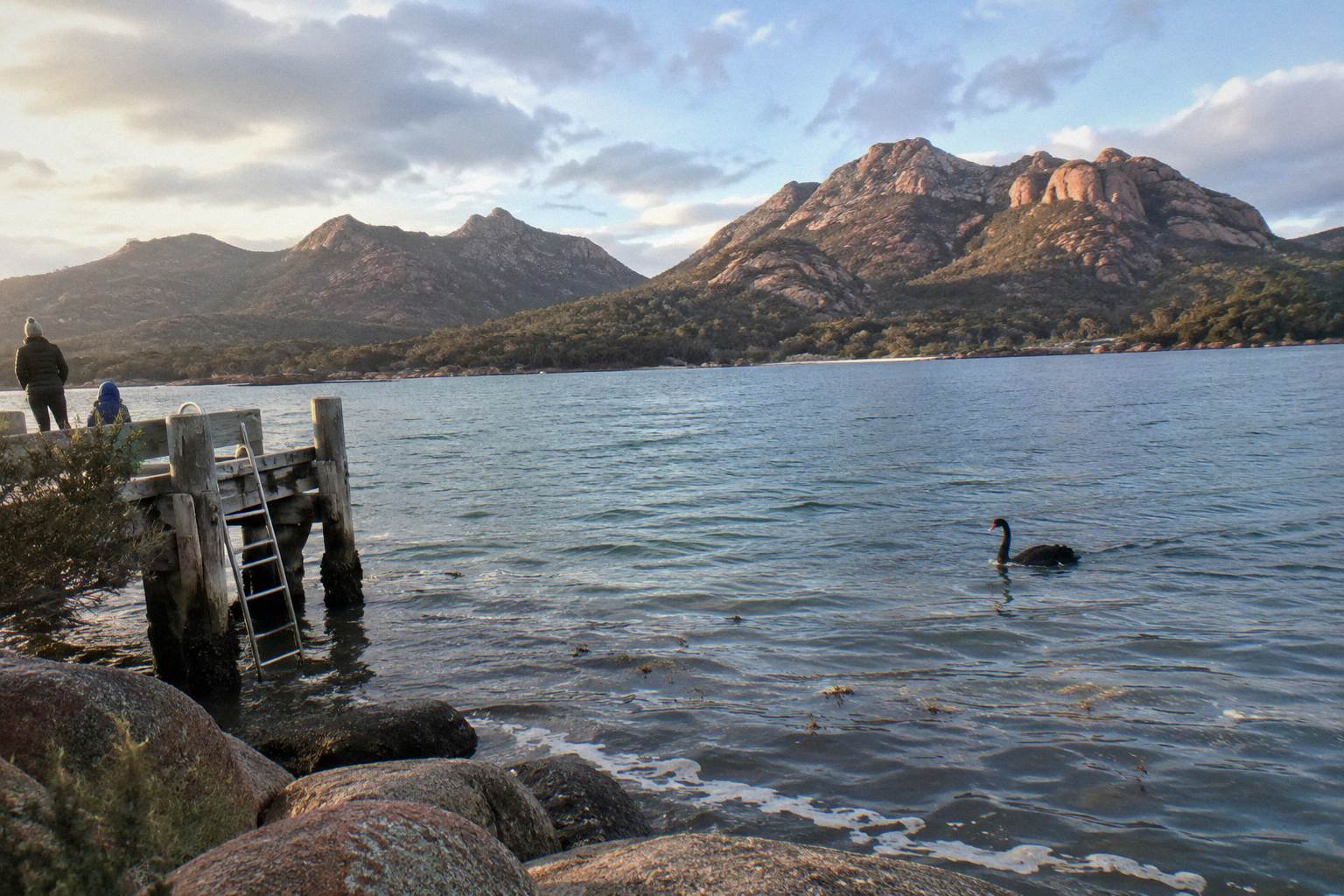
The operator's own page lists sting rays, white bellied sea eagles, and larger species like dolphins, whales and fur seals 'on occasion'. The day paddle explores Great Oyster Bay from Coles Bay, while seal colonies sit on Schouten Island and Ile des Phoques and whales are usually seen on the eastern, Tasman Sea side. No sighting is ever guaranteed.
The question behind almost every wildlife enquiry is the same: will a paddle actually deliver animals? The truthful answer starts with who says what. Freycinet Adventures, the operator of The Freycinet Paddle, states its wildlife plainly and with a qualifier: sting rays, white bellied sea eagles, and even larger marine species like dolphins, whales, and fur seals "on occasion". Tasmania's parks service and the state wildlife regulator add the geography: where seals actually haul out, when southern right whales pass, and how close boats may go. Piece those together and you get a realistic picture, which is what follows.
For background on the town the tours leave from, see Coles Bay kayak tours and how they run, and for the broader water the paddle crosses, the Great Oyster Bay sea kayaking guide. The wildlife questions specific to dolphins have their own deep dive in whether dolphins appear on a Freycinet kayak tour.
| Quick fact | What holds |
|---|---|
| Wildlife named by the operator | Sting rays, white bellied sea eagles, dolphins, whales, fur seals, all "on occasion" |
| Where the day paddle goes | Great Oyster Bay, out of Coles Bay; not Wineglass Bay, not Schouten Island |
| Seal colonies (operator park page) | Schouten Island and Ile des Phoques |
| Whales (PWS) | Waters regularly visited by whales, particularly humpbacks, in the winter months |
| Southern right whales (NRE Tasmania) | Can be reliably seen in Tasmania between May and November each year |
| Land animal distance (PWS) | Keep 2 metres from native animals, do not feed wildlife |
| Whale hotline (PWS) | 0427 WHALES, 0427 942 537 |
What Wildlife Might You See From A Sea Kayak At Freycinet?
From a kayak at Freycinet you may realistically see sting rays, white bellied sea eagles, and, on occasion, dolphins, whales and fur seals, though the operator's own wording attaches that "on occasion" qualifier to the larger animals. The parks service adds that seals may be spotted resting on rocks and that humpback whales in particular regularly visit these waters in winter, but no source promises you an animal on any given morning.
Start with the smallest and most likely. Sting rays and white bellied sea eagles are named on the operator's sunrise paddle page without the "larger marine species" framing, which suggests they are the everyday cast rather than the headliners. A ray passing under a kayak in shallow water, an eagle working the shoreline: those are the encounters the operator lists first, and they suit the sheltered bays the tour actually paddles.
The bigger animals carry the qualifier. Dolphins, whales and fur seals appear on the operator's page with the words "on occasion" attached, and no operator page read claims how often dolphins turn up. Anyone selling you a Freycinet dolphin trip with confident frequency figures is selling something the operators themselves do not claim.
Around all of this sits the landscape itself. The operator describes Coles Bay as the town at the foot of the Hazards, where Great Oyster Bay meets the Tasman Sea, and the parks service calls the Hazards "a spectacular granite mountain range that rises dramatically from the sheltered turquoise bays". Freycinet is also Tasmania's oldest national park, reserved in 1916 alongside Mount Field, according to the park service's Freycinet page. The wildlife lives inside that granite world, and the kayak is simply one quiet way to be in it.
Can You See Dolphins On A Freycinet Kayak Tour?
Yes, dolphins are on the operator's own list of animals seen from its tours, always with the qualifier "on occasion". No operator page claims a frequency, a season or a pod size for dolphins at Coles Bay, and no tour here is sold as a dolphin trip. If dolphins appear, they appear on their own terms, and the tour's value sits in everything else around the paddle: the water, the granite, the birds and the beach stop.
The honest framing works like this. The Freycinet Paddle is a three hour guided tour with about two hours of paddling cumulatively and a rest break halfway, in sit-in double sea kayaks, run by Freycinet Adventures with small groups of no more than 16. You can read the full format on the tour page for The Freycinet Paddle and check availability if the dates suit. Dolphins are part of what the water can offer, not the product being sold.
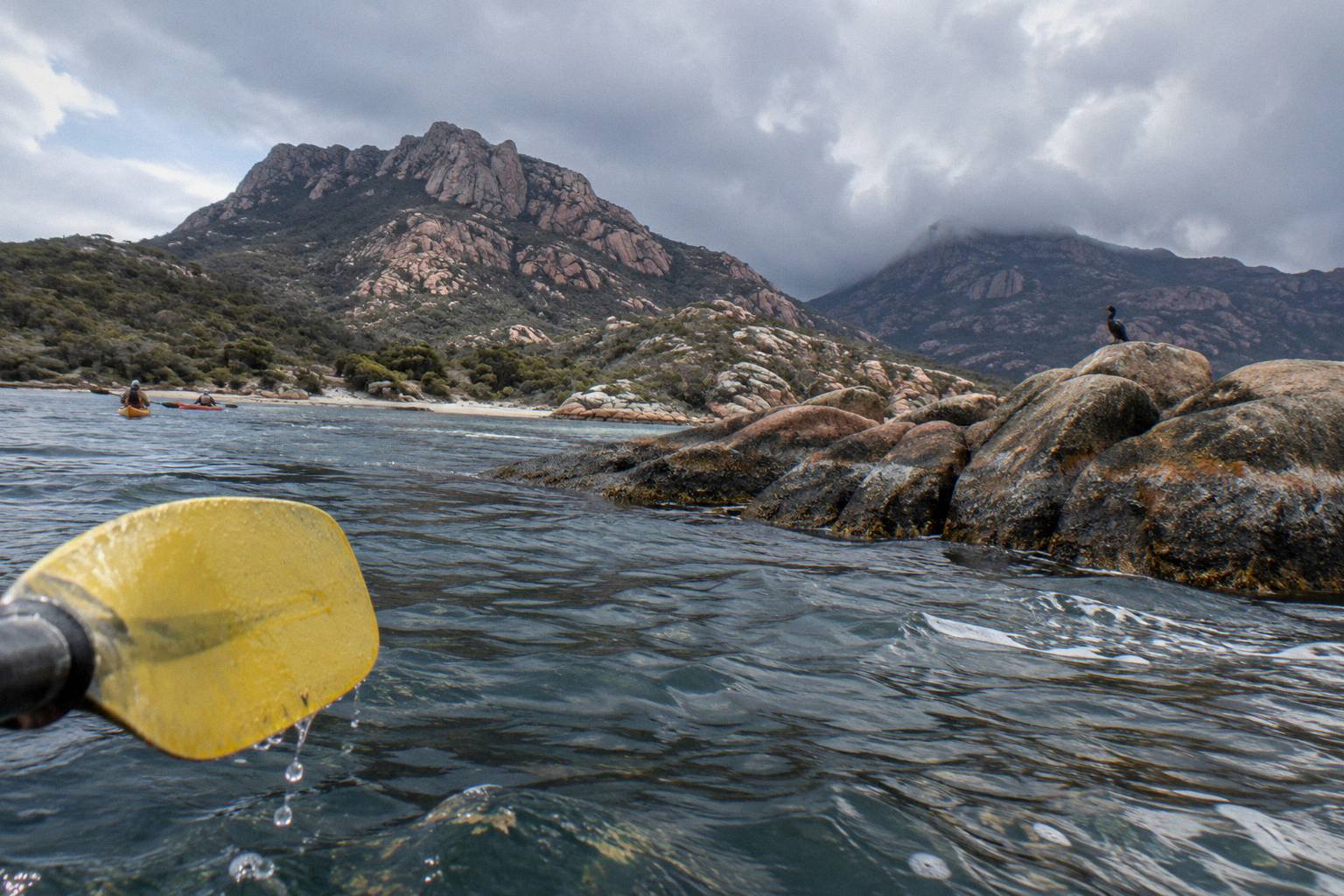
It also helps to know which water you are on. The paddle crosses Great Oyster Bay, the sheltered western side of the peninsula, which is precisely why the tours suit beginners and families; the parks service says the relatively sheltered waters of Coles Bay allow for all experience levels and recommends tour companies for anyone new to paddling, on its kayaking page. Open ocean swell and its larger traffic, including most whale movement, sits on the other side of the Hazards.
So treat dolphins as the bonus, not the benchmark. A traveller who books purely for dolphins and counts the trip a failure without them has set up the wrong test. A traveller who books for a slow, quiet morning on sheltered water with granite overhead, and meets a ray or an eagle along the way, has matched expectation to what the pages actually say.
One more practical note. If dolphins do come near, the vessel approach guideline matters, and it is covered in full further down. The short version: the guideline for vessels says no closer than 50 metres to a dolphin, and the page does not name kayaks, so the safe move is to let the animal decide the distance and never to paddle toward it.
Where Are The Seals And Whales Around Freycinet?
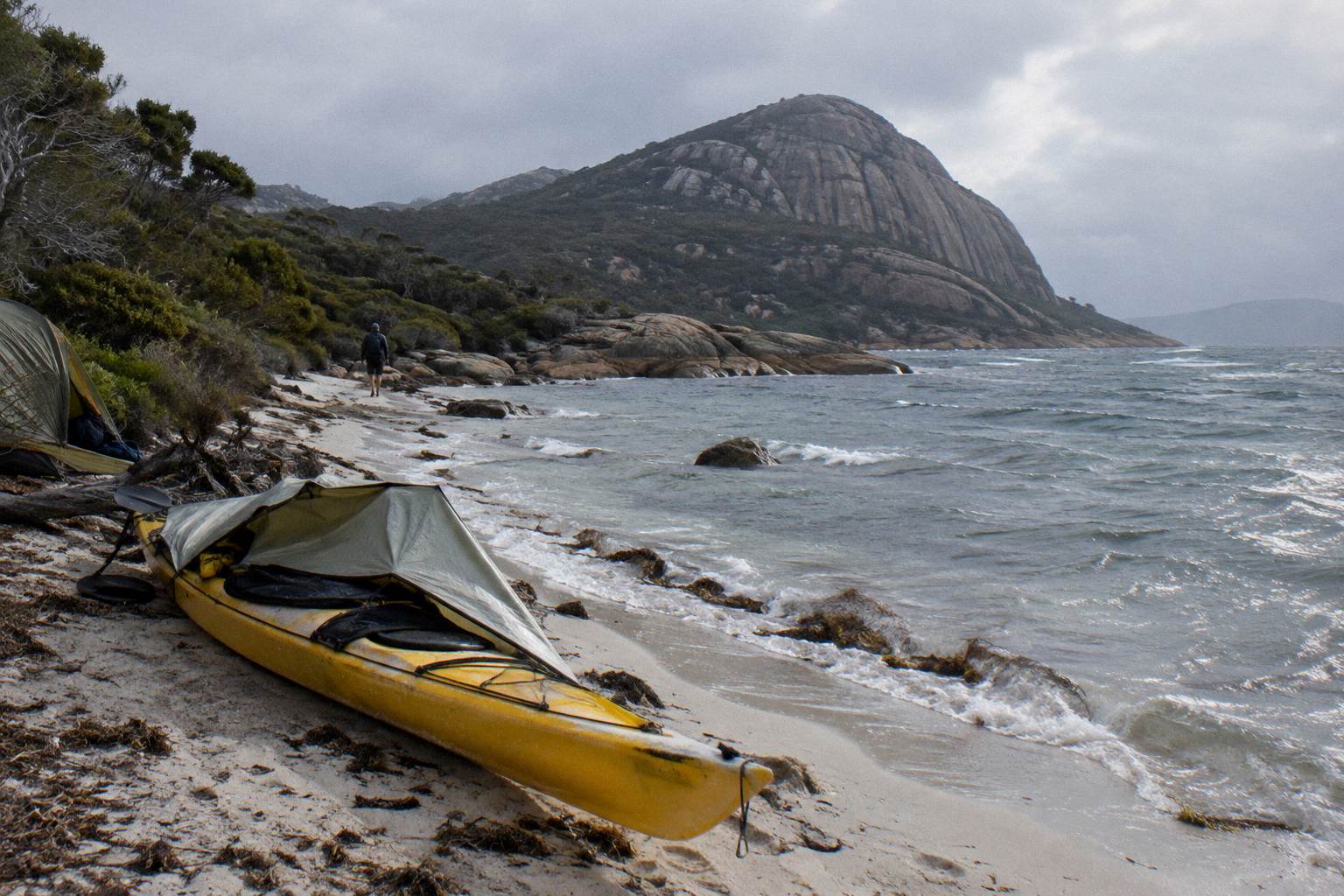
Seal colonies sit on Schouten Island and Ile des Phoques, both named on the operator's own park page, and the parks service says seals may be spotted resting on rocks. Whales, the operator's park page says, are often seen during their annual migration, usually on the eastern side of the Freycinet Peninsula, more commonly southern right and humpback, with Cape Tourville a great site to observe them. The guided day paddle does not reach any of those places.
That geography is the single most useful wildlife fact for planning. Great Oyster Bay, where the paddle goes, is the sheltered western side. Schouten Island and the whale traffic belong to the eastern, Tasman Sea side of the peninsula. So a kayak traveller who specifically wants the best odds on whales is honestly better served by the land lookouts the operator's park page names, such as Cape Tourville, or by a boat that works the eastern water.
For the southern right whale specifically, Tasmania's wildlife regulator says the species can be reliably seen in Tasmania between May and November each year, and names sheltered east coast waters including Great Oyster Bay, on its southern right whale page. For humpbacks, the parks service says only "winter months", and no month range for Great Oyster Bay humpbacks exists in the sources here, so none is offered. If you are choosing a travel month around whales, hold the plan loosely and confirm current movements with the visitor centre.
The cruise option deserves a mention in any whale conversation. The Wineglass Bay cruise, run by Wineglass Bay Cruises, boards at 61 Jetty Rd, Coles Bay, runs about 4 hours 30 minutes and carries a 4.7 rating across more than 1,000 reviews. It works the eastern side of the peninsula in a way a beginner kayak tour cannot, and it is the water option if large marine life is the priority. The format details are on the Wineglass Bay cruise tour page.
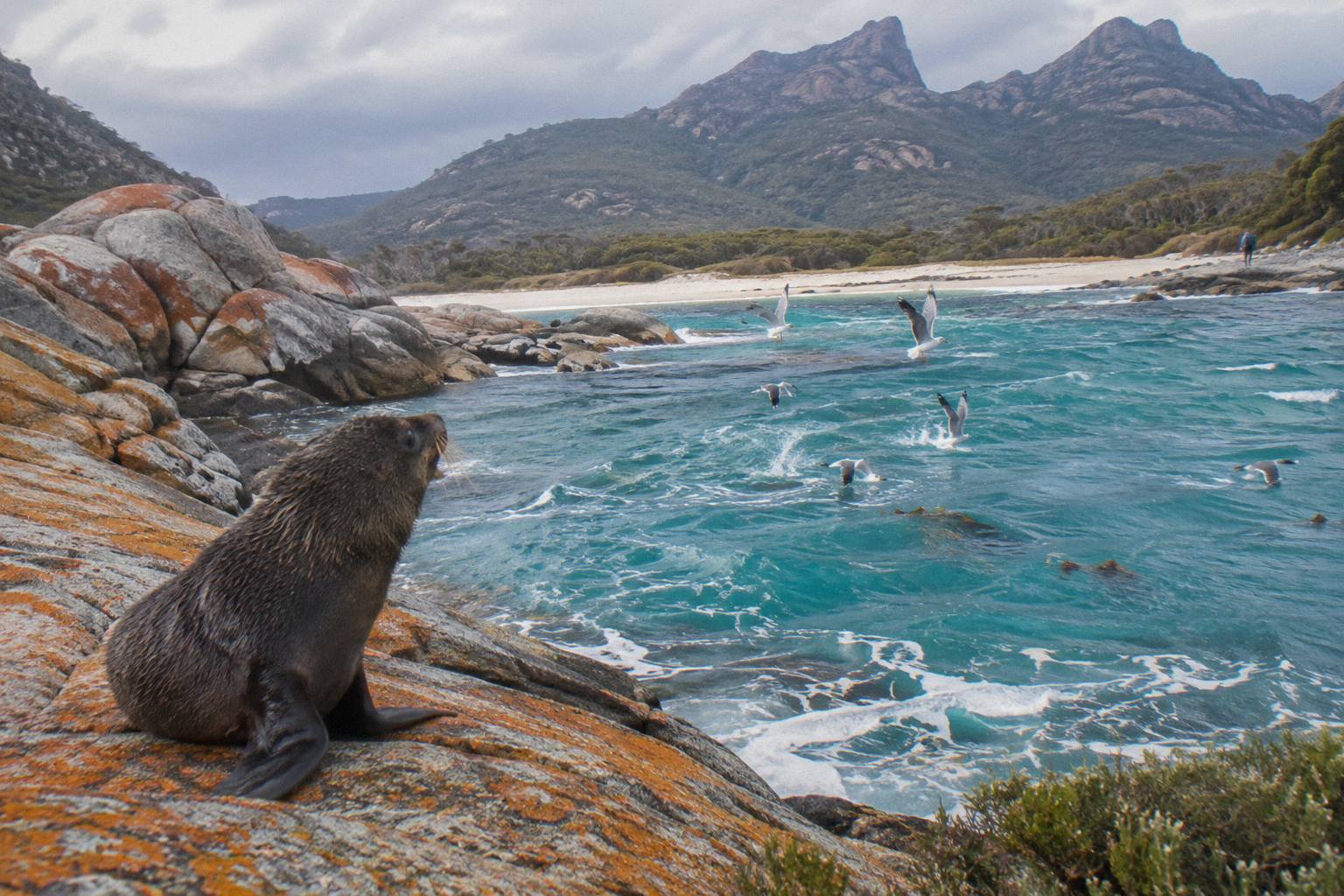
And if you meet a whale or dolphin in trouble rather than in passing, the parks service runs a whale hotline on 0427 WHALES, 0427 942 537, listed on its marine mammals page. Save the number before any day on Tasmanian water.
Sea Eagles, Sting Rays And The Halfway Beach Stop
Yes, the tour includes a halfway stop on a secluded sandy beach, reached after a safety briefing and about an hour of paddling, where you get a freshly brewed cup of coffee or a hot drink and a snack the booking page calls a gourmet cookie, and because you are still, quiet and at water level there, that pause is the best viewing window for the sea eagles and sting rays the operator names.
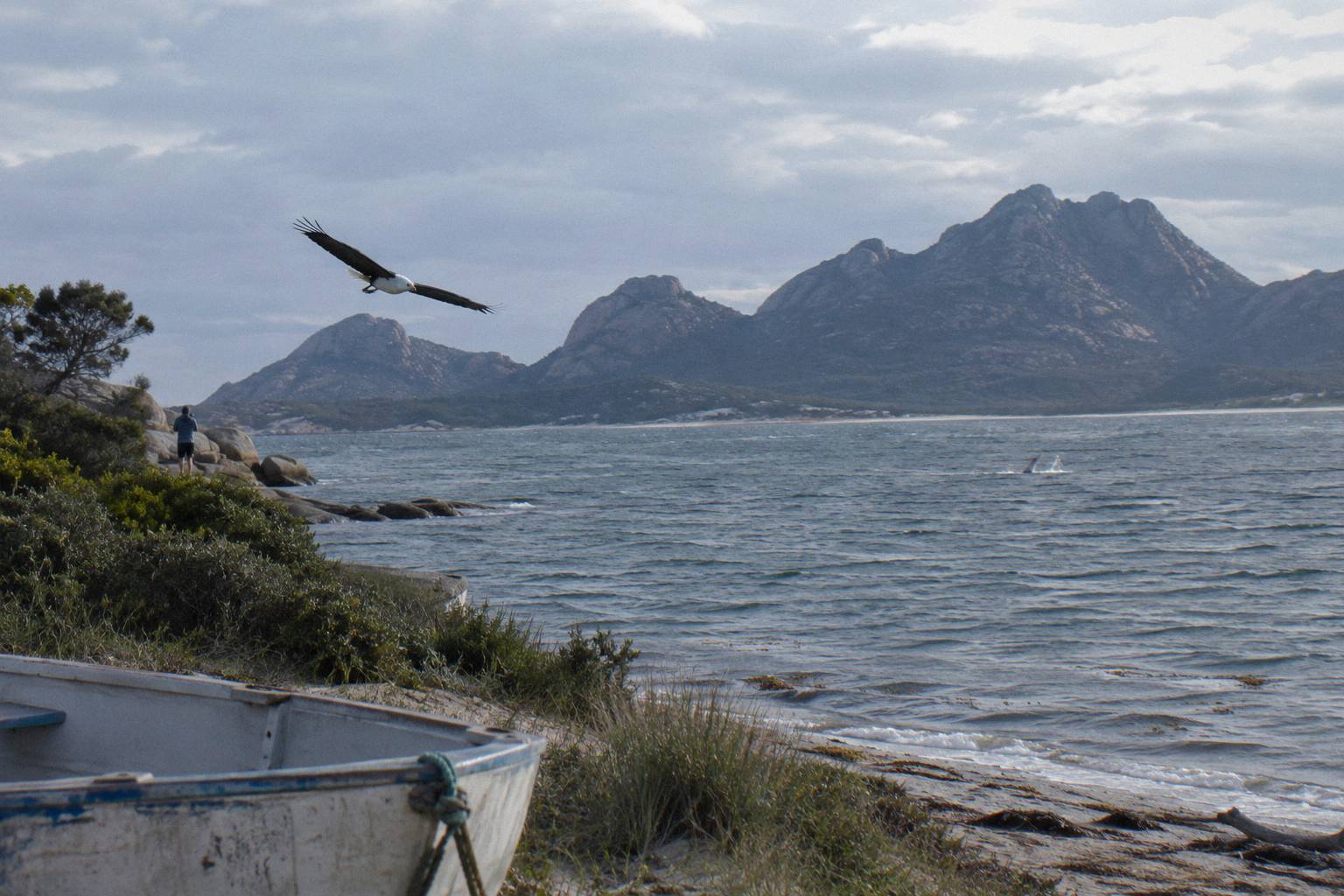
Birds of prey reward patience more than motion. A white bellied sea eagle works a long stretch of coastline, and a group sitting on a beach with hot drinks is exactly the kind of unthreatening presence that lets one pass overhead. The operator names the species on its sunrise page, and the same waters serve the day paddle, so the bird list carries across both. Other pages covering the same trip are gathered on Freycinet Kayaking.
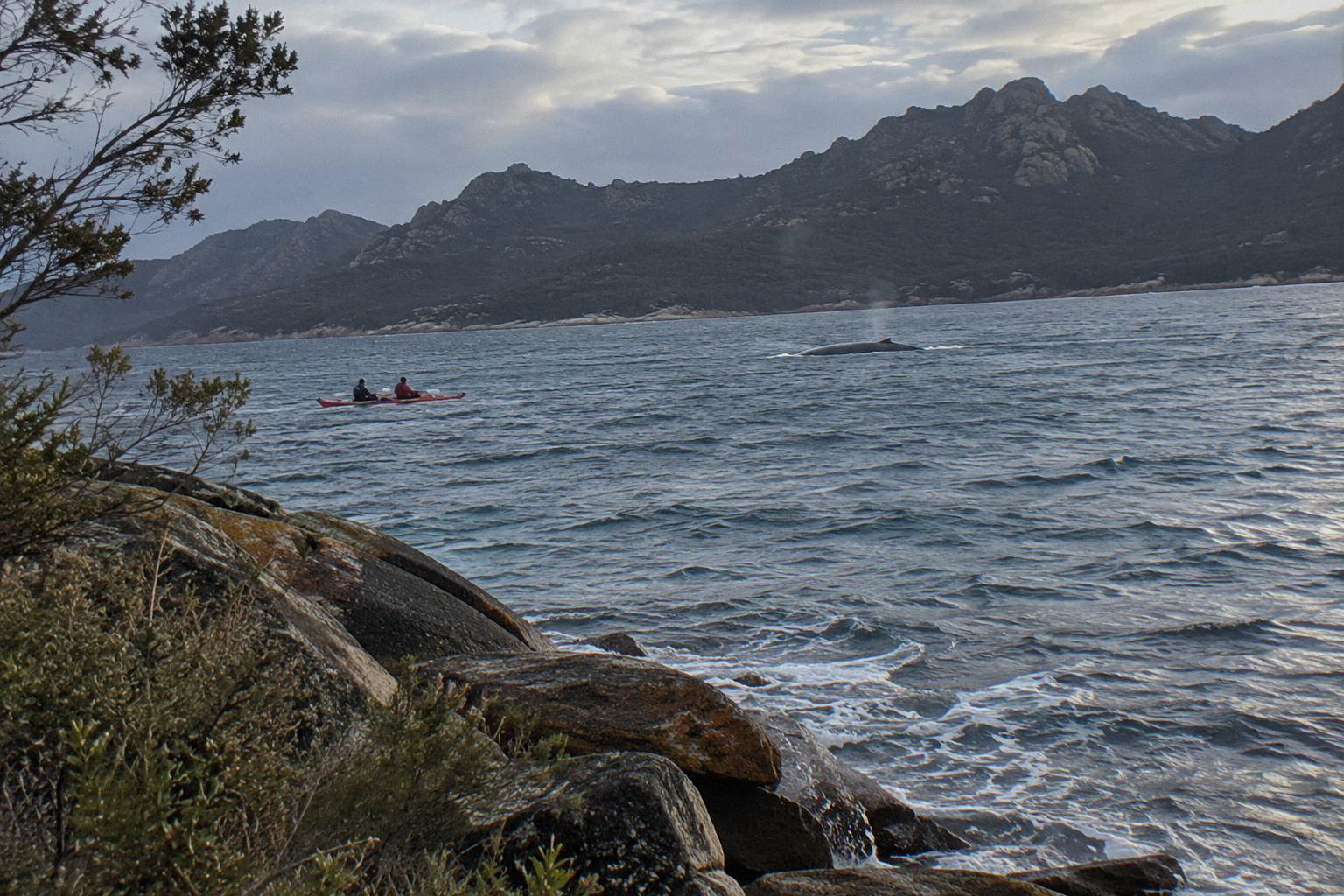
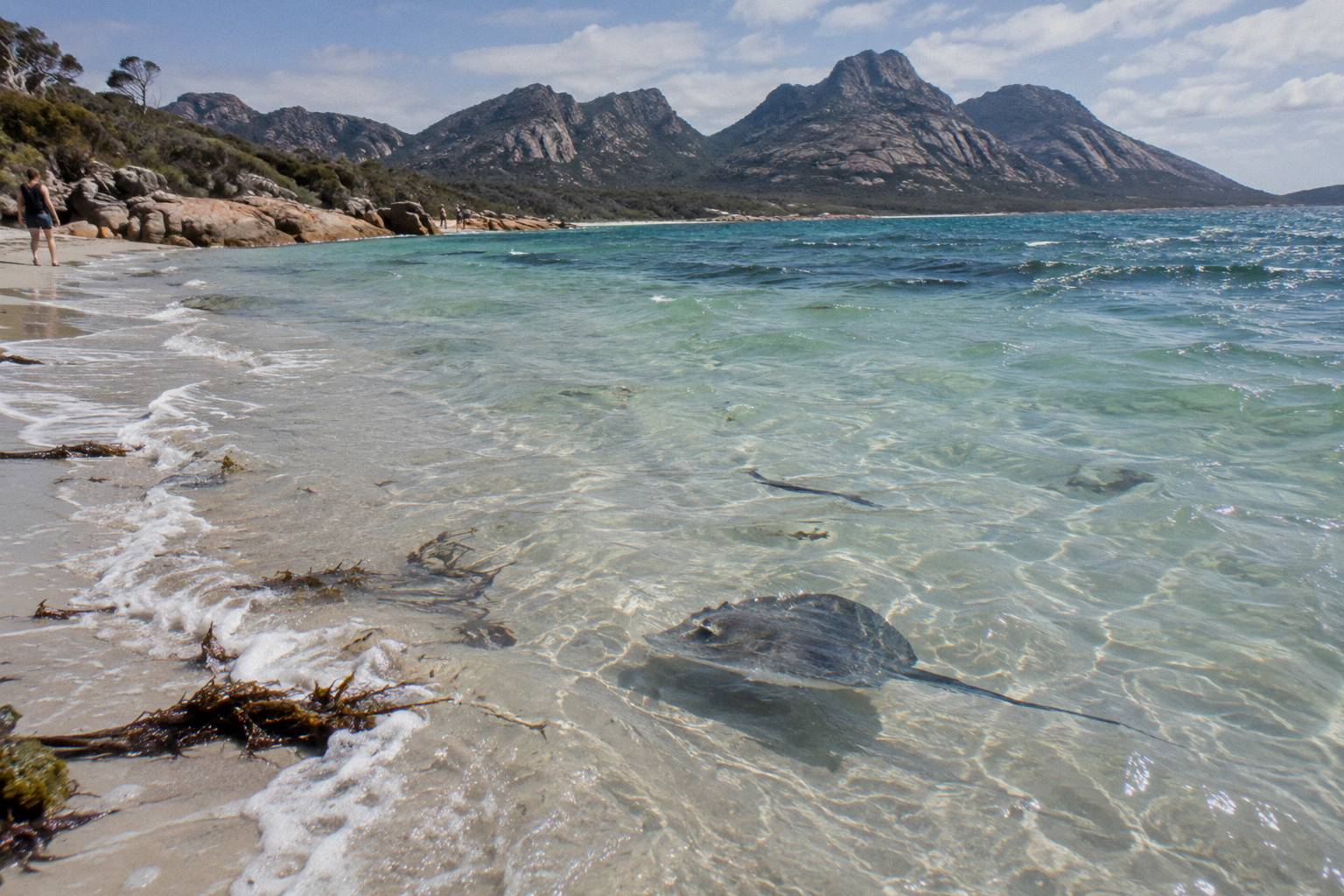
Sting rays are the other shoreline regular. They favour shallow, sandy water of the kind a secluded beach stop sits beside, and the operator lists them alongside the eagles, before the "larger marine species" phrase. Rays are best left entirely alone: watched, never followed, never cornered. The parks service's wildlife care rules, keep 2 metres from native animals and never feed wildlife, apply on land and are spelled out on its caring for wildlife page.
A word on feeding, because it is the mistake well-meaning visitors make most. Feeding any native animal, from an eagle to a ray to a wallaby on the beach, changes its behaviour and is against the park rules. Pack out everything, keep the snack for yourself, and let the animals earn their own living.
The Approach Rules That Protect Freycinet Marine Life
Under Tasmania's whale and dolphin viewing guidelines, vessels must stay at least 100 metres from whales and 50 metres from dolphins, rising to 300 metres and 150 metres when under steam, with no more than three vessels in the caution zone. Kayaks are not named, so never assume the smaller distances apply to you.
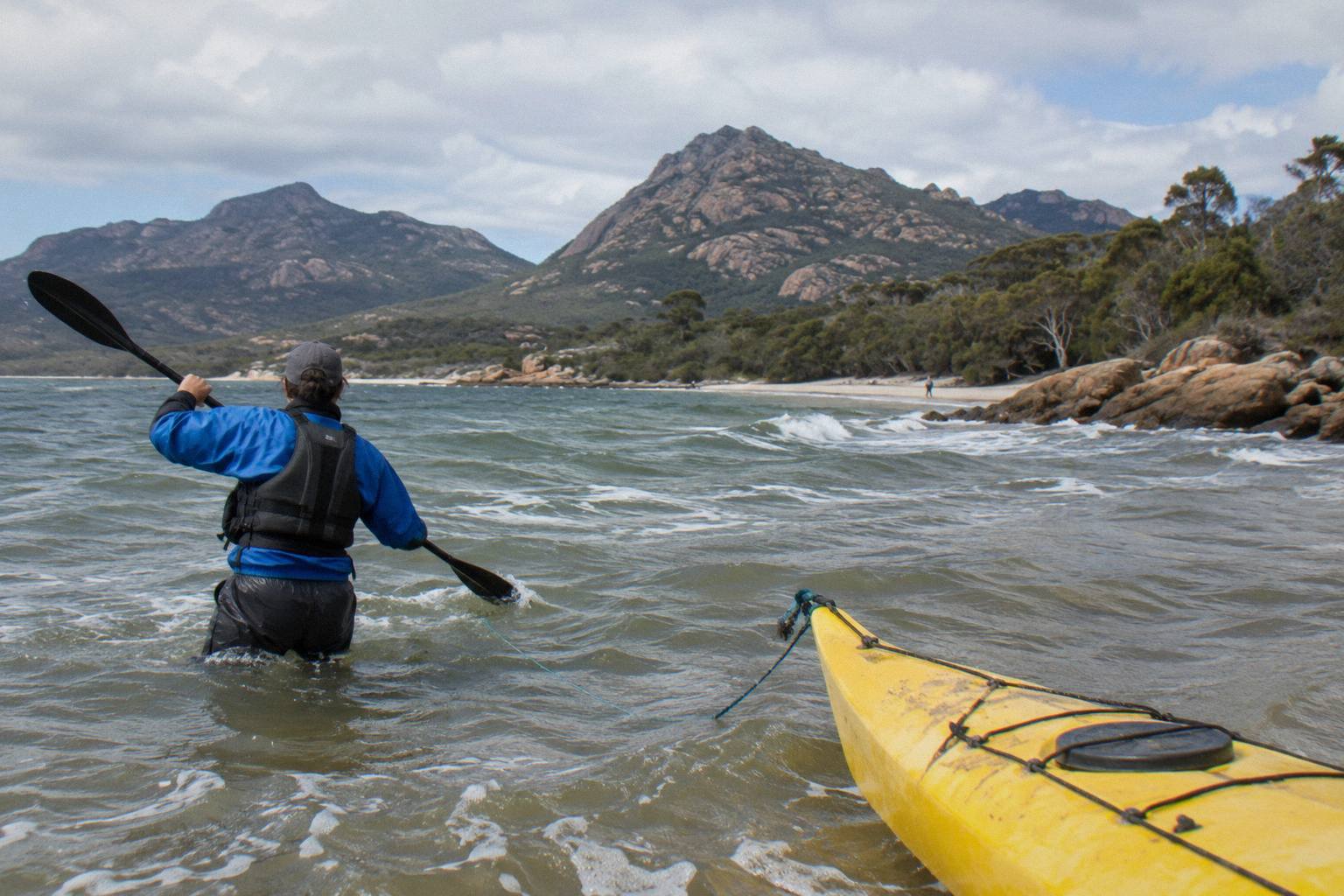
The full guideline set, from NRE Tasmania's whale and dolphin viewing guidelines, also asks vessels to travel at a slow, no-wake speed, to avoid approaching animals from directly in front or behind, never to touch or feed them, and keeps personal motorised watercraft 300 metres away. For a paddler, the practical reading is simple: any animal that approaches you is a gift, and any animal you approach is a violation of the spirit of the rules and possibly the letter.
| Situation | Distance rule (guideline for vessels) |
|---|---|
| Whale, vessel not under steam | No closer than 100 m |
| Whale, vessel under steam | 300 m |
| Dolphin, vessel not under steam | No closer than 50 m |
| Dolphin, vessel under steam | 150 m |
| Personal motorised watercraft, whales | 300 m |
| Vessels in the caution zone | Maximum of three |
Seals have their own guideline. Under NRE Tasmania's seal watching guidelines, boats must stay no closer than 100 metres to a seal colony during November and December, the pupping season, and 50 metres at other times, and travel under 10 knots within 200 metres and 5 knots within 100 metres. A paddler near resting rocks should treat those distances as the floor, not the target.
On any guided tour, the guide carries this responsibility. A licensed operator manages the group's distance from any animal, which is a quiet argument for guided paddling over independent hire in wildlife country. For the wider case on that trade-off, see whether a guided paddle beats hiring your own kayak.
What The Freycinet Paddle Actually Paddles Through
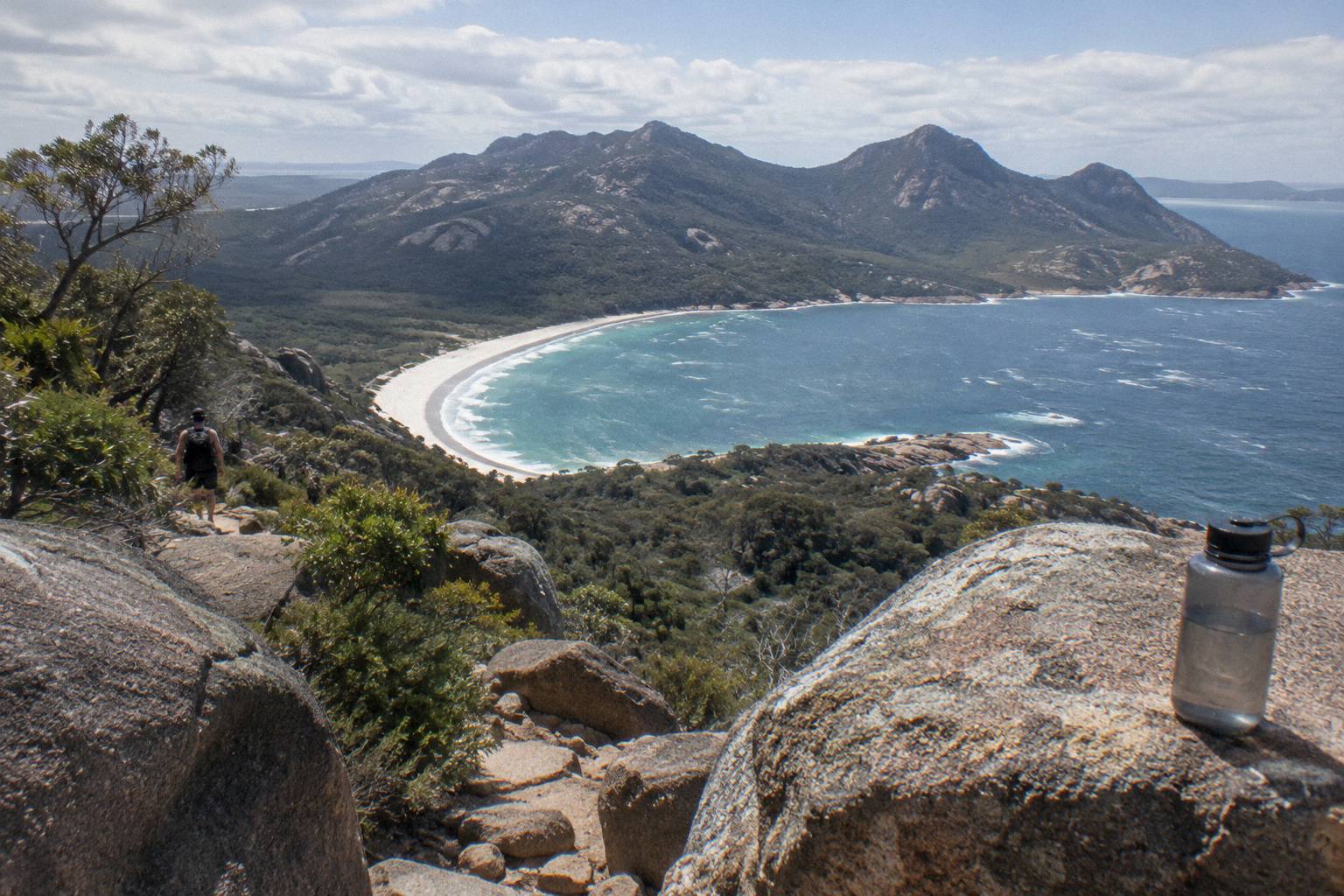
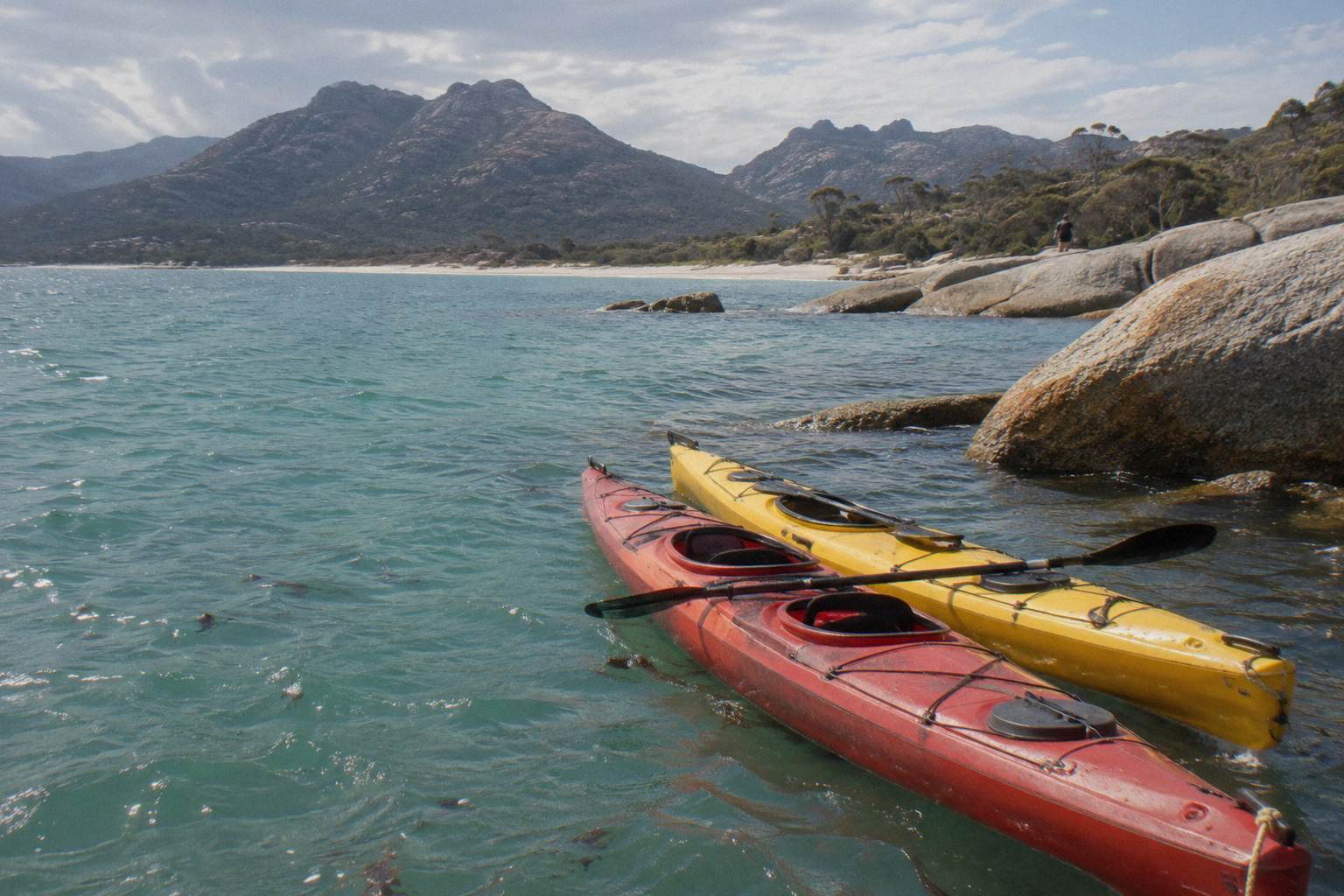
The Freycinet Paddle crosses Great Oyster Bay from Muirs Beach at Coles Bay, staying on the sheltered side of the peninsula in sit-in tandem sea kayaks, and it never reaches Wineglass Bay or Schouten Island. Morning and Twilight sessions follow the same route, with the Twilight tour finishing right on sunset.
The water itself is part of the wildlife story, because sheltered water is what makes a beginner-friendly wildlife paddle possible at all. The parks service notes that the relatively sheltered waters of Coles Bay suit all experience levels, and the operator welcomes complete beginners, asking only that guests can swim and are comfortable in, on and around water in a leisurely sense for a couple of hours. The full requirements, including the swim rule and the guidance to raise medical questions with a doctor and the operator, are on the operator's FAQ, and the age rule is children from 7, with under 16s accompanied by an adult.
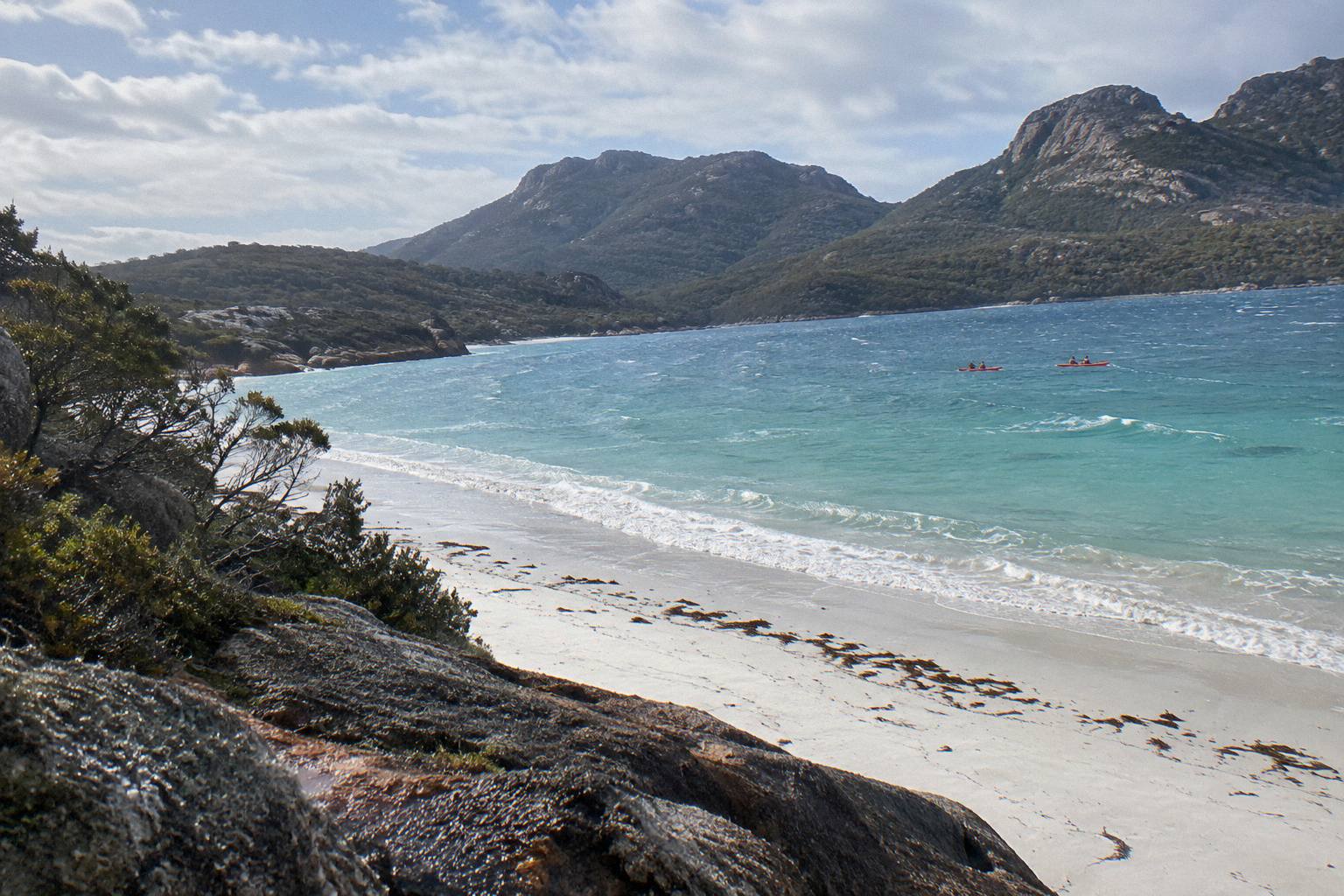
Water temperature shapes what lives comfortably in the bay and what you feel if a hand goes in. Seatemperature.org's long-run data for Coles Bay puts February as the warmest month at an average of 17.2 degrees and August the coldest at an average of 13.0. Those are historical sea surface averages, not a forecast for your day, but they set expectations: this is cool temperate water in every month, which is why the operator supplies warm jackets rather than wetsuits, a question covered in what to wear sea kayaking at Freycinet.
| Month | Avg sea temp C | Month | Avg sea temp C |
|---|---|---|---|
| Jan | 16.8 | Jul | 13.2 |
| Feb | 17.2 | Aug | 13.0 |
| Mar | 16.6 | Sep | 13.1 |
| Apr | 16.0 | Oct | 13.5 |
| May | 14.8 | Nov | 14.8 |
| Jun | 14.0 | Dec | 16.3 |
For seasonal planning around both comfort and wildlife, the best time to sea kayak at Freycinet guide carries the detail. Note that the tour runs year round with seasonal departure times, and no timetable or start times are fixed enough to print here; ask when booking.
Which Trip Suits A Wildlife-Minded Traveller?
For sheltered-water watching of rays and eagles, the three-hour Freycinet Paddle fits best, with small groups and a beach stop; if large marine life is your priority, the Wineglass Bay cruise of about 4 hours 30 minutes covers the eastern water; and for land-based whale lookouts, choose the guided Freycinet walking tour or the Wineglass Bay Lookout walk.
Match the animal to the platform. Rays and eagles favour the quiet, near-shore water a kayak does best, and a paddle causes no engine noise at all. Whales belong mostly to the eastern side, per both the operator's park page and the parks service, which is cruise or lookout country. Seals, whose colonies are on Schouten Island and Ile des Phoques, are realistically a cruise or expedition-scale encounter, not a day-paddle one.
| Trip | Format | Wildlife angle | Rating |
|---|---|---|---|
| The Freycinet Paddle | 3 hours, about 2 hours paddling, from Muirs Beach, Coles Bay | Quiet, at-water-level viewing in Great Oyster Bay; rays and eagles named by the operator | 4.8 across more than 1,000 reviews |
| Wineglass Bay cruise | About 4 hours 30 minutes, boards at 61 Jetty Rd, Coles Bay | Eastern side of the peninsula, where the operator's park page says whales are usually seen | 4.7 across more than 1,000 reviews |
| Freycinet walking tour | Guided walk | Land lookouts, including the whale vantage points the operator names | No rating held |
Price comes into the comparison at exactly one point that can be printed: the booking page shows a from price of A$155 per person, changing by date, and the operator's weekend and public holiday surcharges mean one flat figure is never the whole story. The cruise's price is not held here, so ask the operator or check the booking page when comparing.
There is also the no-car consideration. Travellers based in Hobart can reach the region on the Wineglass Bay day tour from Hobart, a full day trip run by Wineglass Bay Discovery Tours, though a kayak tour from Coles Bay on the same day is a schedule question to put to each operator. The drive from either Launceston or Hobart is about 2.5 to 3 hours, per the parks service.
Combining A Kayak Morning With A Wildlife Afternoon
A realistic wildlife day at Freycinet pairs the morning paddle with an afternoon on land: kayak Great Oyster Bay for quiet, close-to-shore encounters, then walk or drive to an eastern vantage such as Cape Tourville, which the operator's park page calls a great site to observe whales. Book the paddle first, since online bookings close 3 hours before departure.
The sequence matters less than the spacing. Three hours on the water with a beach stop is a modest physical load for most guests, since the operator says anyone fit enough for a leisurely two hour recreation activity can manage it, but adding a steep walk straight after is a personal call. The Wineglass Bay Lookout walk is 2.5 to 3.5 hours return over 6 kilometres at Grade 3, and the longer Wineglass Bay and Hazards Beach circuit runs 4 to 5 hours over 11 kilometres at Grade 4, per the parks service. Neither is a warm-down.
Practical notes from the park pages: drinking water is scarce inside the park, with taps at the visitor centre, Honeymoon Bay and the Wineglass Bay walking tracks car park, and drones are not permitted in Tasmanian national parks, so leave the camera drone behind. The visitor centre at Coles Bay, open 9am to 4pm daily, sells park passes and answers current wildlife questions, and a valid parks pass is required for entry to all of Tasmania's national parks, per the parks pass page.
Whether the kayak tour itself needs a pass is a question to ask when booking: the operator's kayak pages do not say either way, while its guided walking tour page explicitly says a pass is required and not included. Confirm rather than assume.
What To Ask The Operator Before Booking For Wildlife
Five questions cover it: what has been seen from the tours this week, what the current seasonal departure times are, whether your group's ages and swimming ability fit the rules, what happens with the weather policy if conditions turn, and how close the guide will take the group if an animal appears. Each of these has a factual answer, and none of them needs a guess from you.
Run the checklist before you pay:
- Ask what animals have appeared on recent departures. The operator sees the water every day and can tell you what is around far better than any published page can.
- Ask the departure time for your date. Times are seasonal and are confirmed at booking, not in advance.
- State ages and swimming ability up front. Children from 7 are welcome with the operator, under 16s need an adult, and every guest needs to be able to swim, per the operator's FAQ.
- Ask about the weather policy in plain terms. Guides can cancel at any time for safety, and weather cancellations carry a full refund or reschedule; guest cancellations need 24 hours notice for a refund.
- Ask the group's expected size. The operator runs minimum 2 and maximum 16 per tour, which shapes how quiet the wildlife watching can be.
That last point about quiet matters more than gear. A group of 16 double kayaks is not a stealth craft, but paddles make no engine noise, and the operator's route keeps to the sheltered bay where the everyday wildlife lives. The point is what the paddle feels like on the water, not the size of the group alone.
What Trips People Up When Chasing Wildlife At Freycinet
The recurring slip-ups: booking the day paddle expecting Wineglass Bay or the seal colonies, which it never reaches; assuming a dolphin or whale sighting is promised, which no operator claims; feeding or approaching animals against park rules; assuming your park pass is sorted, which the kayak pages do not confirm; and confusing launch points, since the day paddle leaves Muirs Beach while Honeymoon Bay belongs to the separate sunrise tour. One question at booking avoids each.
Take them in order. Geography first: Great Oyster Bay, where you paddle, is not the Tasman Sea side where the operator's park page says whales are usually seen, and the paddle does not reach Schouten Island's seals. Expectation second: the operator's word is "on occasion", and a trip judged purely on a dolphin sighting is a trip set up to disappoint. Conduct third: the vessel approach guideline sets 100 metres for whales and 50 metres for dolphins, and the safest reading for a paddler is to hold back further and let the animal close any distance.
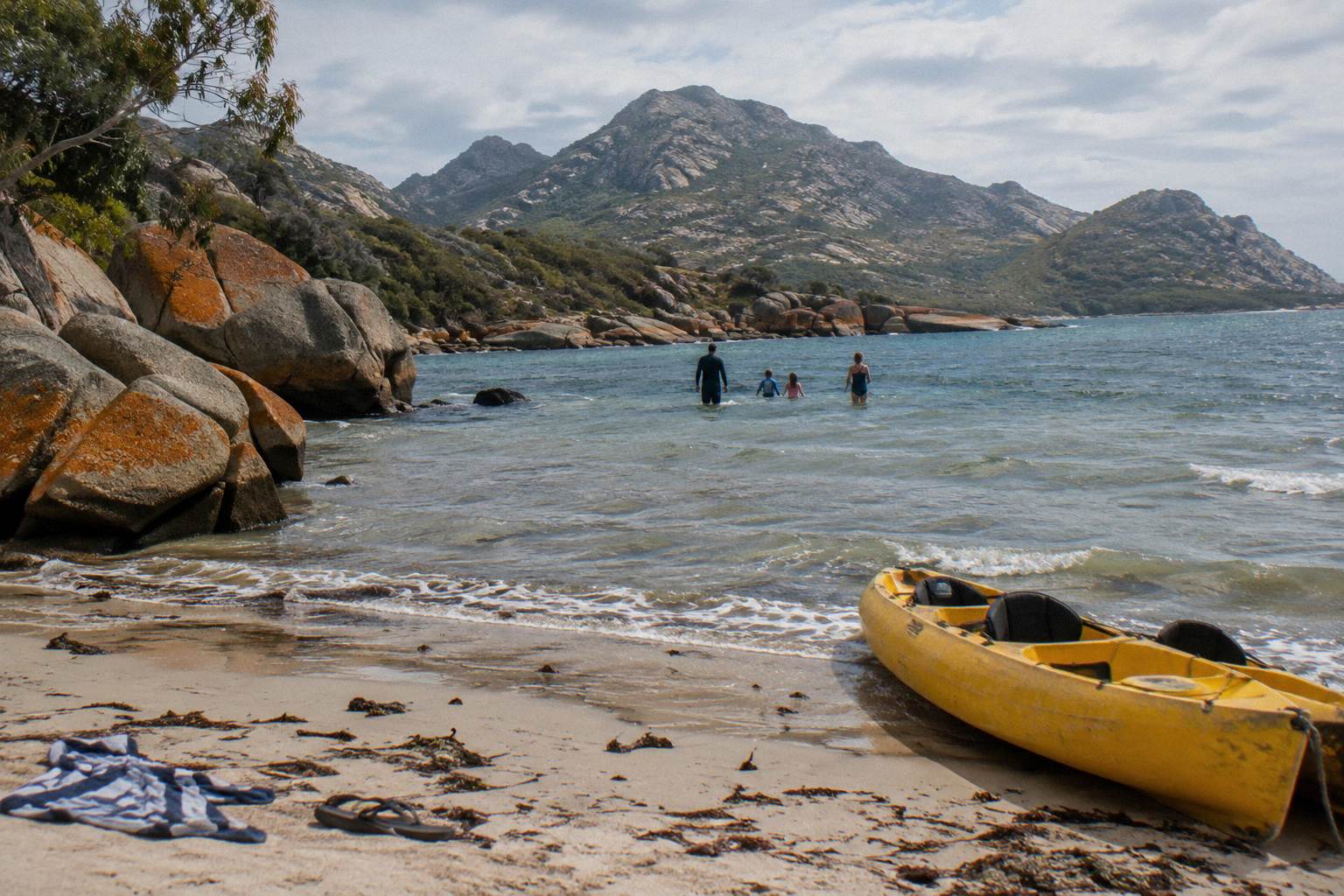
Logistics fourth. The launch is Muirs Beach, Coles Bay, which the operator says has free public parking and public toilets. Fifth, the pass: a valid parks pass is required for entry to Tasmania's national parks, but whether the kayak tour itself needs one is not stated on the operator's kayak pages, so confirm at booking rather than discovering it at the gate. A final small one: bring drinking water, a hat and sunglasses, wear footwear that can get wet, and use the dry bags the operator mentions for phones and cameras.
Common Questions About Freycinet Wildlife From A Kayak
Can You See Dolphins On A Freycinet Kayak Tour?
The operator lists dolphins among the larger marine species seen from its tours "on occasion", and no page claims a frequency. If dolphins appear, it is on their terms, and the tour is not sold as a dolphin trip.
Are Whale Sightings Possible On The Day Paddle?
The operator's park page says whales are often seen during their annual migration, usually on the eastern side of the Freycinet Peninsula, while the day paddle crosses Great Oyster Bay on the western side. Southern right whales can be reliably seen in Tasmania between May and November, per NRE Tasmania, which names Great Oyster Bay among sheltered east coast waters, but no operator promises a whale on any tour.
Where Are The Seal Colonies Near Freycinet?
The operator's park page places seal colonies on Schouten Island and Ile des Phoques, and the parks service says seals may be spotted resting on rocks. The day paddle does not reach either colony; seal approach rules keep boats 100 metres from a colony in November and December and 50 metres at other times.
How Close Can You Paddle To Marine Wildlife?
Tasmania's whale and dolphin viewing guidelines set 100 metres for whales and 50 metres for dolphins for vessels, growing to 300 and 150 metres under steam, and the page does not name kayaks, so never assume the smaller distance is yours to use. The safe practice is to stop, stay quiet and let the animal decide.
What Is The Most Likely Wildlife On A Freycinet Paddle?
The operator names sting rays and white bellied sea eagles before the larger species, and the halfway beach stop is the natural still window for shoreline watching. Keep 2 metres from native land animals and never feed wildlife, per the parks service.
What If Weather Cancels The Tour?
Guides can cancel at any time for safety, and a weather cancellation carries a full refund or a reschedule. Guest-initiated cancellations need 24 hours notice for a refund, per the operator's FAQ.