Can You See Dolphins On A Freycinet Kayak Tour?
Dolphins appear in Great Oyster Bay but no operator promises them. What the operator, PWS and NRE Tasmania actually say about marine life on a Freycinet paddle.
In short: Dolphins live in and pass through Great Oyster Bay, and the operator of the only guided kayak day tour at Coles Bay lists dolphins, whales and fur seals "on occasion", its own qualifier, never as a promise. The paddle itself is a 3 hour guided tour with about 2 hours of paddling, launched from Muirs Beach, and it stays on the bay side of the peninsula. Book it for the water, the granite and the guide, and treat any dolphin as a bonus.
The question is fair, because a lot of people pick a kayak over a cruise or a walk precisely because a kayak feels closer to the water anything swims in. The honest-shape answer, in plain terms: yes, dolphins can appear, and the tour company that runs the paddle says so itself, but the frequency is something no operator page states. Nobody who sells the tour claims you will see one.
What follows sets out every attributed statement the sources hold: what the operator's own pages say about dolphins, whales and seals; what Tasmania's wildlife authority says about when southern right whales move through these waters; and what the official viewing guidelines say about how close a vessel may go. There is also a practical look at which trip type suits a wildlife-first traveller, because the paddle, the cruise and the walks each put a visitor in a different relationship with the same coastline. More background on the bay itself is in sea kayaking on Great Oyster Bay.
Yes, dolphins can appear on a Freycinet kayak tour, but a sighting is possible rather than promised. Freycinet Adventures, which runs The Freycinet Paddle, lists dolphins among the larger marine species seen "on occasion" on its sunrise paddle page, states no figure for how often they appear, and its booking page offers no wildlife guarantee.
That wording deserves a slow read. "On occasion" is the operator's own hedge, and it is the strongest dolphin statement any source connected to the tour makes. A reader deciding between trips should take it exactly as written: these animals are in the area, the tour sometimes crosses paths with them, and nothing sold at Coles Bay makes a dolphin part of the product.
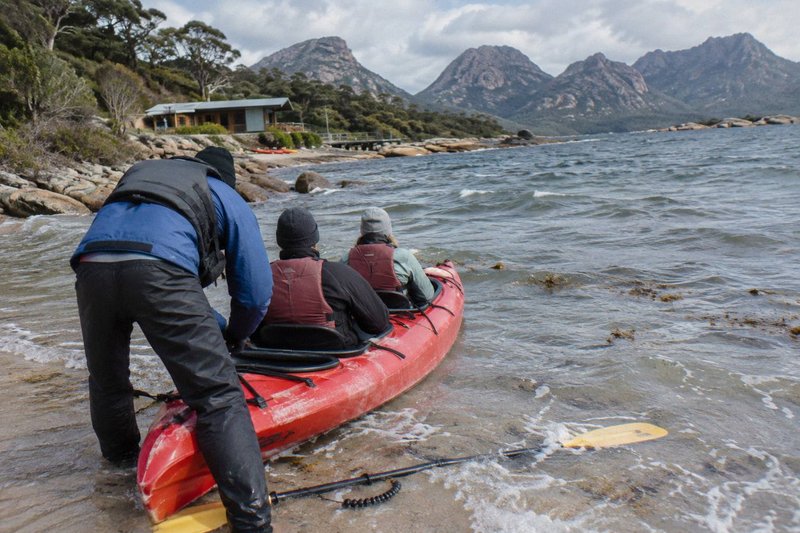
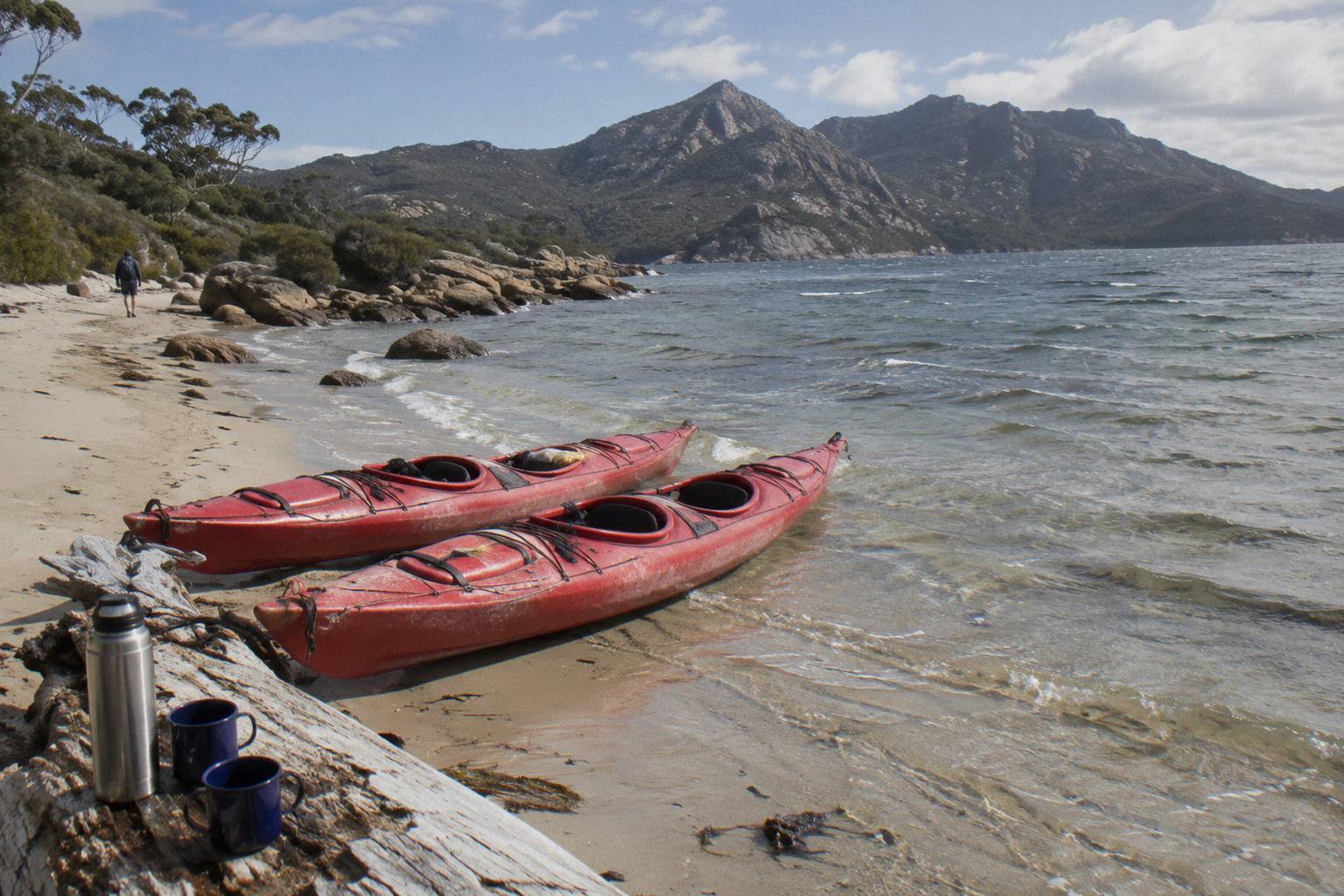
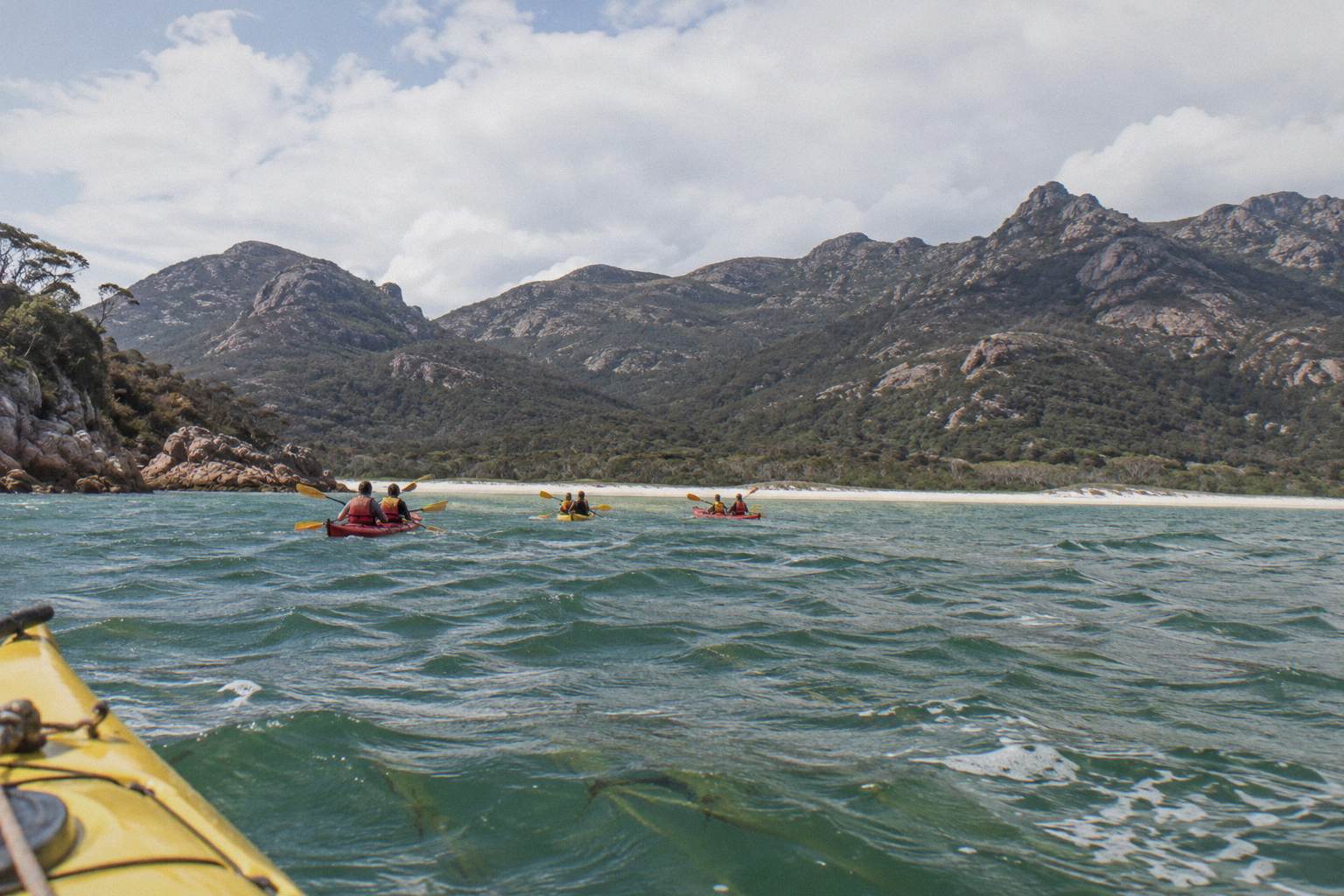
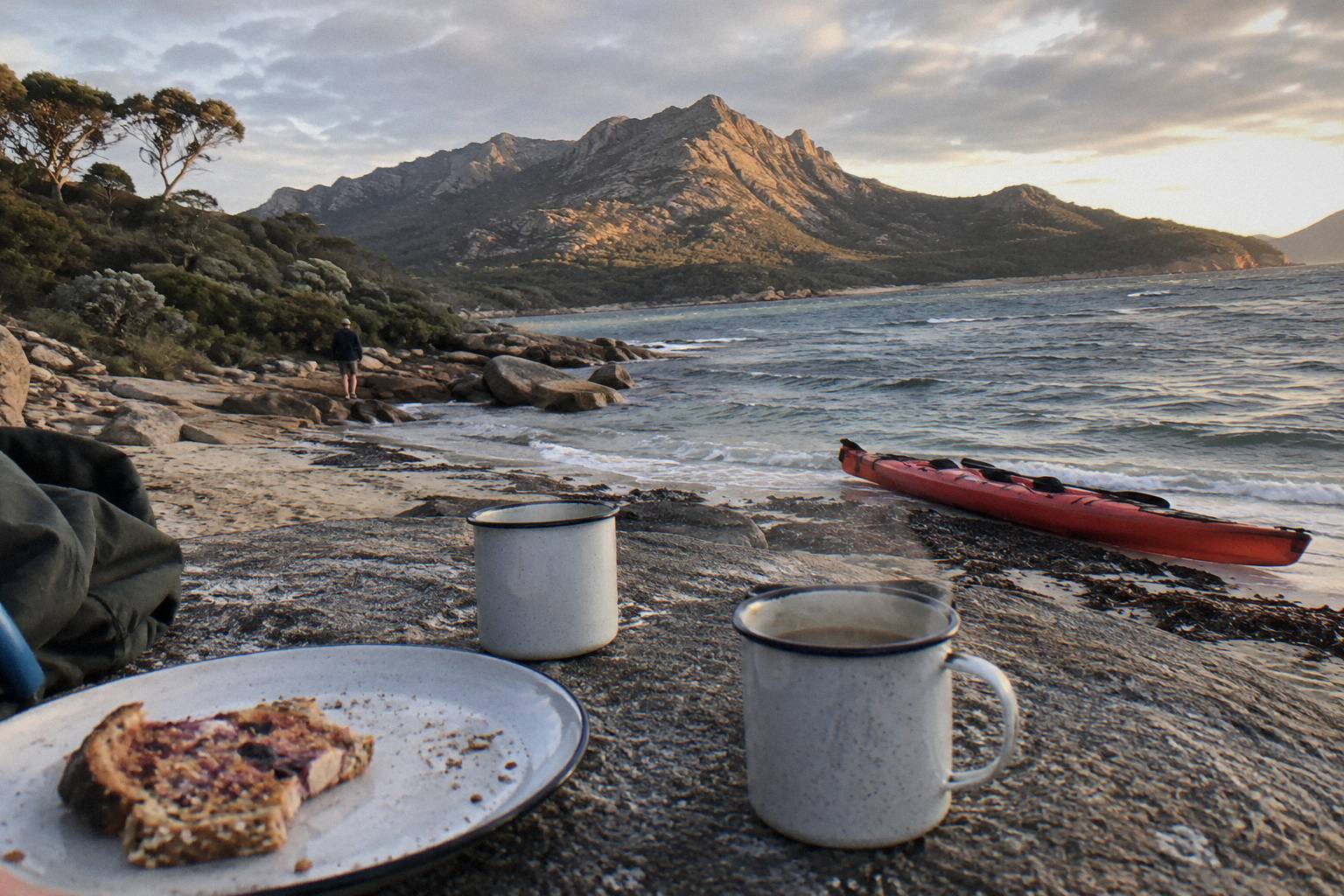
The paddle itself is The Freycinet Paddle, a 3 hour tour with about 2 hours of cumulative paddling and a rest break halfway, run from Muirs Beach in Coles Bay. Groups run from a minimum of 2 to a maximum of 16, in double sit-in sea kayaks, with a solo guest paired with another guest or a guide. A safety briefing comes first, then the paddle, then a stop on a secluded sandy beach for a freshly brewed coffee or hot drink and a snack. It rates 4.8 across more than 1,000 reviews on its main booking page, from A$155 per person, a price that changes by date. You can read the format in full on the tour page for The Freycinet Paddle and check availability if a date is already in mind.
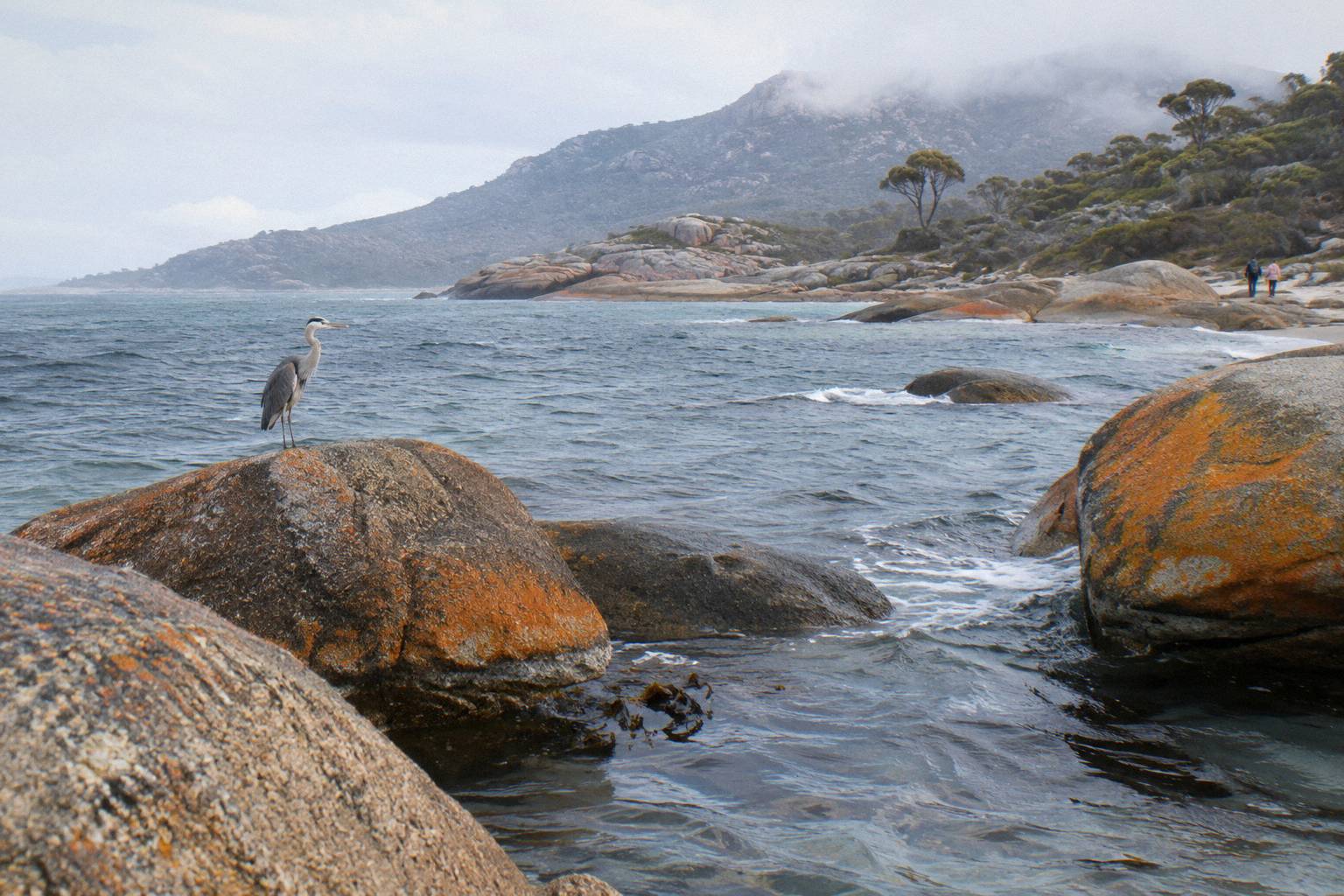
The birds and rays deserve more credit than they usually get. Sting rays and white bellied sea eagles sit in the same operator sentence as the dolphins, without the "larger marine species" framing, and a sea eagle working the surface of the bay is the kind of sight that photographs poorly and stays with a paddler anyway. Treating the trip as a wildlife lottery with one winning ticket misses what else is on the water.
It also helps to compare the trip types before committing, since a dolphin hope plays out differently from a boat, a kayak and a walking track. The paddle, the Wineglass Bay cruise and the Freycinet walking tour sit side by side below.
Where The Paddle Actually Goes: Great Oyster Bay
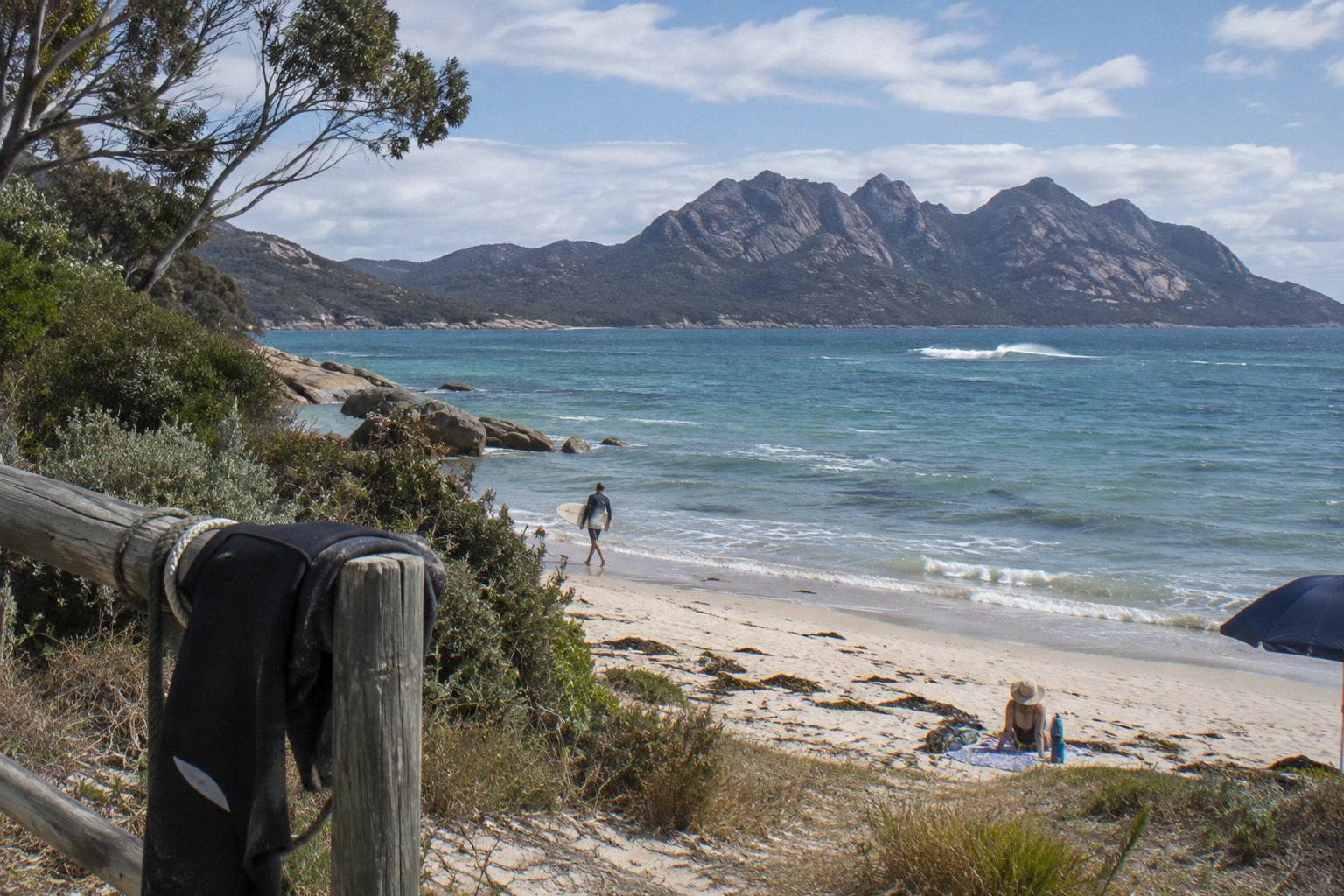
The Freycinet Paddle launches from Muirs Beach at Coles Bay and paddles on Great Oyster Bay, the sheltered body of water between the Freycinet Peninsula and the Tasmanian mainland. It does not reach Wineglass Bay and it does not reach Schouten Island, both of which sit on the far, ocean side of the peninsula.
Geography matters more here than on most trips, because the two sides of the peninsula are different waters. The operator describes Coles Bay as the town at the foot of the Hazards "where Great Oyster Bay meets the Tasman Sea", but the kayak tour itself stays on the bay. The Tasman Sea side, where the operator's own park page says whales are usually seen on the eastern side of the peninsula during migration, is reached by the cruise, not by the paddle. That distinction shapes what any wildlife expectation should be.
So a dolphin question becomes a location question. Great Oyster Bay is a real marine environment with rays, seabirds and, on occasion, the larger species, but it is not the open-ocean whale corridor the operator describes on the eastern side. For the full picture of what lives in and around these waters from a kayak, see Freycinet wildlife from a kayak, and for the seasonal side of the question, the best time to sea kayak at Freycinet.
Parks and Wildlife Service describes the Hazards as "a spectacular granite mountain range that rises dramatically from the sheltered turquoise bays", and the park as "effectively two eroded blocks of granite". Freycinet is Tasmania's oldest national park, reserved in 1916 alongside Mount Field. PWS also notes that tour companies in the area run a variety of sea kayaking experiences and are recommended for people new to paddling, and that the relatively sheltered waters of Coles Bay suit all experience levels, per the official park page.
Is a paddle the right call at all?
If the goal is a morning or twilight on quiet water with a guide who knows the coast, the answer is usually yes, dolphins or none. The operator runs morning and Twilight sessions on the same route, with the Twilight finish right on sunset, and the tour runs year round with seasonal departure times. Anyone wanting the eastern, ocean-facing side, where the operator says whales are more commonly seen, is better matched to a boat, which is exactly what the next sections unpack.
What The Operator And PWS Actually Say About Marine Life
The operator makes attributed wildlife statements rather than promises: its sunrise paddle page lists sting rays, white bellied sea eagles, and occasional dolphins, whales, and fur seals, while its park page notes seal colonies on Schouten Island and Ile des Phoques and says whales, more commonly southern right and humpback, are often seen during their annual migration, usually on the eastern side of Freycinet Peninsula, with Cape Tourville a great site to observe whales.
The seals are the most location-specific fact in the set. Schouten Island and Ile des Phoques are real colony sites named by the operator itself, but the day paddle reaches neither, so a seal on the paddle would be a passing animal, not a colony visit. The Wineglass Bay cruise, which runs about 4 hours 30 minutes and boards at 61 Jetty Rd, Coles Bay, is the water-based trip that actually works the peninsula's outside. PWS adds that the park's waters are "regularly visited by whales, particularly humpback whales, during the winter months" and that "seals may be spotted resting on rocks", though that PWS page says nothing about dolphins at all.
Pulled together, the picture is consistent and modest. Rays and sea eagles: listed plainly. Dolphins, whales and seals: listed with "on occasion". Whale watching in the migration season: described on the eastern, ocean side of the peninsula. A day paddle in Great Oyster Bay sits inside all of that without being the headline act for any of it.
The table below gathers each claimable statement with its source, which is the cleanest way to hold the boundaries in mind.
| Animal | What is claimed | Who says it | Where it applies |
|---|---|---|---|
| Dolphins | Listed among "larger marine species" seen "on occasion" | Operator, sunrise paddle page | The paddle's waters, no frequency given |
| Sting rays | Listed without qualifier | Operator, sunrise paddle page | Great Oyster Bay |
| White bellied sea eagles | Listed without qualifier | Operator, sunrise paddle page | Great Oyster Bay |
| Fur seals | "On occasion"; colonies on Schouten Island and Ile des Phoques | Operator, sunrise and park pages | Colonies sit outside the paddle route |
| Humpback whales | Waters "regularly visited" in the winter months | PWS, park page | Park waters, winter |
| Southern right whales | Reliably seen in Tasmania May to November, east coast waters named | NRE Tasmania | Statewide, including Great Oyster Bay |
| Whales generally | "Often seen" in migration, usually eastern side of peninsula | Operator, park page | Ocean side, not the paddle route |
The Rules For Watching Marine Mammals In Tasmania
Tasmania's official whale and dolphin viewing guidelines apply to vessels: stay at least 100 m from a whale and 50 m from a dolphin, or 300 m and 150 m if under steam, keep to slow no-wake speed, never approach from in front or behind, and limit the caution zone to three vessels. Kayaks are not named in the guidelines, and the rules do not state whether a kayak counts as a vessel.
Those distances come straight from the NRE Tasmania viewing guidelines, and the practical takeaway for a paddler is simple: if dolphins appear, they set the terms of the encounter. The guideline for vessels also bans touching and feeding. A guided tour has a further safeguard, because the guide makes the call on the water, and the group stays together. On land, PWS asks visitors to keep 2 m from native animals and not to feed wildlife, per its caring for wildlife guidance.
| Situation | Rule (NRE Tasmania guidelines for vessels) |
|---|---|
| Approaching a whale | No closer than 100 m |
| Approaching a dolphin | No closer than 50 m |
| Vessel under steam near a whale | 300 m |
| Vessel under steam near a dolphin | 150 m |
| Caution zone | Maximum of three vessels, slow no-wake speed |
| Approach angle | Never from directly in front or behind |
| Contact | Do not touch or feed |
Seals carry their own distances under the NRE seal watching guidelines: boats stay no closer than 100 m to a seal colony during November and December, when pups are born, and 50 m at other times, with speeds under 10 knots within 200 m and 5 knots within 100 m. Since the paddle visits no colony, the number that matters most to a kayaker is the general one: the animals own the distance, and the guide owns the decisions.
One more official channel is worth knowing about. PWS publishes a whale hotline, 0427 WHALES (0427 942 537), for reporting whale sightings and strandings. A group that does meet dolphins or whales on the water is already in the best hands, with a guide; a traveller who spots a whale in trouble from shore has somewhere to call.
Which Trip Suits A Wildlife-Minded Traveller?
Match the trip to the animal: paddlers get quiet proximity on Great Oyster Bay, where rays and sea eagles are the regulars and dolphins appear occasionally, while the 4 hour 30 minute Wineglass Bay cruise, rated 4.7 across more than 1,000 reviews, works the peninsula's outside, the side the operator associates with migrating whales. Walkers watch from above, with Cape Tourville named by the operator as a great whale watching site.
Put bluntly: a reader whose holiday is ruined without a dolphin should not book any tour on the promise of one, because no such promise exists at Freycinet. A reader who wants a fair chance at memorable water time, with dolphins as a possible bonus, has three honest shapes to choose from.
The quiet-water paddler. The Freycinet Paddle suits this traveller best. Double sit-in kayaks, a guide, small groups capped at 16, a beach stop with a hot drink and a gourmet cookie, and a route on sheltered water that PWS itself describes as suitable for all experience levels. Children from 7 can join with an adult, guests need to be able to swim, and a 24 hour notice window applies to refunds, with weather cancellations refunded in full or rescheduled. The trade is simple: bay-side water, bay-side wildlife.
The ocean-side watcher. The Wineglass Bay Cruise From Coles Bay boards at 61 Jetty Rd and runs about 4 hours 30 minutes, reaching the coastline the paddle does not. The operator's park page places migrating whales usually on the eastern side of the peninsula, and the cruise is the sold trip that goes there. It still promises nothing, but the geography aligns with the animal.
The no-car or full-day option. The Wineglass Bay Day Tour From Hobart covers a full day from Hobart with Wineglass Bay Discovery Tours, which suits a traveller staying in the capital who wants the peninsula's headline sights in one organised block. It is not a kayak trip and not a wildlife trip first, but it reaches Wineglass Bay, which the paddle never does. Getting to Coles Bay without a car of any kind has its own wrinkles, covered in reaching a Coles Bay kayak tour without a car.
A pairing also works. The paddle and the cruise are different enough to do both: one for the quiet, close-to-the-water morning, one for the outside of the peninsula. The relative merits of each, plus the walking option, are laid out in kayak, cruise or walk at Wineglass Bay.
What Trips People Up When Chasing Dolphins
The biggest mistake is treating a tour as a guaranteed sighting, since no Freycinet operator promises dolphins and the paddle stays in Great Oyster Bay rather than the eastern, whale-favoured side of the peninsula. Others arrive unprepared: guests must be able to swim, children need to be 7 or older with an adult, bookings close 3 hours before departure, and weather can end a tour, with a full refund or reschedule.
A few practical points follow from that. Book ahead rather than on the day, since online bookings close 3 hours before departure and seasonal times shift through the year, which is covered in whether to book a Freycinet kayak tour in advance. Wear footwear that can get wet, since the operator says it will. Bring water and a hat, keep the phone in the dry bags supplied, and tell the operator at booking about any fitness or health question, with a doctor's advice where relevant. None of this raises the odds of a dolphin, but all of it raises the odds of a good paddle.
The third trip-up is subtler: conflating the trips. The sunrise breakfast paddle is a different product from The Freycinet Paddle, with its own 2.5 hour duration and its Honeymoon Bay stop, and the wildlife wording quoted on this page comes from the sunrise page, applied to the same waters. The cruise with lunch, again, is its own product. Reading one page and expecting another is how disappointment gets manufactured, and a reader unsure of the differences can start from Freycinet Kayaking and work outward by trip type.
The fourth is expectation management on the day. A guide who turns the group away from a dolphin to hold a legal distance is doing the job correctly. The vessel guideline numbers above apply to everyone on the water, and a tour that respects them is a tour worth supporting.
Common Questions About Dolphins On A Freycinet Kayak Tour
Can You See Dolphins On A Freycinet Kayak Tour?
Possibly, never certainly. The operator lists dolphins, whales and fur seals "on occasion" on its sunrise paddle page, and no operator page states a frequency. The paddle runs on Great Oyster Bay, where the animals do pass through, and a sighting is a bonus rather than a booked feature.
Are Dolphins Guaranteed On The Freycinet Paddle?
No. No operator page at Coles Bay guarantees any marine animal, and the operator's own qualifier is "on occasion". Rays and white bellied sea eagles are listed in the same sentence without that qualifier, but nothing is promised.
Can You See Whales On A Freycinet Kayak Tour?
The day paddle stays in Great Oyster Bay, while the operator says whales are usually seen on the eastern, ocean side of the peninsula during migration. NRE Tasmania does name Great Oyster Bay among sheltered east coast waters where southern right whales can be reliably seen between May and November, so a whale in the bay is possible, but it is not what the paddle is sold on.
Where Are The Seals Near Freycinet?
The operator's park page names seal colonies on Schouten Island and Ile des Phoques. The Freycinet Paddle reaches neither. PWS says seals may be spotted resting on rocks in the park's waters, and the NRE seal watching guidelines set approach distances for boats near colonies.
How Close Can A Kayak Get To A Dolphin In Tasmania?
The official viewing guideline for vessels sets 50 m for dolphins and 100 m for whales, but the page does not name kayaks, and whether a kayak counts as a vessel is not stated. On a guided tour the guide makes the distance call, and touching or feeding is banned.
Which Freycinet Trip Is Best For Marine Wildlife?
For quiet, close-to-the-water time with rays and sea eagles as the regulars, the paddle. For the ocean side of the peninsula that the operator associates with migrating whales, the Wineglass Bay cruise, about 4 hours 30 minutes. No trip at Freycinet guarantees a sighting of anything.