Where Is The Best Place To Sea Kayak In Tasmania?
The short answer to where to sea kayak in Tasmania: the sheltered waters of Coles Bay and Great Oyster Bay at Freycinet, with one guided day paddle sold, a multi-day expedition option and the rules that apply to paddling your own craft.
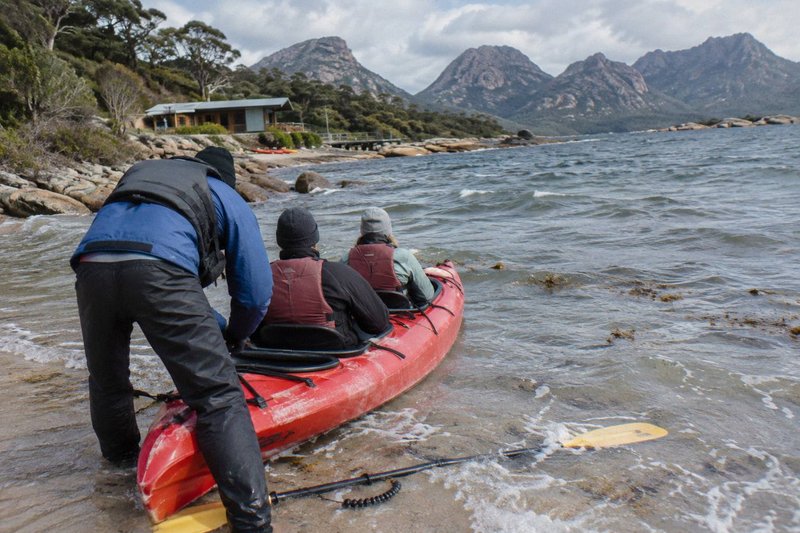
In short: The best-supported answer is Coles Bay on the east coast, where Great Oyster Bay meets the Tasman Sea beneath the granite Hazards of Freycinet National Park. Tasmania Parks and Wildlife Service says the relatively sheltered waters there allow for all experience levels and recommends local tour companies for anyone new to paddling. One guided day paddle, The Freycinet Paddle, departs from Muirs Beach year round.
For a fuller picture of the bay the paddle covers, see the Great Oyster Bay sea kayaking guide.
| Question | The answer the sources hold |
|---|---|
| Best place to start | Coles Bay, on Great Oyster Bay at the foot of the Hazards |
| Why there | PWS: sheltered waters suit all experience levels; tour companies recommended for newcomers |
| The guided day paddle | The Freycinet Paddle, 3 hours, about 2 hours paddling, from Muirs Beach |
| Multi-day option | A 6 day Freycinet Peninsula expedition run by Tasmanian Expeditions |
| Self-guided paddling | No verified hire operator at Coles Bay; MAST rules apply to your own craft |
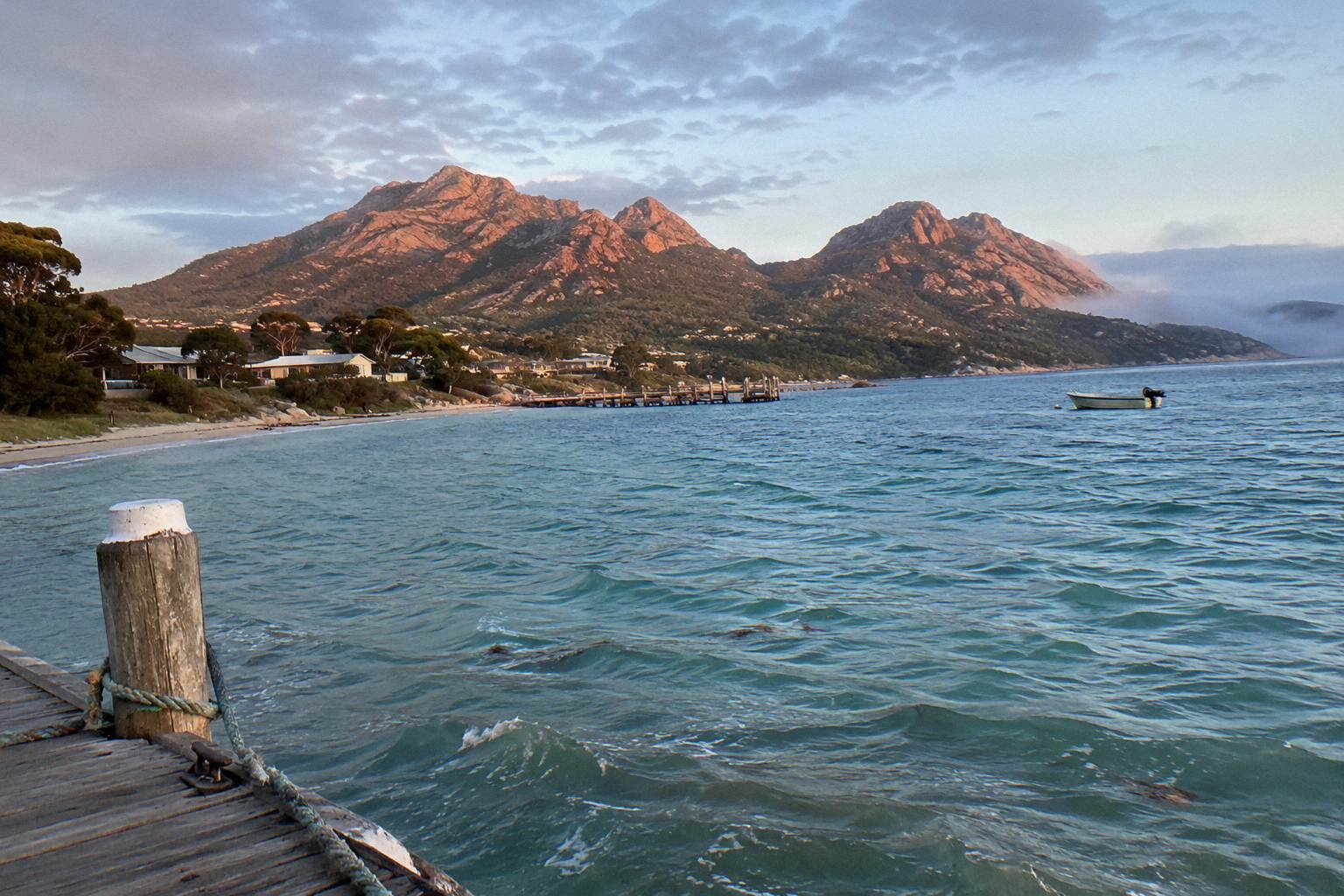
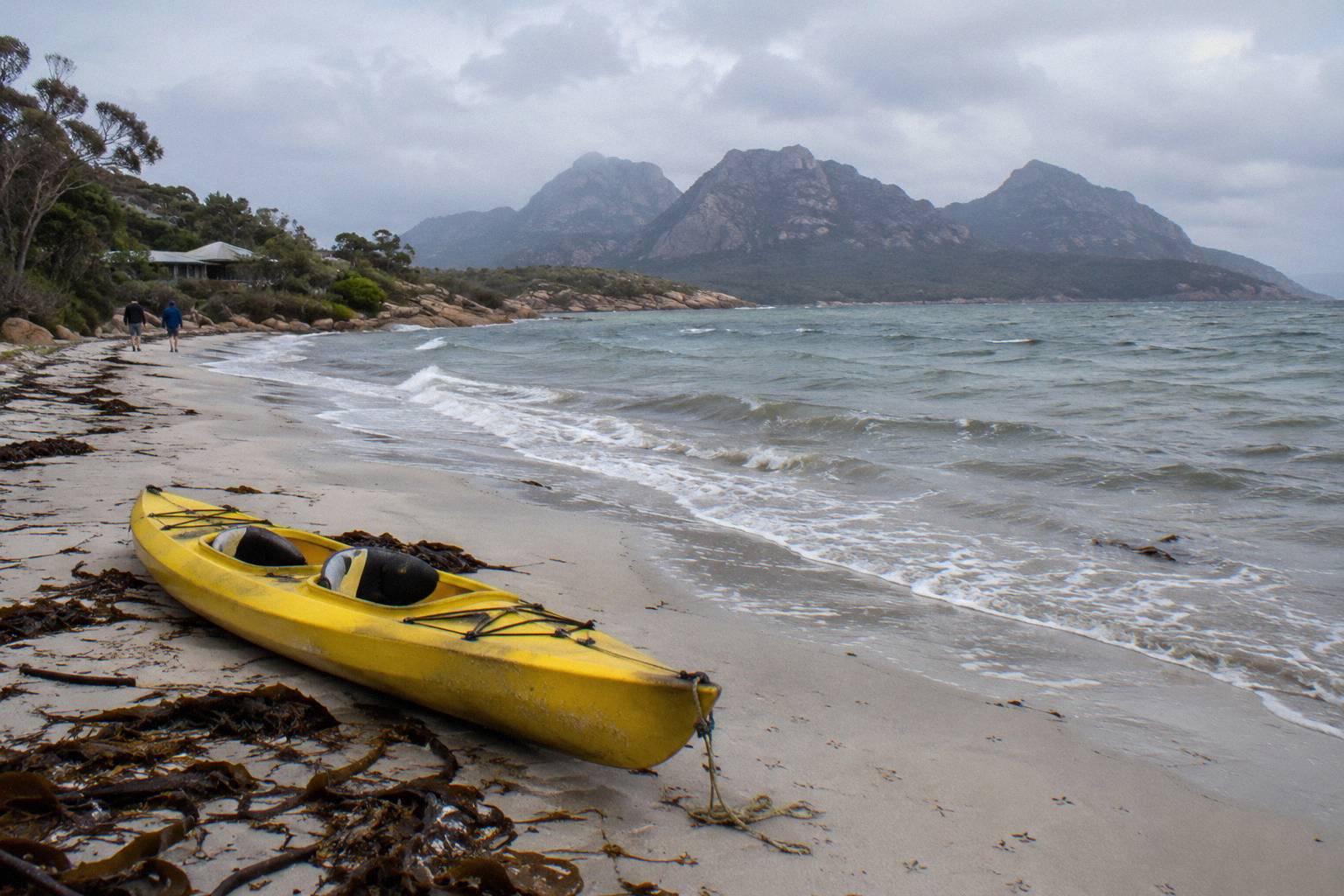
The best place to sea kayak in Tasmania is Coles Bay, the township at the foot of the Hazards where Great Oyster Bay meets the Tasman Sea. Tasmania Parks and Wildlife Service describes the Hazards as a spectacular granite mountain range rising dramatically from sheltered turquoise bays, and says the relatively sheltered waters suit all experience levels, with local tour companies and a year-round guided day paddle available.
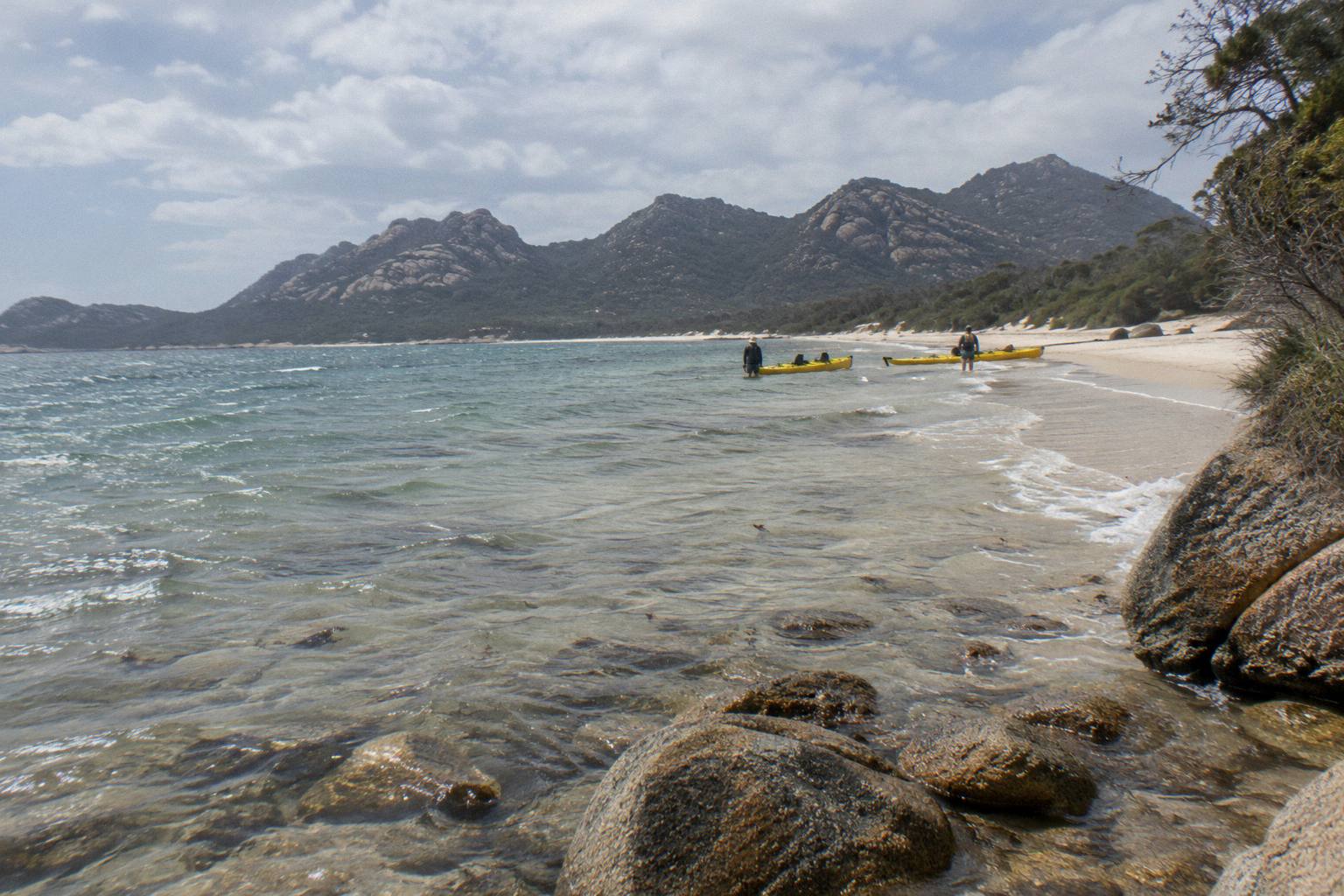
That recommendation carries weight because of what shelter means on the east coast. The operator, Freycinet Adventures, describes Coles Bay as sitting at the foot of the Hazards, where the bay is protected from the open ocean by the Freycinet Peninsula itself. The multi-day expedition page for the peninsula makes the same point in its own words: the paddling is mostly on Great Oyster Bay, sheltered from the open ocean swell. Two independent sources, one geography lesson.
Freycinet also holds a historical claim worth knowing before you choose. PWS records it as the oldest national park in Tasmania, reserved in 1916 alongside Mount Field, and describes the park as effectively two eroded blocks of granite. That granite is the reason the scenery and the shelter come together: the range frames the bay and breaks the weather at the same time. You can read the park facts on the official PWS Freycinet page.
The practical shape of the answer is narrow, and saying so plainly is more useful than a fake list of five destinations. The sources hold one sheltered day-paddle location with a year round guided tour, one multi-day expedition covering the peninsula and Schouten Island, and self-launch paddling for people who bring their own craft. No other Tasmanian region, operator or ranking appears in what the sources hold, so none is named here. If a longer wish list is what you are after, the decision logic below matters more than the place names.
The guided option that anchors all of it is The Freycinet Paddle tour page, and check availability to see live dates. It is rated 4.8 across more than 1,000 reviews on its main booking page, with a from price of A$155 per person. Beyond that one paddle, the honest comparison is between formats, not between bays.
Why Coles Bay Suits Every Paddle Level
Shelter is the reason, and the authority is Tasmania Parks and Wildlife Service. Its kayaking page states that tour companies in the area run a variety of sea kayaking experiences and are recommended if you are new to paddling, and that the relatively sheltered waters of Coles Bay allow for all experience levels. That is a park service, not a tour operator, making the suitability call, which is why it carries the weight it does here.
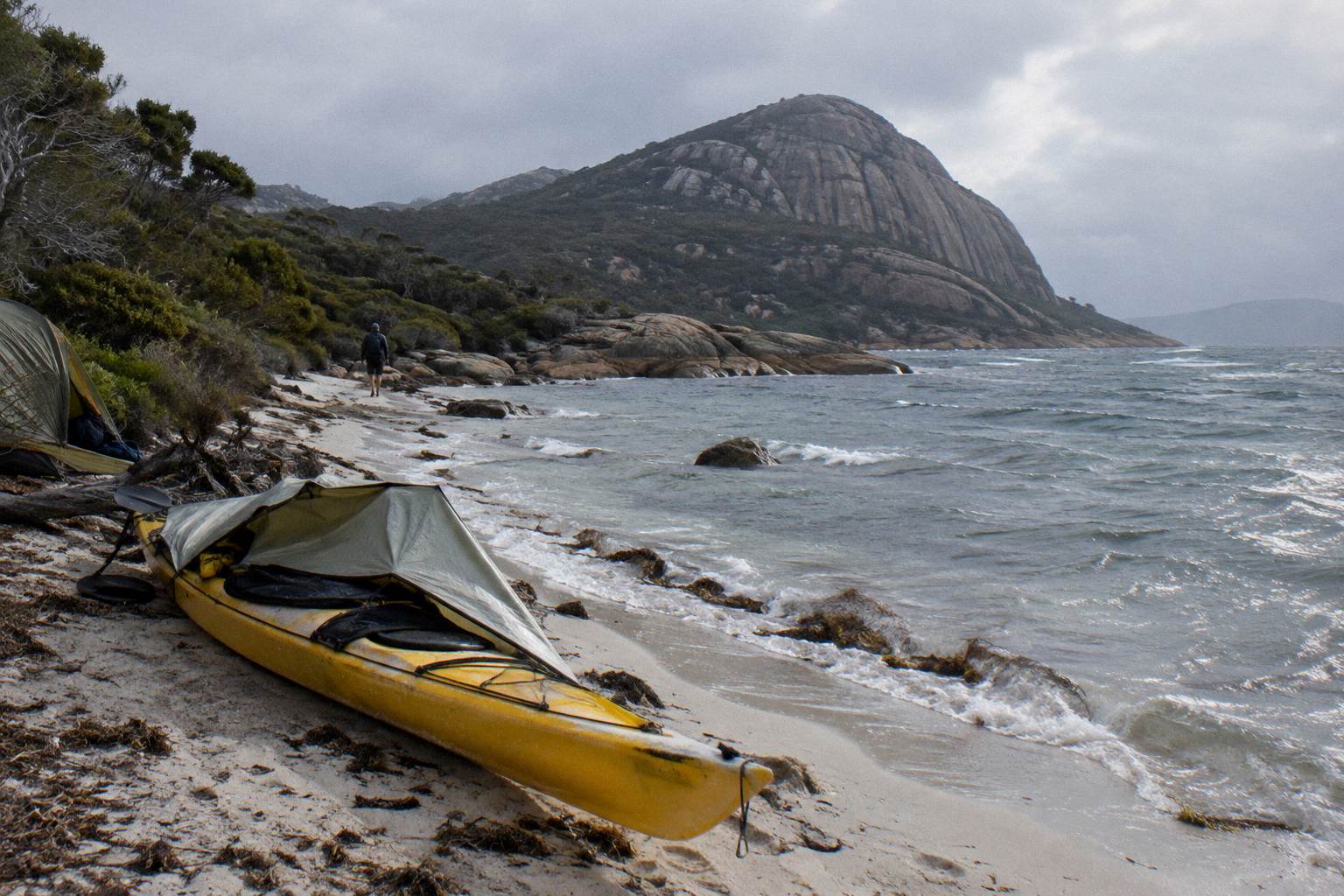
For a beginner, that single sentence changes the whole plan. Open-coast paddling in Tasmania asks for experience, surf skills and the right gear; a sheltered bay asks for a booking. If you are weighing your first time on the water, the beginners guide to sea kayaking at Freycinet walks through what the operator itself says about fitness, swimming ability and first-timers. The short version: the operator welcomes complete beginners, asks only that guests can swim, and says a leisurely two hour recreation level of fitness is enough.
For experienced paddlers the same shelter works differently. It makes the bay a place to cover water and look at granite up close rather than a place to battle conditions, and it is the launch pad the multi-day expedition uses for its crossing of Schouten Passage. The expedition page notes the trip is mostly on Great Oyster Bay, sheltered from the open ocean swell, which tells you even the ambitious routes here lean on the same protection.
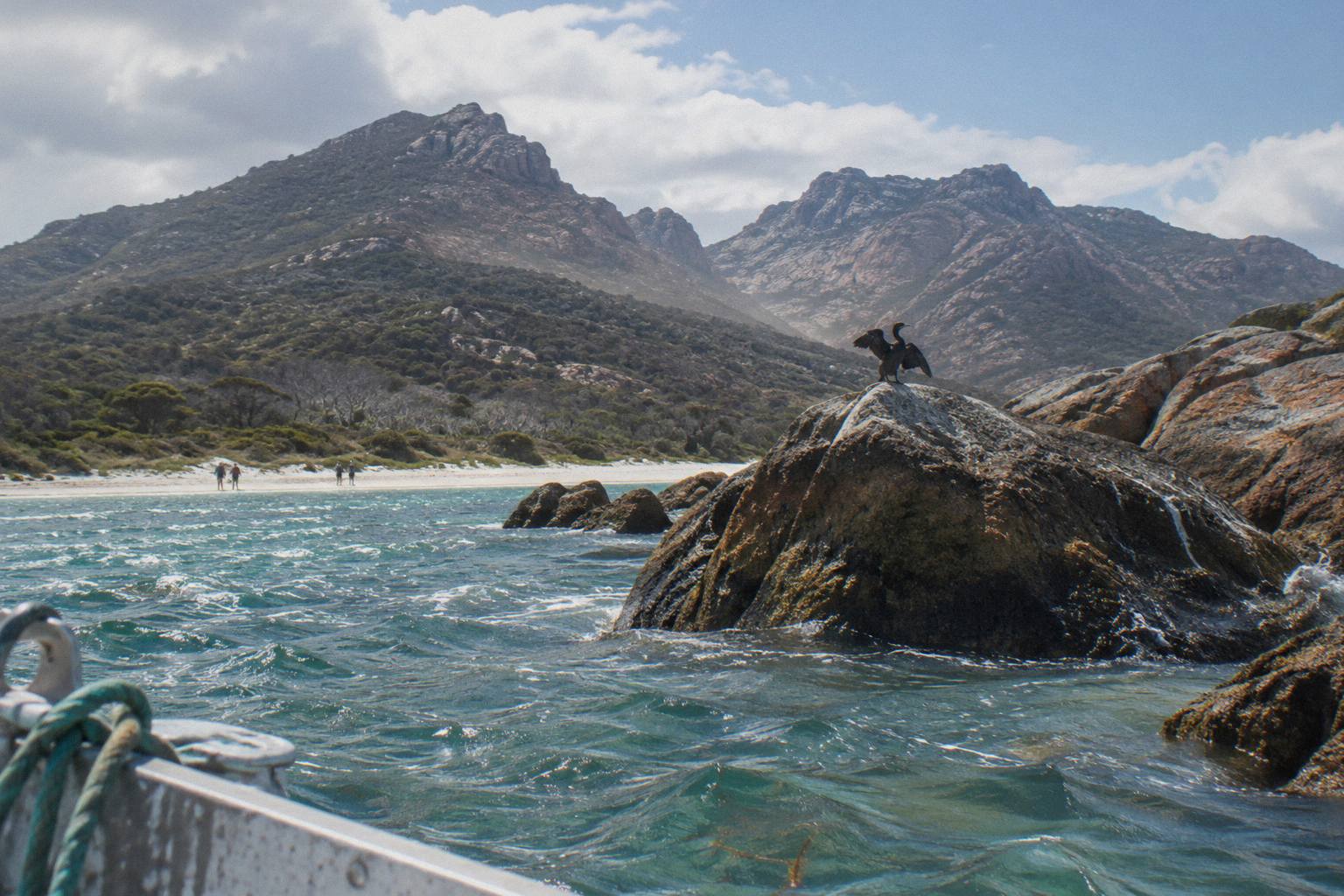
The PWS kayaking page, which you can read at parks.tas.gov.au/things-to-do/rafting-and-kayaking, is the right place to confirm the current wording before a trip. Combined with the operator's year round schedule, the picture is a bay that works in summer and winter alike, with seasonal departure times rather than a fixed timetable. Timing matters as much as place, and the best time to sea kayak at Freycinet covers the seasonal detail.
Deciding between a first paddle and something longer? The day tour is the low-commitment way in.
What The Freycinet Paddle Actually Covers
The Freycinet Paddle is a 3 hour guided trip in total, with about 2 hours of paddling cumulatively and a rest break halfway, run by Freycinet Adventures out of Coles Bay. Groups run from a minimum of 2 to a maximum of 16, the kayaks are double sit-in sea kayaks, and a solo guest paddles with another guest or a guide. The tour runs year round with seasonal departure times.
The shape of the trip matters when you are comparing places. A safety briefing comes first, then the paddle itself on Great Oyster Bay, with a half-way stop on a secluded sandy beach where the operator serves a freshly brewed coffee or hot drink and a snack, described on the booking page as a hot drink and a gourmet cookie. Morning and Twilight sessions follow the same route, and the operator says the Twilight session finishes right on sunset.
Two boundaries define the trip honestly. The paddle stays on Great Oyster Bay out of Coles Bay: it does not reach Wineglass Bay and it does not reach Schouten Island. And the launch is Muirs Beach in Coles Bay township, where the operator says free public parking and public toilets are available. Wineglass Bay itself is seen from the cruise, the walking track or the Hobart day tour, never from the day paddle.
The operator makes two claims about itself worth attributing rather than paraphrasing: it describes itself as award-winning, and says the tour was listed number four must-do experience in Australia on the Nine Network's Things to Try Before You Die. Those are the operator's claims, and they are presented as exactly that. The detail you can plan around is simpler: a 3 hour window, about 2 hours of it paddling, beginners welcome, from A$155 per person, with the price changing by date.
The operator's own tour page at freycinetadventures.com.au/freycinet-tours carries the full format. What it adds up to is a place and a trip that match each other: sheltered water, small groups, a beach stop, and a granite range overhead.
What Is Not Sold: Hire, Schouten Island And Multi-Day Trips
This site sells no kayak hire at Coles Bay, since no hire operator is verified in the sources, and Schouten Island appears only on a 6 day Tasmanian Expeditions expedition rather than any bookable day tour. Visitors can self-launch with their own kayaks or stand up paddle boards, but that independent paddling is not a commercial tour sold here.
The multi-day option deserves its own words because it is the only held route to Schouten Island. The Tasmanian Expeditions page at tasmanianexpeditions.com.au describes a 6 day Freycinet Peninsula kayak expedition: a drive of about two and a half hours from Hobart to start, a put-in at Richardsons Beach, a paddle through Schouten Passage to Schouten Island and back to Hazards Beach. Its page carries two different totals, so no price is quoted. It is a serious commitment beside a 3 hour day paddle, and a day trip cannot do the same route.
Self-launch paddling is the third path. Discover Tasmania carries a Coles Bay kayaking write-up that mentions bringing your own kayak or stand up paddle board, with Richardsons Beach and Honeymoon Bay as stops; it is not a commercial tour operator. Anyone paddling their own craft takes on the equipment rules themselves, which the next section covers. No hire shop, price or rental rule is held in the sources, so if hire is what you need, ask locally before travelling.
What remains for a day visitor wanting a sold product is the guided paddle, plus adjacent trips that are not kayak tours at all. The Wineglass Bay cruise boards at 61 Jetty Rd, Coles Bay, runs about 4 hours 30 minutes, carries up to 100 travellers with live commentary from a local guide, toilets on board and wheelchair access, and is rated 4.7 across more than 1,000 reviews. The Freycinet walking tour and the full day tour from Hobart are further adjacent options. None of them is a paddle, and each is labelled as what it is.
| Option | Format | Where it goes | Kayak trip? |
|---|---|---|---|
| The Freycinet Paddle | Guided day paddle, 3 hours | Great Oyster Bay out of Coles Bay | Yes |
| Wineglass Bay cruise | Cruise, about 4 hours 30 minutes | Wineglass Bay from Coles Bay | No |
| Freycinet walking tour | Guided walk | Wineglass Bay Lookout track | No |
| Peninsula kayak expedition | 6 day expedition | Schouten Passage, Schouten Island, Hazards Beach | Yes, multi-day |
| Self-launch paddling | Your own craft | Richardsons Beach, Honeymoon Bay | Yes, unguided |
How To Get To Coles Bay And Where The Tour Meets
Driving to Coles Bay takes about 2.5 to 3 hours from either Launceston or Hobart: leave the Tasman Highway at Coles Bay Road, 12 km south of Bicheno, then follow 28 km of sealed road into the township. The Freycinet Paddle meets at Muirs Beach, opposite the Iluka Tavern on The Esplanade, where free public parking and toilets are available.
Hotel pick-up and drop-off is not included in the paddle, per the booking page exclusions, so the drive and the parking are yours to organise.
Getting there without a car is its own question, and the sources hold one clean answer: the Wineglass Bay day tour from Hobart, run by Wineglass Bay Discovery Tours, is a full day trip that departs Hobart. It is not a kayak tour. For the paddle itself, no transfer option is held in the sources, so a car, or asking the operator directly about transport, is the way to confirm.
If you are planning the drive from either city, the Hobart to Freycinet route guide and the Launceston equivalent cover the day-trip logistics. PWS is the authority on access, and the times above use its wording exactly rather than a mapping estimate. The last 28 km is sealed road through the township, which keeps the final leg simple even in winter.
Paddling Your Own Craft: The Rules That Apply
Marine and Safety Tasmania makes life jackets compulsory in lightweight craft, which includes kayaks, canoes and stand up paddle boards. Its paddle craft rules also set the lights, tether and signalling equipment required by water category: a white strobe or all-round light between sunset and sunrise, a tether when more than 200 m offshore, and category-dependent EPIRB, flare and EVDS requirements. Guided tours supply the kayaking equipment; independent paddlers carry the obligation themselves.
The life jacket rule sits on the MAST lifejackets page at mast.tas.gov.au, which also sets the levels: Level 50 and 50S suits kayak operators in sheltered waters only, while Level 100 and 150 cover sheltered and open waters. MAST's paddle safety advice adds plain warnings: never venture too far offshore, mind tides and wind, and unless you are an experienced surf paddler, stay out of the surf. Read the full set on the MAST paddle craft page.
Wildlife rules apply on and off the water. NRE Tasmania's whale and dolphin viewing guidelines set the distances for vessels: no closer than 100 m to a whale or 50 m to a dolphin, with larger buffers for vessels under steam, and the guideline page does not name kayaks, so treat the vessel distances as the benchmark rather than asserting the rule covers kayaks. Seal watching has its own numbers: boats stay 100 m from a seal colony in November and December during pupping, 50 m at other times. The NRE whale and dolphin guidelines carry the detail.
None of this burdens a guided guest much: the operator supplies all kayaking equipment and runs a safety briefing before the paddle. The distinction matters for the self-launch paddler weighing the free option against the guided one. Freedom comes with a checklist, and the sheltered bay does not exempt anyone from it.
Choosing By Traveller Type: Which Option Fits You
A first-time paddler fits The Freycinet Paddle: beginners are welcome, the water is sheltered, and the operator asks only for swimming ability and leisure-level fitness, with children from 7 able to join. A visitor set on seeing Wineglass Bay itself fits the cruise or the walking tour, because the day paddle does not go there. A confident paddler with six days fits the peninsula expedition. Matching the person to the format is easier than ranking bays.
The family case is straightforward. The operator says children from 7 can join, that under 16s need an accompanying adult, and that the kayak suits people happy to sit still for 2 to 3 hours. The tandem sit-in kayaks mean a child paddles paired with an adult. Group sizes cap at 16, so the trip keeps a small-group feel even in peak season. If the answer to where is settled, the guide to kids' ages on the paddle handles the age questions in detail.
The cruise-and-walk cases are for visitors whose real goal is Wineglass Bay. The cruise covers it from the water in about 4 hours 30 minutes; the walking tour covers it from the lookout track; the Hobart day tour bundles the whole journey for travellers without a car. Each is a legitimate way to see the bay, and each is labelled here as what it is. Confusing them with kayak trips is the single most common planning error on the east coast.
| You are... | Best fit from what is held | Why |
|---|---|---|
| A first-time paddler | The Freycinet Paddle | Sheltered bay, beginners welcome, guide supplied gear |
| A family with children 7 and over | The Freycinet Paddle | Tandem kayaks, adult pairs with under 16s, groups capped at 16 |
| Set on Wineglass Bay itself | Cruise or walking tour | The day paddle does not reach Wineglass Bay |
| Travelling without a car | Hobart full day tour | Departs Hobart, a full day, no kayak component |
| An experienced paddler with time | Peninsula expedition | 6 days, Schouten Passage, Schouten Island, own booking |
The solo traveller case closes the set. A solo guest on the paddle is paired with another guest or a guide, so travelling alone does not lock you out of a tandem fleet, and the group minimum of 2 means the tour needs company to run at all. Between these cases, most travellers land on the day paddle or one adjacent trip, and the decision becomes about time, budget and whether the kayak or the bay itself is the point.
Common Mistakes When Choosing Where To Paddle
The mistakes are predictable and fixable: booking a day paddle expecting Wineglass Bay, assuming kayak hire exists at Coles Bay, turning up without confirming the meeting point on the day, and treating a cruise or a walk as interchangeable with a paddle. Each one comes from blending products that the sources keep firmly separate. The fix is to match the format to the goal before the place, and to confirm the details the operator alone can settle.
The Wineglass Bay expectation is the biggest. The paddle is a Great Oyster Bay trip: it launches at Muirs Beach, stops on a secluded beach halfway, and returns. If the postcard curve of sand is the goal, the cruise, the walk or the Hobart day tour is the product, not the kayak. Booking the paddle and hoping is how disappointment gets manufactured.
The hire assumption is the quietest. No Coles Bay hire operator is verified in the sources, so a plan built on renting a kayak at the beach has no foundation until someone local confirms otherwise. The self-launch write-up that exists assumes you brought your own craft. Between those two mistakes sits the meeting point: Muirs Beach is the recorded launch. Ask, then drive.
The last mistake is skipping the questions only the operator can answer: whether a parks pass is needed for the launch, the departure time for your date, and whether conditions suit a first-timer that day. One clause covers the rest: whatever the pages do not settle, the operator can. If sheltered water and a guided start sound right, Freycinet Kayaking exists to make that booking decision simple.
Common Questions About Sea Kayaking In Tasmania
Where Is The Best Place To Sea Kayak In Tasmania?
The sources support Coles Bay on Great Oyster Bay: PWS says its relatively sheltered waters allow for all experience levels and recommends area tour companies for newcomers, and a year round guided paddle operates there.
Can You Kayak To Wineglass Bay On A Day Tour?
No sold day paddle reaches Wineglass Bay. The Freycinet Paddle stays on Great Oyster Bay; Wineglass Bay is seen from the cruise, the walking tour or the Hobart day tour.
Can You Hire A Kayak At Coles Bay?
No hire operator at Coles Bay is verified in the sources. Self-launch paddling means bringing your own kayak or stand up paddle board, with MAST rules applying.
Is Sea Kayaking In Tasmania Good For Beginners?
At Coles Bay, yes: PWS says the sheltered waters suit all experience levels, and the operator welcomes complete beginners, asking that guests can swim and have leisure-level fitness.
How Do You Reach Schouten Island By Kayak?
Only the 6 day Freycinet Peninsula kayak expedition held in the sources covers Schouten Island, paddling Schouten Passage from a Richardsons Beach put-in. It is booked directly with its operator.
Where Does The Coles Bay Kayak Tour Meet?
At Muirs Beach, Coles Bay, with free public parking and toilets nearby.