What Is A Freycinet Kayak Tour Like In Winter?
A winter Freycinet kayak tour runs year round from Coles Bay. Sea temperatures, what is provided, whale season facts and who a winter paddle suits, from operator and official sources.
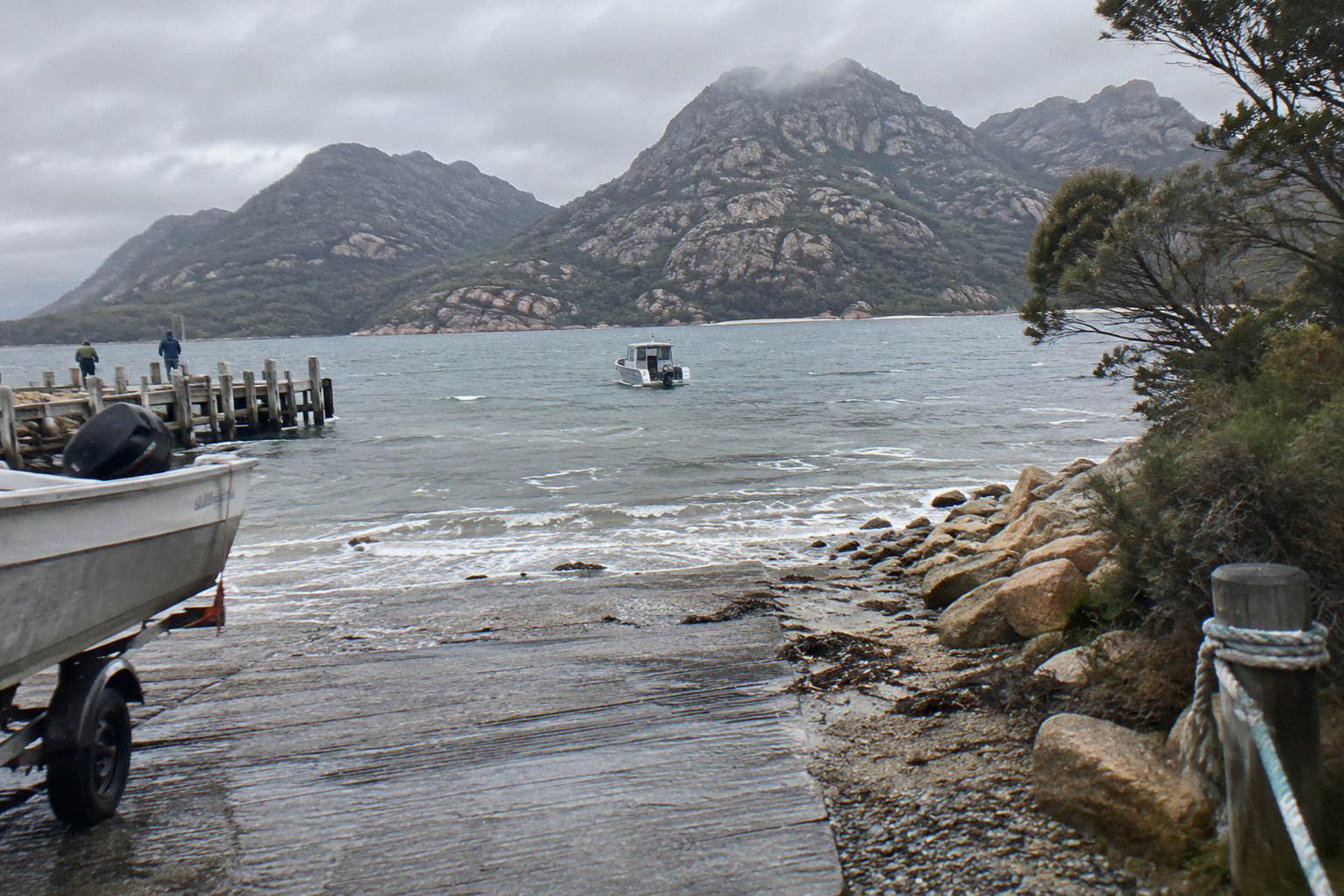
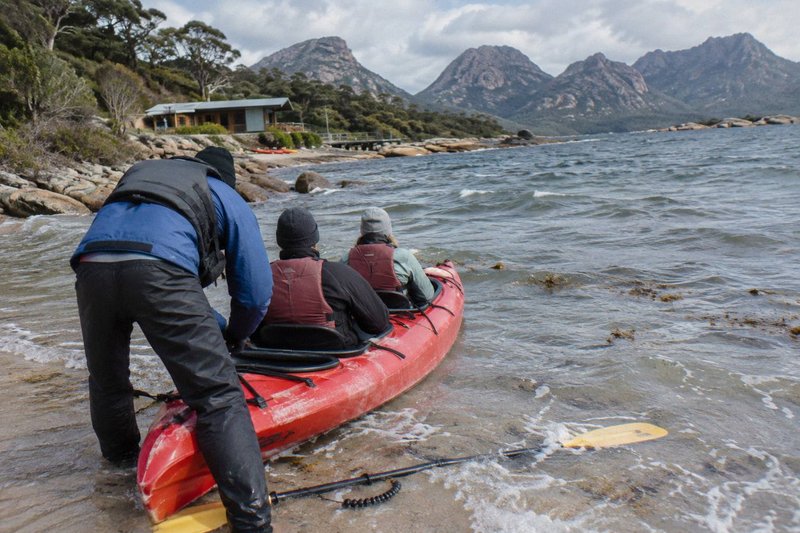
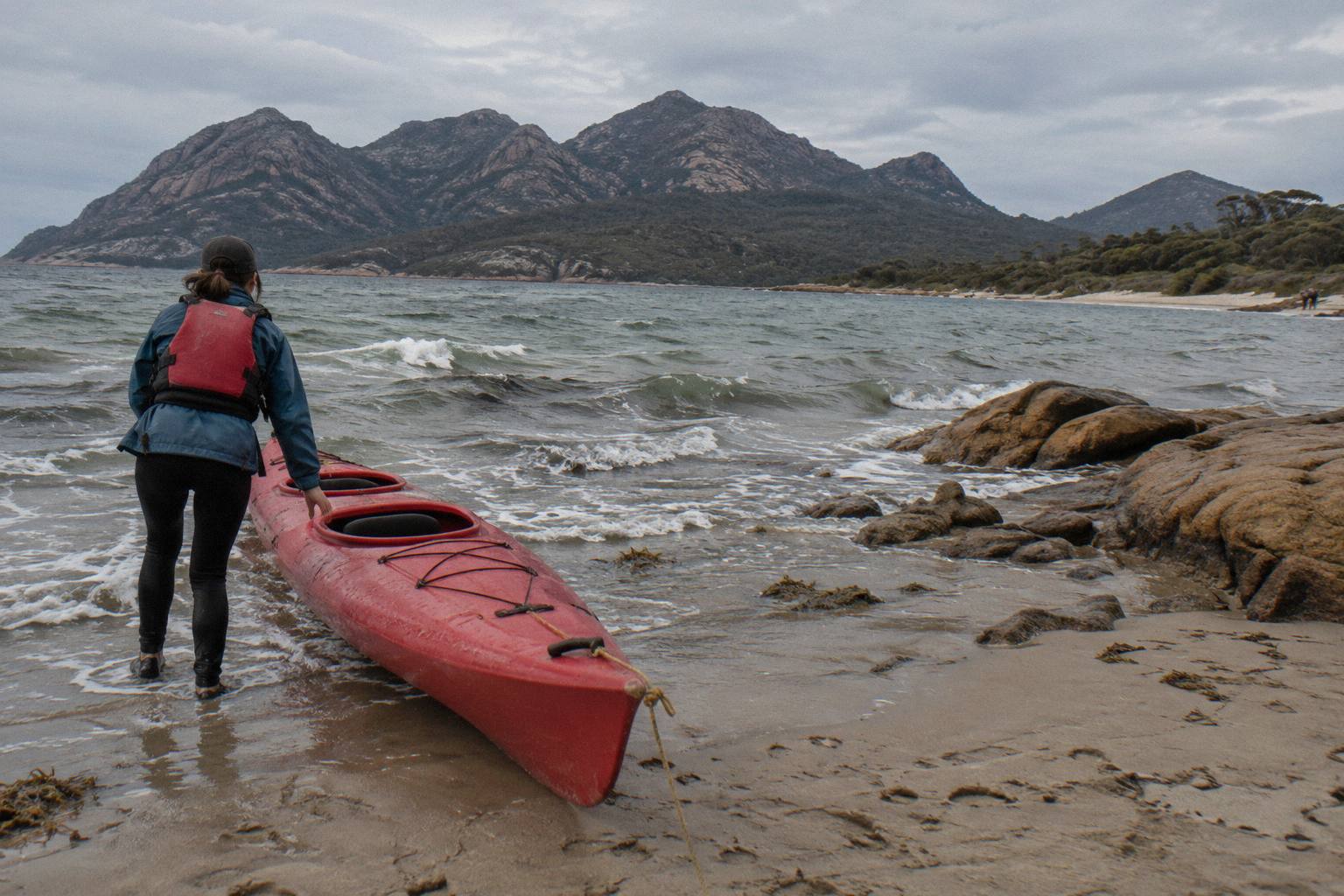
A winter paddle at Freycinet is the same 3 hour guided tour that runs all year, launched from Muirs Beach at Coles Bay, with the sea at or near its coldest and whales moving along the Tasmanian coast. Freycinet Adventures says The Freycinet Paddle runs year round with seasonal departure times, supplies warm jackets, and cancels with a full refund or reschedule when conditions are not safe. Winter here is June to August, after the southern right whales begin passing Tasmania from May.
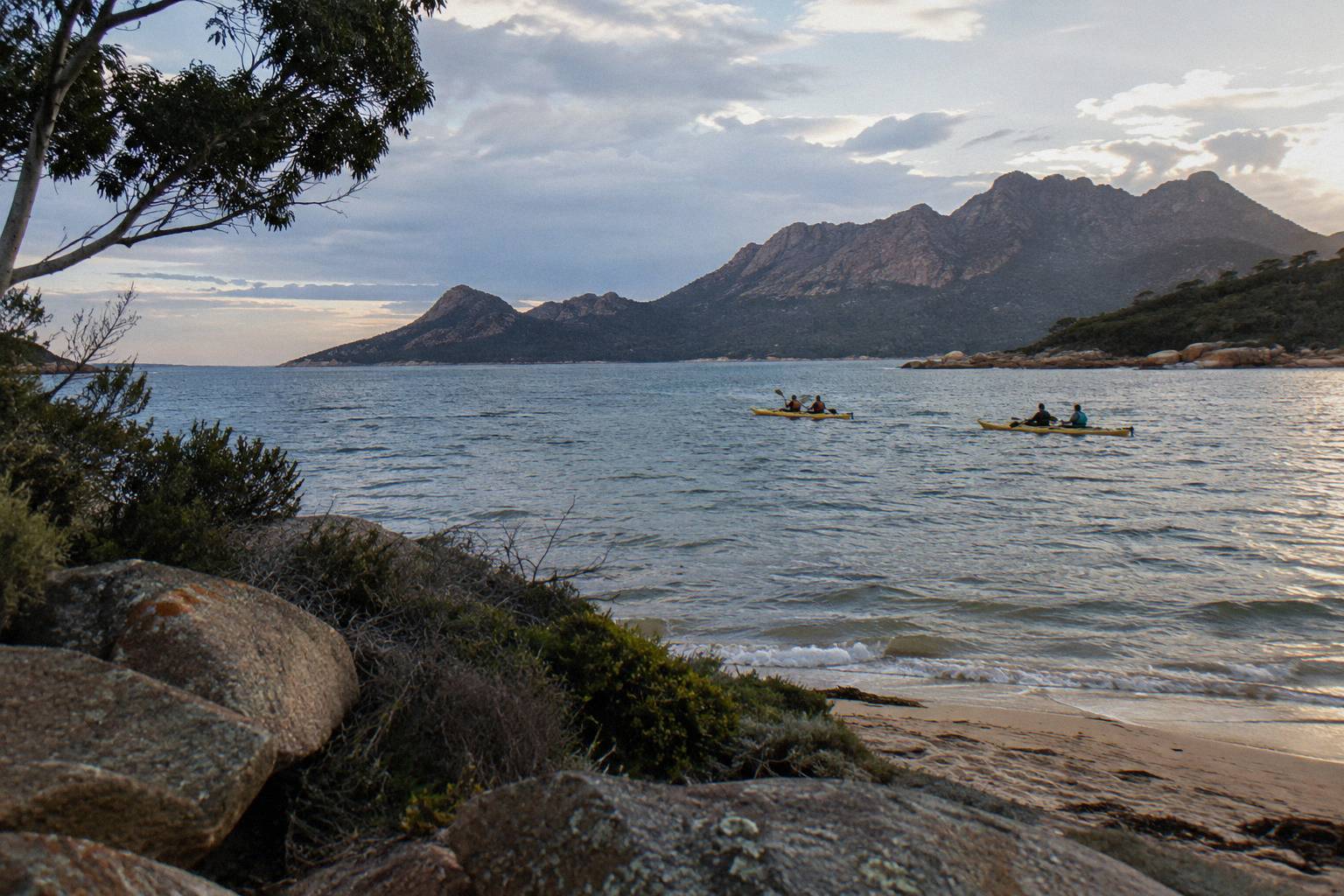
The tour does not reach Wineglass Bay or Schouten Island; it paddles Great Oyster Bay out of Coles Bay. If a winter day turns rough, the operator's rules on wind, experience and refunds decide what happens next, and those rules are set out plainly on the operator's own FAQ page. For the wider question of timing a trip around conditions, the best season for a Freycinet paddle is covered separately.
A winter Freycinet kayak tour is the standard guided paddle carried into the colder months: 3 hours total, about 2 hours of actual paddling with a halfway beach stop for a hot drink, in tandem sit-in sea kayaks, with warm jackets supplied and no wetsuit mentioned by the operator. The operator states the tour runs year round with seasonal departure times, so departures shift with the season rather than stopping. Sea surface temperatures at Coles Bay sit near their annual low in July and August, around an average of 13.0 to 13.2 degrees Celsius by the seatemperature.org long-run data. Winter also overlaps whale season: NRE Tasmania says southern right whales can be reliably seen in Tasmania between May and November each year.
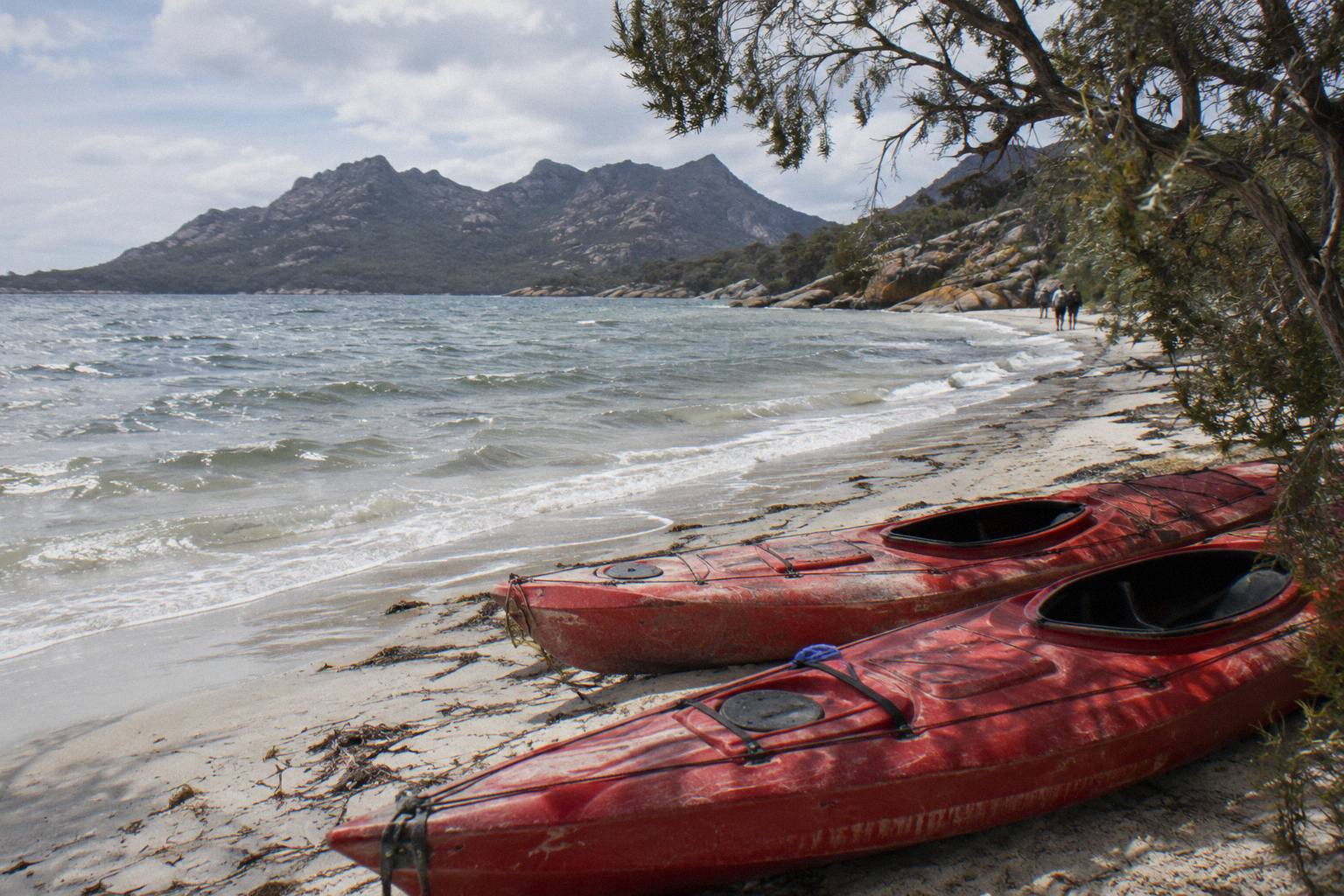
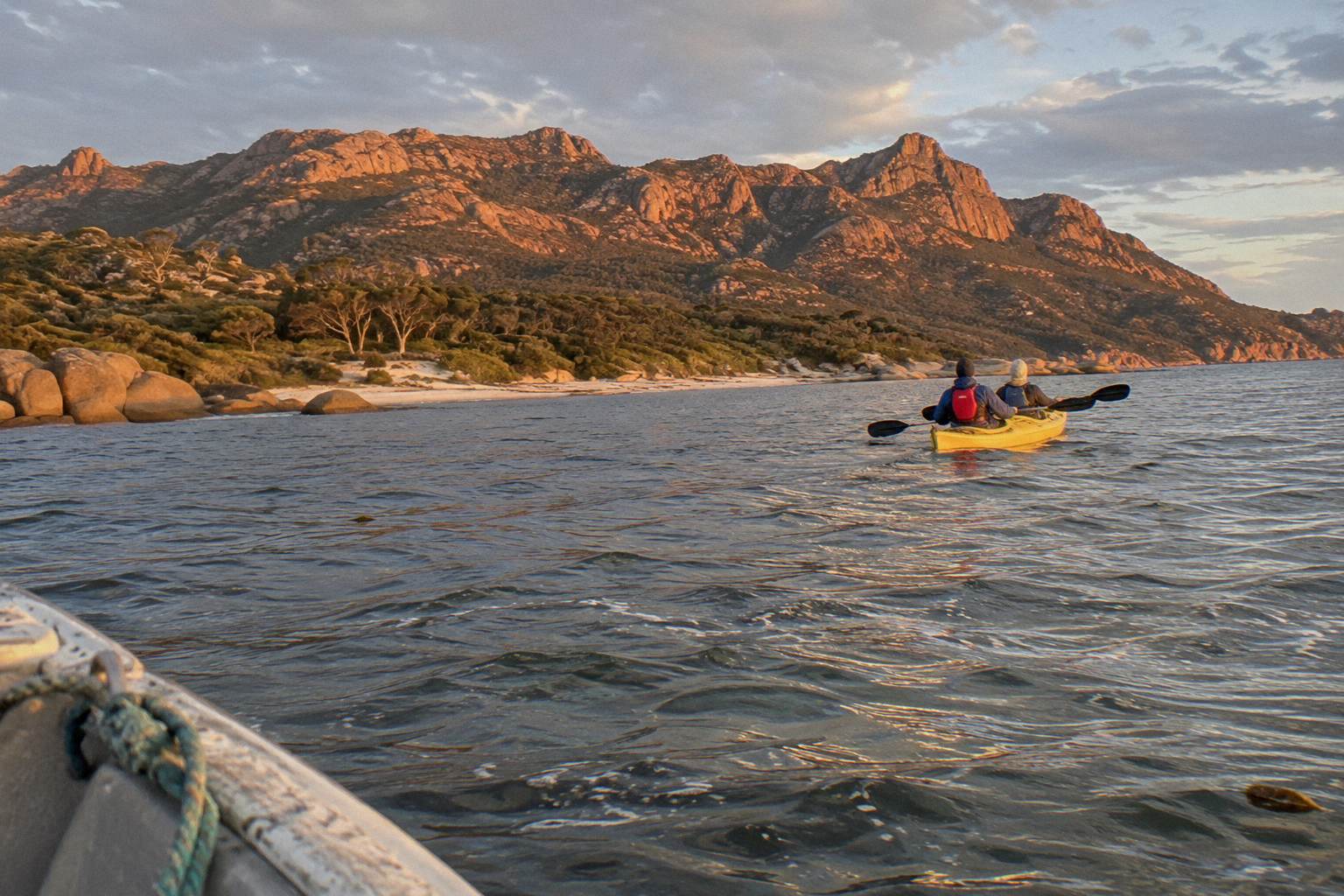
The shape of the day does not change with the calendar. The Freycinet Paddle begins with a safety briefing, then about 2 hours of cumulative paddling with a rest break halfway on a secluded sandy beach, where the operator serves a freshly brewed coffee or hot drink and a snack. Groups run from a minimum of 2 to a maximum of 16 people. Solo guests paddle with another guest or with a guide, because the boats are double sit-in sea kayaks. Morning and Twilight sessions follow the same route, and the operator says the Twilight session finishes right on sunset, which in winter lands earlier in the afternoon than summer travellers might expect.
What changes in winter is the water, the daylight window and the wildlife calendar. The paddle stays in Great Oyster Bay on the sheltered western side of the peninsula, and PWS describes Coles Bay as relatively sheltered water suitable for all experience levels. Wildlife on the day paddle is never promised: the operator's sunrise page lists sting rays, white bellied sea eagles, and larger marine species like dolphins, whales and fur seals "on occasion". Whales are a separate matter of season and location, covered further down, and no operator page read claims a whale sighting on the Great Oyster Bay day paddle.
How Cold Is The Water At Coles Bay In Winter?
By the seatemperature.org long-run averages, Coles Bay sea surface water runs about 13.3 to 14.0 degrees Celsius in June, 12.5 to 13.9 in July and 12.5 to 13.5 in August, with July and August averages of 13.2 and 13.0 degrees Celsius, the coldest months of the year at this beach. The same source records February as the warmest month with an average of 17.2 degrees Celsius, so winter water sits roughly four degrees below the summer peak. These are historical averages for the sea surface, not a forecast for the day anyone books, and they are approximate figures from a secondary source built on long-run data.
The full monthly picture, in degrees Celsius, from the same source:
| Month | Min C | Avg C | Max C |
|---|---|---|---|
| Jan | 15.9 | 16.8 | 17.7 |
| Feb | 16.6 | 17.2 | 17.9 |
| Mar | 16.1 | 16.6 | 17.2 |
| Apr | 15.2 | 16.0 | 16.8 |
| May | 13.7 | 14.8 | 15.9 |
| Jun | 13.3 | 14.0 | 14.7 |
| Jul | 12.5 | 13.2 | 13.9 |
| Aug | 12.5 | 13.0 | 13.5 |
| Sep | 12.6 | 13.1 | 13.7 |
| Oct | 12.8 | 13.5 | 14.2 |
| Nov | 13.8 | 14.8 | 15.7 |
| Dec | 15.4 | 16.3 | 17.2 |
The monthly figures come from seatemperature.org's Coles Bay page, which the site describes as long-run historical sea surface data. May is a transition month, averaging 14.8 degrees, and the water warms again from September. The practical meaning for a winter booking is simple: expect water in the low teens, dress for it, and treat anything warmer as a bonus rather than a plan. The deeper question of how cold the water feels for kayaking at Freycinet is worth reading alongside winter planning.
No air temperature, wind, rainfall or daylight figures are held by the sources used here, so none are quoted. The operator confirms departures are seasonal and prints no timetable, which is the honest boundary of what can be planned around in advance.
What Gear Is Provided On A Winter Paddle?
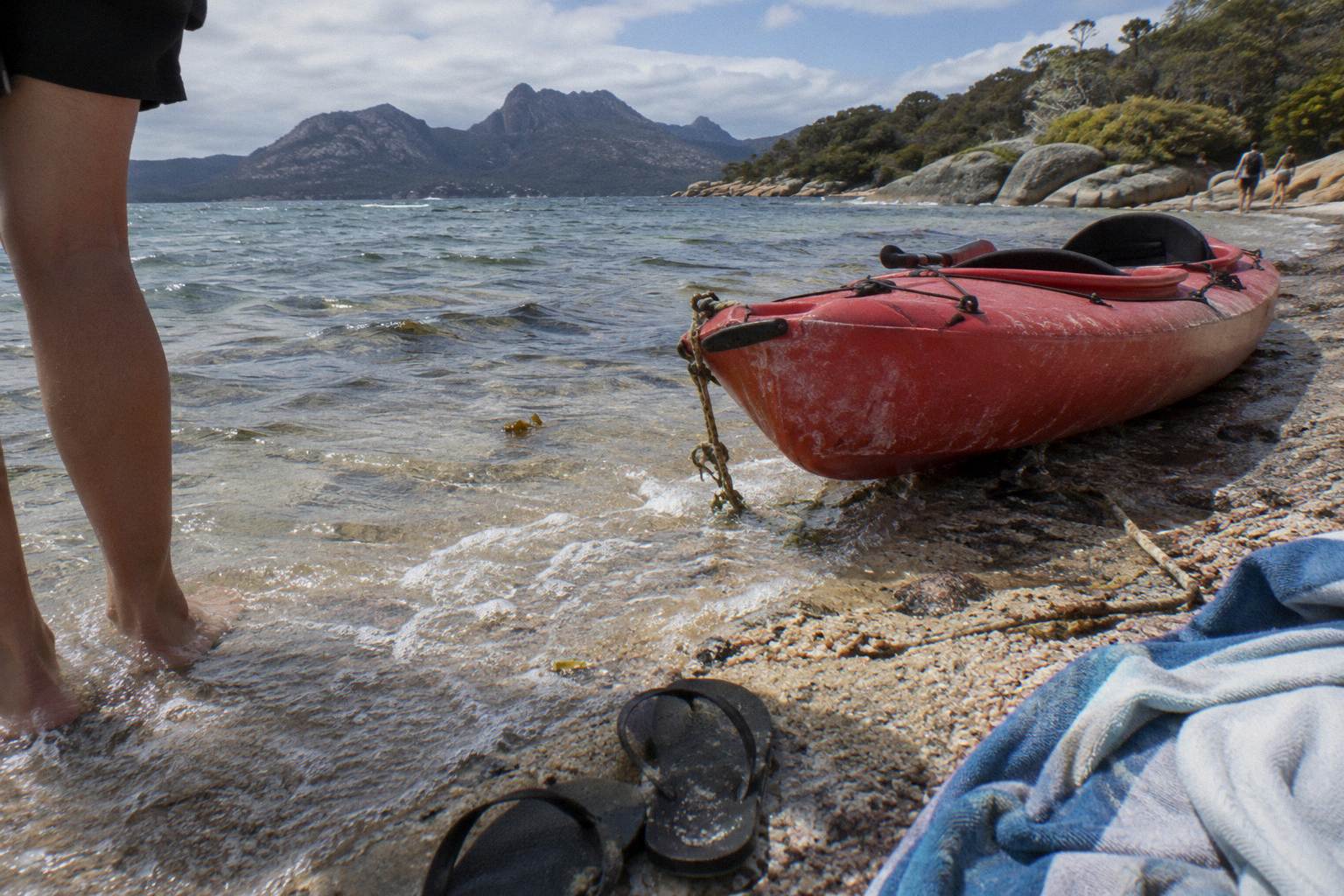
The operator and the booking page together say all sea kayaking equipment is provided, including the stable double sea kayaks and warm jackets, with dry bags supplied for phones and cameras, a hot drink and a gourmet cookie on the beach stop, a professional guide, and GST and National Park fees in the price; hotel pick-up and transport to and from attractions are excluded. The operator's kit list asks guests to bring drinking water and a hat or sunglasses, to wear comfortable clothing, and to plan for footwear that will get wet, so flip flops or bare feet. No wetsuit is mentioned by the operator, so a winter guest asking about one should ask the booking desk directly rather than assume either way.
For independent context, Marine and Safety Tasmania states that a life jacket is compulsory in a lightweight craft, which includes kayaks, on its lifejacket requirements page. The operator's pages describe "all kayaking equipment" without itemising life jackets, so a guided tour supplies its equipment and the exact inventory is a fair question at booking. A winter packing approach for sea kayaking at Freycinet is covered in full elsewhere; in short, the operator's own list is the one to work from.
A simple split of what is and is not included, per the operator and booking page:
| Provided | Bring Yourself | Excluded |
|---|---|---|
| Double sit-in sea kayaks | Drinking water | Hotel pick-up |
| Warm jackets | Hat or sunglasses | Transport to attractions |
| Dry bags for phone and camera | Comfortable clothing | |
| Hot drink and gourmet cookie at the beach stop | Footwear that can get wet | |
| Professional guide, GST, National Park fees |
The sit-in cockpit design matters more in winter than in summer: the operator FAQ describes sit-in tandem sea kayaks with a cockpit seat about 45 cm across, suiting people up to 195 cm and approximately 120 kg, and guides may decline a guest whose body size does not fit the boats. That is a fit question for any season, but it is better asked before a cold morning than during one.
Can You See Whales On A Winter Freycinet Kayak Tour?
You might, since winter overlaps whale season, but no kayak tour at Freycinet promises a whale, and the day paddle stays in Great Oyster Bay, while the sources place whale sightings mainly on the eastern, Tasman Sea side of the peninsula, so treat a whale encounter as a rare bonus rather than a tour feature. NRE Tasmania says southern right whales can be reliably seen in Tasmania between May and November and names sheltered east coast waters including Great Oyster Bay. PWS says the park's waters are regularly visited by whales, particularly humpback whales, during the winter months, and that seals may be spotted resting on rocks. The operator's own park page says whales are often seen during their annual migration, usually on the eastern side of the Freycinet Peninsula, more commonly southern right and humpback, and names Cape Tourville as a great site to observe them.
Those are migration statements, not sighting promises, and the distinction matters on a boat. Humpback month ranges for Great Oyster Bay are not held by any source here, so none are printed. The approach rules are strict regardless of season: the NRE Tasmania guideline for vessels says approach no closer than 100 m to a whale or 50 m to a dolphin, and 300 m and 150 m respectively for a vessel under steam; the page does not name kayaks, and no kayaker should treat these distances as permission to close on an animal. Southern right whale season detail is on the NRE Tasmania southern right whale page.
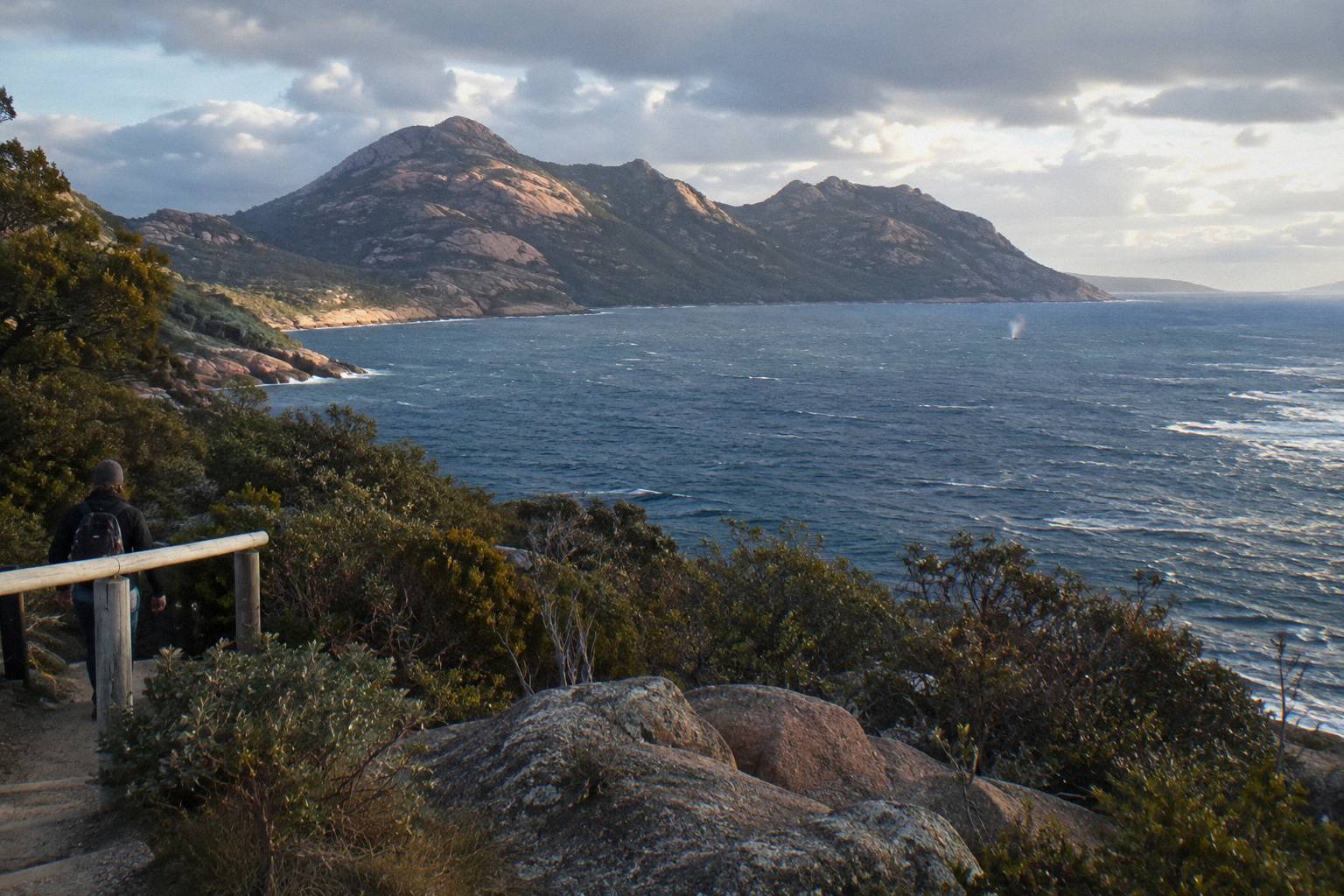
For land-based watching instead, PWS asks visitors to keep 2 m from native land animals and not to feed wildlife, per its caring for wildlife guidance, and runs a whale hotline on 0427 WHALES, that is 0427 942 537. A whale spotted from the Waterglass Bay side is a different proposition again: the Wineglass Bay cruise versus kayak comparison lays out which product actually reaches the famous bay, and the cruise is the one on the water there, not the paddle.
Does The Tour Still Run In June, July And August?
Yes, the operator states plainly that The Freycinet Paddle runs year round with seasonal departure times, which places June, July and August inside the operating calendar rather than outside it; no timetable or start times exist to quote, because departures shift with the season and the operator prints none. What a winter booking does carry is a real chance of the operator reshaping or ending the day: the FAQ says guides can cancel at any time for safety, and that in challenging wind the operator may contact guests beforehand and may require previous sea kayaking experience and moderate fitness, otherwise the guest receives a full refund or a reschedule. A weather cancellation is a full refund, and the booking page describes an alternative date or a full refund.
The cancellation logic a winter traveller should hold onto is short. Weather cancellations by the operator: full refund or reschedule, the operator's choice of remedy to confirm at the time. Guest cancellations for other reasons: 24 hours notice for a refund, per the operator FAQ, with the booking page wording it as free cancellation up to 24 hours before. Online bookings with the operator close 3 hours before departure for The Freycinet Paddle, which in winter matters when a forecast turns late in the day. What the operator cannot do is control the sea, and the weather decision process for Freycinet paddles walks through the same rules in more depth.
Guests cancelling for any non-weather reason inside 24 hours, or arriving unable to meet the operator's stated requirements, should expect the stated policy to apply rather than a winter exception. The operator FAQ also sets the standing participation rules that apply in every month: guests need to be able to swim, children are welcome from 7, and anyone under 16 paddles with an accompanying adult.
Who Is A Winter Paddle Right For?
A winter paddle suits travellers who want the same 3 hour guided format, accept water in the low teens, and value the quiet of the off season over warm-water comfort; it does not suit anyone who cannot swim, children under 7, or guests unwilling to follow the operator's cold-weather instructions on clothing and footwear. The operator FAQ says complete beginners are welcome and that being fit enough for a leisurely 2 hour recreation activity is the benchmark, since the tour includes about 2 hours of cumulative paddling with a rest break halfway. The swim requirement is a safety rule from the operator FAQ and is not relaxed for calm days.
A few traveller types, worked from the stated facts. A couple travelling in July with no kayaking history: the tour fits, because beginners are welcome, the boats are stable doubles, and a guide leads every group of 2 to 16. A family with a 7 year old: possible, and worth a direct conversation with the operator about a winter day, since the FAQ asks that children be happy to sit still for 2 to 3 hours. A solo traveller: welcome, paddling with another guest or a guide in a tandem. A visitor with mobility or size concerns: the cockpit figures, up to about 195 cm and approximately 120 kg, are the operator's own, and the operator says guides may decline a booking where body size does not fit the kayaks, so raise it before booking. Anyone with a medical question should check with a doctor and tell the operator when booking.
For a fuller walk through of these rules, the fitness requirements for a Freycinet paddle and the swimming rule for Freycinet sea kayak tours each carry the operator's wording. The site behind these pages, Freycinet Kayaking, also compares the paddle against the non-kayak ways to see the peninsula when a winter morning looks uninviting.
What Trips People Up When Booking A Winter Paddle
The recurring winter mistakes are assuming the tour stops in the cold months, expecting a wetsuit that no operator page mentions, treating whale season as a sighting promise, and arriving without footwear that can get wet or without the 24 hour cancellation rule in mind. Each of these is avoidable with one question to the booking desk. The tour runs year round; warm jackets are provided and a wetsuit is not stated; whales are seasonal and attributed, never guaranteed; and free cancellation needs 24 hours notice, while a weather cancellation by the operator carries a full refund or a reschedule.
Booking late is the quiet trap. Online bookings close 3 hours before departure, and winter groups run from just 2 to 16 people, so a July date has the same capacity ceiling as a February one with fewer travellers competing for it. The surcharge calendar matters too: the operator applies a 5 per cent surcharge on Saturdays, 9 per cent on Sundays and 15 per cent on public holidays, so a long weekend winter escape costs more than a midweek one at the operator's own rates. Confirm current pricing on the booking page, where the from price shows as from A$155 per person and shifts by date.
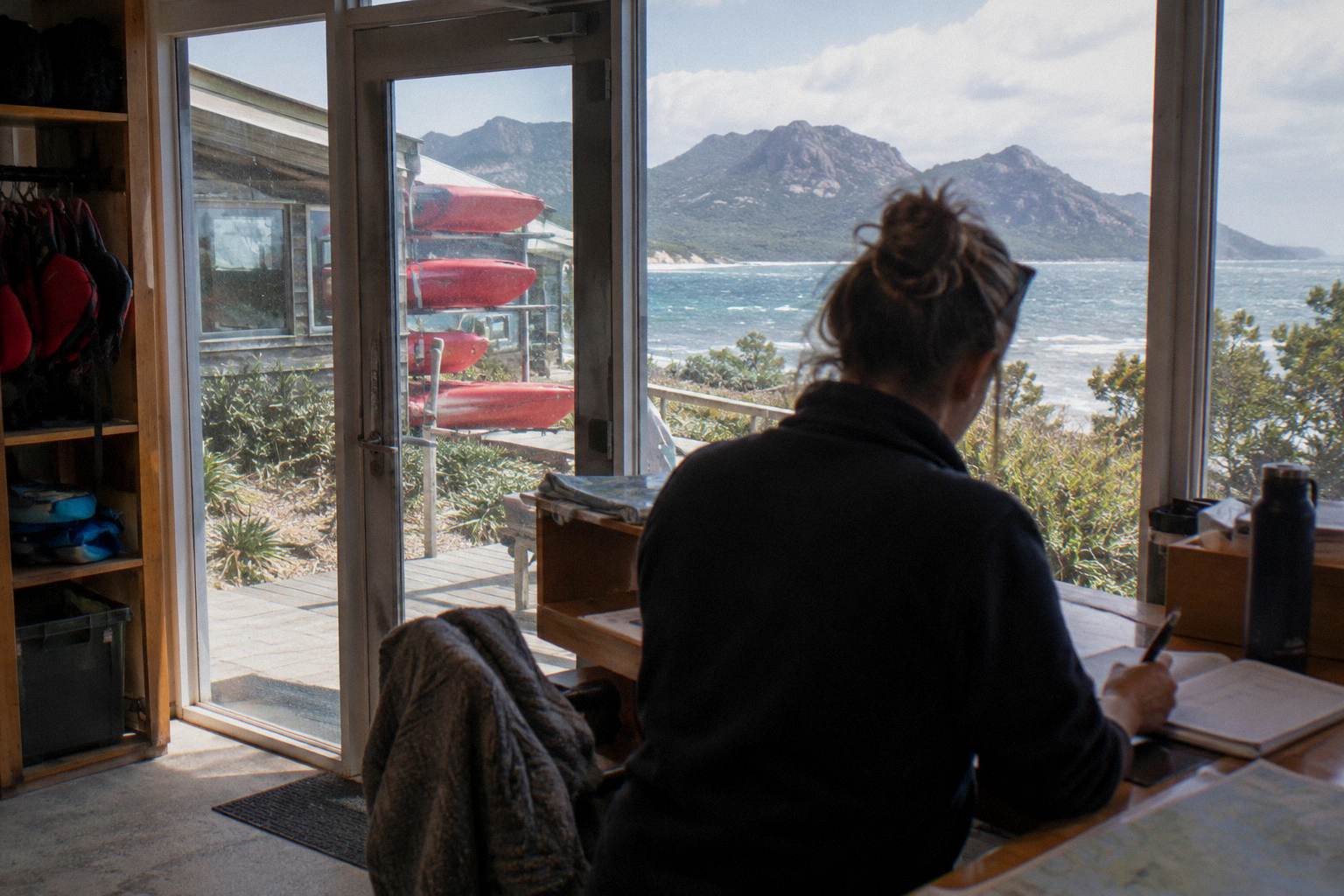
A short checklist before paying. Ask whether a wetsuit is available for the date, since none is stated. Ask what the operator's own weather call process is for the morning in question. Confirm the departure point, Muirs Beach at Coles Bay, which the operator says has free public parking and public toilets. Check whether a parks pass applies to the launch, since the kayak pages do not state it either way; a Daily Pass costs AUD 49.15 per vehicle for up to 24 hours per the PWS fee page. Then read the full comparison of guided paddles versus hiring your own kayak if the value question is still open.
Common Questions About Winter Freycinet Kayak Tours
What Is A Freycinet Kayak Tour Like In Winter?
The same 3 hour guided paddle that runs all year: a safety briefing, about 2 hours of cumulative paddling in tandem sit-in sea kayaks, and a beach stop with a hot drink, with warm jackets provided and the sea near its coldest at roughly 13 degrees Celsius average in July and August. The operator runs the tour year round with seasonal departure times, and cancels with a full refund or reschedule when conditions are unsafe.
How Cold Is The Water At Coles Bay In Winter?
By seatemperature.org long-run averages, the sea surface at Coles Bay averages 14.0 degrees Celsius in June, 13.2 in July and 13.0 in August, with monthly lows of 12.5 degrees in July and August. February is the warmest month at a 17.2 degree average.
Can You See Whales On A Winter Kayak Tour At Freycinet?
Never as a promise. NRE Tasmania says southern right whales can be reliably seen in Tasmania between May and November, and PWS says the park's waters are regularly visited by whales, particularly humpbacks, during the winter months. The operator places whale sightings usually on the eastern side of the peninsula, while the day paddle stays in Great Oyster Bay.
Are Wetsuits Provided On Winter Tours?
The operator says all kayaking equipment and warm jackets are provided, and its pages mention no wetsuit, so ask the booking desk directly. Dry bags for phones and cameras are provided.
Does The Tour Get Cancelled More In Winter?
No cancellation rates are held by any source here. The rules are what matter: guides can cancel at any time for safety, and in challenging wind the operator may require prior sea kayaking experience and moderate fitness, otherwise the guest gets a full refund or a reschedule.
What Should I Wear For A Winter Paddle?
Follow the operator's list: comfortable clothing, warm layers under the provided jacket, a hat or sunglasses, drinking water, and footwear that can get wet such as flip flops, or bare feet.