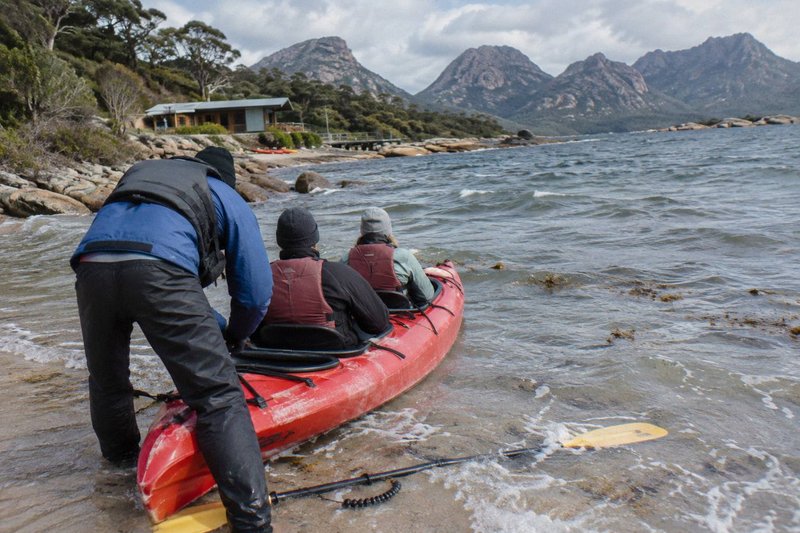
How Cold Is The Water For Kayaking At Freycinet?
Sea temperature at Coles Bay month by month, what the operator supplies to keep you warm, and what to pack for a winter or summer paddle at Freycinet.
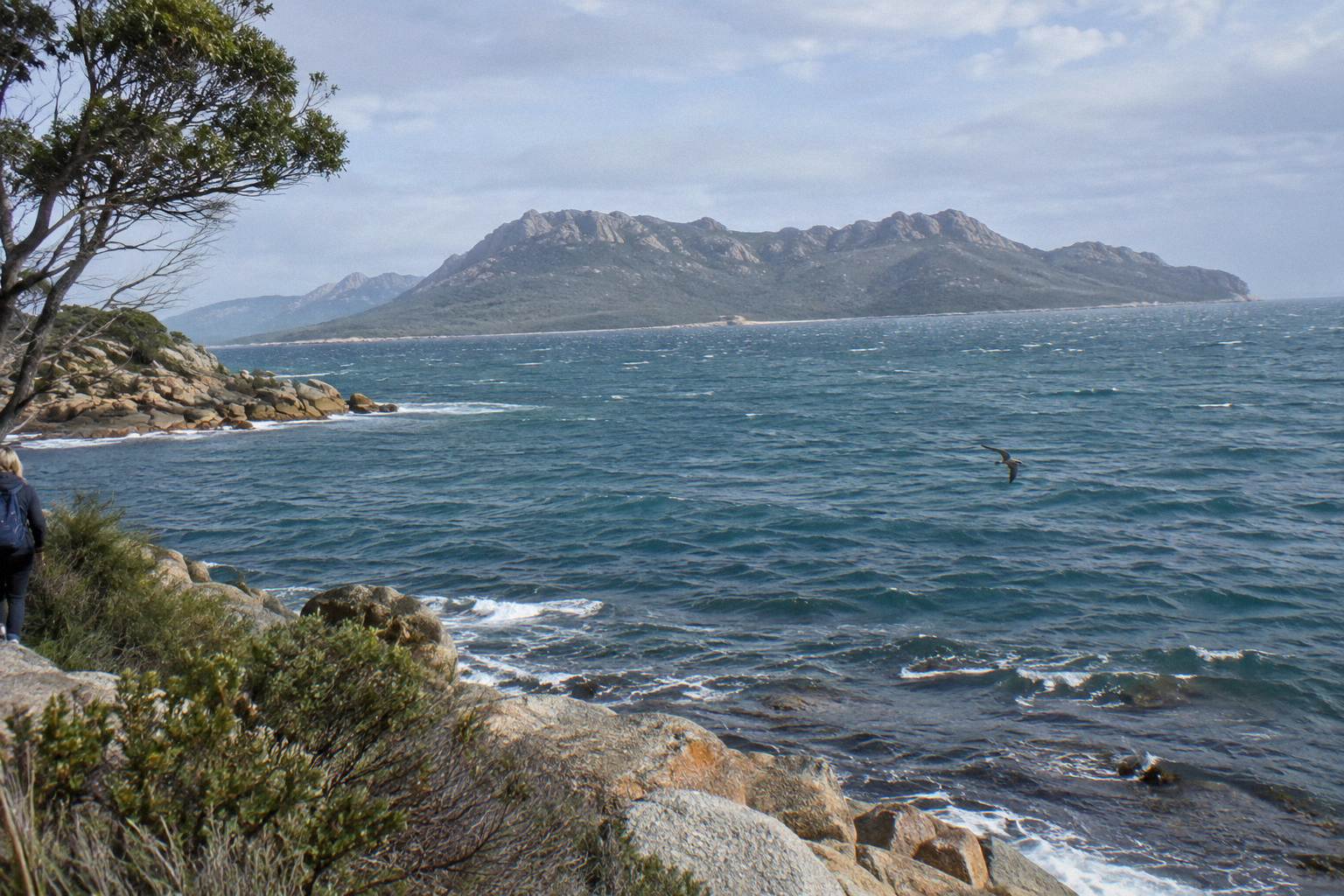
Coles Bay sits where Great Oyster Bay meets the Tasman Sea, at the foot of the Hazards, and the water there is genuinely cold by mainland Australian standards: the long-run sea surface data for Coles Bay, published by seatemperature.org, puts the annual range at roughly 13 to 17 degrees Celsius. February is the warmest month on that record, averaging about 17.2 degrees, and August the coldest, averaging about 13.0 degrees. For a paddler those numbers matter less as a swim forecast than as a dressing guide, because on a guided trip you stay in the boat, the operator supplies warm jackets, and the main cold you will notice is the wind on your hands and the water on your feet. A Freycinet Kayaking reader planning a trip in July needs different clothing to one booked for February, and the gap between those two months is only about four degrees of sea temperature.
In short: expect sea temperatures of about 13 degrees Celsius in the coldest months (July to September) and about 17 degrees in the warmest (January to March), per the long-run Coles Bay averages from seatemperature.org. No wetsuit is offered or needed on the guided paddle: Freycinet Adventures provides all kayaking equipment, including warm jackets, and asks you to wear comfortable clothing and footwear that can get wet. The Freycinet Paddle runs year round, with departure times shifting with the seasons. Practical takeaway: layer for the air and wind, accept wet feet, and let the supplied jacket handle the rest.
Start with the tour itself: the guided paddle out of Coles Bay.
| Month | Min (C) | Avg (C) | Max (C) |
|---|---|---|---|
| Jan | 15.9 | 16.8 | 17.7 |
| Feb | 16.6 | 17.2 | 17.9 |
| Mar | 16.1 | 16.6 | 17.2 |
| Apr | 15.2 | 16.0 | 16.8 |
| May | 13.7 | 14.8 | 15.9 |
| Jun | 13.3 | 14.0 | 14.7 |
| Jul | 12.5 | 13.2 | 13.9 |
| Aug | 12.5 | 13.0 | 13.5 |
| Sep | 12.6 | 13.1 | 13.7 |
| Oct | 12.8 | 13.5 | 14.2 |
| Nov | 13.8 | 14.8 | 15.7 |
| Dec | 15.4 | 16.3 | 17.2 |
The sea at Coles Bay averages between about 13.0 and 17.2 degrees Celsius across the year, per the long-run record maintained by seatemperature.org. August is the coldest month at 13.0 degrees on average, and February the warmest at 17.2 degrees. Even at the summer peak the water stays below 18 degrees most days, so this is cool-temperate paddling rather than tropical, and how you dress for it matters more than the number itself.
Those figures deserve a plain explanation. Seatemperature.org is a secondary source built on long-run historical sea surface measurements, and its Coles Bay page reports a minimum, an average and a maximum for each month. The spread inside any single month is roughly one degree either side of the average. So a July paddle could meet water at 12.5 degrees, and a February paddle at 17.9 degrees, and both sit inside the normal range rather than marking anything unusual. Treat the averages as a planning figure, not a prediction for your specific morning.
What the number does not tell you is how cold you will actually feel, because on the guided paddle you are not swimming. The Freycinet Paddle is 3 hours in total with about 2 hours of paddling cumulatively and a rest break halfway, in stable double sit-in sea kayaks launched from Muirs Beach at Coles Bay. Sit-in kayaks keep your lower body out of the wind and largely out of the spray, which changes the warmth equation completely compared with sitting exposed on a sit-on-top. Your feet are the exception: the operator warns that footwear will get wet, and suggests flip flops or bare feet. Hands and face are the other exposed points, which is why a hat or sunglasses makes the operator's bring list alongside drinking water.
The seasonal shape of the numbers is worth a second look. The sea warms slowly through spring, holds its summer peak from January to March, and then cools steadily from April onward to the August floor. November and May sit at almost the same average, about 14.8 degrees, which surprises people who assume late spring feels like late autumn. The ocean in November is carrying the memory of winter, while the air can already feel summery. Pack for the water temperature in November, not the air temperature, and the shoulder months from April to June and September to November deserve the same thinking.
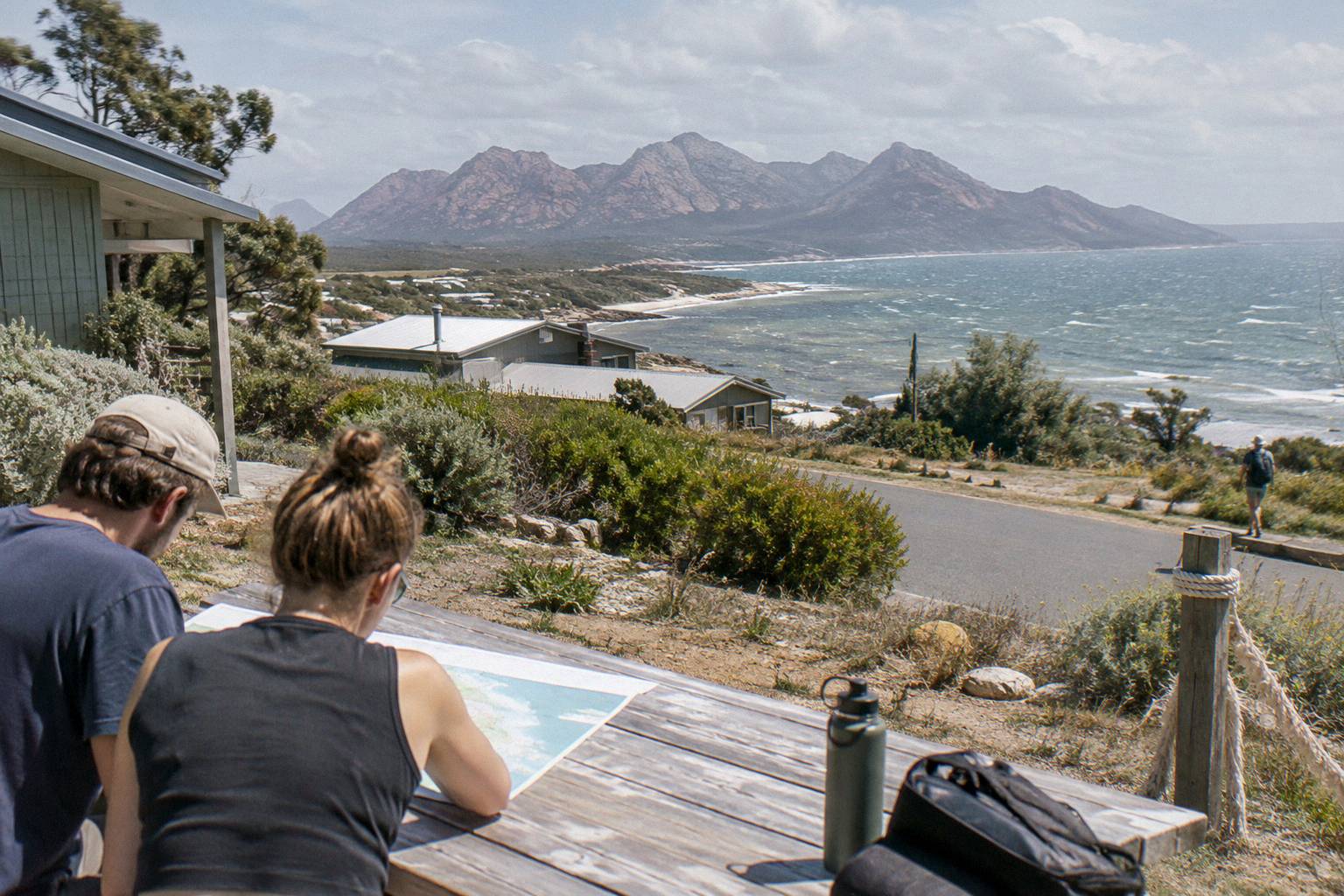
There is also a wildlife angle to the cold half of the year, if that shapes when you travel. The Department of Natural Resources and Environment Tasmania notes that southern right whales can be reliably seen in Tasmania between May and November, and the parks service says the park's waters are regularly visited by whales, particularly humpbacks, during the winter months. The day paddle stays on Great Oyster Bay and the operator describes dolphins, whales and fur seals as appearing on occasion, never as a promise. But the cooler months are when the bigger marine species move along this coast, so a colder sea is not automatically a quieter one.
Do You Need A Wetsuit To Kayak At Coles Bay?
No wetsuit is needed for the guided paddle, and none is offered. Freycinet Adventures states that all sea kayaking equipment is provided, and both the operator and the booking page name warm jackets among what is supplied; a wetsuit appears nowhere in the operator's clothing advice. Instead the guidance is simpler: comfortable clothing, footwear that can get wet, a hat or sunglasses, and drinking water. Dry bags for phones and cameras are provided too.
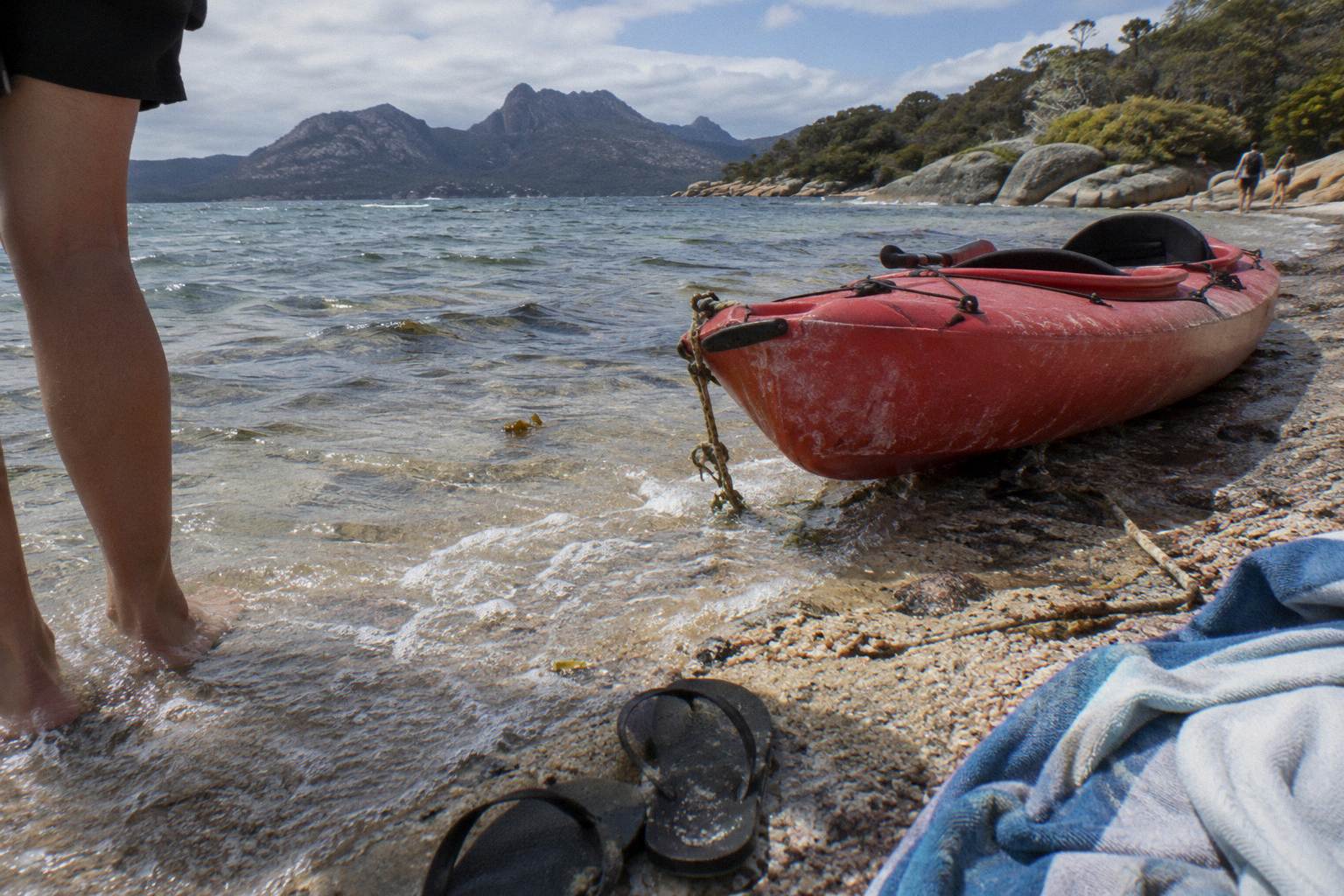
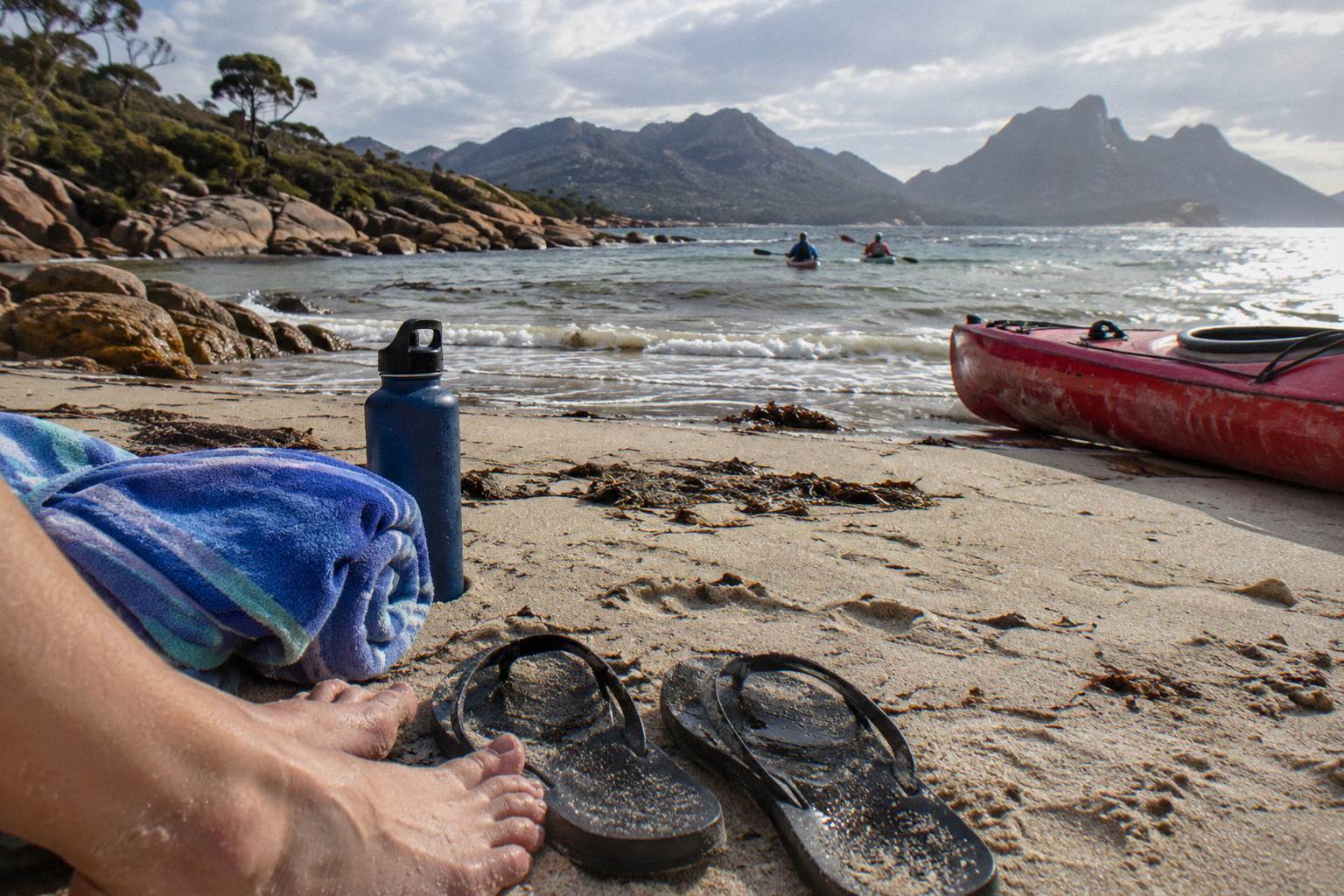
That answer sometimes catches visitors from Queensland or from overseas summer destinations, who arrive with a wetsuit mindset and find the reality more forgiving. A wetsuit is what you wear when you expect long immersion: surf sessions, dive trips, capsizing drills. On a guided flatwater paddle in double sit-in kayaks, immersion is not the plan and the cockpit shields you from most spray. The operator's half-way stop is on a secluded sandy beach, where you step out briefly for a hot drink and a snack, then get back in. Warm jackets supplied over your own layers handle the wind chill.
The distinction matters because the operator's clothing advice is built around splash, not swimming. Footwear will get wet: that is stated plainly, and flip flops or bare feet are the suggestion, which rules out anything you want to keep dry. Everything from the knees up stays largely dry in a sit-in double. So the packing logic is: legs in quick-drying comfortable clothing, a warm layer or two on top that the supplied jacket can go over, and nothing precious below the ankle.
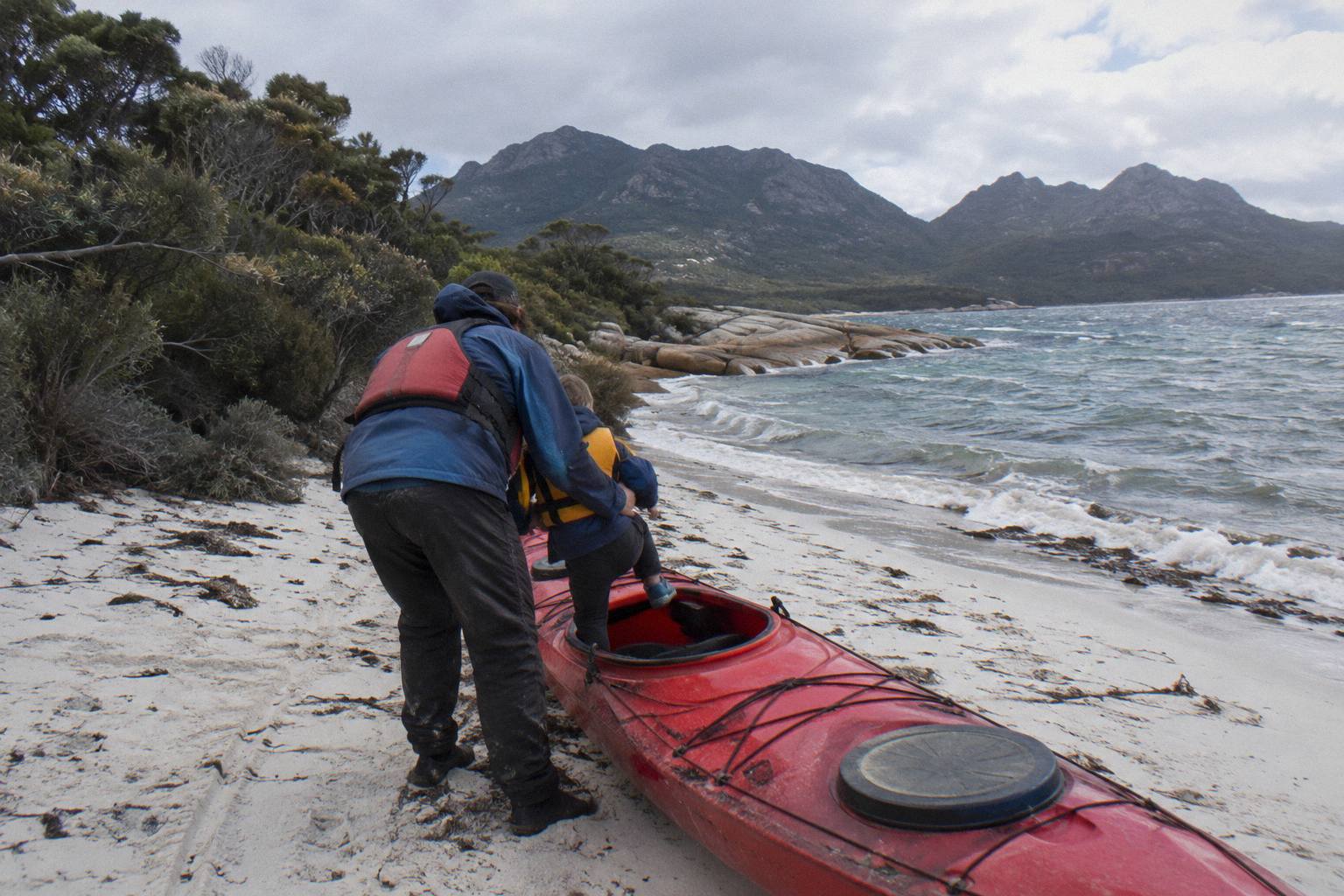
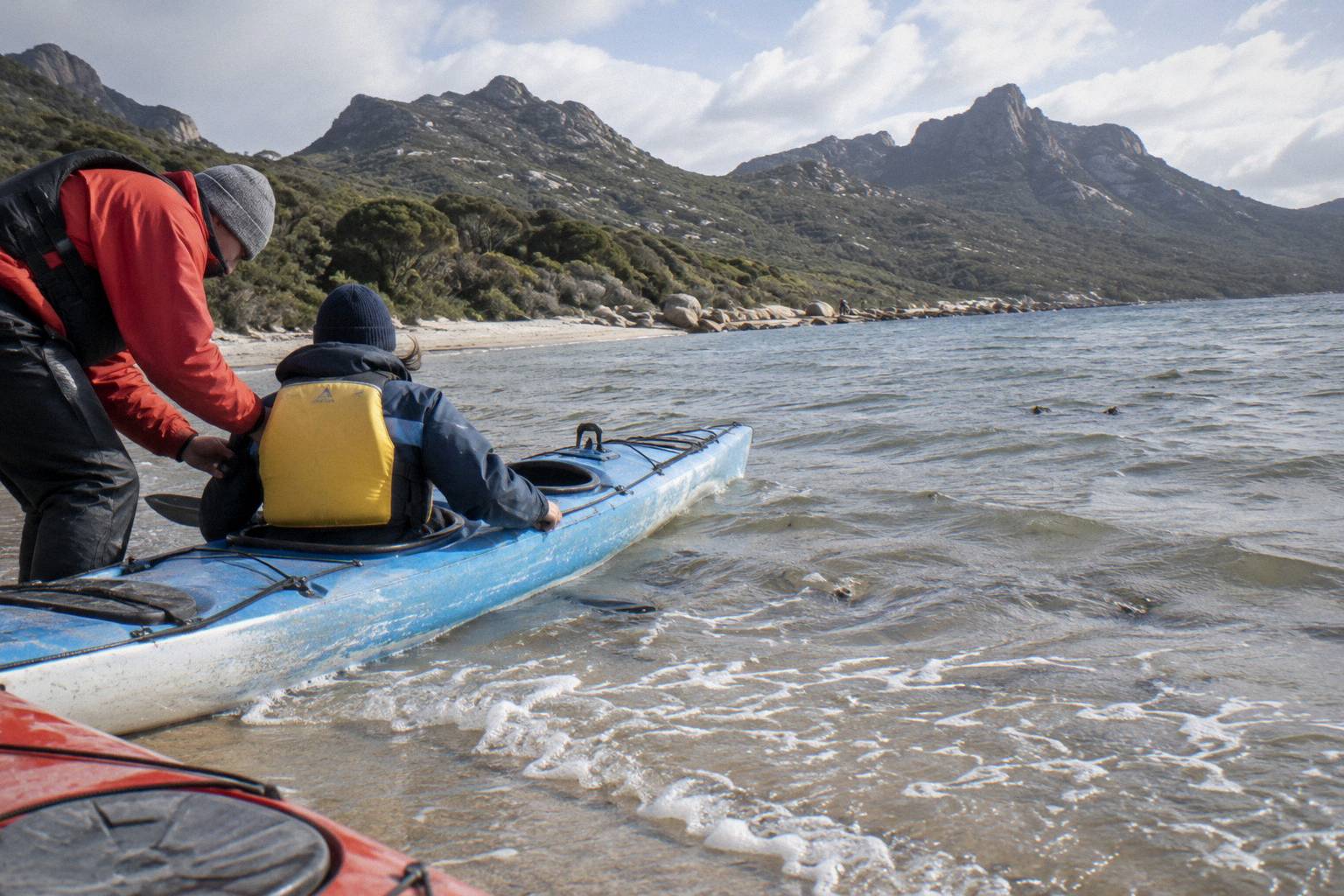
One safety item sits behind the equipment question, and it belongs to the regulator rather than the operator. Marine and Safety Tasmania states that a life jacket is compulsory in a lightweight craft, which includes kayaks. The operator's pages describe "all kayaking equipment" being provided without itemising life jackets, so the accurate statement is that a guided tour supplies its craft and equipment, and MAST requires a life jacket in any kayak. If you ever paddle independently in Tasmania, the life jacket rule is yours to meet; on a guided tour the operator carries that responsibility.
What Does 13 To 17 Degrees Actually Feel Like On The Water?
Sea temperature in the low teens feels cold to fall into and mild to paddle on, and the gap between those two experiences is the whole story of kayaking at Freycinet. Water at 13 degrees is cold enough to take your breath away on full immersion, one reason the operator requires guests to be able to swim. Sitting in a sit-in double with a supplied warm jacket, the same water feels like cool air and wet feet.
It helps to separate the three ways cold reaches a paddler. First, contact: your feet at launch and at the beach stop, and your hands if you splash. That is brief and tolerable at any month in the table. Second, wind chill: moving air over damp skin, which the supplied jackets and your own layers manage, and which is why the operator's bring list leans on clothing rather than neoprene. Third, immersion: falling in, which is the scenario the swim requirement and the safety briefing exist for. The water temperature table is really an immersion table. In February, an accidental dunking is brisk; in August it is serious, which is why guides brief everyone first and can cancel at any time for safety.
For readers comparing months, here is the same data arranged by season rather than calendar month, which is usually how people actually decide when to come.
| Season | Months | Typical sea avg (C) | What it means for paddling |
|---|---|---|---|
| Summer | Dec, Jan, Feb, Mar | 16.3 to 17.2 | Peak warmth; spray feels refreshing, wet feet are a non-event |
| Autumn | Apr, May | 14.8 to 16.0 | Cooling fast; add a layer under the supplied jacket |
| Winter | Jun, Jul, Aug | 13.0 to 14.0 | Coldest water; layers and warm headgear earn their place |
| Spring | Sep, Oct, Nov | 13.1 to 14.8 | Sea still carrying winter; air can feel warmer than the water suggests |
Note what that table does not claim: nothing about wind, crowds, rainfall, daylight or which month is calmest. Those figures are not held for this site, and sea temperature alone cannot tell you whether a given July morning is glassy or blustery. The operator says tours run year round with seasonal departure times and that guides can cancel at any time for safety, and in challenging wind the operator may contact guests beforehand, may require previous sea kayaking experience and moderate fitness, and otherwise offers a full refund or reschedule. Weather cancellation means a full refund, so a cold-season booking carries no financial risk from a bad forecast.
If the cold-water idea puts you off the kayak entirely but not Freycinet itself, the water can stay cold and you can stay dry: the Wineglass Bay cruise boards at 61 Jetty Rd in Coles Bay and runs about 4 hours 30 minutes, rated 4.7 across more than 1,000 reviews on its booking page, and it shows you Wineglass Bay from the deck rather than from a cockpit. The Freycinet Walking Tour is the third dry-land option among the trips covered here.
Is The Water Colder Than Other Parts Of Tasmania?
Coles Bay's 13 to 17 degree range is cold by mainland Australian standards and unremarkable by Tasmanian ones, which is the honest extent of the comparison. No destination-by-destination temperature table for other Tasmanian launch points is held here, so none is offered. Whatever the regional differences, the practical advice does not change: comfortable layers, the supplied jacket, and footwear that can get wet.
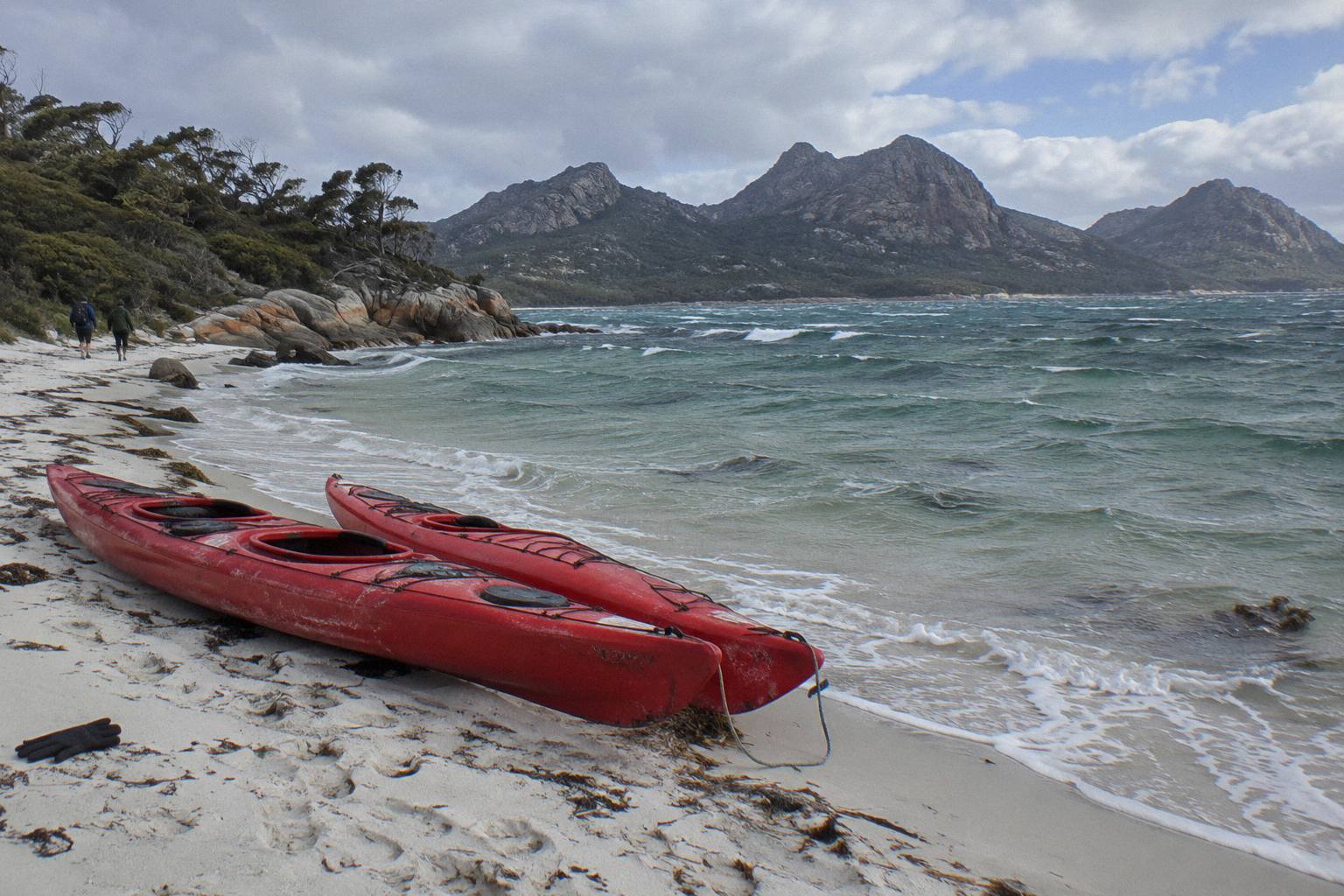
The question behind that heading is usually really asking whether Freycinet is a specially cold place to paddle, and the answer is no: Great Oyster Bay is a sheltered, east-facing embayment, and the parks service notes the relatively sheltered waters of Coles Bay suit all experience levels. Sheltered does not mean warm. The sea surface record shows the same temperate swing any Tasmanian east coast location shows, with the August floor near 13 degrees and the February ceiling near 17. What Great Oyster Bay offers is protection from open-ocean swell, which matters for comfort far more than a fraction of a degree.
Travellers weighing Tasmania against other kayaking destinations they have done can anchor on the numbers. Seventeen degrees is roughly the summer sea temperature at which many people in southern Australia will swim without a wetsuit, reluctantly. Thirteen degrees is colder than most mainland beach swimming at any time of year. So: swimming at Coles Bay is a short-visit activity even in February, while paddling on it in the right clothing is comfortable in any month. That distinction, between a swimmable sea and a paddleable one, is the useful takeaway from the temperature table.
What Should You Wear For The Water Temperature?
Dress in comfortable layers you can adjust, expect wet feet in every month, and let the operator's supplied warm jackets do the outer-layer work. The operator's advice is comfortable clothing, drinking water, a hat or sunglasses, and footwear that can get wet, with flip flops or bare feet suggested. In the warmest months one layer under the supplied jacket is plenty; in July and August add a warm mid-layer and something for your head.
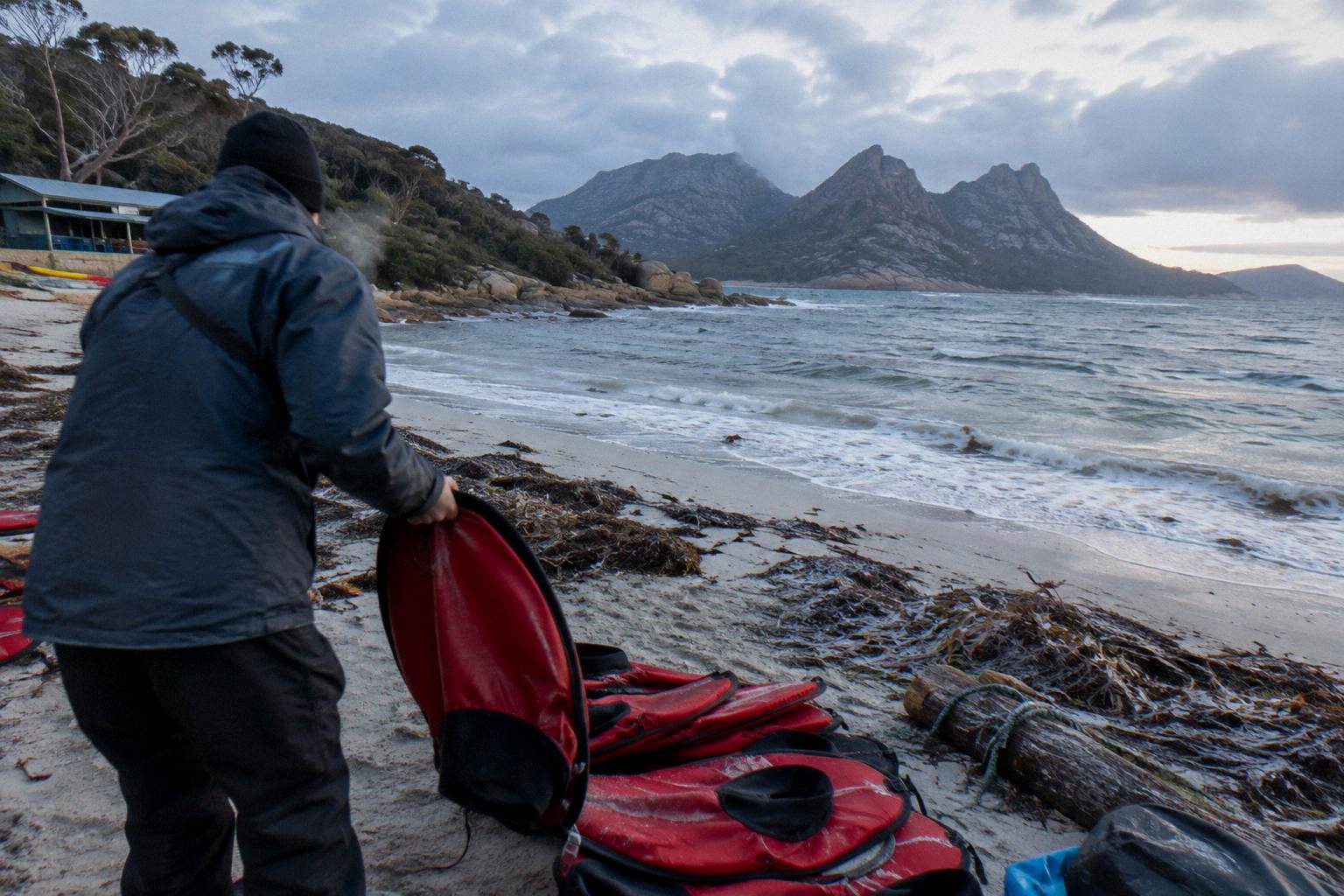
The month-by-month logic is straightforward. From December to March, treat it as a cool-climate summer activity: comfortable clothing, sun protection, footwear for the wet launch. From April to June, the sea is losing about half a degree a week at the steepest part of the cooling curve, so the difference between early April and late June is real; a warm layer under the jacket covers it. From July to September the water sits at its floor, and the supplied jacket over a fleece or jumper, plus a beanie, is the reliable combination. October and November warm slowly, so keep the winter habits until the sea itself turns, not the air. If you want the full clothing picture, the what to wear sea kayaking at Freycinet guide works through it layer by layer.
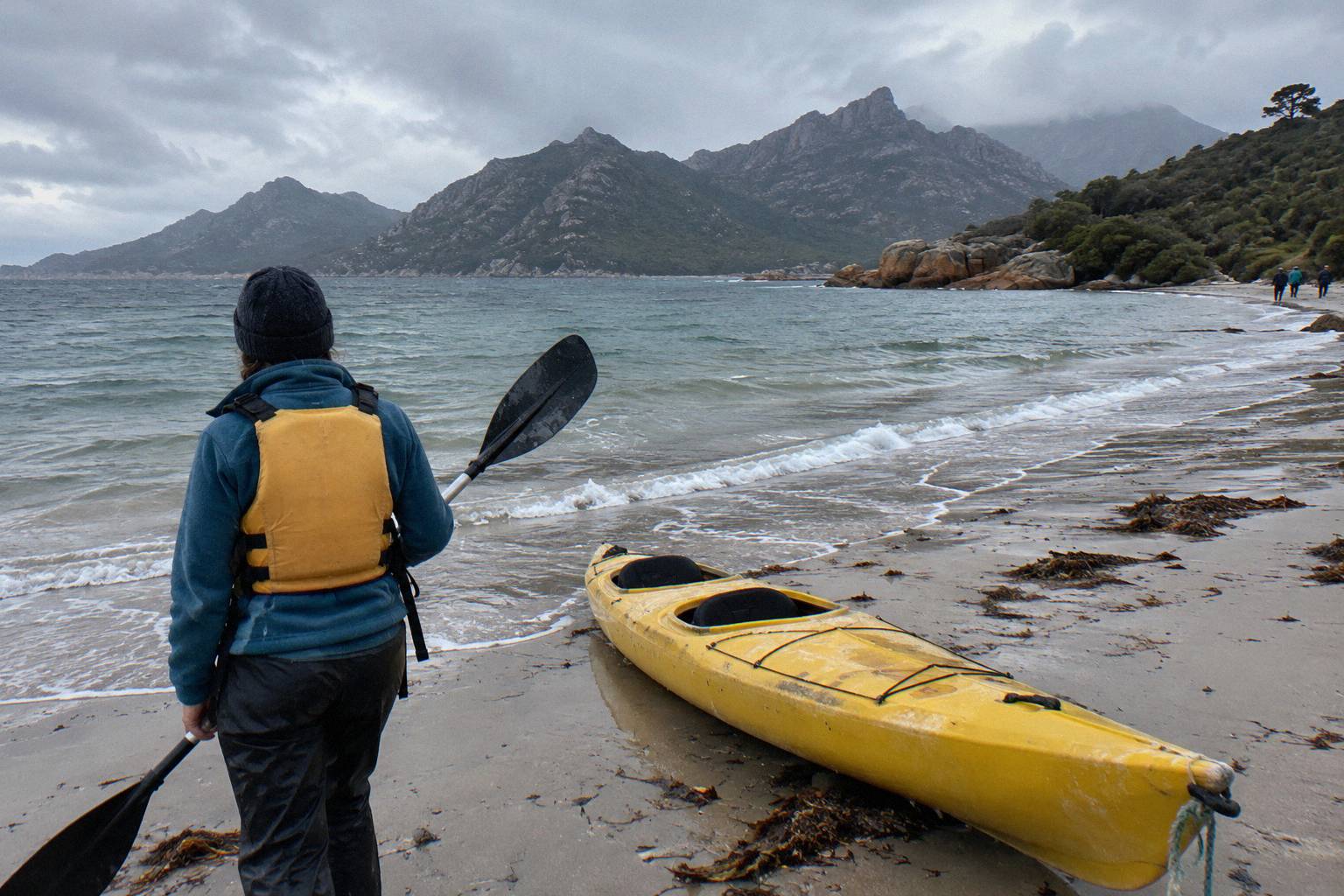
Two practical items complete the kit. Dry bags for phones and cameras are provided, so the electronics question has a built-in answer; still, the operator suggests rather than guarantees, so anything genuinely waterproof-sensitive can stay ashore. And if you are extending the day beyond the paddle, it is worth mapping how the 3-hour tour slots between a morning walk and an afternoon elsewhere in the park, which matters in winter when the daylight window is shorter.
For families, the same clothing logic applies to children, who join from age 7 with an adult, per the operator. Children feel cold faster in the water months, so in July and August give them an extra layer rather than the same as yours, and note the operator's remark that children need to be happy to sit still for 2 to 3 hours. The swim requirement applies to everyone: the operator's FAQ states plainly that guests need to be able to swim to take part. If any of that raises a health question, check with your doctor and tell the operator when you book.
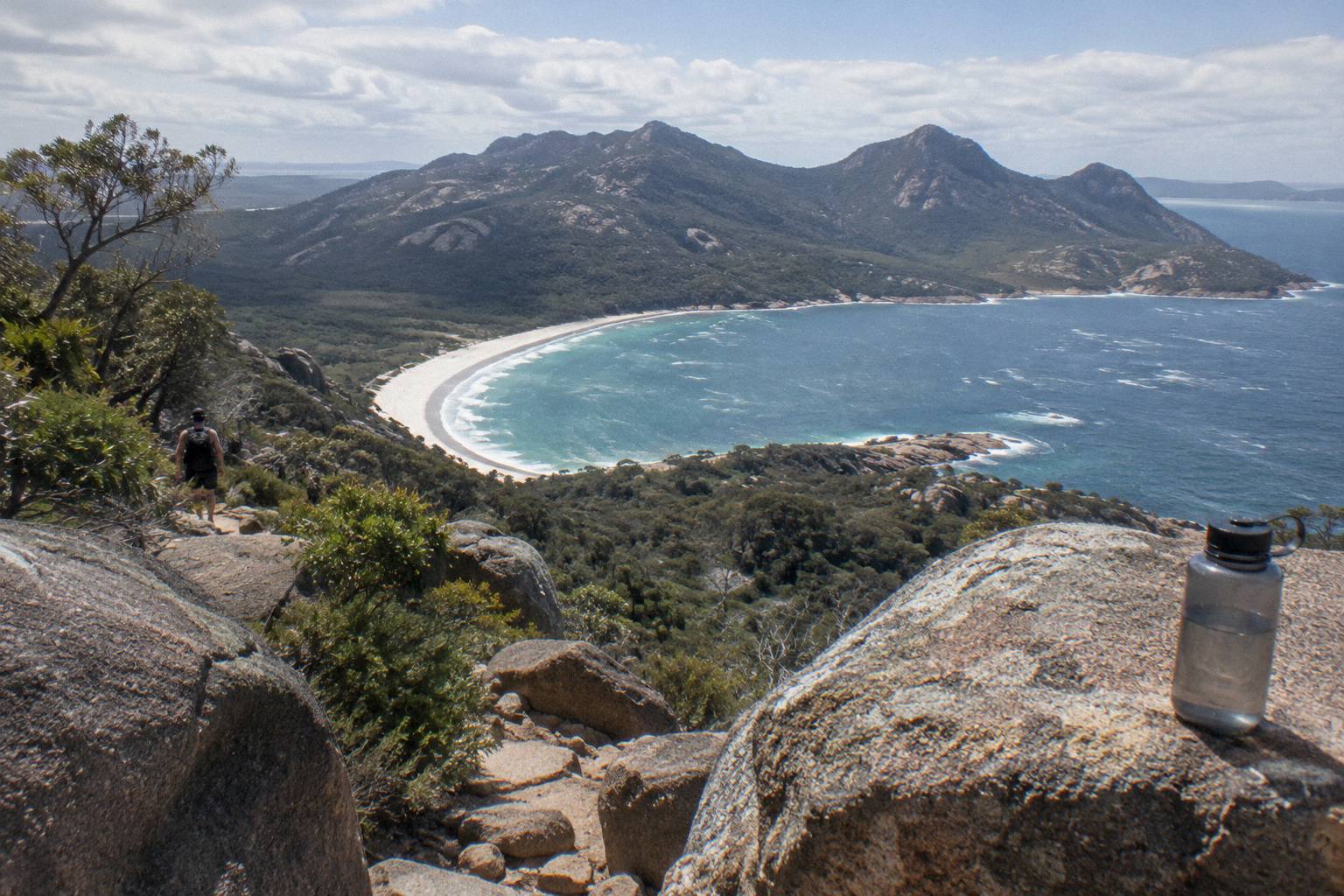
Does The Cold Water Change What Wildlife You Might See?
Yes, in one specific way: the colder months overlap with the whale seasons. NRE Tasmania says southern right whales can be reliably seen in Tasmania between May and November, and the parks service says the park's waters are regularly visited by whales, particularly humpbacks, during the winter months. The operator describes sting rays, white bellied sea eagles, and larger species including dolphins, whales and fur seals as appearing on occasion. Nothing is guaranteed, on any tour, in any month.
That is the full extent of what can honestly be said, and it is worth resisting the temptation to say more. The day paddle takes place on Great Oyster Bay, and the operator's own park page notes whales are usually seen on the eastern side of the Freycinet Peninsula during their annual migration, more commonly southern right and humpback whales. So a whale sighting from a kayak on the bay side is possible, occasional, and never promised. It also bears repeating that the day paddle does not reach Wineglass Bay; the coastline it explores is the sheltered Great Oyster Bay shore between Coles Bay and the Hazards.
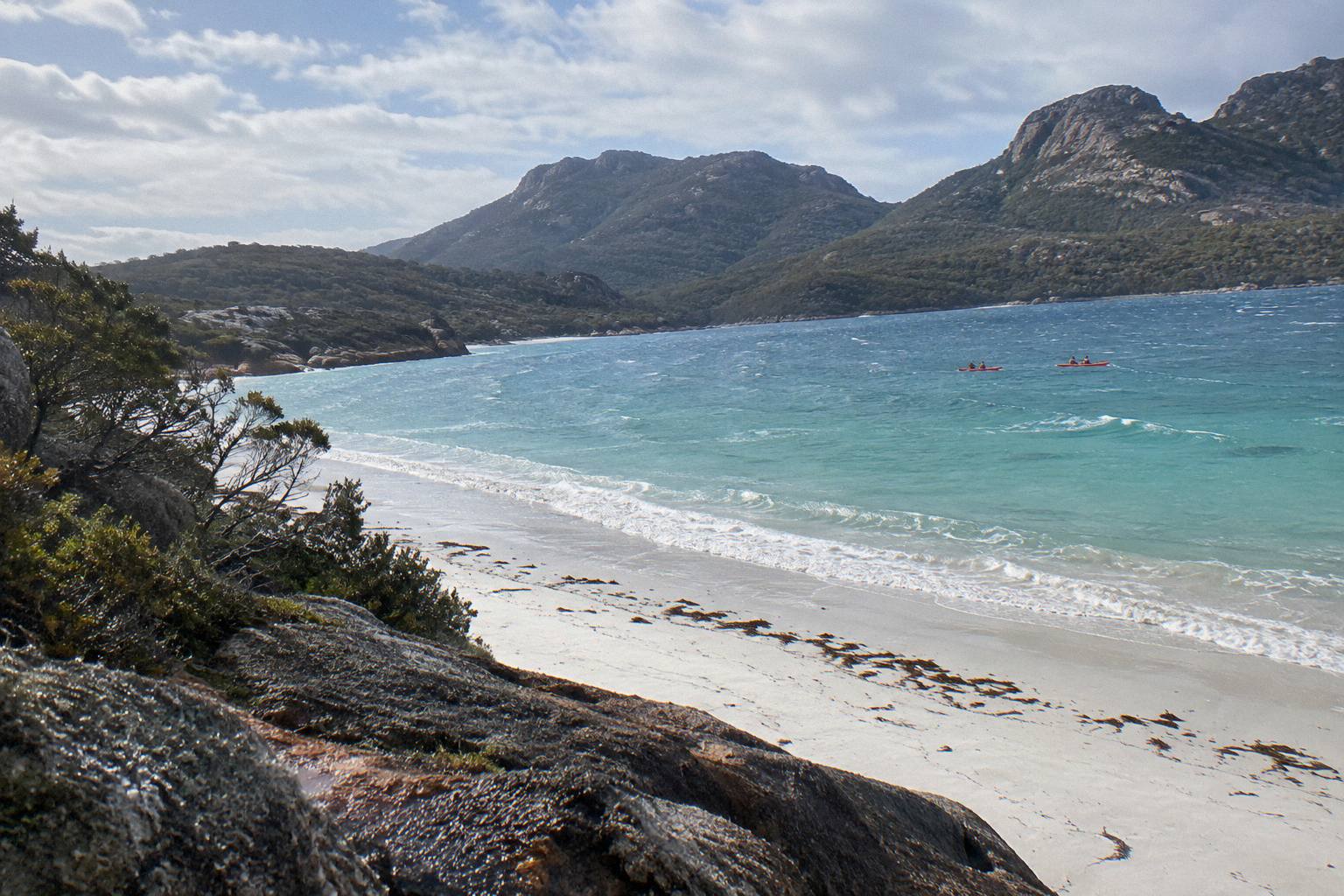
For readers whose real question is whether the water is cold enough to put them off entirely, a worked comparison helps. Picture two bookings. The February traveller wears a t-shirt, takes the supplied jacket anyway because the wind can pick up, gets wet feet at Muirs Beach, and gives the temperature no further thought. The August traveller layers up, wears a beanie under the supplied jacket, accepts the same wet feet, and finds the paddle comfortable because the effort of paddling keeps the body warm while the cockpit blocks the wind. Both do the same 3-hour tour, about 2 hours of paddling, with the same beach stop and hot drink. The sea temperature difference between them, about four degrees, is real but manageable, and it is the dressing, not the date, that decides comfort.
What Trips People Up When Packing For Cold Water
The recurring mistakes are packing for the air temperature instead of the sea temperature, bringing footwear you want to keep dry, assuming a wetsuit is required and overloading the day, and skipping the swim requirement check. The operator supplies the craft, paddles, warm jackets and dry bags, so nearly everything else is clothing you already own. Feet get wet at every launch, in every month.
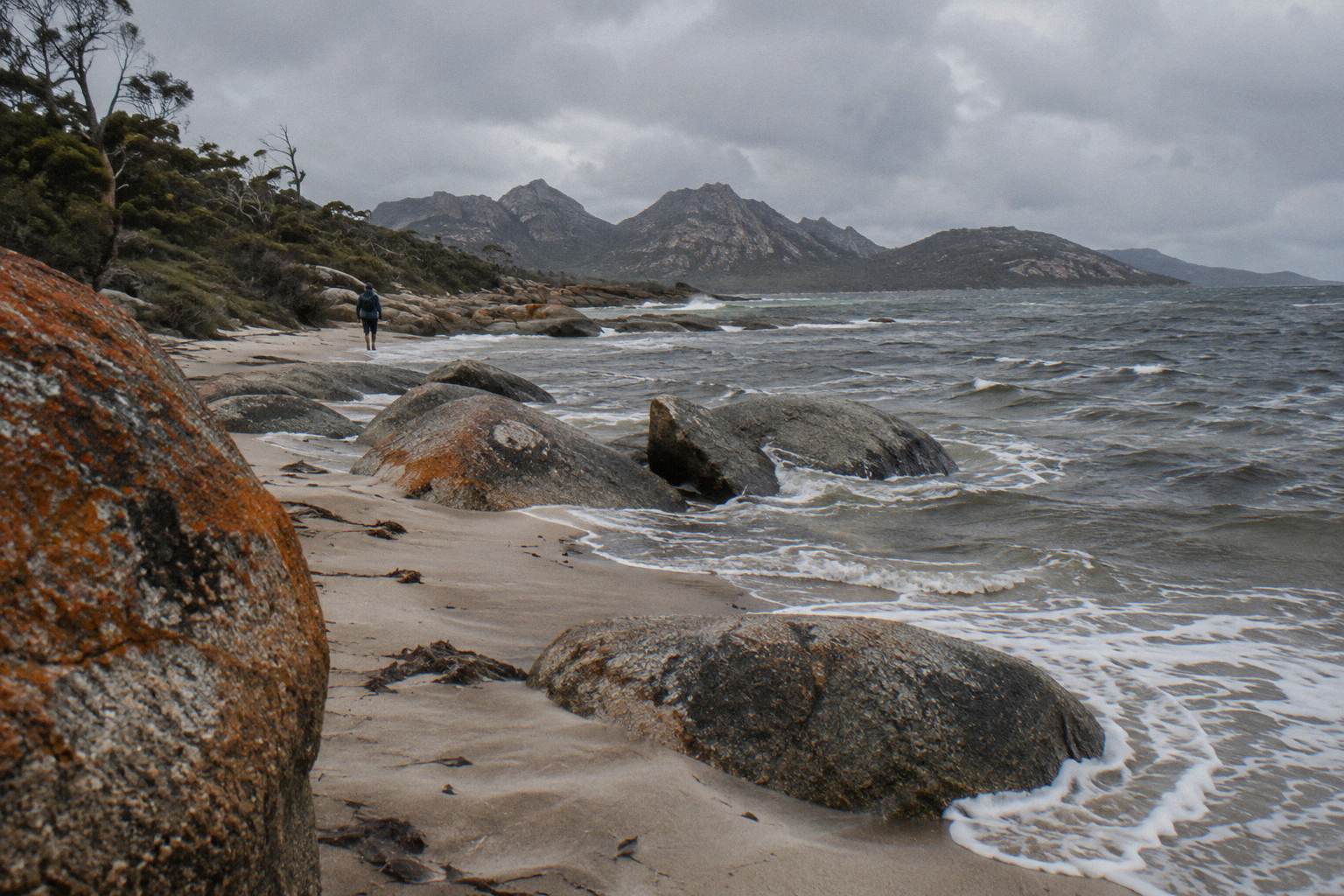
A short checklist covers the rest. Confirm your month's sea temperature against the table above and dress one layer warmer than it suggests in the cooler half of the year. Leave the good runners ashore. Bring drinking water and a hat or sunglasses per the operator's advice. If a health condition makes cold water a genuine concern, check with your doctor and tell the operator when you book, since guides can only accommodate what they know about. And book with the cancellation terms in mind: 24 hours notice for a refund, and a full refund or reschedule if the operator cancels for weather, so a cold-month booking does not lock you into a bad morning.
Getting to Coles Bay is the last practical piece: the parks service describes the drive as about 2.5 to 3 hours from either Launceston or Hobart, turning off the Tasman Highway onto Coles Bay Road 12 km south of Bicheno. If driving is not an option, there is a full-day coach tour from Hobart that visits Wineglass Bay, though it is a land-based day rather than a paddle. On the pass question, the operator's kayak tour pages do not say whether a national parks pass is included; the walking tour page separately states a pass is required and not included in that price, so ask the operator or check the booking page before you assume either way for the kayak tour.
Booking windows matter more than the thermometer for securing a seat: online bookings for The Freycinet Paddle close 3 hours before departure, and the sunrise version 12 hours before. If the month choice is still open, weighing the seasonal temperature curve against the whale months above is the honest way to decide; no single month is best.
Common Questions About Water Temperature At Freycinet
How Cold Is The Water For Kayaking At Freycinet?
The sea at Coles Bay averages between about 13.0 and 17.2 degrees Celsius across the year, per the long-run averages from seatemperature.org. August is the coldest month, averaging 13.0 degrees, and February the warmest, averaging 17.2 degrees.
Do I Need A Wetsuit For The Freycinet Paddle?
No. The operator provides all sea kayaking equipment including warm jackets, and its clothing advice is comfortable clothing, footwear that can get wet, a hat or sunglasses and drinking water. No wetsuit is mentioned anywhere in the operator's equipment guidance.
Will My Feet Get Wet On The Tour?
Yes, in every month. The operator states plainly that footwear will get wet and suggests flip flops or bare feet. Everything above the ankles stays largely dry in the sit-in double kayaks.
Is The Water Too Cold For Children?
Children from 7 can join with an accompanying adult, per the operator, and the supplied warm jackets apply to them too. In the cooler months give children an extra layer, and remember the operator's note that children need to be happy to sit still for 2 to 3 hours.
What Is Provided To Keep Me Warm?
All sea kayaking equipment is provided, including stable double sea kayaks and warm jackets. Dry bags for phones and cameras are also provided. A hot drink and a snack are served at the half-way beach stop.
Can The Tour Be Cancelled Because Of Cold Or Bad Weather?
Guides can cancel at any time for safety, and weather cancellation means a full refund or reschedule. In challenging wind the operator may contact guests beforehand and may require previous experience. Guest cancellations for other reasons need 24 hours notice for a refund.