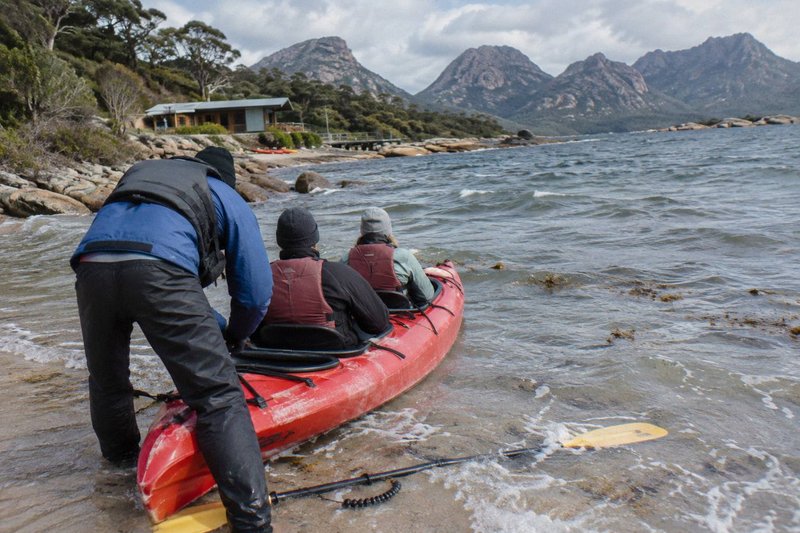
What To Wear Sea Kayaking At Freycinet: Cold Water, Sun And Spray
The short packing list for a Freycinet paddle is simple: comfortable clothes, a hat or sunglasses, drinking water, and footwear that can get wet. Everything else, the kayaks, paddles, spray protection and warm jackets, comes with the tour.
Short answer
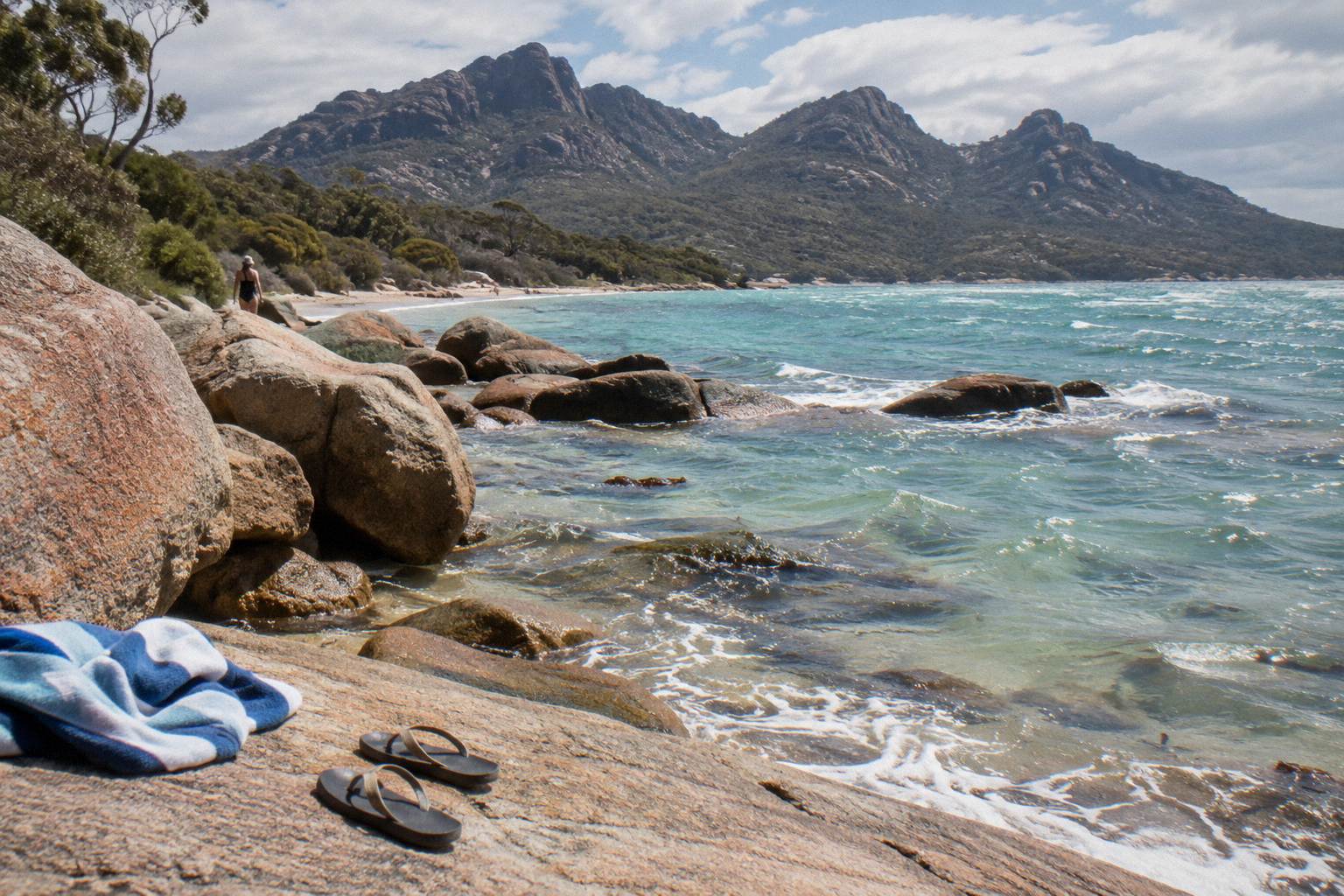
Wear comfortable clothing and footwear that can get wet, such as flip flops or bare feet, and bring drinking water plus a hat or sunglasses. The operator provides all kayaking equipment, warm jackets and dry bags for phones and cameras. Sea temperatures at Coles Bay run from about 13.0 °C in August to about 17.2 °C in February, so layers matter more than a wetsuit, which no operator page mentions.
If you want the broader picture before deciding, the Coles Bay kayak tours overview explains how the day runs; what follows is the clothing and gear question only.
| Item | Status on the tour | Who says |
|---|---|---|
| Double sit-in sea kayaks and paddles | Provided | Operator |
| Warm jackets | Provided | Booking page |
| Dry bags for phone and camera | Provided, suggested for electronics | Operator and booking page |
| Hot drink and a gourmet cookie | Included at the halfway beach stop | Booking page |
| Drinking water | Bring your own | Operator |
| Hat or sunglasses | Bring your own | Operator |
| Footwear | Gets wet; flip flops or bare feet | Operator |
| Wetsuit | Not mentioned on any operator page | Operator pages |
| Hotel pick-up and drop-off | Not included | Booking page |
What To Wear On The Water Itself
Wear comfortable clothes that let you move, layered for the day, and keep nothing precious on your feet or in your pockets. Freycinet Adventures recommends bringing drinking water plus a hat or sunglasses, accepts that footwear will get wet, with flip flops or bare feet as stated options, and provides warm jackets on the water so you can leave your own bulky outer layer behind.
The reasoning behind such a short list is that you are paddling Great Oyster Bay in a stable double sit-in sea kayak, not surf launching. The cockpit seat is about 45 cm across, so tight jeans or rigid trousers would be uncomfortable for three hours, of which about two hours are spent paddling cumulatively with a rest break halfway. Clothing you could walk a few kilometres in comfortably is the right benchmark.
The double kayak matters for clothing too. Solo guests paddle with another guest or a guide, and the sit-in design keeps your lower body out of the wind compared with an open canoe-style seat. Spray can still reach you on the move, which is why quick-drying comfort beats cotton layers that stay damp. The operator does not prescribe fabrics or colours, and there is no reason to overthink it: a t-shirt under the provided warm jacket covers most days.
Season shifts the equation more than style does. In the warmer months the sun off the water is the main thing to manage with a hat or sunglasses, and in the cooler months the provided warm jacket does the heavy lifting. If you want a month-by-month read on conditions before choosing your layers, the best time to sea kayak at Freycinet guide breaks the year down, and the sea temperature table further down this page gives you the water side of that decision.
For context on the tour you are dressing for, The Freycinet Paddle (tour details here) runs 3 hours in total from Muirs Beach, Coles Bay, with a safety briefing first and a halfway stop on a secluded sandy beach for a freshly brewed coffee or hot drink and a snack, per the operator and the booking page. Check availability
What The Tour Provides, So You Do Not Have To Carry It
The tour supplies all sea kayaking equipment, warm jackets, and dry bags for cameras and phones, so you need none of that. Inclusions also cover GST, National Park fees, a hot drink with a gourmet cookie, and a professional guide. Only hotel pick-up and drop-off and transport to and from attractions sit outside the package, which keeps your bag small.
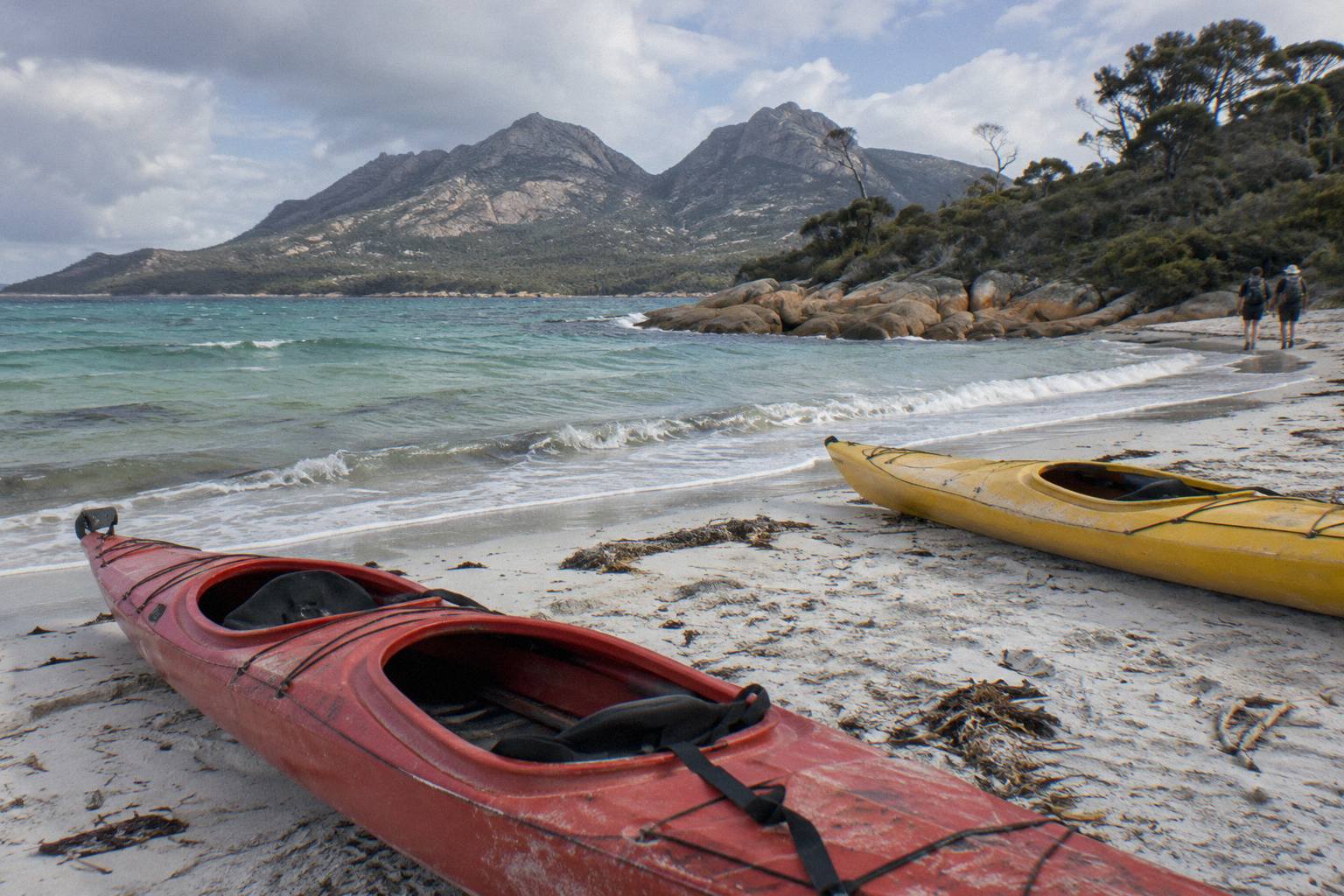
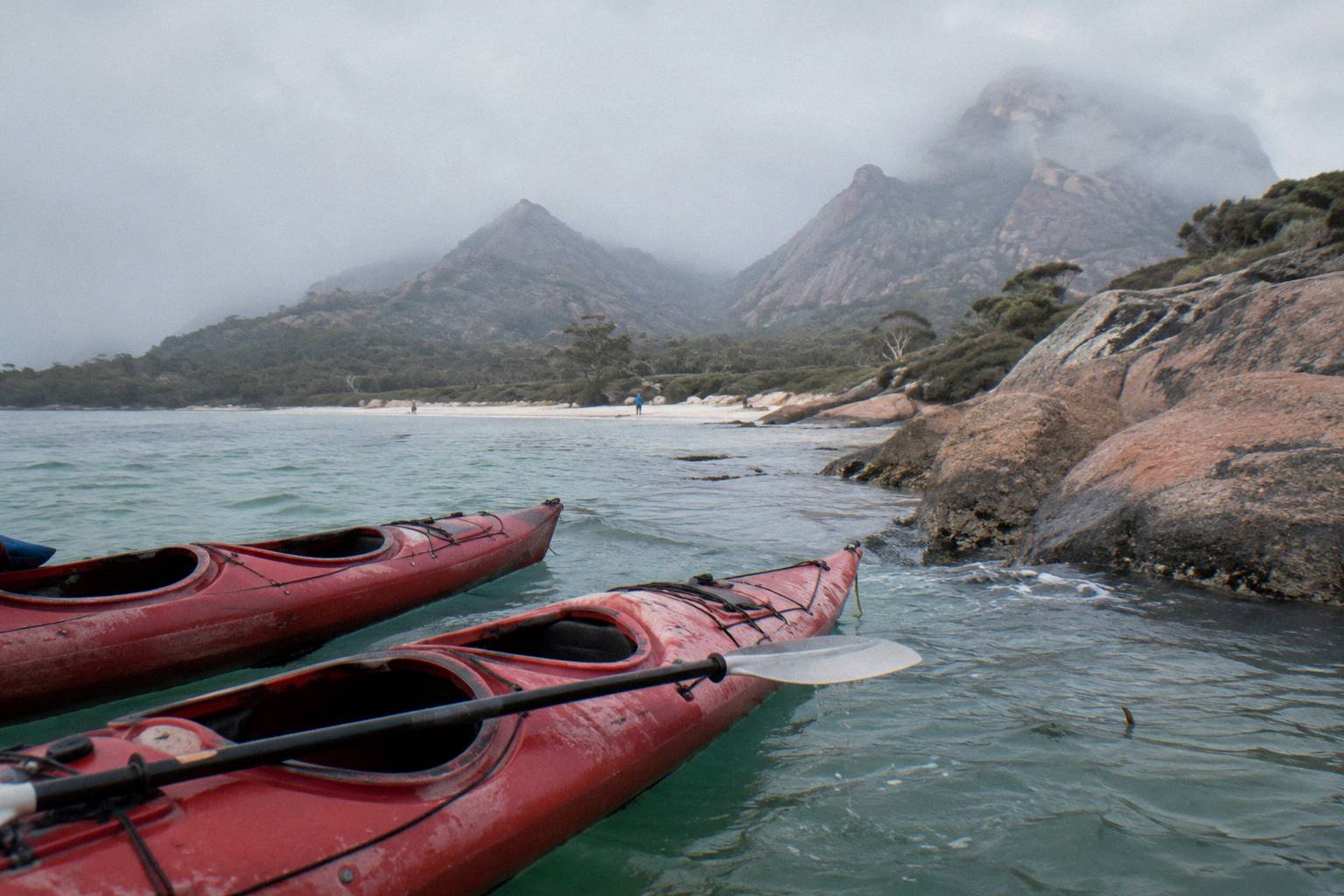
It is worth pausing on what "all kayaking equipment" means in practice. The kayaks are stable double sit-in sea kayaks, paddles come with them, and the warm jackets are on the booking page's inclusion list, which means you can leave your heaviest layer in the car if the day is mild. Marine and Safety Tasmania requires a life jacket in a lightweight craft, which includes kayaks, and a guided tour supplies its safety equipment as part of the package, so personal flotation does not need space in your luggage either.
Dry bags deserve a special mention because they answer the question almost every traveller asks: can the camera come? The operator suggests dry bags for phones and cameras, and the booking page lists them among what is provided. You do not need to buy one for a half day on Great Oyster Bay. Bring the phone, bring the camera, and hand them to the guide's kit rather than zip-locking them yourself.
What is not provided is just as useful to know. Drinking water is your job, transport to and from the meeting point is your job, and hotel pick-up and drop-off sits on the booking page's exclusion list. The meeting point is Muirs Beach, Coles Bay, where the operator says there is free public parking and public toilets. If you are weighing the overall cost of the day beyond clothing, the Freycinet kayak tour cost breakdown covers the from price and the pass question.
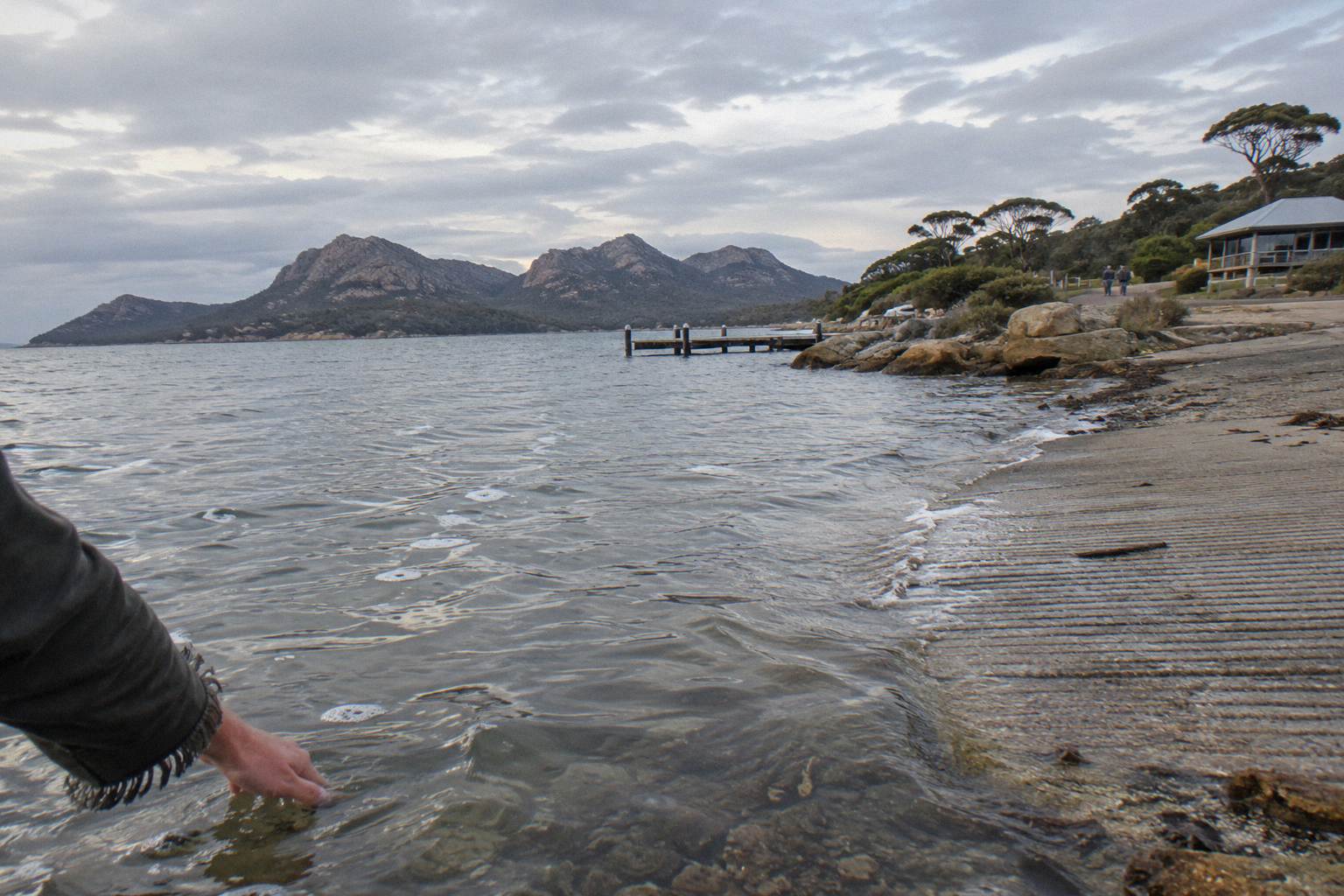
The one clothing item no page mentions is a wetsuit. The operator's own tour and FAQ pages, read end to end, describe warm jackets and dry bags and say nothing about wetsuits, and the sea temperatures below explain why: even at its warmest, Coles Bay water averages about 17.2 °C in February, which is a warm jacket rather than a wetsuit kind of cool. If you own a wetsuit and love it, nobody will stop you wearing it, but nothing in the tour's stated kit expects one.
Footwear, Getting Wet, And The Spray Question
Expect wet feet but very little spray, and leave the serious water shoes at home. The operator is blunt that footwear gets wet and suggests flip flops or bare feet, since the launch involves walking through shallow water at Muirs Beach, while the sit-in double kayaks block most spray and the halfway rest break puts you onto sand rather than shingle.
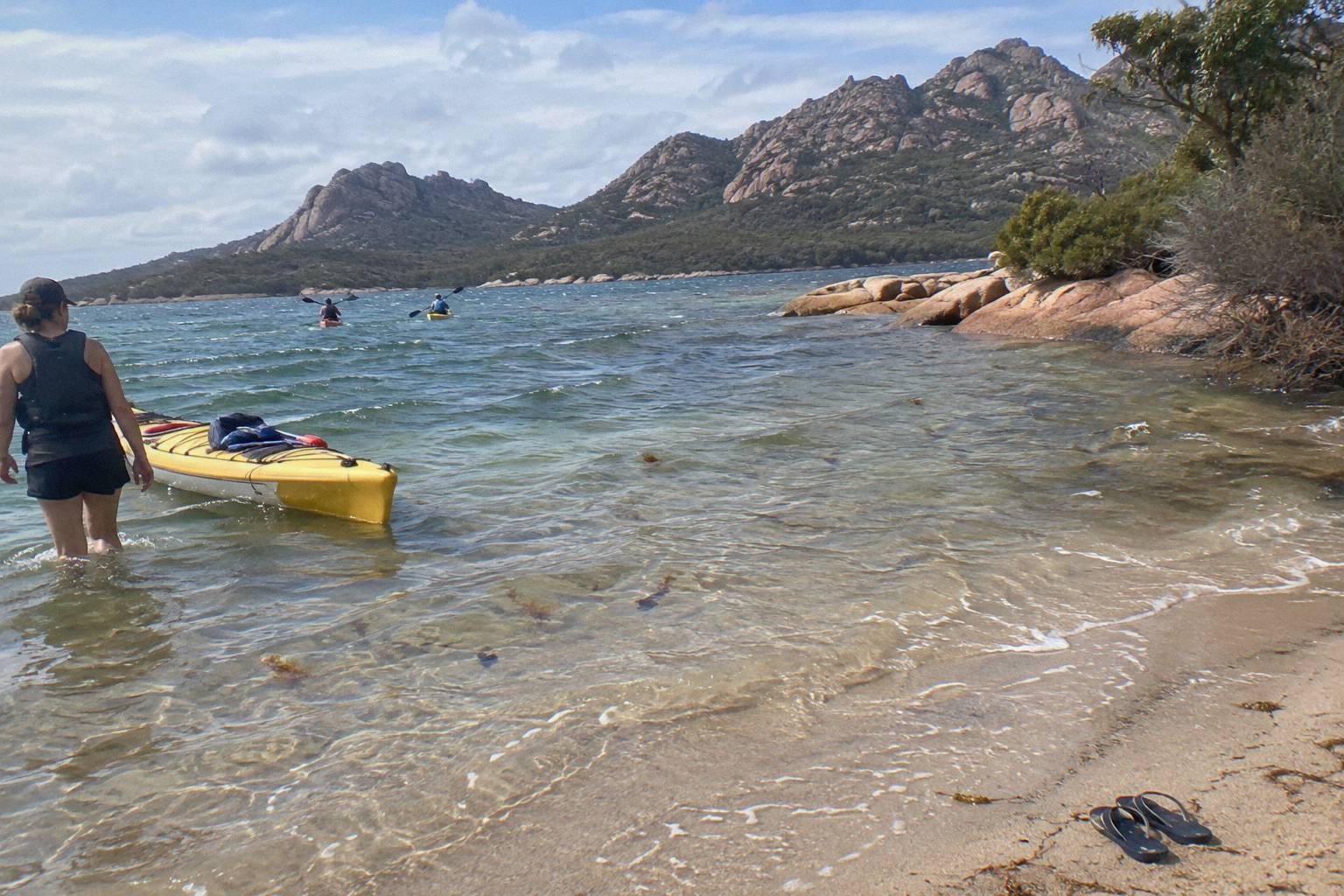
The footwear advice deserves its plainest reading: whatever is on your feet when you launch should be something you would happily stand in the sea in. Flip flops or bare feet is the operator's phrasing, and it covers both the launch and the halfway beach stop. What it rules out is anything you would be upset to soak, which means leather sneakers and fresh white runners are the wrong call, and thick socks under sandals will just hold water.
Will you get wet beyond the feet? The honest answer from the tour's own description is: some spray, no swimming. This is a guided paddle on Great Oyster Bay in stable doubles, with a safety briefing first and about two hours of cumulative paddling across the 3 hour tour, and the operator's stated halfway stop is a beach rest with a hot drink, not a swim stop. No operator page mentions swimming on the tour. Guests do need to be able to swim as a safety precaution, the operator's FAQ says, but that is an eligibility rule, not an activity.
Clothing that tolerates a damp sleeve or a splash on the shorts therefore beats clothing that must stay dry. If a fuller treatment of the wet-and-seasick worry would help, the article on getting wet on a Freycinet kayak tour takes that question on its own. For dressing purposes the summary is: comfortable clothes, provided warm jacket, footwear that can get wet, phone in a provided dry bag.
How Cold Is The Water, Month By Month
Coles Bay's sea temperature stays cool all year: according to seatemperature.org's long-run historical averages, the water swings between roughly 12.5 °C and 17.9 °C, peaking in February at about 17.2 °C and bottoming out in August at about 13.0 °C, so even midsummer water is cool rather than warm, and midwinter water is cold but not extreme, with layers and the provided warm jacket covering both ends.
| Month | Min C | Avg C | Max C |
|---|---|---|---|
| Jan | 15.9 | 16.8 | 17.7 |
| Feb | 16.6 | 17.2 | 17.9 |
| Mar | 16.1 | 16.6 | 17.2 |
| Apr | 15.2 | 16.0 | 16.8 |
| May | 13.7 | 14.8 | 15.9 |
| Jun | 13.3 | 14.0 | 14.7 |
| Jul | 12.5 | 13.2 | 13.9 |
| Aug | 12.5 | 13.0 | 13.5 |
| Sep | 12.6 | 13.1 | 13.7 |
| Oct | 12.8 | 13.5 | 14.2 |
| Nov | 13.8 | 14.8 | 15.7 |
| Dec | 15.4 | 16.3 | 17.2 |
The figures are approximate averages from seatemperature.org's Coles Bay page, a secondary source built on long-run historical sea surface data, so treat them as a planning guide rather than a forecast for your particular morning. The seasonal shape is what matters for your wardrobe: a steady warm peak through January to March, a slide through April and May, a flat cold floor through July to September, and a climb back through October to December.
What does a 13 to 17 degree range mean for clothing? At the February end, a t-shirt under the provided warm jacket with the jacket probably tied around your waist for the paddling stretches is the realistic kit. At the August end, the warm jacket stays on, and a beanie stops being a joke, though the operator's kit list mentions only the jacket. The tour runs year round with seasonal departure times, so winter paddling is a real option, and the winter Freycinet paddle guide and the piece on how cold the water is for kayaking at Freycinet take the cold-weather question further.
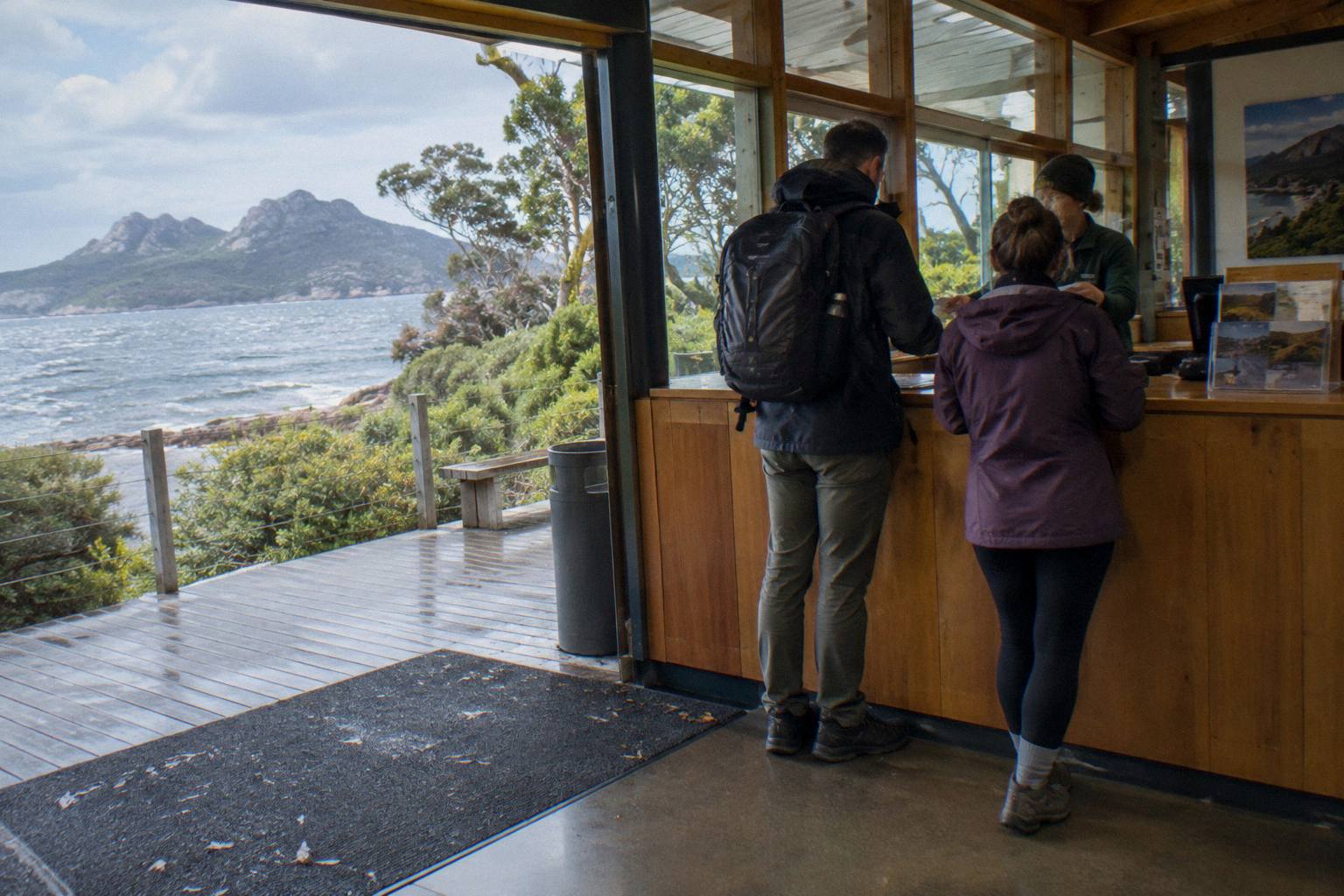
One practical note: these are sea surface temperatures, not air temperatures, and no reliable air temperature, wind or rainfall figures are held here, so do not build your outfit from guesses. If a weather window is what you are chasing, the Freycinet weather for kayaking guide is the place to look, and remember the operator's own rule: guides can cancel at any time for safety, and a weather cancellation brings a full refund or a reschedule, per the operator's FAQ and the booking page.
Phones, Cameras And Dry Storage
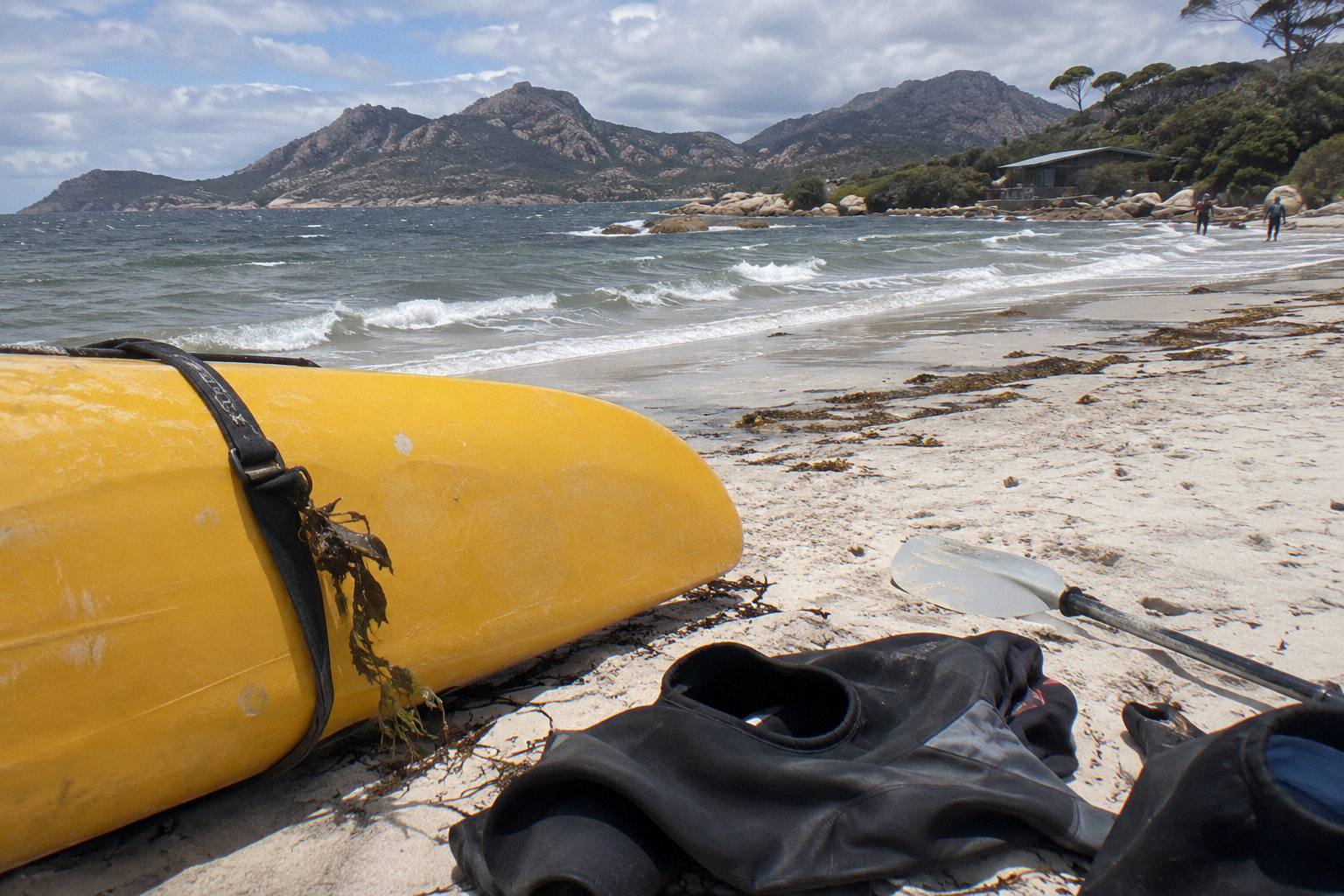
Yes, bring both your phone and camera, and yes, they can stay dry without you buying anything: the operator suggests dry bags, the booking page lists dry bags among what is provided, and the sit-in cockpit keeps gear lower and drier than an open deck would. The halfway beach stop is the natural photo moment, so keep the phone in the dry bag between shots.
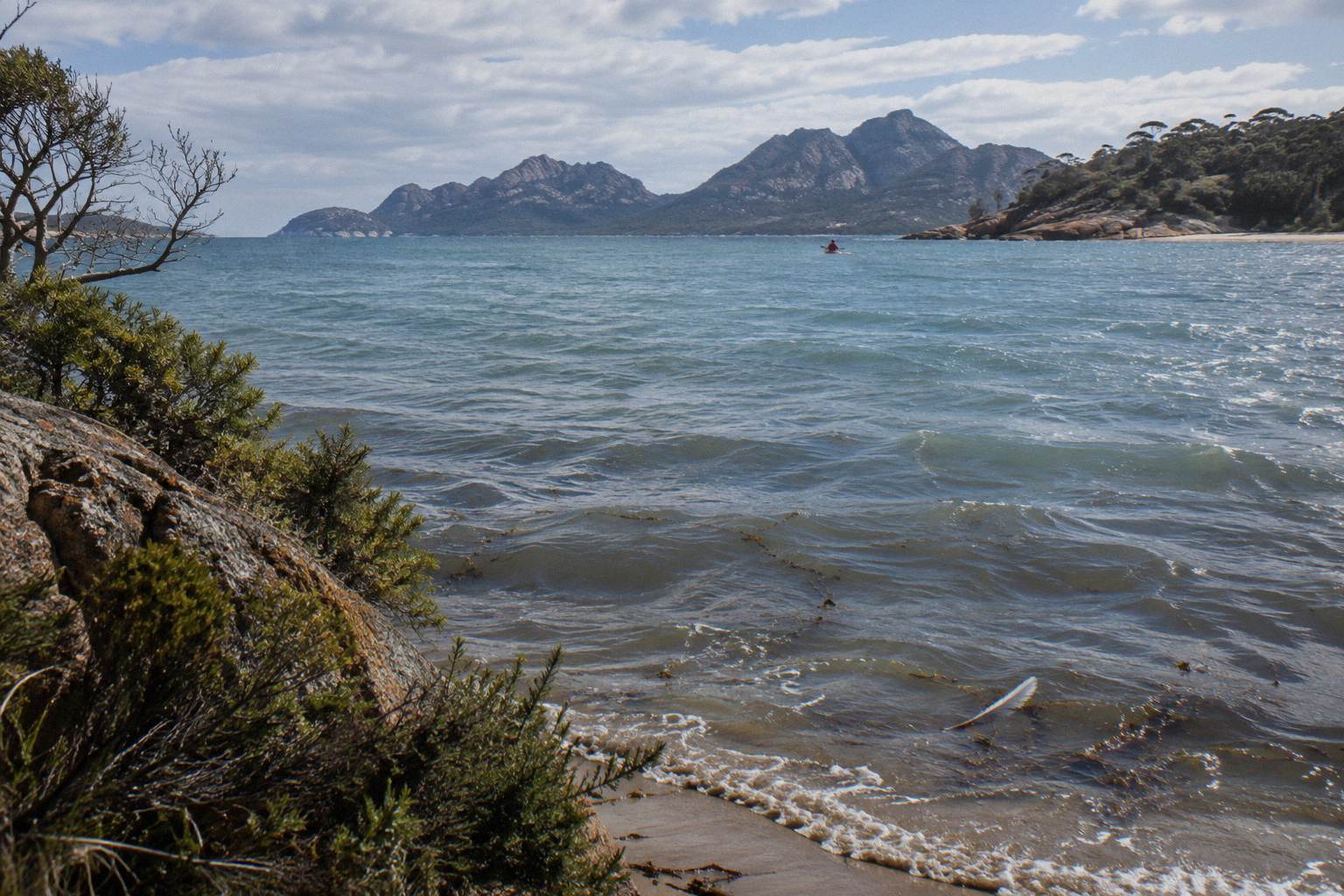
Marine and Safety Tasmania adds a related recommendation for anyone paddling: a mobile phone in a waterproof pouch. On a guided tour the operator carries the safety kit and the communications, but the advice underlines why the phone should live in waterproof protection rather than a jacket pocket, and a full treatment of the phone question sits in the article on taking a phone or camera on a Freycinet kayak tour.
Think through the sequence of the day and the dry bag logic becomes obvious. There is a safety briefing on shore first, then roughly two cumulative hours of paddling split by a beach stop with a hot drink and a gourmet cookie, per the operator and the booking page. Spray on the move, wet hands at the beach stop, and a kayak that has held other paddlers all year add up to one conclusion: anything you would be sad to drown goes in the dry bag, and everything else stays in the car. The full index of guides sits on Freycinet Kayaking.
If photography is a big part of why you are going, the Great Oyster Bay sea kayaking guide covers the bay the paddle travels, and the wildlife article explains what the operator actually says you might spot, which is sting rays, white bellied sea eagles, and on occasion dolphins, whales and fur seals, with no sighting ever guaranteed.
Life Jackets And The Safety Rules That Shape Your Kit
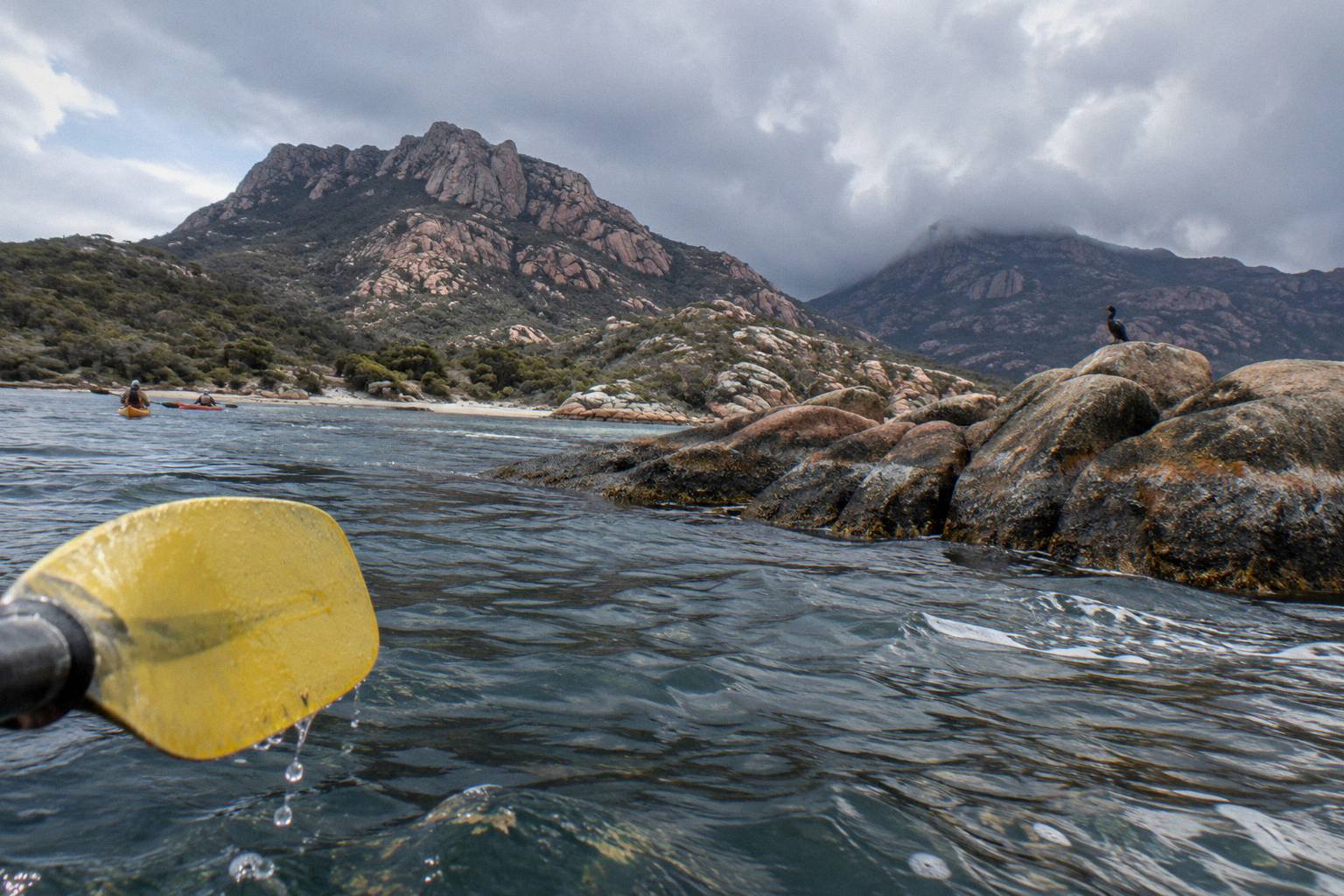
A life jacket is compulsory in a lightweight craft in Tasmania, and kayaks are named explicitly in that category by Marine and Safety Tasmania, so one will be part of your on-water outfit. Guided tours supply their kayaking equipment as a package, and the operator's pages describe that equipment without itemising beyond kayaks, paddles, warm jackets and dry bags. Dressing for a life jacket means no bulky layers underneath that fight the fit.
The MAST life jacket rules also set levels: Level 50 and 50S life jackets are acceptable for kayak operators in sheltered waters only, while Level 100 or 150 covers sheltered and open waters. On a guided tour those choices belong to the operator, but it is useful context for anyone who later paddles independently, and the Parks and Wildlife Service recommends tour companies for anyone new to paddling.
For private paddlers, the MAST paddle craft rules go further: a white strobe or all-round light to be lit between sunset and sunrise and when visibility is limited, a tether when more than 200 m offshore, and other equipment varying by water category, plus advice never to venture too far offshore and to stay out of the surf unless you are an experienced surf paddler. None of that applies to a guided three hour tour in the bay, but it explains why going alone is a different proposition from going guided.
| Rule | Who it applies to | What it means for clothing |
|---|---|---|
| Life jacket compulsory in kayaks | All paddlers in Tasmania | Fitted over your layers, supplied on the tour |
| Light between sunset and sunrise | Private paddle craft | Relevant only to the Twilight session's finish near sunset, handled by the operator's kit |
| Tether beyond 200 m offshore | Private paddle craft | Not your concern on a guided bay tour |
| Phone in waterproof pouch recommended | All paddlers | Use the provided dry bag |
| Unpatrolled beaches, hazardous cliffs | Park visitors | Footwear for wet launch, care on rocks |
The Twilight session is the one tour element that touches the daylight rule, since the operator says it finishes right on sunset. The lighting obligation sits with the operator's equipment, not your wardrobe, but if you book a Twilight departure, bring a warm layer for the end of the day: the warm jacket is provided, and the sea temperature table above tells you the water will not be helping after dark.
What To Ask The Operator When You Book
Before you book, ask three things: whether a park pass is needed for the Muirs Beach departure, what the plan is if weather affects your date, and whether your group fits the stated limits, which cover children from 7 with an adult for under 16s, swimming ability, and kayaks suited to people up to 195 cm and about 120 kg. Also mention any health concerns.
Start with the pass. A valid parks pass is required for entry to all of Tasmania's national parks, and the operator's walking tour page states the pass is not included in that product, but the kayak tour pages do not say either way, so confirm directly whether the Muirs Beach launch needs one. The PWS pass page has the current fees, with a daily pass at AUD 49.15 per vehicle for up to 8 people, and passes are sold at the Freycinet Visitor Centre, open daily 9am to 4pm.
Then the weather. The operator's FAQ says guides can cancel at any time for safety, that in challenging wind the operator may contact guests beforehand and may require previous sea kayaking experience and moderate fitness, and that a weather cancellation means a full refund or a reschedule. Guest cancellations for other reasons need 24 hours notice for a refund. Knowing that policy before you book tells you how firm your plans need to be, and the article on bad weather on a Freycinet kayak tour expands on it.
Finally, fit and suitability. The sit-in tandem cockpit is about 45 cm across and suits people up to 195 cm and approximately 120 kg, and the operator says guides may decline if body size does not fit the kayak. Children from 7 are welcome if, in the operator's words, they are happy to sit still for 2 to 3 hours, and all under 16s need an accompanying adult. Fitness-wise, the operator says anyone fit enough for a leisurely two hour recreation activity is fine, complete beginners included. For health questions, check with your doctor and tell the operator when you book.
Common Mistakes When Packing For A Freycinet Paddle
The recurring errors are simple: wearing footwear that cannot get wet, carrying a wetsuit nobody asked for, buying dry bags the tour already supplies, and forgetting drinking water entirely. Some travellers also arrive expecting to swim and dress for it, when the operator requires swimming ability as an eligibility rule rather than offering it as an activity. Each mistake is avoidable with the operator's own list: comfortable clothes, hat or sunglasses, water, and flip flops or bare feet.
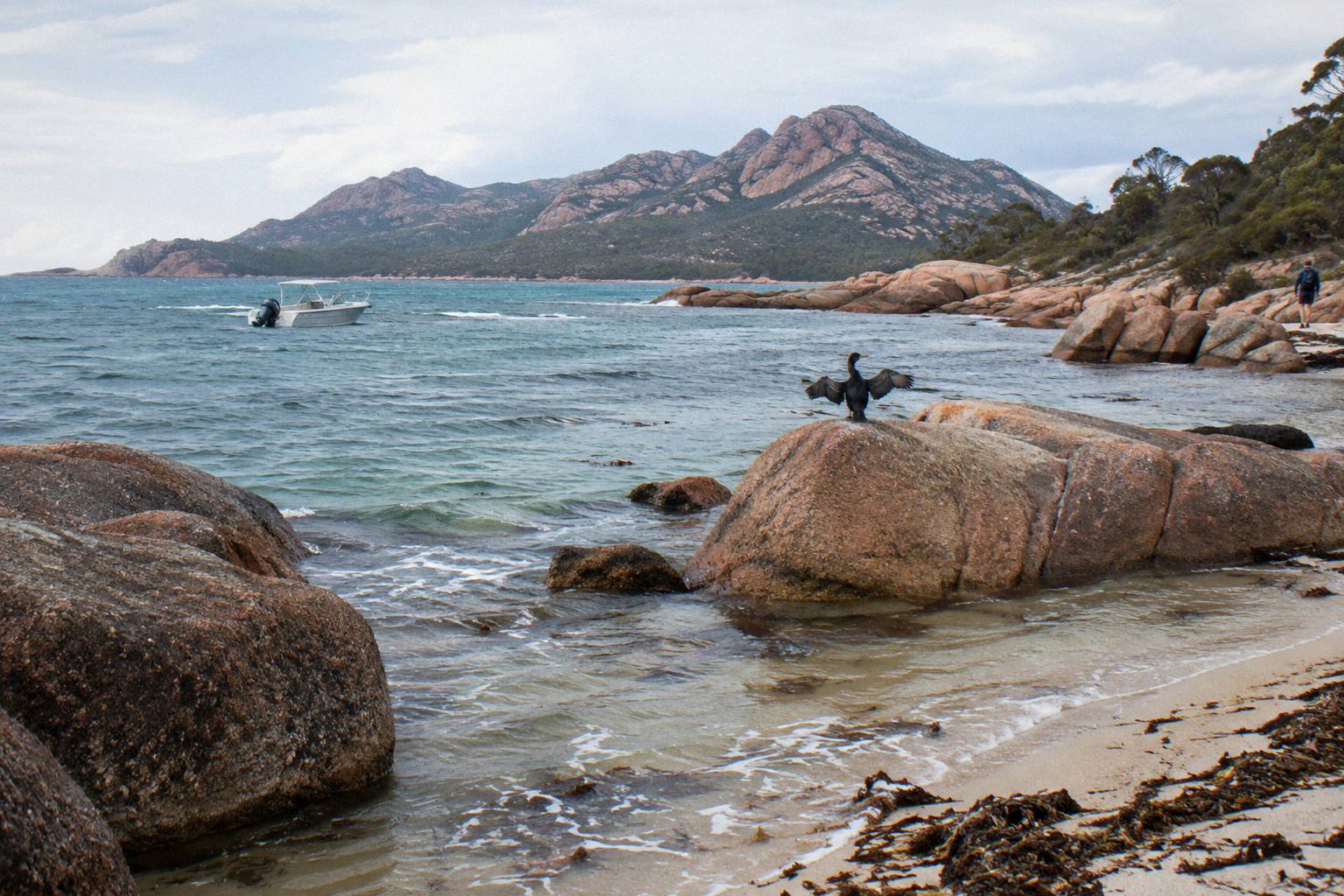
The first mistake is footwear. Every year someone launches in fresh sneakers and spends three hours with squelching socks. The operator's stated advice, flip flops or bare feet, exists precisely because the launch at Muirs Beach puts your feet in the water, and the booking page's note that the departure can shift to the Coles Bay boat ramp in some weather changes nothing on that score.
The second is over-packing against the provided kit. Warm jackets and dry bags come with the tour, so the traveller who fills a daypack with spare jackets, zip-lock bags and a rented wetsuit has carried weight for nothing. The third is under-packing the one item that is genuinely yours: drinking water. Three hours with about two cumulative hours of paddling, in sun reflecting off the bay, with a hot drink only at the halfway stop, makes water the single item you cannot borrow.
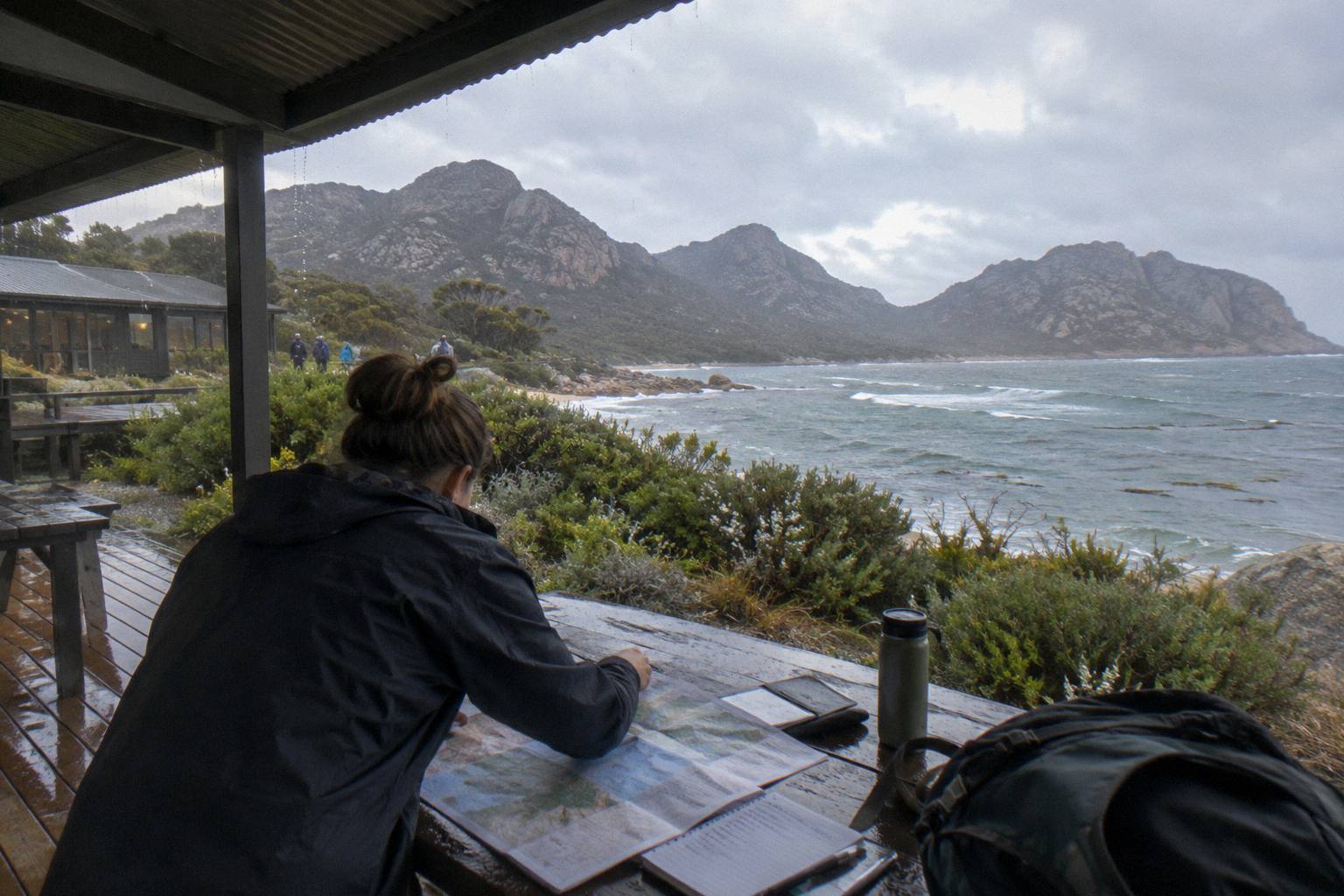
The fourth mistake is calendar-blind dressing. Arriving in February kit for an August departure, or vice versa, is corrected by one glance at the temperature table above: roughly 13.0 °C average water in August against roughly 17.2 °C in February, with air conditions varying around that. Layers solve both ends. The fifth is logistics: assuming hotel pick-up exists when the booking page lists it as an exclusion, or budgeting without checking the pass question. Plan to drive yourself to Coles Bay, park free at Muirs Beach, and confirm the pass when booking. For travellers weighing guided versus independent options, the article on whether a guided Freycinet paddle is worth it works through that trade-off.
Common Questions About What To Wear Sea Kayaking At Freycinet
Do I Need A Wetsuit For A Freycinet Kayak Tour?
No operator page mentions a wetsuit. The tour provides warm jackets instead, and Coles Bay's sea temperature averages about 13.0 °C in the coldest month and 17.2 °C in the warmest, per seatemperature.org's historical data, which the operator's kit is built around.
What Shoes Should I Wear On The Paddle?
The operator says footwear will get wet and suggests flip flops or bare feet. Anything you would happily stand in shallow sea water in works; anything that must stay dry stays in the car.
Is A Life Jacket Provided?
Marine and Safety Tasmania makes a life jacket compulsory in kayaks, and the tour provides all kayaking equipment as a package. The operator's pages name the kayaks, paddles, warm jackets and dry bags without itemising further.
Can I Bring My Phone And Camera?
Yes. The operator suggests dry bags for phones and cameras, and the booking page lists dry bags among the provided equipment, so you do not need to bring your own waterproofing.
What Should I Wear In Winter?
The same comfortable clothing plus everything the tour hands you: the provided warm jacket on, a hat or sunglasses, drinking water, and flip flops or bare feet. The tour runs year round with seasonal departure times, and the operator states no timetable, so confirm your session's timing when booking.
Do I Need To Bring Water And Snacks?
Bring drinking water; the operator's list makes it yours to carry. A hot drink and a gourmet cookie at the halfway beach stop are included per the booking page, so snacks beyond that are optional.