Tandem Or Single Kayak: Which Do You Get On A Freycinet Tour?
The Freycinet Paddle uses double sit-in sea kayaks, and solo guests pair with another guest or a guide. Here is what that means for your booking.
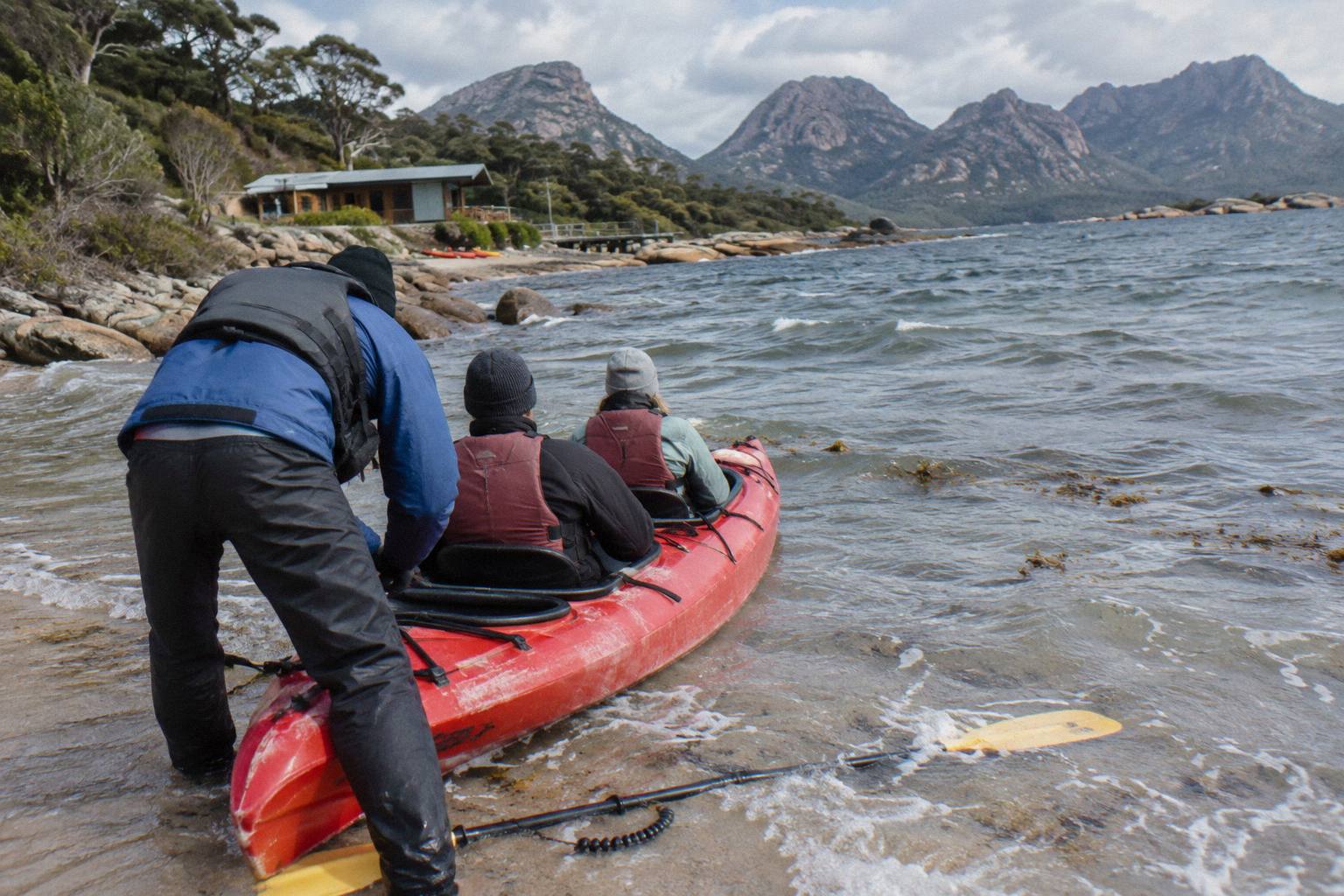
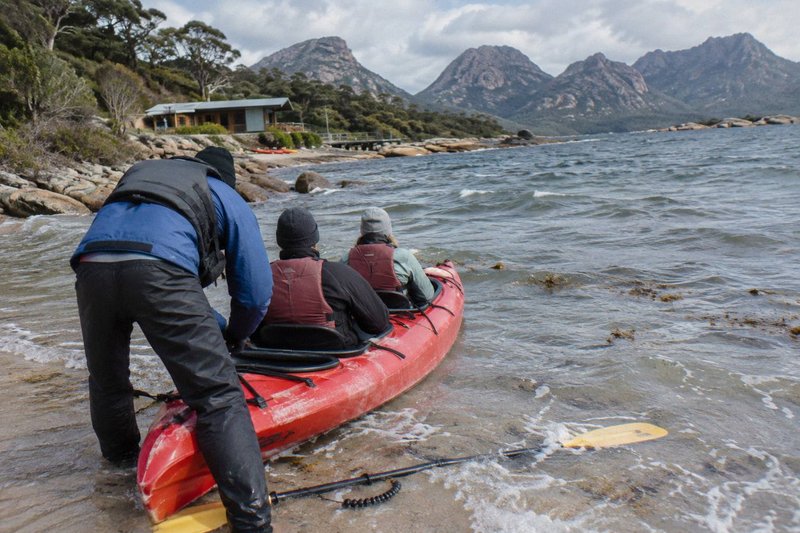
You get a double. The Freycinet Paddle, the guided sea kayak tour out of Coles Bay, runs double sit-in tandem sea kayaks, and there is no single kayak option. The operator, Freycinet Adventures, says solo guests paddle with another guest or with a guide, and the booking page describes the craft as stable double sea kayaks. If you were hoping to steer your own boat, the honest headline is that the format is fixed, and the sections below explain what that means for families, couples, solo travellers and anyone booking with a specific partner in mind.
The question matters more than it might look. Choosing between formats is really choosing which trip to book, because the tandem shape decides who you share the boat with, how the paddling effort is split, and who can come along at all. Children from 7, adults up to about 120 kg and 195 cm, beginners and non-drivers are all in scope, but each of those answers is tied to the double kayak.
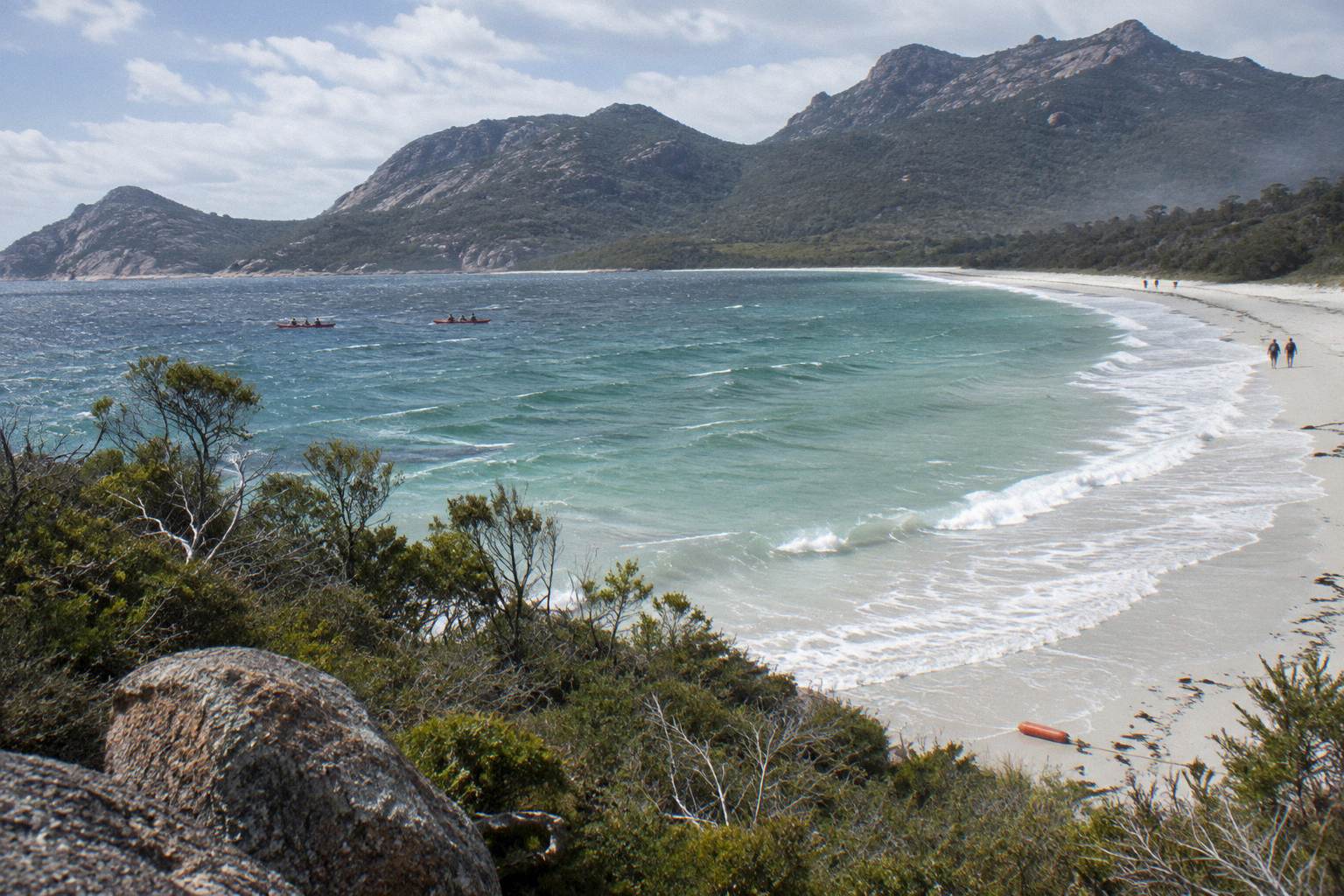
The tour itself is a 3 hour trip with about 2 hours of paddling spread across the session and a rest break halfway on a secluded sandy beach, where the operator serves a freshly brewed coffee or hot drink and a snack. It launches from Muirs Beach in Coles Bay, onto Great Oyster Bay. It does not reach Wineglass Bay or Schouten Island, whatever the brochure imagination suggests.
If you want the quick comparison before the detail, these are the three ways travellers usually fill a Freycinet day:
- Half-Day Wineglass Bay Cruise
- 3-Hour Kayak Paddle
- Wineglass Bay Cruise, Lunch Included
- Full-Day Tour From Hobart, Pickup
- Walking Tour, Meal Included
Why Doubles Suit The Coles Bay Paddle
Stability is the main reason: a double kayak sits wider and steadier on the water, which suits the conditions paddlers meet around Coles Bay, while two people share the paddling effort, so one stronger or more experienced partner can carry more of the work, beginners feel safer, and the pair stay together rather than drifting apart on the water. Double sea kayaks are more stable than single kayaks in the same conditions, which is why guided beginner tours in sheltered water so often use them, and the operator describes its boats as stable doubles suitable for complete beginners. The second reason is pairing: a double lets a guide match a nervous or weaker paddler with a stronger partner, and it lets children from 7 ride in a boat with an adult. The operator FAQ frames the tour as fine for anyone fit enough for a leisurely 2 hour recreation activity.
Great Oyster Bay itself is the third reason. The paddle stays on the bay side of the peninsula rather than the open Tasman Sea coast, and the operator runs the tour year round with seasonal departure times. In sheltered water, the trade-offs of a tandem, mainly that it turns slower and needs two people to paddle in time, matter far less than they would in open ocean swell.
For the operator, doubles also keep the group manageable. Tours run with a minimum of 2 and a maximum of 16 guests, and the booking page confirms the same maximum of 16 travellers. One guide can watch a line of paired boats more easily than a scatter of singles, which matters when the group includes children and first-timers.
There is a social side too. Couples and parent-child pairs get a shared boat by default, and the pairing rule means solo travellers are never left drifting alone at the back. The operator is direct about the arrangement: solo guests paddle with another guest or a guide.
Book the tour itself at the Freycinet Paddle tour page and check availability for your dates, because departure times shift with the seasons and the booking page shows the sessions actually running when you go. Booking online closes 3 hours before departure for the day paddle.
What The Sit-In Double Kayak Is Actually Like
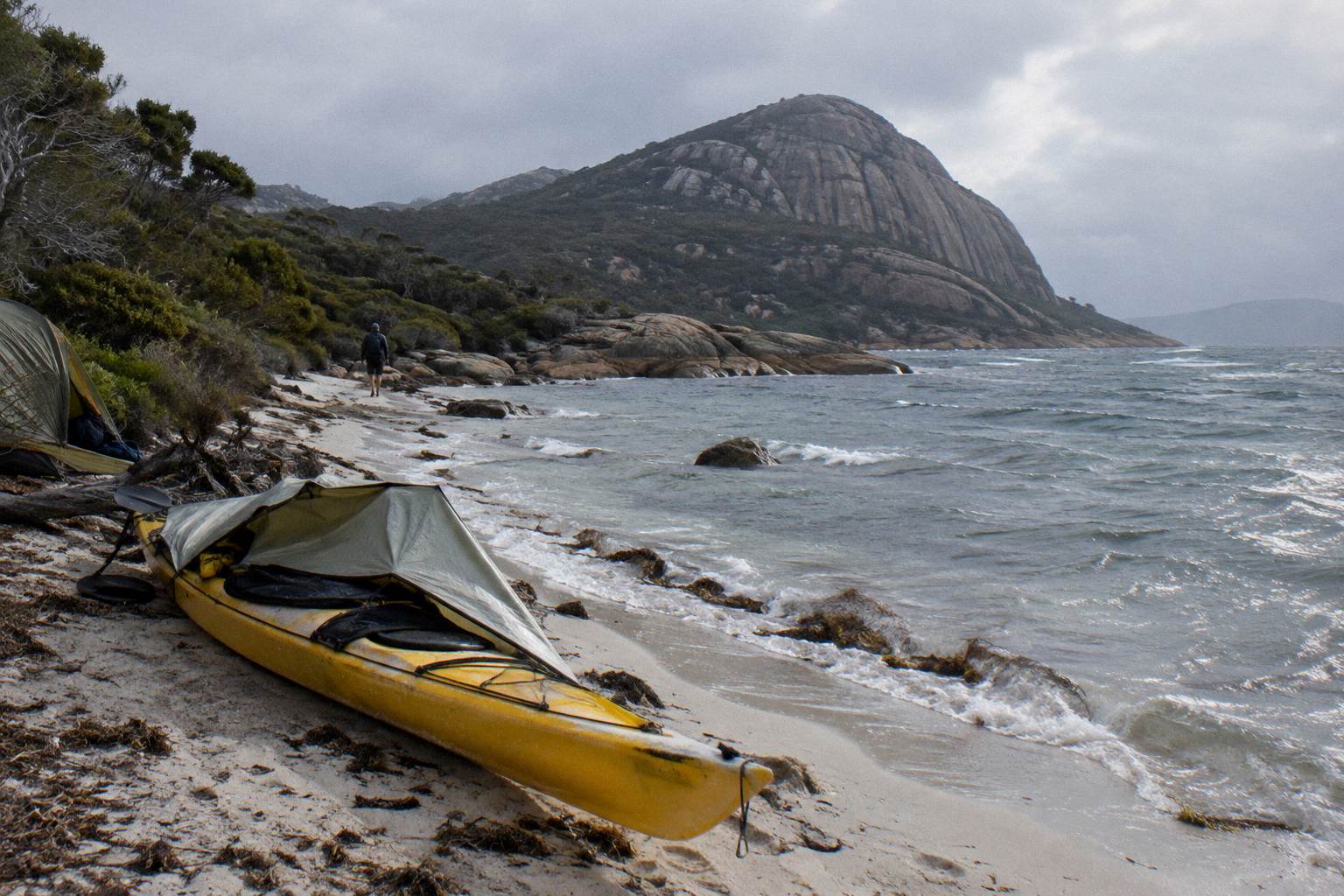
Sit-in means your legs are inside the hull rather than resting on an open deck, so you and your partner sit lower to the water and feel more shielded from wind and splash. With two cockpits set into one long hull, the boat feels stable and planted, and the snug fit makes it feel like you and your paddling partner are moving as one. The operator FAQ calls the craft sit-in tandem sea kayaks, which distinguishes them from the sit-on-top plastic kayaks many people know from beach hire. In a sit-in double, each paddler sits in a cockpit with their lower body inside the boat, and the FAQ gives the cockpit seat as about 45 cm across. The same FAQ says the kayaks suit people up to 195 cm and approximately 120 kg, and that guides may decline a guest whose body size does not fit the cockpit.
That cockpit measurement is the one number worth checking before you book if anyone in your party is very tall or broad. It is not a judgement call you can make on the beach; it is a fit question to raise with the operator when booking, and the operator FAQ is the place the figures come from.
What the tandem rhythm feels like day to day is straightforward: two people paddle the same boat, the front person sets pace and the back person steers, and the guide briefs everyone on the basics first. The tour starts with a safety briefing before anyone launches, and complete beginners are explicitly welcome, so no prior tandem experience is expected.
What you wear and bring is simple as well. All kayaking equipment is provided, warm jackets are supplied, and dry bags are provided for phones and cameras. The operator suggests bringing drinking water and a hat or sunglasses, wearing comfortable clothing, and planning on footwear that will get wet, so flip flops or bare feet. No wetsuit is mentioned by the operator at all, which matters if you were packing one.
Solo Travellers: You Will Pair Up On The Day
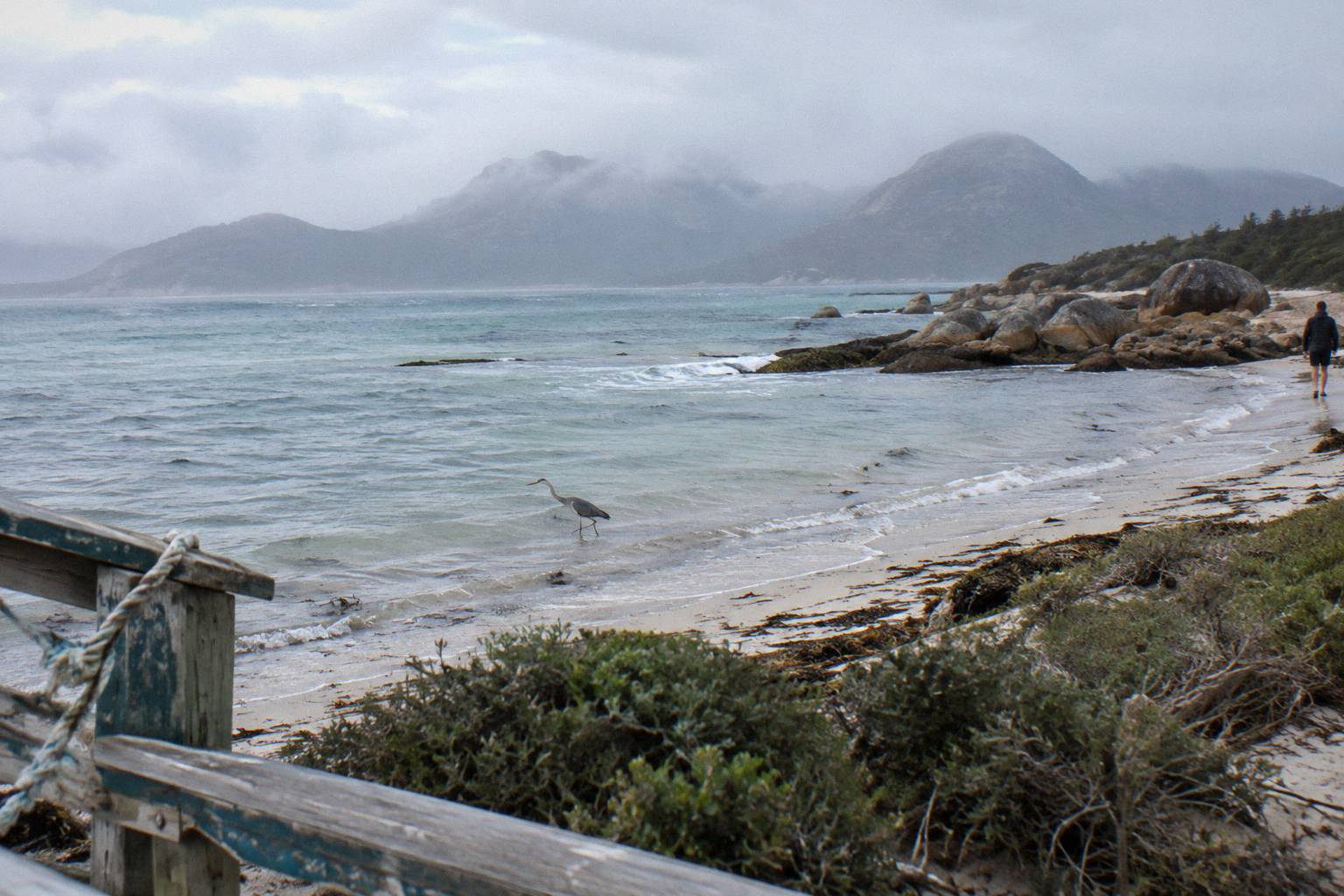
Yes, if you are travelling alone you will be paired up on the day, so there is no need to arrange a partner in advance. When the day arrives, solo guests are matched either with another guest travelling alone or with a guide, so you can simply show up on your own and still take part. That is the operator's stated arrangement, and it removes the usual solo worry of being excluded or paying a single supplement for a boat of your own. The group runs from a minimum of 2 to a maximum of 16 per tour, so a solo booking can be the second person that makes a tour viable, and the guide is the fallback partner when numbers are odd.
If the idea of paddling with a stranger feels awkward, two things soften it. First, the pairing is in the operator's hands, not a free-for-all on the sand; they match guests and step in themselves. Second, the session is short, 3 hours total with about 2 hours of actual paddling and a beach break in the middle, so you are sharing a boat for a morning or a twilight session, not a full day.
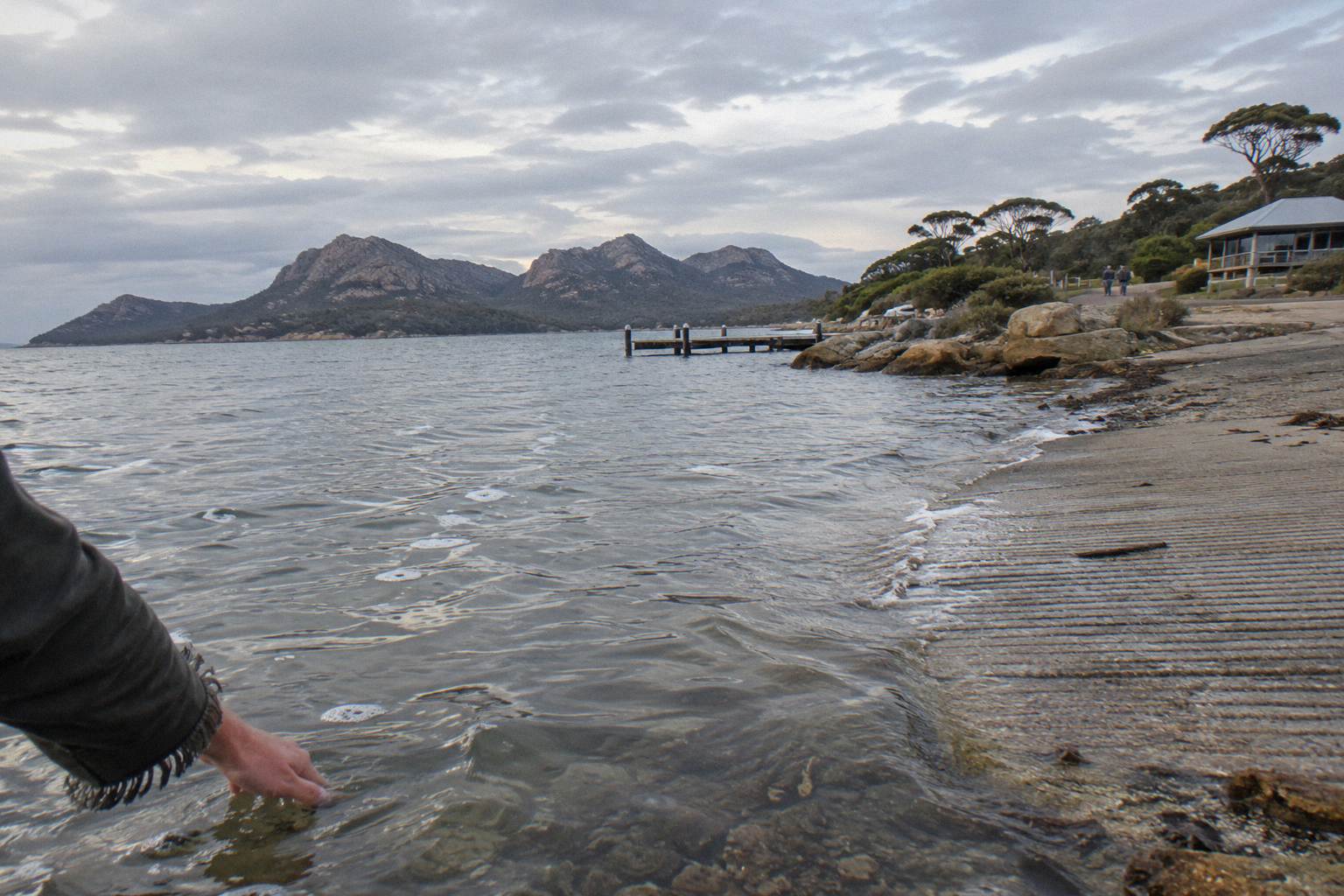
There is a separate question worth asking when you book if you would prefer a guide in your boat, or if you would rather not be paired with a stranger. The operator does not publish a policy on requests of that kind, so ask at booking rather than assuming. On swimming, the operator FAQ is plain: as a safety precaution, you need to be able to swim to take part in the tours.
Who The Double Format Suits, And Who Should Ask First
The double format suits most people who can swim, sit still for the duration, and fit the cockpit comfortably. Anyone who cannot swim, struggles to stay seated, or expects the cockpit to be tight should ask first, because a double may still work but only after checking that the setup genuinely fits. The operator's stated rules: children from 7 who are happy to sit still for 2 to 3 hours, everyone under 16 with an accompanying adult, under 7 not accommodated, adult pricing from 16, and guests needing to be able to swim. Body size limits are about 195 cm and approximately 120 kg, with a roughly 45 cm cockpit seat, and the booking page asks for a moderate fitness level and says the tour is not wheelchair accessible.
| Requirement | What The Operator Says | Applies To |
|---|---|---|
| Minimum age | Children from 7, happy to sit still for 2 to 3 hours | This tour only |
| Under 16s | Must paddle with an accompanying adult | This tour only |
| Swimming | You need to be able to swim to take part | This tour only |
| Body size | Suits people up to 195 cm and approximately 120 kg; cockpit seat about 45 cm across | This tour only |
| Fitness | About 2 hours of cumulative paddling with a halfway rest; fine if fit for a leisurely 2 hour activity | This tour only |
| Mobility | Not wheelchair accessible, per the booking page | This tour only |
One caution travels with the whole table: these figures belong to this operator and this tour. None of them can be generalised to other Tasmanian kayak tours, and none of them applies to the adjacent trips sold alongside the paddle, such as the Wineglass Bay cruise, which is a boat trip rather than a kayak trip at all.
If any row in that table is a live question for you, say so at booking rather than on the day. Guides can decline a guest whose body size does not fit the kayaks, which is far better to know before you drive out. And for health questions, check with your doctor and tell the operator when you book.
How The Double Kayak Compares With Other Ways To See Freycinet
The double kayak is the only way to get onto the water around Freycinet under your own effort, and that single distinction shapes the whole comparison: each of the other ways to see the area gives up that self-propelled, on-the-water experience in exchange for either greater reach or greater ease, so the best choice depends on which of those you value most. The Freycinet Paddle stays on Great Oyster Bay in doubles and does not reach Wineglass Bay. The Wineglass Bay cruise, about 4 hours 30 minutes boarding at 61 Jetty Rd in Coles Bay, does reach the bay by powerboat, and is rated 4.7 across more than 1,000 reviews. The Freycinet walking tour reaches the lookout on foot. Each suits a different traveller.
| Option | Format | Duration | Kayak Type | Reaches Wineglass Bay |
|---|---|---|---|---|
| The Freycinet Paddle | Guided paddle from Muirs Beach | 3 hours, about 2 paddling | Double sit-in sea kayaks | No, stays on Great Oyster Bay |
| Wineglass Bay cruise | Powerboat from Coles Bay | About 4 hours 30 minutes | Not a kayak trip | Yes |
| Freycinet walking tour | Guided walk | Not stated | Not applicable | Yes, the lookout |
The choice often comes down to whether the paddling itself is the point. If steering a double across a sheltered bay with a partner or a guide appeals, the paddle is the pick, and its format is the tandem described above. If reaching the famous beach matters more than the means, the cruise or the walk delivers that. Some travellers split a Freycinet stay across both, paddling one session and cruising or walking another.
The cruise makes a useful contrast for one more reason: it is the same departure town, boarding at 61 Jetty Rd, Coles Bay, so a no-car traveller staying in town can compare the two without transport worries. The paddle launches from Muirs Beach, also in Coles Bay, where the operator says there is free public parking and public toilets.
Equipment, Safety And What The Operator Supplies
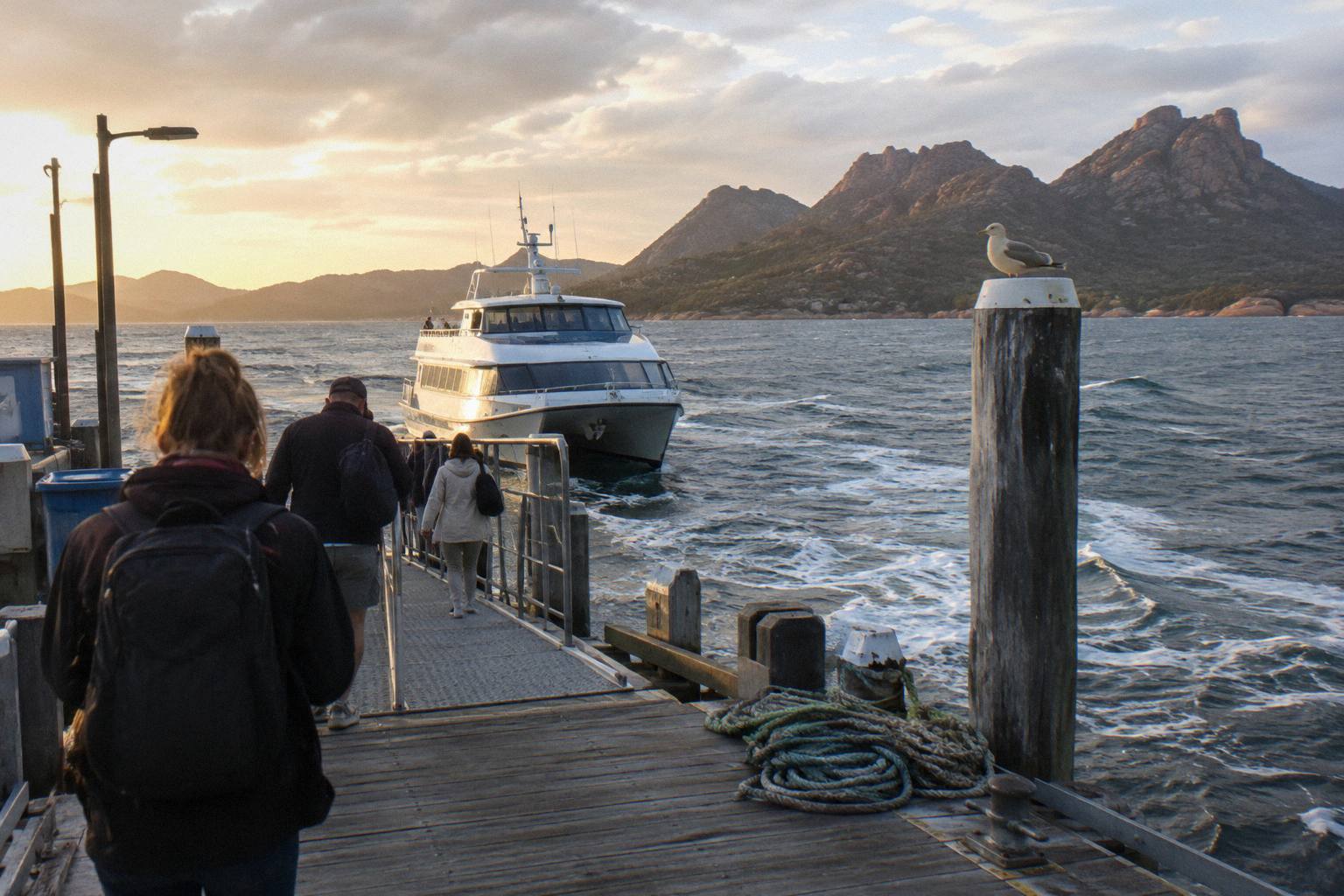
The operator provides all of the kayaking equipment for the trip, including the double kayaks and warm jackets, so you do not need to arrange your own gear. Everything you use on the water, from the double kayaks to the warm jackets, is supplied by the operator, which covers the main equipment and safety questions most travelers ask before they book. Dry bags are provided for phones and cameras, the booking page lists a hot drink with a gourmet cookie, GST, National Park fees and a professional guide among the inclusions, and it lists hotel pick-up and drop-off among the exclusions. You bring drinking water, a hat or sunglasses, comfortable clothing and footwear that can get wet.
On life jackets, the state rule is unambiguous: Marine and Safety Tasmania says a life jacket is compulsory in a lightweight craft, including kayaks. The operator's own pages name all kayaking equipment without itemising life jackets, so the practical summary is that a guided tour supplies its equipment and you should not bring your own boat.
The safety architecture around the tour is worth knowing in outline. Guides can cancel at any time for safety, and in challenging wind the operator may contact guests beforehand, may require previous sea kayaking experience and moderate fitness, and otherwise offers a full refund or a reschedule. Guest cancellations need 24 hours notice for a refund. The session begins with a safety briefing before launching.
For solo paddlers wondering about going it alone outside a tour, the state rules are the reference point: MAST's paddle craft guidance covers lights, tethers beyond 200 m offshore and other requirements, and Parks and Wildlife recommends guided tour companies for anyone new to paddling, noting the relatively sheltered waters of Coles Bay suit all experience levels.
Common Mistakes When Choosing A Kayak Format At Freycinet
The most common mistakes are assuming a single kayak format exists at Freycinet, expecting the boats to be sit-on-top models when they are not, and mixing up which trip reaches which bay. Checking the kayak format on offer and each trip's actual destination before booking helps travellers avoid all three errors. The tour runs double sit-in sea kayaks only, solo guests pair with another guest or a guide, and the paddle stays on Great Oyster Bay without reaching Wineglass Bay or Schouten Island. Booking with any of those three assumptions wrong is the difference between the trip you pictured and the trip you get.
A fourth mistake is arriving unprepared for the wet-foot reality: footwear will get wet, so flip flops or bare feet, not fresh trainers. A fifth is ignoring the swim requirement, which the operator FAQ states plainly and which no booking workaround avoids. A sixth is silent on the day about body size: the cockpit is about 45 cm across and suits people up to 195 cm and approximately 120 kg, and guides may decline a guest who does not fit, so raise it first.
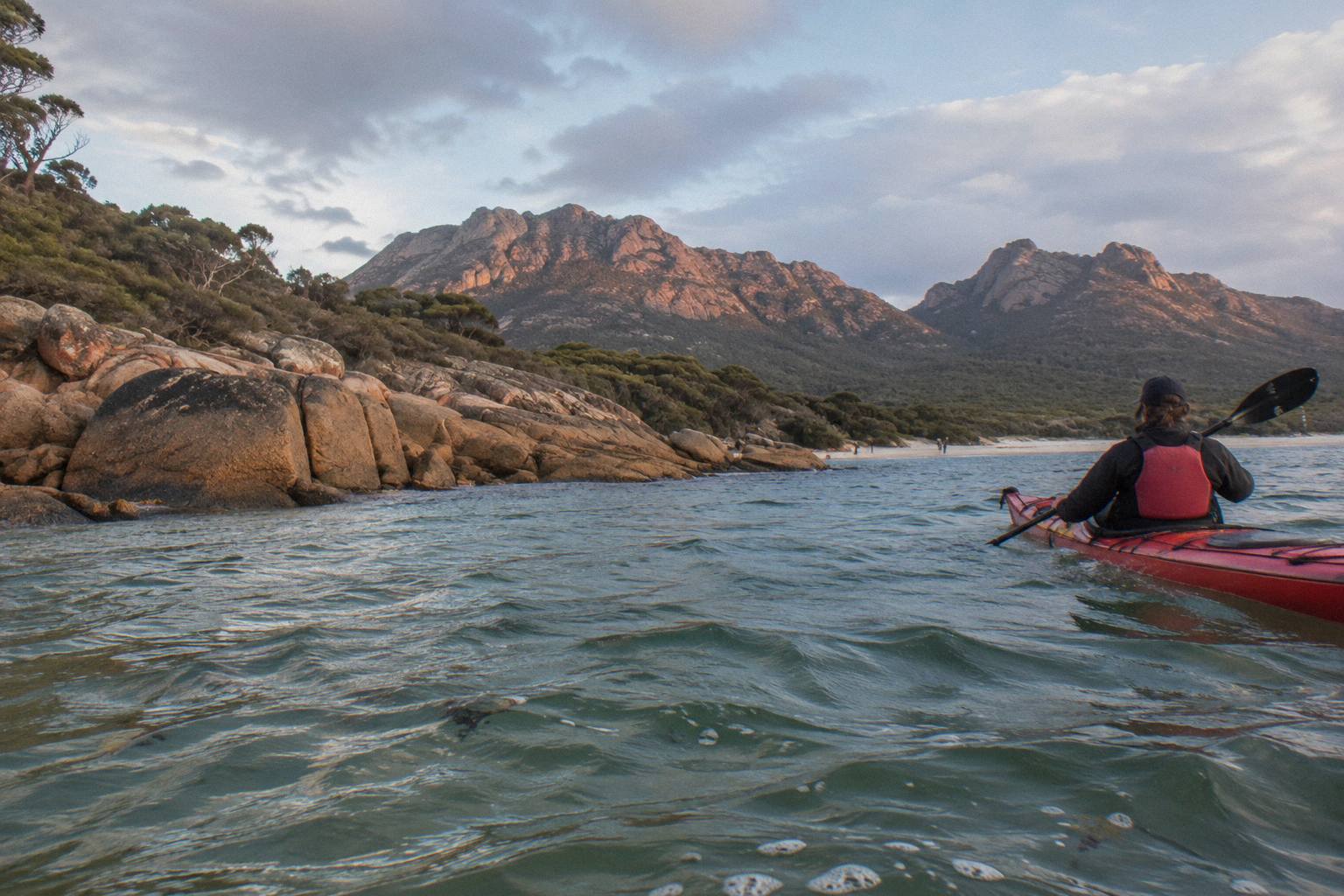
The seventh and most avoidable is leaving the booking late without knowing the season. Departure times are seasonal, no timetable is fixed, and online bookings close 3 hours before departure for the day paddle, 12 hours before for the sunrise tour. If your heart is set on the Twilight session that finishes right on sunset in the warmer months, check availability early rather than on arrival.
Whether the paddle is the right Freycinet day at all depends on your group, and the fitness and suitability questions are worth reading alongside the format question. For the bigger picture of the bay the doubles cross, the Great Oyster Bay paddling guide covers the water side of the peninsula. And if the tandem versus single question has settled into simply choosing a day, Freycinet Kayaking is the home base for comparing every option.
Common Questions About Tandem And Single Kayaks At Freycinet
Tandem Or Single Kayak: Which Do You Get On A Freycinet Tour?
You get a tandem. The Freycinet Paddle runs double sit-in sea kayaks, with no single kayak option, and the operator says solo guests paddle with another guest or a guide. The operator FAQ describes the craft as sit-in tandem sea kayaks, not sit-on-tops.
Can I Request To Paddle Alone?
The operator does not state a policy on solo-boat requests. The published arrangement is that solo guests pair with another guest or a guide, so ask at booking if this matters to you rather than expecting it on the day.
Who Sits In Front And Who Steers?
The operator publishes no seat-allocation rule. In tandem kayaks generally the front paddler sets pace and the rear paddler steers, and the guide briefs the group on the basics before launching, but the on-the-day arrangement is the guide's to make.
Do Children Get Their Own Kayak?
No. Children from 7 join in the double kayaks, and the operator says everyone under 16 needs an accompanying adult in the boat with them. Children under 7 are not accommodated on the tour.
Is There A Weight Or Height Limit?
The operator FAQ says the sit-in cockpit seat is about 45 cm across and suits people up to 195 cm and approximately 120 kg, and guides may decline a guest whose body size does not fit. Mention your measurements when booking.
What If I Would Rather Not Pair With A Stranger?
Say so when you book. The fallback in the operator's arrangement is that a guide paddles with a solo guest, but requests of that kind are best made in advance, since group sizes run from 2 to 16 per tour.