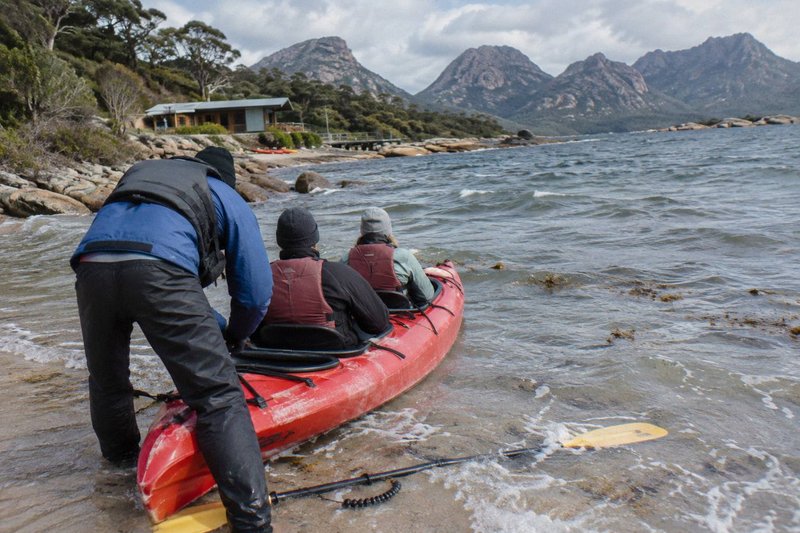
Are Wetsuits Or Warm Jackets Provided On Freycinet Kayak Tours?
Warm jackets and all kayaking equipment are provided on the guided Freycinet paddle; no wetsuit is stated. Here is what to bring, how cold the water runs by month, and what to wear.
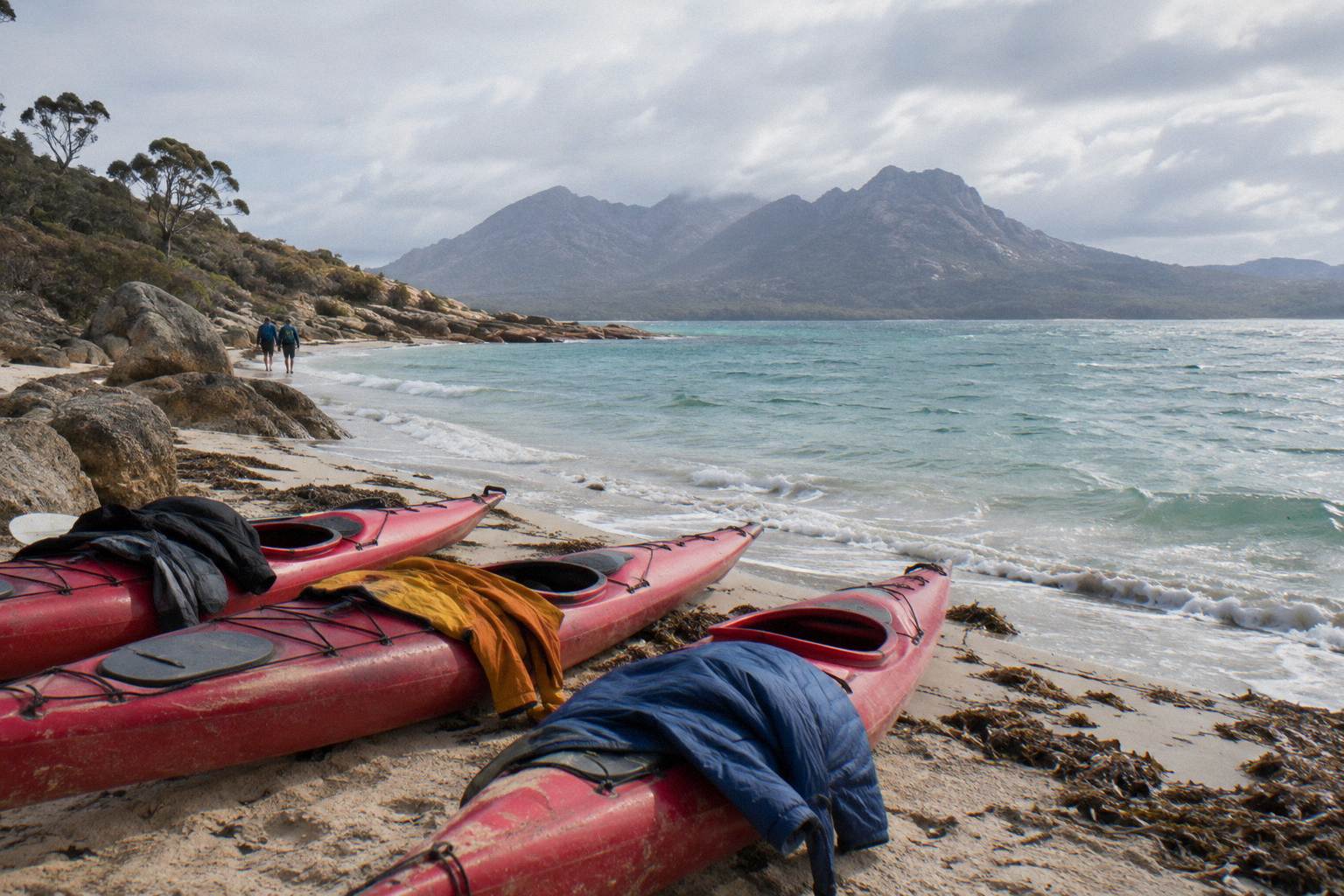
Yes to warm jackets, no mention of wetsuits. The operator of the guided paddle out of Coles Bay, Freycinet Adventures, provides all sea kayaking equipment, including stable double sea kayaks and warm jackets, and dry bags are supplied for cameras and phones. No wetsuit is offered anywhere in the operator's own kit list, so if you want neoprene, bring your own. The water itself is not warm: Coles Bay sea temperatures average roughly 13 to 17 degrees Celsius across the year.
That combination, warm jackets supplied, wetsuits not on the list, surprises people who have paddled in tropical waters or on surf-carnival sit-on-tops. A Freycinet paddle is a different format. You sit inside a double sea kayak with a cockpit about 45 centimetres across, your lower body stays sheltered from the wind, and you are not planning to be in the water at all. Footwear is the one thing the operator flags as certain to get wet: flip flops or bare feet are the suggested choices.
The tour in question is The Freycinet Paddle, a 3 hour trip with about 2 hours of cumulative paddling, a rest break halfway on a secluded sandy beach, and a hot drink with a snack at that stop. It launches from Muirs Beach in Coles Bay, on the Great Oyster Bay side of the peninsula, and it does not reach Wineglass Bay or Schouten Island. If a cold-water worry is what is holding you back from booking, Check availability and read on, because the clothing answer is more reassuring than you might expect.
What The Operator Actually Provides On The Tour
The tour price covers the full kayaking kit, so nothing extra is charged for equipment. The operator provides stable double sit-in sea kayaks, paddles, warm jackets, and dry bags for phones and cameras, which means every item of gear you need on the water is included from the moment you launch. The booking page adds GST, National Park fees, a hot drink with a gourmet cookie and a professional guide among the inclusions, and lists hotel pick-up and drop-off and transport to and from attractions among the exclusions. The operator's own pages say "all kayaking equipment" is provided and name warm jackets; a wetsuit is not mentioned. Life jackets are compulsory in kayaks under Tasmanian rules, and guided tours supply their equipment, though the operator's pages do not itemise jackets beyond the general phrase.
That phrase, "all kayaking equipment", does more work than it looks like doing. It covers the craft, the paddles and the group safety gear the guides carry, and it means you do not need to hire or transport anything to take part. The warm jackets are the piece that matters for this question. The operator's what-to-bring advice says to wear comfortable clothing and notes that warm jackets are provided, which tells you the plan: dress in your own comfortable layers for the day, and take the operator's jacket on top if the morning is cool.
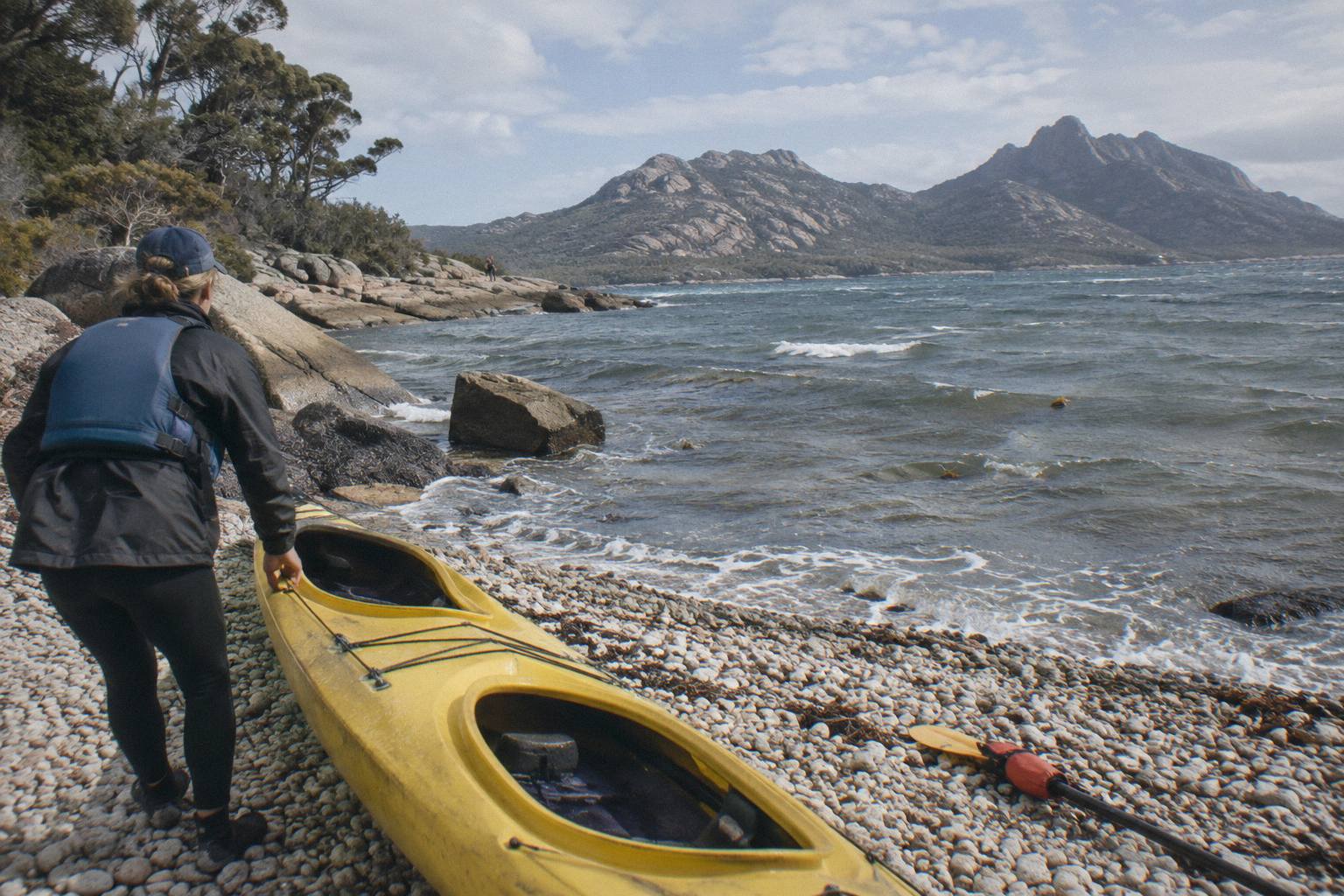
Dry bags are the quiet hero of the kit list. The operator suggests dry bags for phones and cameras, and the booking page confirms they are provided, so a phone comes home dry even if a paddle drips across the deck. If you want the full breakdown of every item, the operator's own FAQ page carries the detailed equipment and clothing advice, and it is the source for everything in the table below.
| Item | Status on the tour | Who says so |
|---|---|---|
| Double sit-in sea kayaks | Provided | Operator tour page and FAQ |
| Warm jackets | Provided | Operator tour page; booking page |
| Dry bags for phone and camera | Provided | Booking page; operator suggests them |
| Guide and safety briefing | Included | Operator tour page |
| Hot drink and snack at the beach stop | Included | Operator and booking page |
| Drinking water | Bring your own | Operator FAQ |
| Hat or sunglasses | Bring your own | Operator FAQ |
| Wetsuit | Not mentioned; bring your own if wanted | Operator pages |
The legal backdrop is worth one line. Marine and Safety Tasmania states that a life jacket is compulsory in a lightweight craft, including kayaks, and a guided commercial tour operates with that rule in place. The operator's kit list does not itemise life jackets by name, so ask when booking if you want confirmation of the specific gear carried on your departure.
How Cold Is The Water At Coles Bay, Month By Month
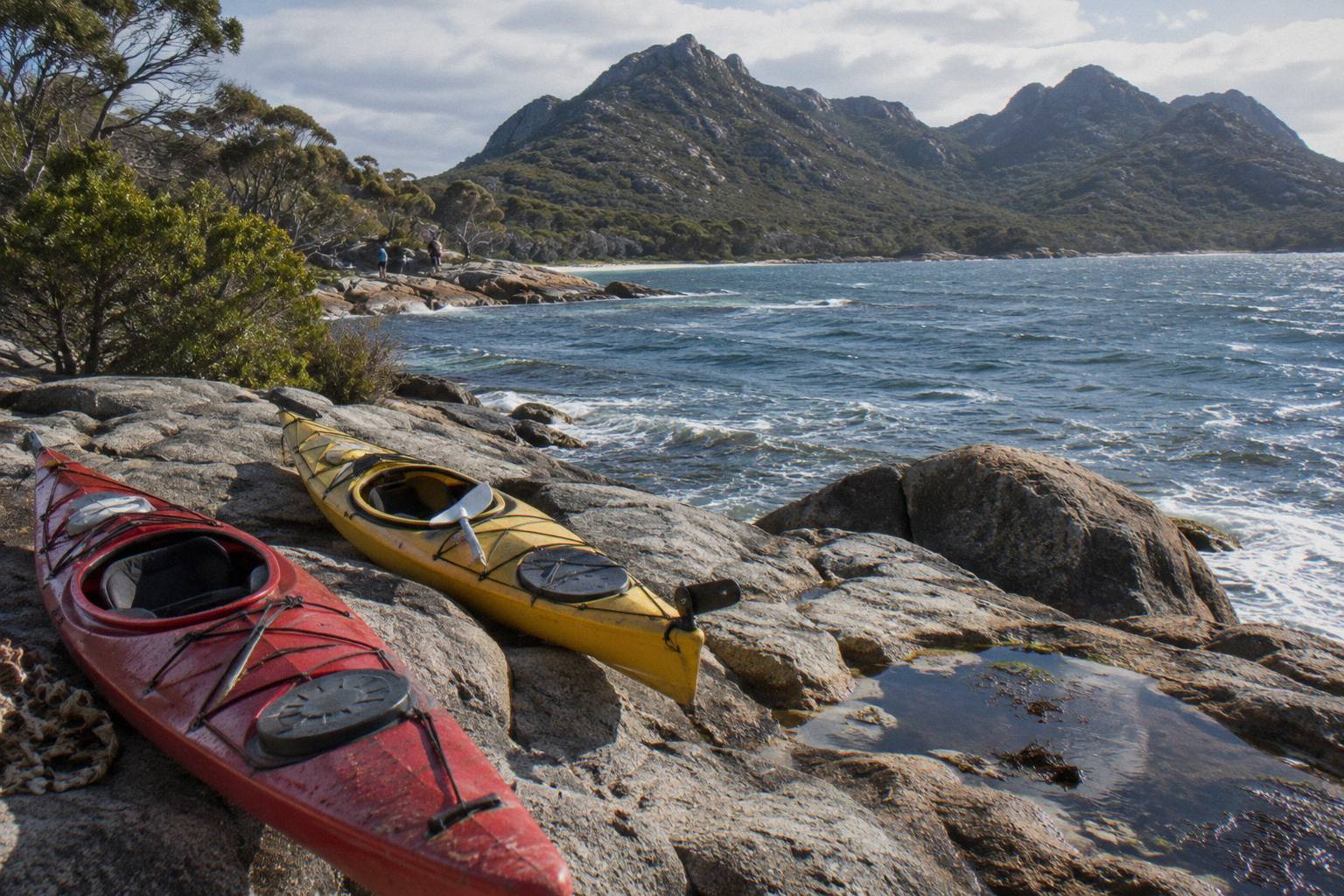
Sea temperatures at Coles Bay average about 13.0 degrees Celsius in August, the coldest month of the year, and about 17.2 degrees Celsius in February, the warmest. Every other month sits somewhere between those two marks, according to seatemperature.org's long-run historical data. Winter months sit in the low teens, summer in the high teens. That is cool-water paddling by any measure, closer to a Victorian summer than a Queensland one, and it explains why the operator provides warm jackets rather than assuming you will be fine in a t-shirt. The table below shows the approximate monthly spread.
The numbers come from seatemperature.org, a secondary source built on long-run historical sea surface readings for Coles Bay, and they are averages, not a forecast for your departure day. Treat them as a planning guide: if you paddle in July, the water is around 13 degrees; in February, around 17. The source also records that February averages 17.2 degrees and August 13.0, making them the year's warm and cold extremes. For context on how those figures feel and what the season does to the experience, the companion piece on what a winter Freycinet paddle is like works through the colder months in detail.
| Month | Min (C) | Avg (C) | Max (C) |
|---|---|---|---|
| Jan | 15.9 | 16.8 | 17.7 |
| Feb | 16.6 | 17.2 | 17.9 |
| Mar | 16.1 | 16.6 | 17.2 |
| Apr | 15.2 | 16.0 | 16.8 |
| May | 13.7 | 14.8 | 15.9 |
| Jun | 13.3 | 14.0 | 14.7 |
| Jul | 12.5 | 13.2 | 13.9 |
| Aug | 12.5 | 13.0 | 13.5 |
| Sep | 12.6 | 13.1 | 13.7 |
| Oct | 12.8 | 13.5 | 14.2 |
| Nov | 13.8 | 14.8 | 15.7 |
| Dec | 15.4 | 16.3 | 17.2 |
Approximate figures, published by seatemperature.org for Coles Bay from long-run historical data. Two honest framing points follow from the table. First, even the warmest month only reaches an average of 17.2 degrees, so "summer" here does not mean bathwater. Second, the difference between February and August is only about four degrees, which is why the operator's kit list does not change dramatically with the season: warm jackets are provided year-round, and the clothing advice stays the same.
Does the water temperature mean you need a wetsuit? On this tour, no operator page says so, and the design of the trip argues against it. The kayaks are sit-in doubles, your legs and torso sit inside the hull, and the route is on Great Oyster Bay, the relatively sheltered side, where Parks and Wildlife Service notes that tour companies run experiences for all experience levels in the relatively sheltered waters of Coles Bay. A wetsuit is clothing for repeated immersion. A guided paddle with a halfway beach stop is a clothing-for-sitting-in-a-boat problem, and that is what warm jackets solve.
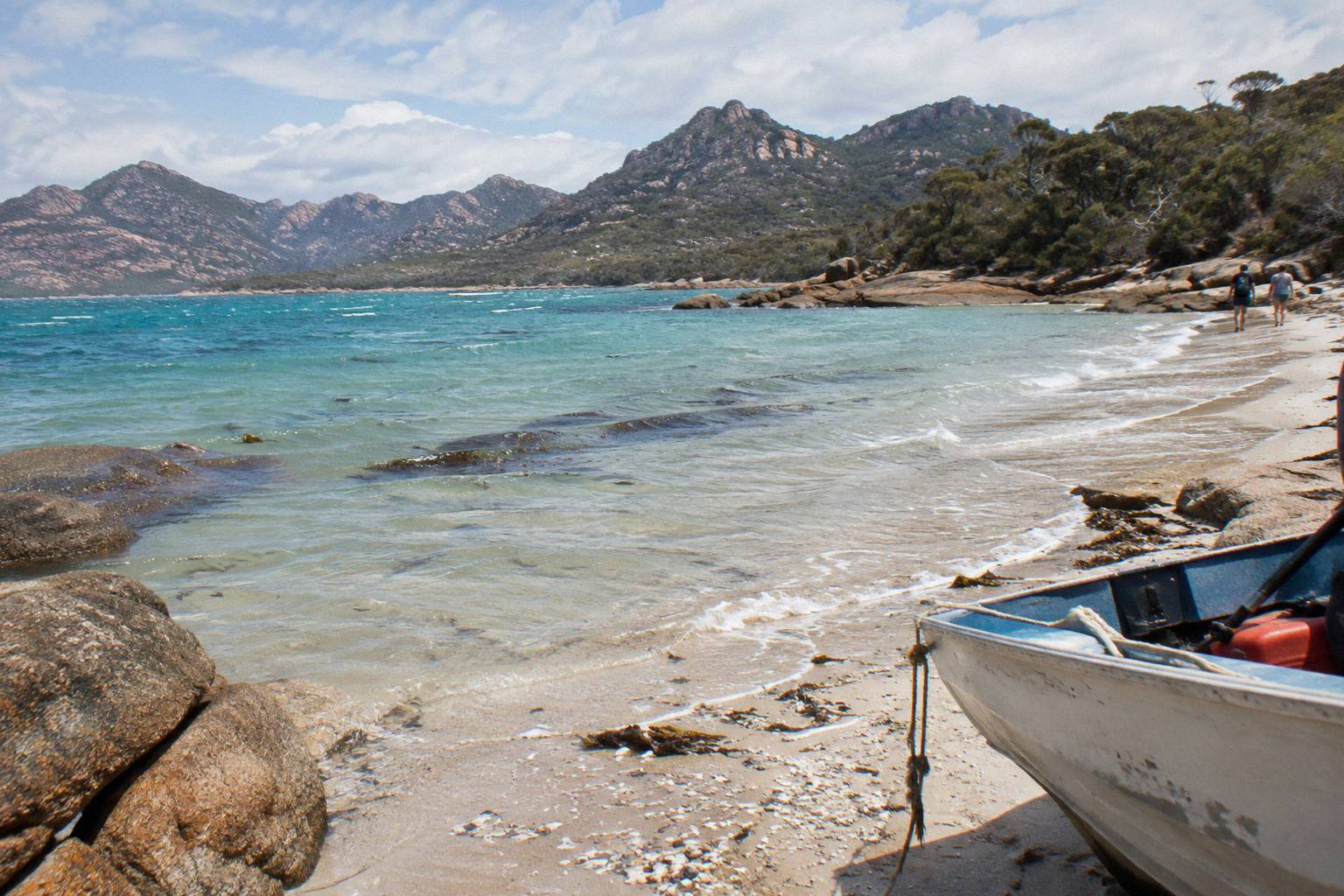
What To Wear And Bring Yourself
Bring drinking water, a hat or sunglasses, and comfortable clothing you can layer so you are ready for changing conditions. For footwear, pick something that can get wet, such as flip flops, or you can simply go bare feet for the day. That is the operator's complete bring list. You do not bring a wetsuit unless you personally want one, you do not bring kayaking gear of any kind, and you do not bring a dry bag for your phone because one is provided. Everything else on your back should be chosen for a morning or afternoon of moderate activity in changeable Tasmanian weather.
The footwear point deserves its own sentence because it is the one item the operator singles out. Footwear will get wet, full stop, which rules out fresh sneakers and anything you care about. Flip flops or bare feet are the stated options, and bare feet work because you are stepping into a boat from a beach, not scrambling over reef. For a fuller treatment of layering, fabrics and the reasoning behind each choice, the guide on what to wear sea kayaking at Freycinet goes item by item.
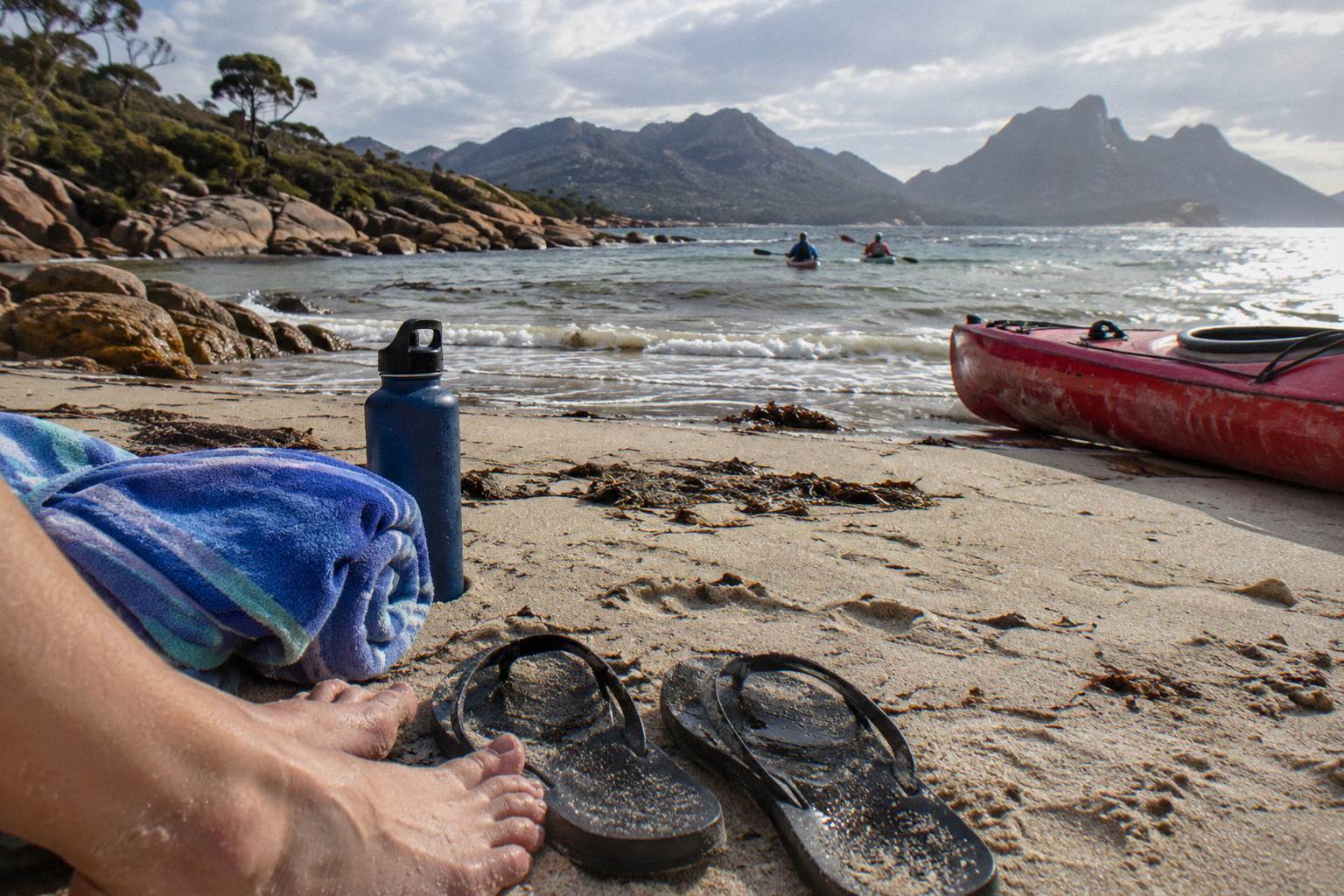
A worked example makes the packing list concrete. A family of four booked on a 3 hour paddle in October, when the water averages about 13.5 degrees, needs between them: four drink bottles, two hats, a couple of pairs of sunglasses, everyday comfortable clothes, and a bag of flip flops by the car door. Warm jackets, kayaks, paddles, dry bags, the guide, the coffee and the cookie at the beach stop are all on the operator's side of the ledger. The booking page notes a from price of A$155 per person for the paddle, though it changes by date, and weekend and public-holiday departures carry surcharges, so check the final figure when you book.
What about children? The operator takes children from 7 years old, with under-16s accompanied by an adult, and the same kit list applies to them: their own water bottle, their own warm layer under the provided jacket, and footwear that can get wet. The operator's FAQ adds that children should be happy to sit still for 2 to 3 hours, which is the real constraint for young families rather than the cold.
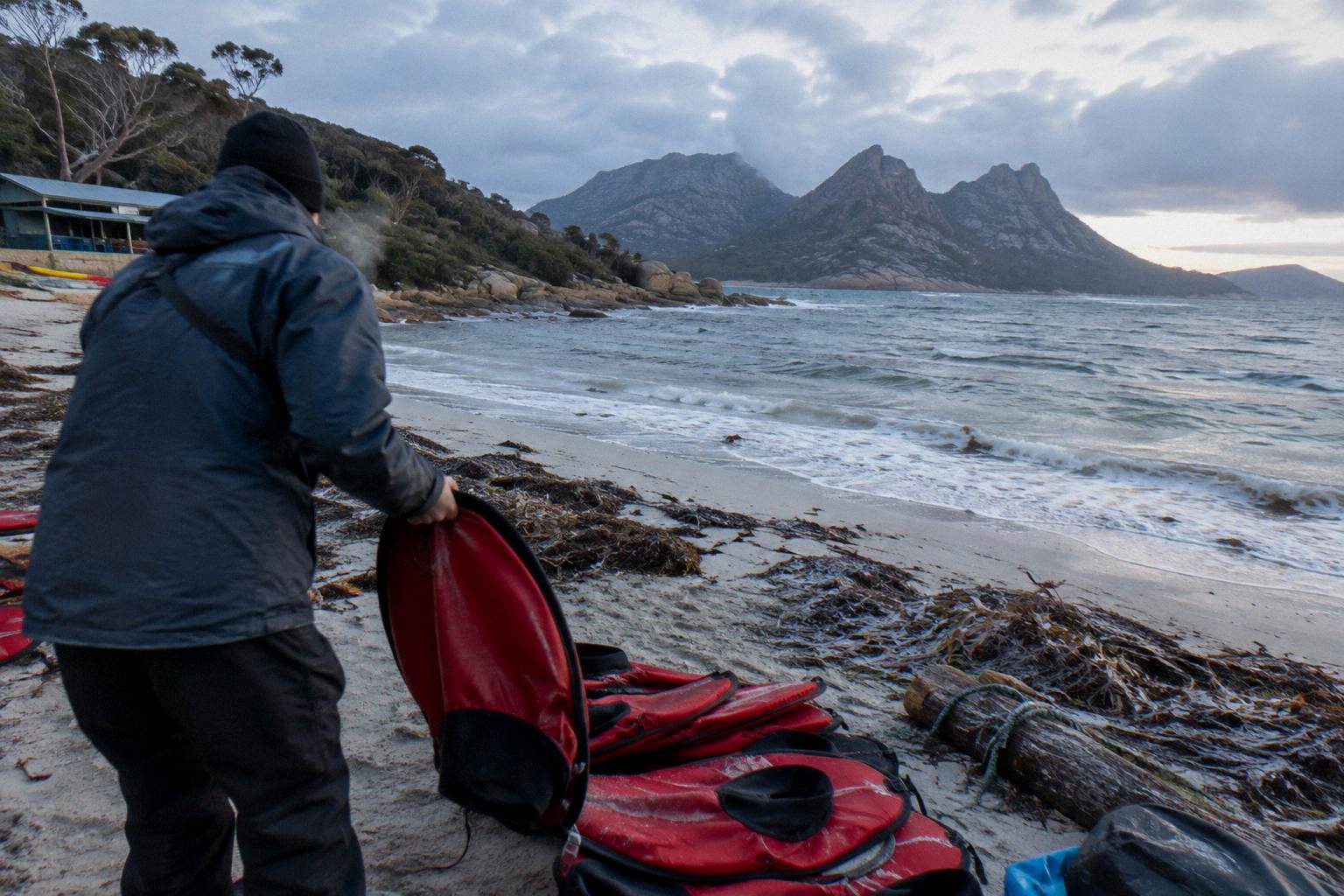
Will You Actually Get Wet On A Freycinet Paddle?
Yes, a bit. Some splashing is likely whenever you paddle, so expect damp sleeves, drips from the paddle, and the occasional splash rather than a full soaking. Full immersion is not the plan, and the aim is to finish the trip merely damp instead of drenched. The tour uses sit-in tandem sea kayaks, which keep your lower body inside the hull and out of the wind and spray, and the operator's only wet-gear warning is about footwear. There is no swim stop on the itinerary, no rolling practise, and no stated expectation that guests end up in the water. Sea state on the day decides how much water comes over the deck, and guides can cancel or modify a departure at any time for safety.
That said, "not the plan" is not a promise. Kayaking is a water sport, drip from the paddle lands on your lap, and rain happens. The practical reading of the operator's advice is: dress so that a wet sleeve or a damp hem does not ruin your day, keep your phone in the provided dry bag, and wear shoes you would happily rinse in the sea. If being cold when damp is a genuine worry for you, say so when booking and the operator can tell you what the conditions have been doing.
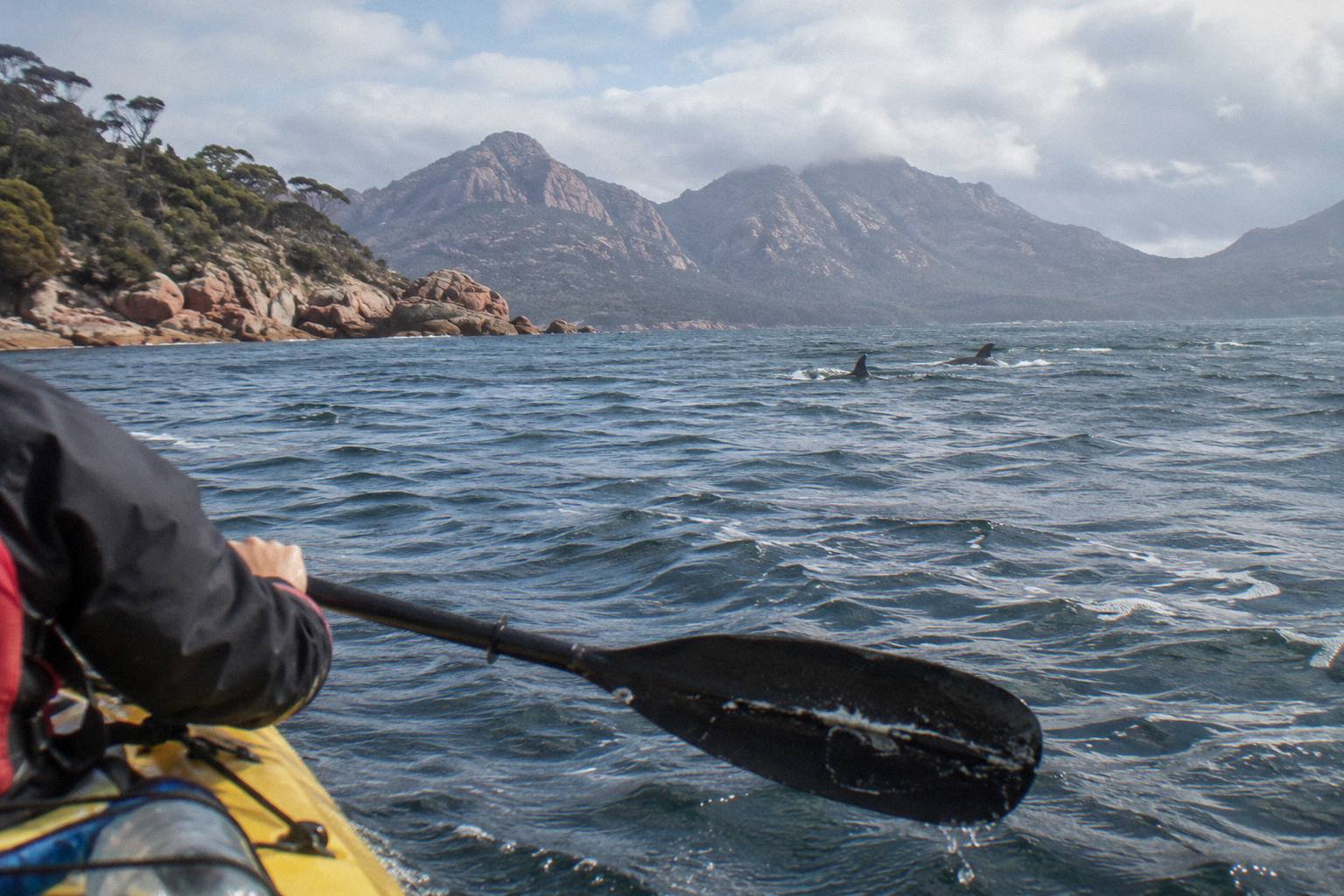
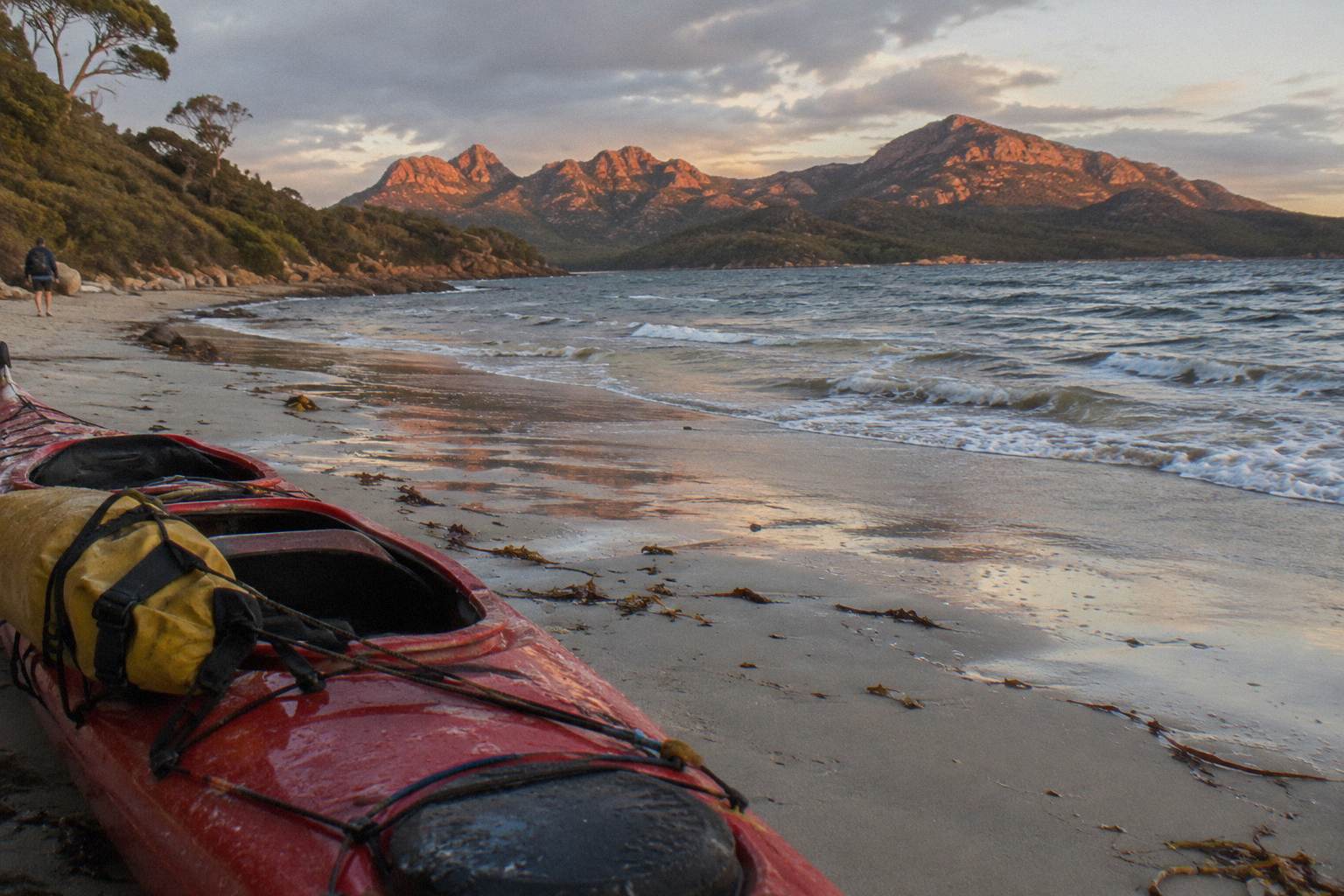
The halfway beach stop changes the equation in a good way. The operator describes a rest break on a secluded sandy beach with a freshly brewed coffee or hot drink and a snack, roughly halfway through about 2 hours of cumulative paddling. You step out, stretch, warm your hands on a cup, and put the warm jacket back on before the second half. On the Twilight session, which follows the same route and finishes right on sunset, that stop also breaks up the coolest part of the day.
Weather Cancellations And The Warm-Jacket Question
Yes, pack a warm jacket, and know that the operator decides if the weather turns: guides can cancel at any time for safety. If that happens, you are covered, since a weather cancellation means a full refund or a reschedule, so you will not lose your money when a trip cannot run. In challenging wind the operator may contact guests beforehand, may require previous sea kayaking experience and moderate fitness, and otherwise offers the same refund or rebook options. Guest cancellations for other reasons need 24 hours notice for a refund. Cold alone does not cancel a tour; the paddle runs year round with seasonal departure times, and no timetable of start times is published.
The cancellation policy matters to a cold-worried reader for a specific reason: wind, not water temperature, is what actually makes a Tasmanian paddle unpleasant, and wind is also the thing the operator watches. When the forecast is challenging, the phone call comes before you are standing on Muirs Beach in a spray jacket wondering what you signed up for. If you are weighing the difference between a windy day and a mild one for booking purposes, the guide to Freycinet weather for kayaking covers how conditions shape the decision.
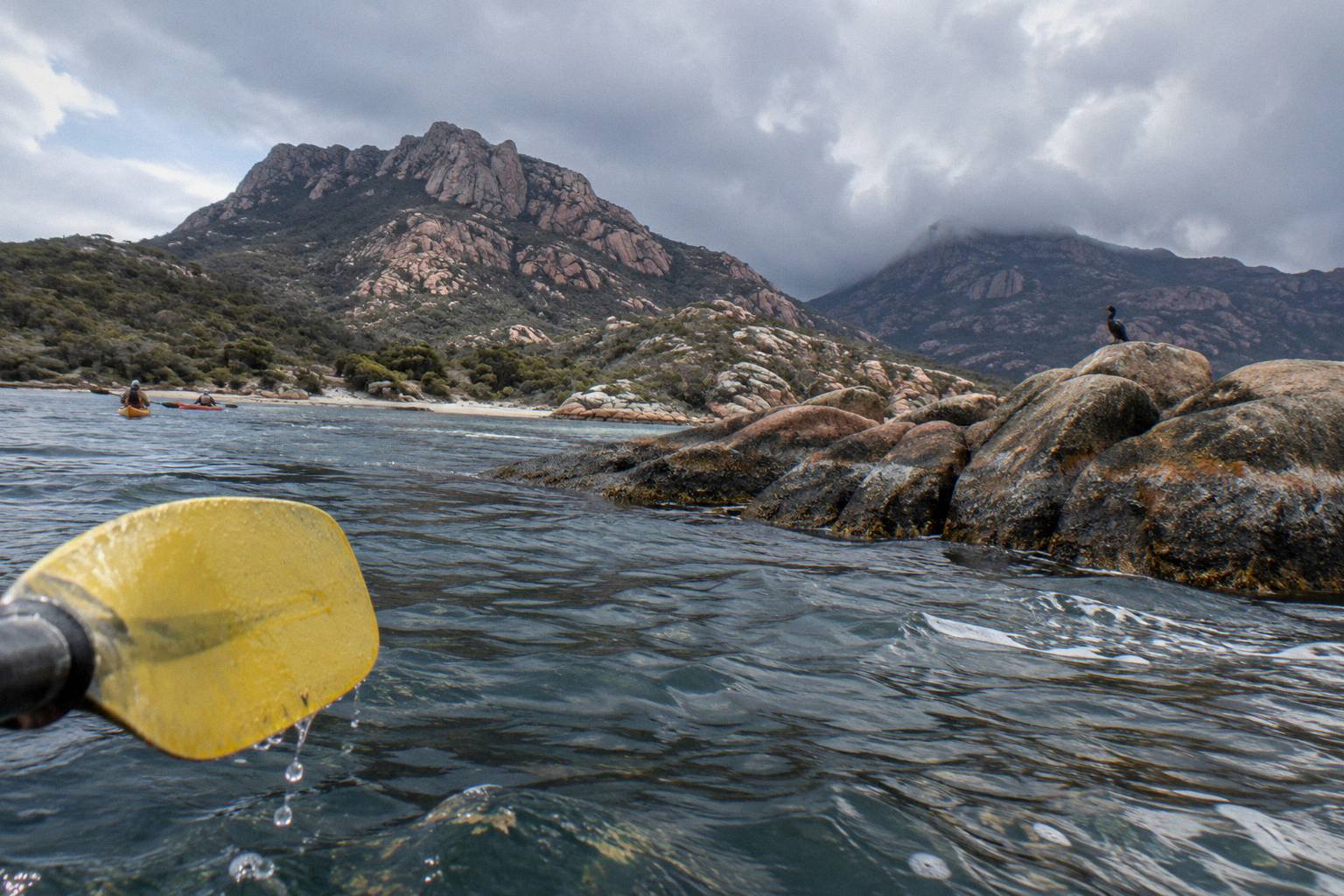
One more framing helps. The operator describes Coles Bay as sitting where Great Oyster Bay meets the Tasman Sea, and the paddle works the sheltered Great Oyster Bay side. The open-ocean swell and the exposed east coast of the peninsula are a different proposition, and the day tour does not go there. Your wetsuit question, in other words, is being asked about one of the more protected pieces of water in the region, not about a surf launch.
Guided Paddle, Cruise Or Walk: Which Keeps You Warmest?
If staying warm and dry is your top priority, the Wineglass Bay cruise and the Freycinet walking tour are the low-exposure picks, keeping you out of the wind and spray. The guided paddle is the option most exposed to splash and wind, though the provided jackets help take the edge off. The cruise from Coles Bay runs about 4 hours 30 minutes aboard a vessel, boards at 61 Jetty Road, and is rated 4.7 across more than 1,000 reviews. The walking tour is a guided walk with no boat at all. The Freycinet Paddle, rated 4.8 across more than 1,000 reviews, trades dry socks for the waterline view. None of the three promises wildlife or weather.
The comparison is not really about comfort rankings, it is about what kind of cold you prefer. On the cruise you are out of the water entirely, dressed as you like, seeing Wineglass Bay itself from the deck. On the walk you generate your own warmth on a graded track with the Wineglass Bay Lookout as the classic turnaround. On the paddle you are at sea level in a sit-in kayak, dry from the waist down, with a warm jacket provided and a hot drink at the halfway beach. Three different relationships with the same coastline.
A decision lens by traveller type, using only what the operator and booking pages state. A visitor who hates the cold but wants to say they paddled in Tasmania: take the paddle, wear your own warm layer under the provided jacket, and pick a summer month when the water averages above 16 degrees. A family with children from 7 up: the paddle suits, minimum age 7 with an adult alongside under-16s, and the group maximum of 16 keeps it small. A visitor who wants Wineglass Bay specifically: the paddle does not go there, so the cruise or the walk is the honest answer, as the comparison of Wineglass Bay by kayak, cruise or walk sets out in full.
For the no-car traveller there is a fourth option: a full day tour from Hobart that reaches Wineglass Bay by road, run by Wineglass Bay Discovery Tours. It removes both the driving and the splash, at the cost of a long day. It carries no printable rating or price here, so ask about both on its booking page.
What Trips People Up When Packing For A Freycinet Paddle
The same few mistakes come up again and again: people pack as though they were heading out for a swim rather than a paddle, they bring shoes that cannot get wet, they skip the water bottle, and they assume a wetsuit is compulsory in Tasmanian water. None of those match what the operator actually asks for. The kit list is short because everything bulky is provided: kayaks, paddles, warm jackets, dry bags, guide, and the hot drink at the beach stop. People who over-pack neoprene and under-pack drinking water have read the trip backwards.
The swim assumption is the most common. Somewhere along the way, "sea kayaking" became confused with "swimming with kayaks", and travellers arrive braced for immersion. The tour has no swim stop, the kayaks are sit-in doubles, and the operator's only stated water requirement is that guests need to be able to swim as a safety precaution. That is an ability standard for emergencies, not a promise of a dunking. The wettest thing on a normal departure is your footwear.
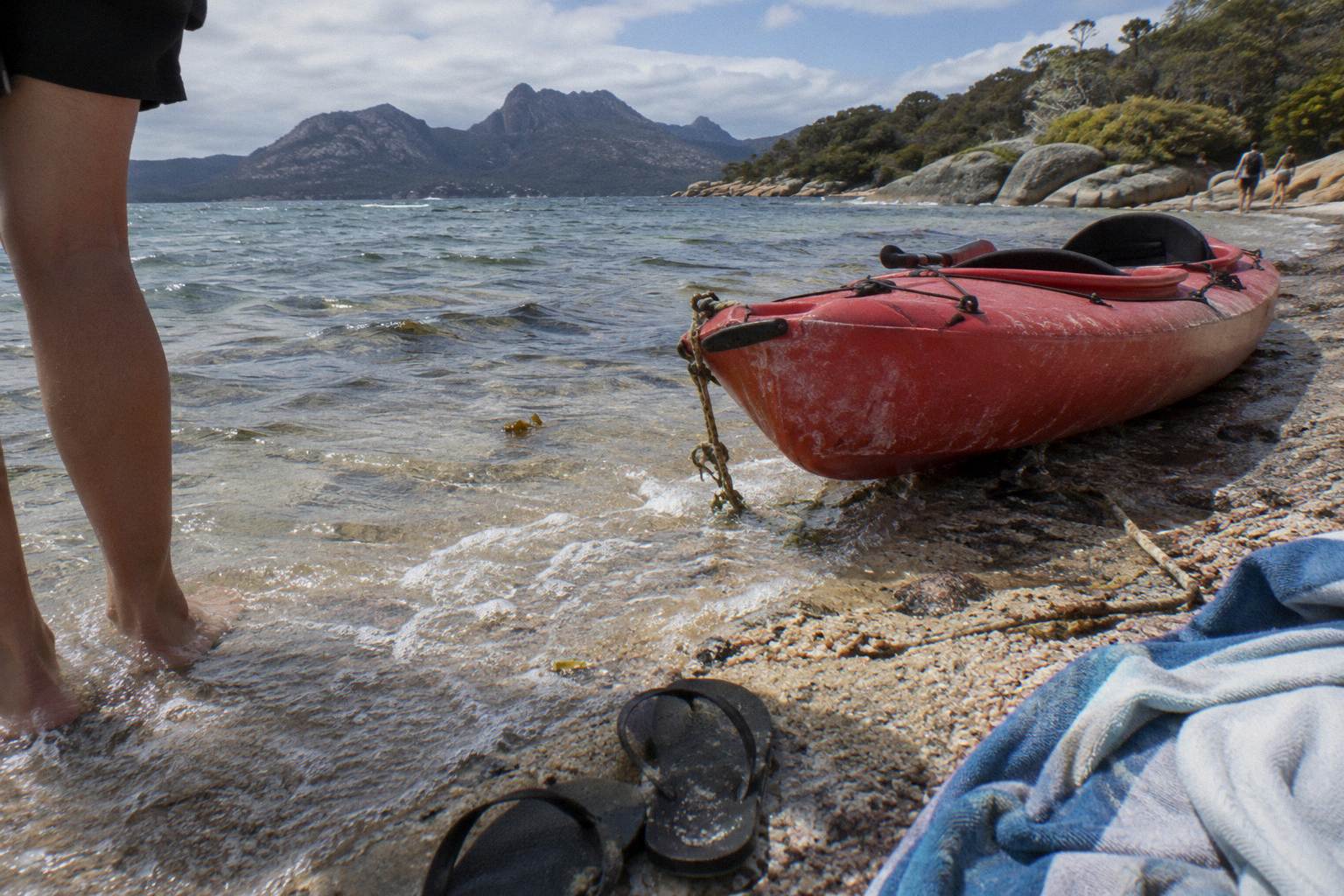
The second trap is shoes. Fresh sneakers, leather sandals you love, and hiking boots all fail the operator's simple test: footwear will get wet. Flip flops or bare feet are the stated answers. The third is forgetting drinking water, which the operator lists explicitly as a bring item; three hours of outdoor activity with a coffee halfway still needs your own bottle. The fourth is phone handling: dry bags are provided, so use one from the start rather than pocketing the phone for later. If gaps remain, one short question to the operator when booking settles the rest, including how the park pass applies to your departure, and the rundown of the Freycinet park pass and kayak tours helps there.
For a publisher of Tasmanian paddle guidance, Freycinet Kayaking keeps the answer simple: trust the provided kit, bring the short list, and let the warm jackets do their job.
Common Questions About Wetsuits And Jackets On Freycinet Kayak Tours
Are Wetsuits Or Warm Jackets Provided On Freycinet Kayak Tours?
Warm jackets are provided: the operator's tour page and the booking page both list them, alongside all sea kayaking equipment and dry bags for phones and cameras. A wetsuit is not mentioned anywhere in the operator's kit list, so bring your own if you want one. The water at Coles Bay averages roughly 13 to 17 degrees Celsius across the year, cool but manageable in a sit-in kayak with a jacket over your own layers.
Do I Need A Wetsuit For Sea Kayaking At Coles Bay?
Not according to the operator. No page from Freycinet Adventures mentions wetsuits, and the craft are sit-in tandem sea kayaks that keep your lower body inside the hull. The operator's clothing advice is comfortable clothing, warm jackets provided, and footwear that can get wet. If you run cold or paddle in the winter months, a personal wetsuit layer is your call, not a tour requirement.
What Clothing Should I Wear On The Freycinet Paddle?
Wear comfortable clothing you can layer, bring a hat or sunglasses, and choose flip flops or bare feet because footwear will get wet. Bring your own drinking water. Warm jackets, dry bags, kayaks and paddles are all provided, and the halfway beach stop includes a hot drink and a snack, which helps on cool departures.
How Cold Is The Water When Kayaking At Coles Bay?
According to seatemperature.org's long-run data for Coles Bay, the monthly averages run from about 13.0 degrees Celsius in August, the coldest month, to about 17.2 in February, the warmest. Winter readings sit in the low teens and summer in the high teens. Those are approximate historical averages, not a forecast, but they show the gap between seasons is only around four degrees.
Will I Get Wet On A Freycinet Kayak Tour?
Some splash is likely and full immersion is not part of the plan. The tour uses sit-in double sea kayaks, has no swim stop, and the operator's only wet-item warning concerns footwear. Paddle drip, spray and rain can dampen sleeves and hems, which is why comfortable clothing and the provided dry bags for phones and cameras are the practical answer.
Are Life Jackets Provided On The Tour?
Marine and Safety Tasmania makes a life jacket compulsory in lightweight craft including kayaks, and the operator provides all kayaking equipment. The operator's pages describe that equipment as a whole rather than itemising life jackets by name, so if you want written confirmation of the specific safety gear on your departure, ask the operator when booking.