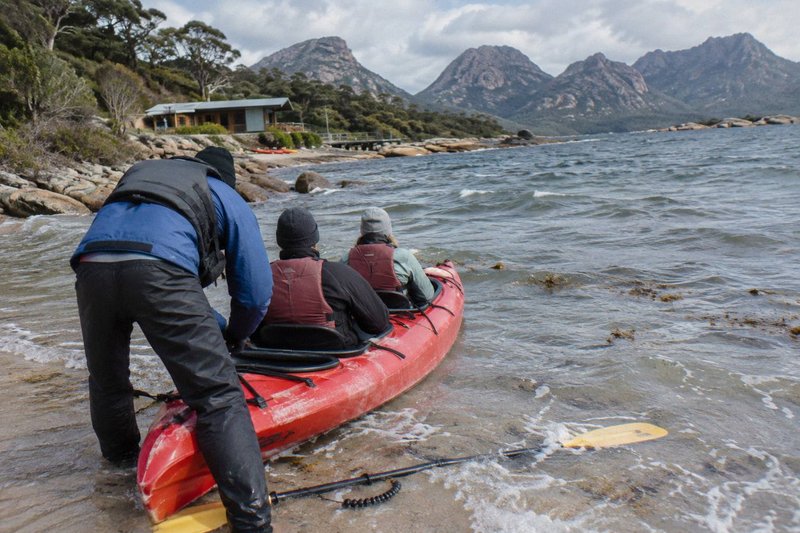
Honeymoon Bay At Freycinet: Paddle It Or Walk It?
Honeymoon Bay sits inside Freycinet National Park, and only one kayak trip stops there: a sunrise breakfast paddle sold directly by the operator. The regular day paddle stops at a different, unnamed beach. Walking in, camping and the park's facilities are the other routes, and the choice comes down to timing, legs and what you want from the water.
Short answer
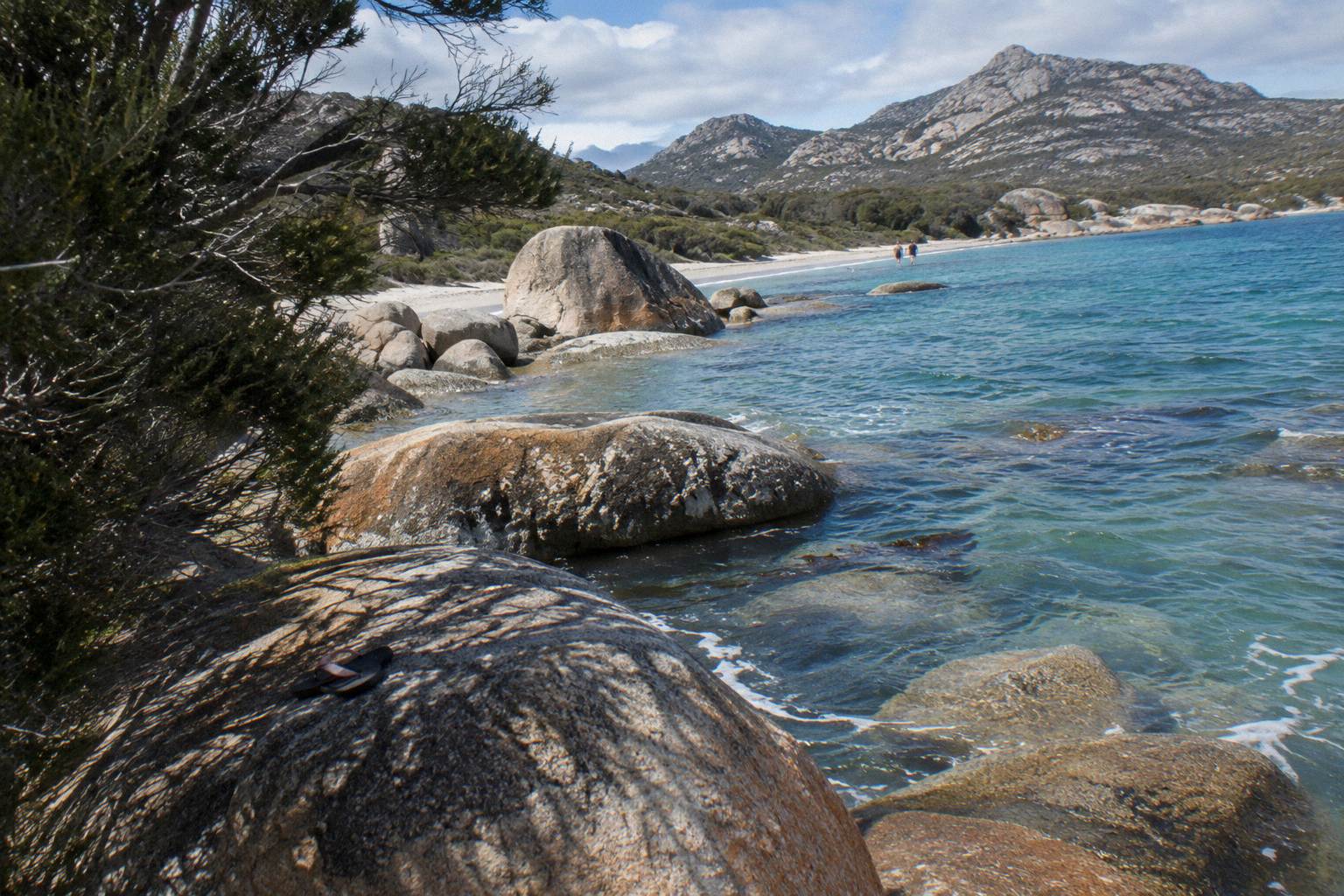
Honeymoon Bay is a beachfront camping and picnic area inside Freycinet National Park, about 28 km by road from the Tasman Highway turnoff. A 2.5 hour Sunrise Breakfast Paddle run by Freycinet Adventures stops there for a continental breakfast. The regular 3 hour Freycinet Paddle does not, so paddle it at dawn or reach it on foot, by car or by campsite.
If the plan is broader than one bay, start with the full Freycinet kayak day itinerary to see how a paddle slots into a day that also takes in the walks.
Quick Facts: Honeymoon Bay At A Glance
Honeymoon Bay is a beachfront camping and picnic area inside Freycinet National Park, close to Coles Bay township below the Hazards, where PWS provides taps, toilets, tables and electric barbecues. The table below gathers the facts that decide the paddle-or-walk question: which kayak trip stops there, what it costs in time, where you can camp, and the park rules that shape a visit, all attributed to the operator or PWS.
| Fact | Detail |
|---|---|
| What it is | Beachfront camping and picnic area inside Freycinet National Park |
| Kayak trips that stop there | The Sunrise Breakfast Paddle, sold directly by the operator |
| Duration of that trip | 2.5 hours, daily departures from 7am depending on the time of year |
| Breakfast at the stop | Continental breakfast with tea and coffee, per the operator |
| Booking cut-off | 12 hours before departure, per the operator |
| Does The Freycinet Paddle stop there | No, its half-way stop is a secluded sandy beach elsewhere |
| Camping | Yes, at Honeymoon Bay, Richardsons Beach and Ranger Creek (PWS) |
| Facilities | Taps, electric barbecues, tables and toilets (PWS) |
| Drones | Not permitted in Tasmanian national parks (PWS) |
Freycinet is Tasmania's oldest national park, reserved in 1916 alongside Mount Field, and the Parks and Wildlife Service page describes the Hazards above the bay as a spectacular granite mountain range rising from sheltered turquoise bays. That combination, pink granite at the waterline and calm water at your feet, is exactly what pulls travellers toward the small bays on the Coles Bay side of the peninsula.
Where Is Honeymoon Bay And Why Does It Draw People?
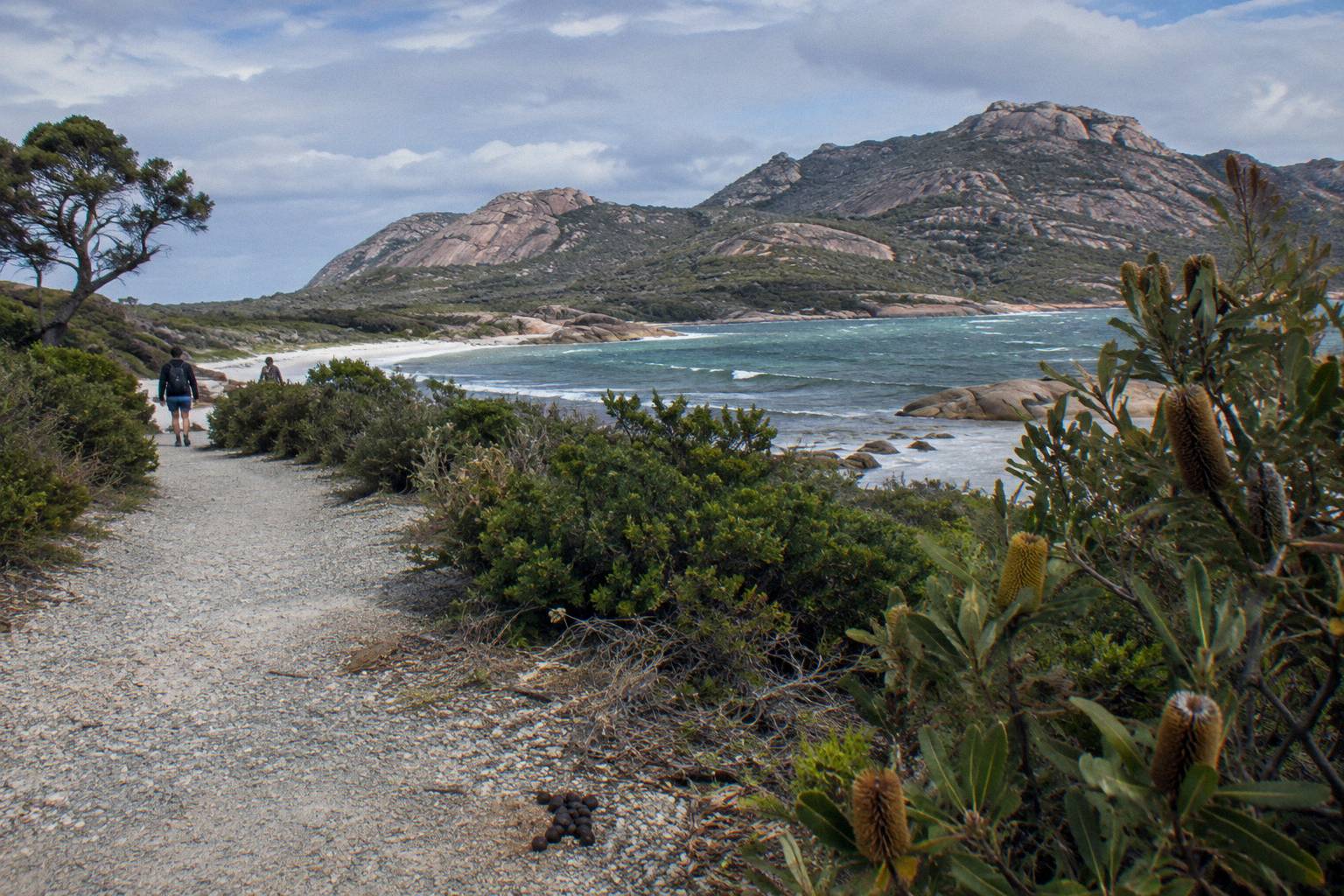
Honeymoon Bay sits on the western edge of Freycinet National Park, a short way around the shoreline from Coles Bay township, below the granite slopes of the Hazards where Great Oyster Bay meets the Tasman Sea. It is a camping and picnic area rather than a distant destination: PWS lists taps, electric barbecues, tables and toilets there, and the park's beachfront camping grounds at Honeymoon Bay, Richardsons Beach and Ranger Creek cluster along the same stretch of coast.
The bay is close enough to the township to work as a half-day outing and photogenic enough to feel earned. The operator's own description of the area calls Coles Bay the town at the foot of the Hazards, and PWS frames the whole park as effectively two eroded blocks of granite, which is why the boulders at the waterline look the way they do. Water at the tap is one thing; drinking water generally is scarce in the park, so carry what you need rather than assuming a fill point beyond the three PWS names.
Two practical cautions come straight from PWS. Beaches in the park are unpatrolled, and the cliffs are hazardous, so children need supervising near both. Drones are not permitted anywhere in Tasmania's national parks, which matters if the plan was aerial footage of the granite.
If the paddle itself is the main draw and the bay is secondary, whether sea kayaking here suits beginners answers the confidence question, and PWS notes that the relatively sheltered waters of Coles Bay allow for all experience levels and recommends guided tour companies if you are new to paddling.
Which Kayak Tours Actually Stop At Honeymoon Bay?
Only one kayak trip stops at Honeymoon Bay: the Sunrise Breakfast Paddle, a 2.5 hour guided paddle run directly by Freycinet Adventures, with daily departures from 7am depending on the season and a beach stop at Honeymoon Bay inside the national park for a continental breakfast with tea and coffee. The Freycinet Paddle, the 3 hour day tour, does not stop there. The operator says its half-way stop is a secluded sandy beach, not Honeymoon Bay.
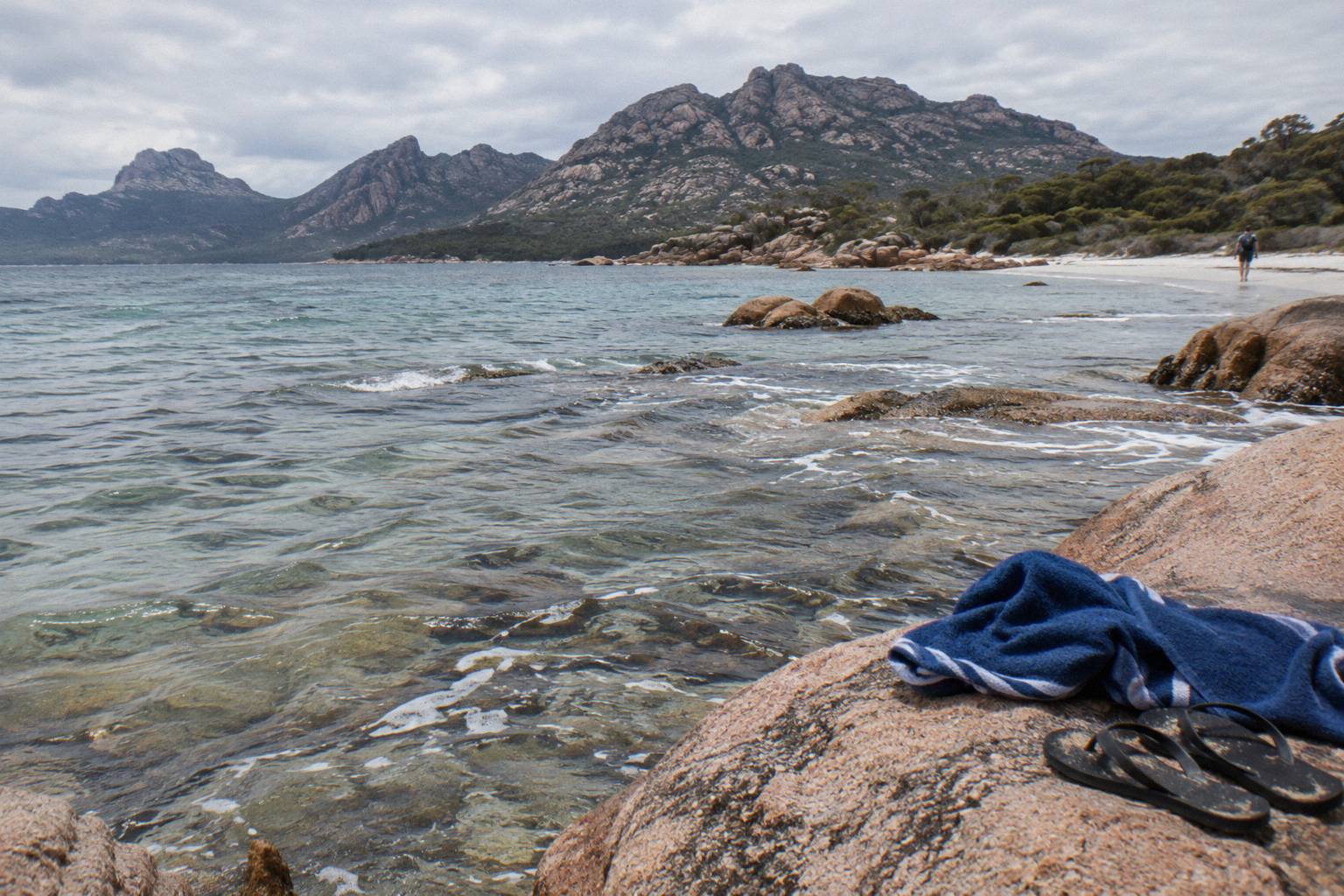
That distinction is the single most useful fact on the page. Travellers book the day paddle expecting the Honeymoon Bay breakfast stop, and the two products are different trips with different formats. The sunrise paddle is booked through the operator directly; the day paddle is the tour sold on the booking pages covered here, rated 4.8 across more than 1,000 reviews on its main booking page, with a from price of A$155 per person that changes by date.
Neither trip reaches Wineglass Bay or Schouten Island; both paddle the Great Oyster Bay side out of Coles Bay. The trade-off is simple: sunrise timing and a Honeymoon Bay breakfast on one hand, flexible session times and a sunset finish on the other, since the operator says morning and twilight sessions of The Freycinet Paddle follow the same route and the twilight finishes right on sunset.
Beyond the paddle, two non-kayak options in the same family of trips cover the peninsula from different angles: the Wineglass Bay cruise from Coles Bay, about 4 hours 30 minutes boarding at 61 Jetty Rd, rated 4.7 across more than 1,000 reviews, and the operator's own guided Wineglass Bay Lookout walk of 2 hours with a 4 guest minimum. Neither stops at Honeymoon Bay either, but both reach views and water the paddle does not.
For a deeper look at the question of which water to be on, seeing Wineglass Bay by kayak, cruise or walk works through the same decision for the park's famous beach.
How Does The Sunrise Breakfast Paddle Actually Work?
The Sunrise Breakfast Paddle runs 2.5 hours, departing daily from 7am depending on the time of year, and bookings close 12 hours before departure. The operator paddles to Honeymoon Bay inside Freycinet National Park, lands for a continental breakfast with tea and coffee, then returns. It is sold directly by the operator rather than through the booking pages covered here, so price, meeting detail and availability are confirmed with the operator when you enquire.
The trip's shape suits early risers and photographers more than lie-in holidaymakers. A 7am-style departure means being at the water before the township is properly awake, and the operator's own page for the trip lists the wildlife framing it uses across its tours: sting rays, white bellied sea eagles, and larger marine species like dolphins, whales and fur seals on occasion. That qualifier is the operator's, and it is the honest one. No tour here guarantees a sighting, and sea state on the day decides what the water shows you.
Kayaks on the operator's tours are double, sit-in tandem sea kayaks; solo guests paddle with another guest or a guide. The operator's FAQ says guests need to be able to swim, and the same fitness guide applies as the day tour: comfortable with a leisurely couple of hours of recreation.
Booking mechanics matter more here than on the day paddle. The 12 hour cut-off means a same-morning decision usually does not work; the day paddle's online bookings close 3 hours before departure. If Honeymoon Bay at breakfast is the goal, the enquiry goes in the day before at the latest, direct to the operator's sunrise breakfast tour page.
If dawn on the water appeals but the breakfast stop does not decide the day, the 3 hour day paddle covers the same stretch of Great Oyster Bay with a coffee and snack stop of its own on that secluded beach, and runs year round with seasonal departure times.
Paddle It Or Walk It: Which Suits You?
Walk it if you want the bay at your own pace, a swim, a barbecue or a night beside the granite; paddle it if arriving across the water at dawn, with breakfast on the sand, is the point. Walking access from the camping areas and car access leave the bay free of time pressure, while the sunrise paddle trades flexibility for a guided, timed arrival and a 12 hour booking cut-off. Neither option reaches Wineglass Bay by kayak.
The honest comparison uses only what each source states. Here is the decision grid:
| Option | Time | Reach Honeymoon Bay? | What The Source Says |
|---|---|---|---|
| Sunrise Breakfast Paddle | 2.5 hours, from 7am seasonally | Yes, beach stop with breakfast | Operator's own page; direct booking, closes 12 hours ahead |
| The Freycinet Paddle | 3 hours, about 2 hours paddling | No, secluded sandy beach stop | Operator and booking page; runs year round |
| Walk from camping areas | Your own pace | Yes, on foot | PWS: beachfront camping at Honeymoon Bay, Richardsons Beach, Ranger Creek |
| Wineglass Bay Lookout walk | 2.5 to 3.5 hours return, 6 km, Grade 3 | No, goes to the lookout | PWS track grading |
| Full circuit walk | 4 to 5 hours, 11 km, Grade 4 | No, Hazards Beach and Wineglass Bay | PWS track grading |
| Cape Tourville Circuit | 20 minutes, 600 m, Grade 1 | No | PWS track grading |
By traveller type, the split falls out cleanly. Families with children from 7 who can sit happily for 2 to 3 hours, the operator's stated age guide for its kayak tours, fit the day paddle; the camping ground at Honeymoon Bay suits younger children better, with toilets, taps and barbecues on hand and no swim requirement in sight. Slow travellers and photographers get more from the sunrise paddle, whose stop is the bay itself. Walkers with half a day and Grade 3 legs get the Wineglass Bay Lookout, which the paddle never reaches.
One cost that catches walkers and campers: a valid parks pass is required for entry to all of Tasmania's national parks. The Daily Pass is AUD 49.15 per vehicle for up to 8 people, or AUD 24.55 per person arriving by bus, cycle or on foot, and passes are sold at the Freycinet visitor centre, open daily 9am to 4pm, and online. The details sit on the PWS pass and entry fees page. The operator's walking tour page states a pass is required and not included in that tour's price; for the kayak tours, confirm with the operator when booking.
What The Freycinet Paddle Does And Does Not Include
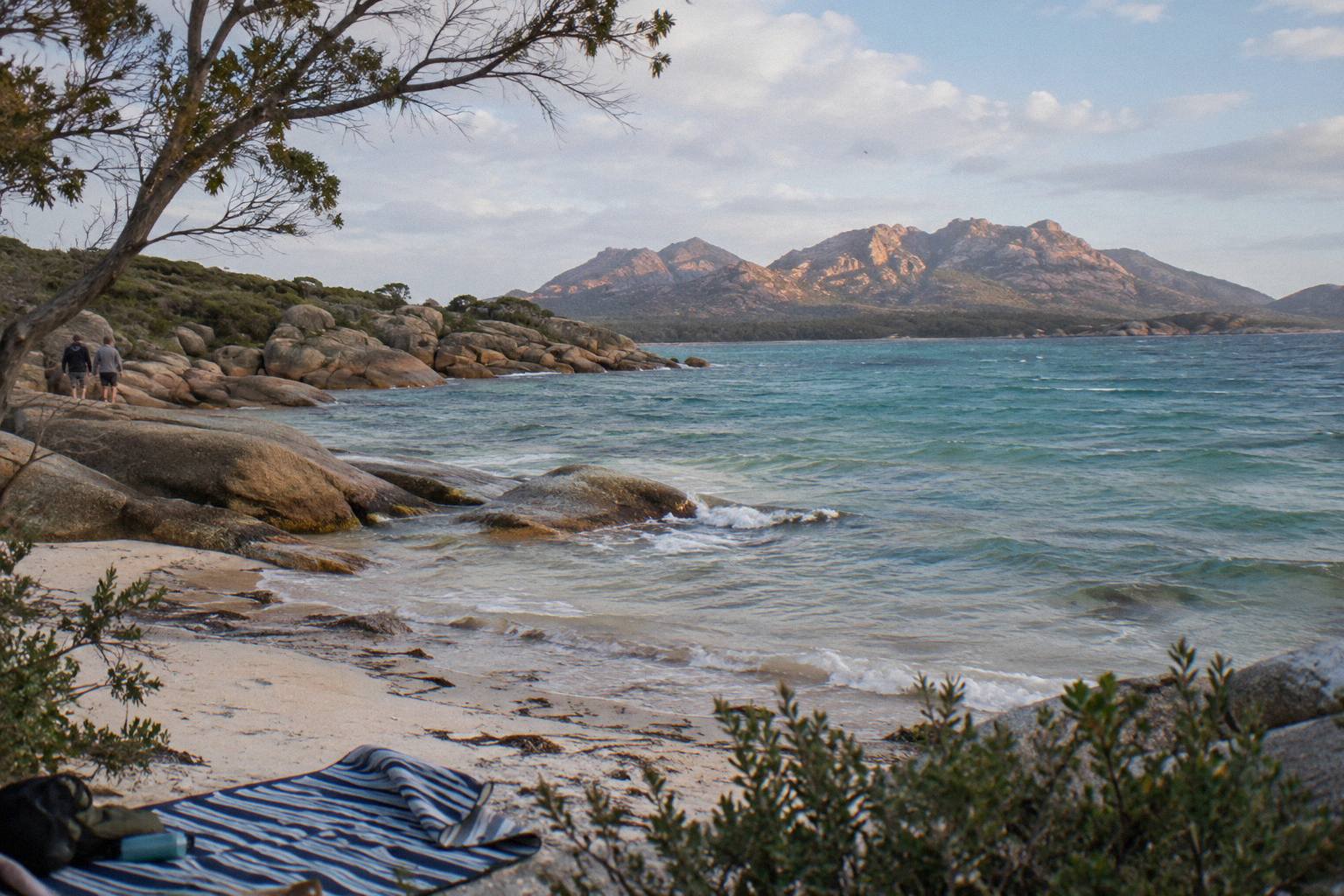
The Freycinet Paddle is a 3 hour guided tour with about 2 hours of cumulative paddling and a rest break halfway, in double sit-in sea kayaks, from Muirs Beach at Coles Bay where the operator says free public parking and public toilets are available. Groups run from a minimum of 2 to a maximum of 16, and the tour runs year round with seasonal departure times. It does not go to Honeymoon Bay, Wineglass Bay or Schouten Island.
What you get, per the operator and booking page: all kayak equipment provided, a safety briefing first, warm jackets provided, dry bags for phone and camera, and a half-way stop on a secluded sandy beach for freshly brewed coffee or a hot drink and a snack; the booking page includes a gourmet cookie there. What you bring: drinking water, a hat or sunglasses, comfortable clothing, and footwear that can get wet. The booking page notes the meeting point can shift to the Coles Bay boat ramp in some weather.
Cancellation terms are generous on both sides. The operator's terms allow free amendments and cancellations up to 24 hours in advance, and if the operator cancels for weather you get a full refund or a reschedule. In challenging wind the operator may contact guests beforehand and may require previous sea kayaking experience and moderate fitness, otherwise the same full refund or reschedule applies.
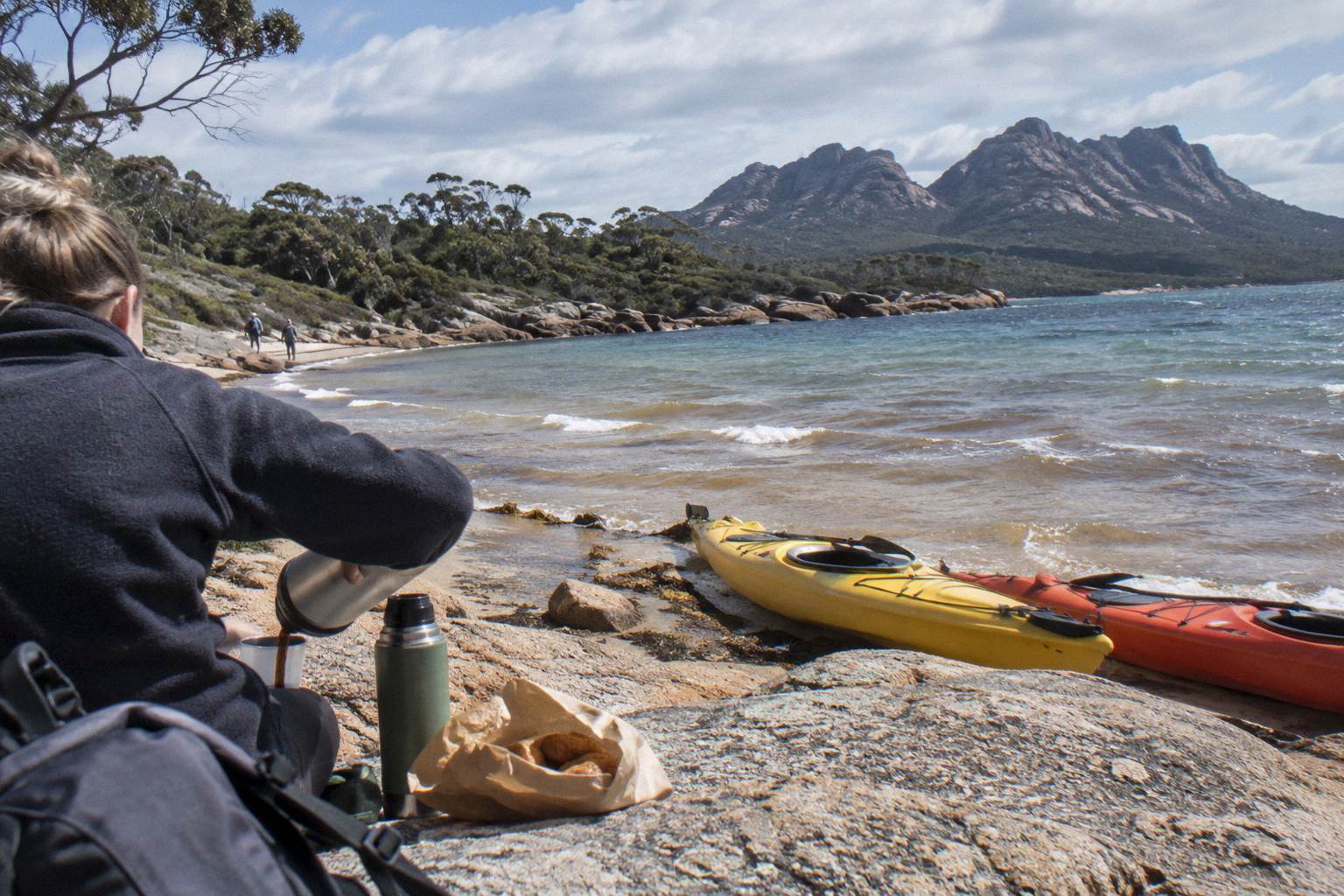
If being on the water matters more than which beach you stop at, the day paddle is the flexible choice: book a The Freycinet Paddle tour page and check availability for your dates, since sessions fill around the seasonal timetable.
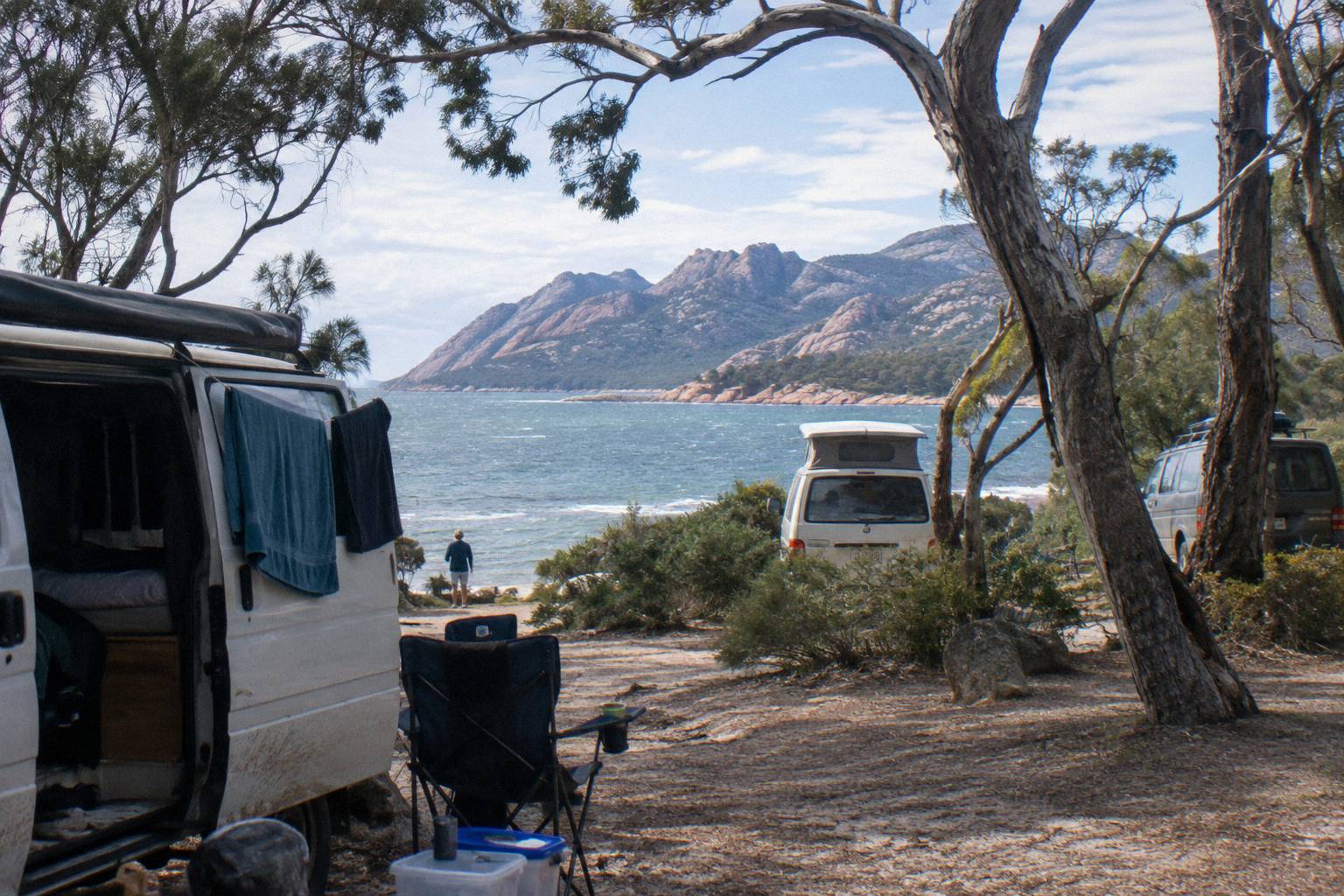
The water itself is worth one planning note. Coles Bay's sea surface runs a long-run average of about 17 degrees Celsius in February at its warmest and about 13 degrees in August at its coldest, per seatemperature.org's historical monthly data. The operator provides warm jackets rather than wetsuits, so dress for the season; the what to wear sea kayaking at Freycinet guide works through the layers.
For a different water experience altogether, the Wineglass Bay cruise spends about 4 hours 30 minutes on the water from 61 Jetty Rd, Coles Bay, and it is the one option that puts you on the inside of Wineglass Bay itself, which no kayak tour sold here does. Rated 4.7 across more than 1,000 reviews, it suits travellers who want the famous beach from the water without a paddle in hand.
Walking In: Tracks, Grading And What To Expect On Foot
The walk into Honeymoon Bay is short since the camping areas sit near the Coles Bay end of the park, with three graded PWS tracks nearby: 600 m Grade 1 Cape Tourville Circuit at 20 minutes; 6 km Grade 3 Wineglass Bay Lookout walk at 2.5 to 3.5 hours return; and the 11 km Grade 4 Wineglass Bay and Hazards Beach circuit at 4 to 5 hours. Honeymoon Bay works as a walking base or a gentle destination.
The Grade 3 lookout walk is the classic half-day objective, and the operator's guided version of it, 2 hours with a 4 guest minimum, suits travellers who want interpretation rather than navigation. Camping at Honeymoon Bay puts the trailhead effectively at your tent door, though camping fees and booking details are not held here, so ask PWS when planning a night.
Three practicalities shape a walking day. Drinking water is scarce: taps sit at the visitor centre, Honeymoon Bay and the Wineglass Bay Walking Tracks car park, and nowhere in between. The beaches are unpatrolled and the cliffs hazardous, per PWS. And whatever the month, the best time to sea kayak at Freycinet and the walking calendar overlap in summer, December to February, when the water is at its warmest and the days longest.
| Track | Time | Distance | Grade |
|---|---|---|---|
| Cape Tourville Circuit | 20 minutes | 600 m | 1 |
| Wineglass Bay Lookout walk | 2.5 to 3.5 hours return | 6 km | 3 |
| Wineglass Bay and Hazards Beach circuit | 4 to 5 hours | 11 km | 4 |
For a guided version of the lookout walk, the Freycinet Walking Tour covers the operator's 2 hour format with a 4 guest minimum, park pass not included. It pairs naturally with a morning paddle: walking Wineglass Bay and kayaking on the same day lays out a workable order.
Camping, Facilities And Park Rules At Honeymoon Bay
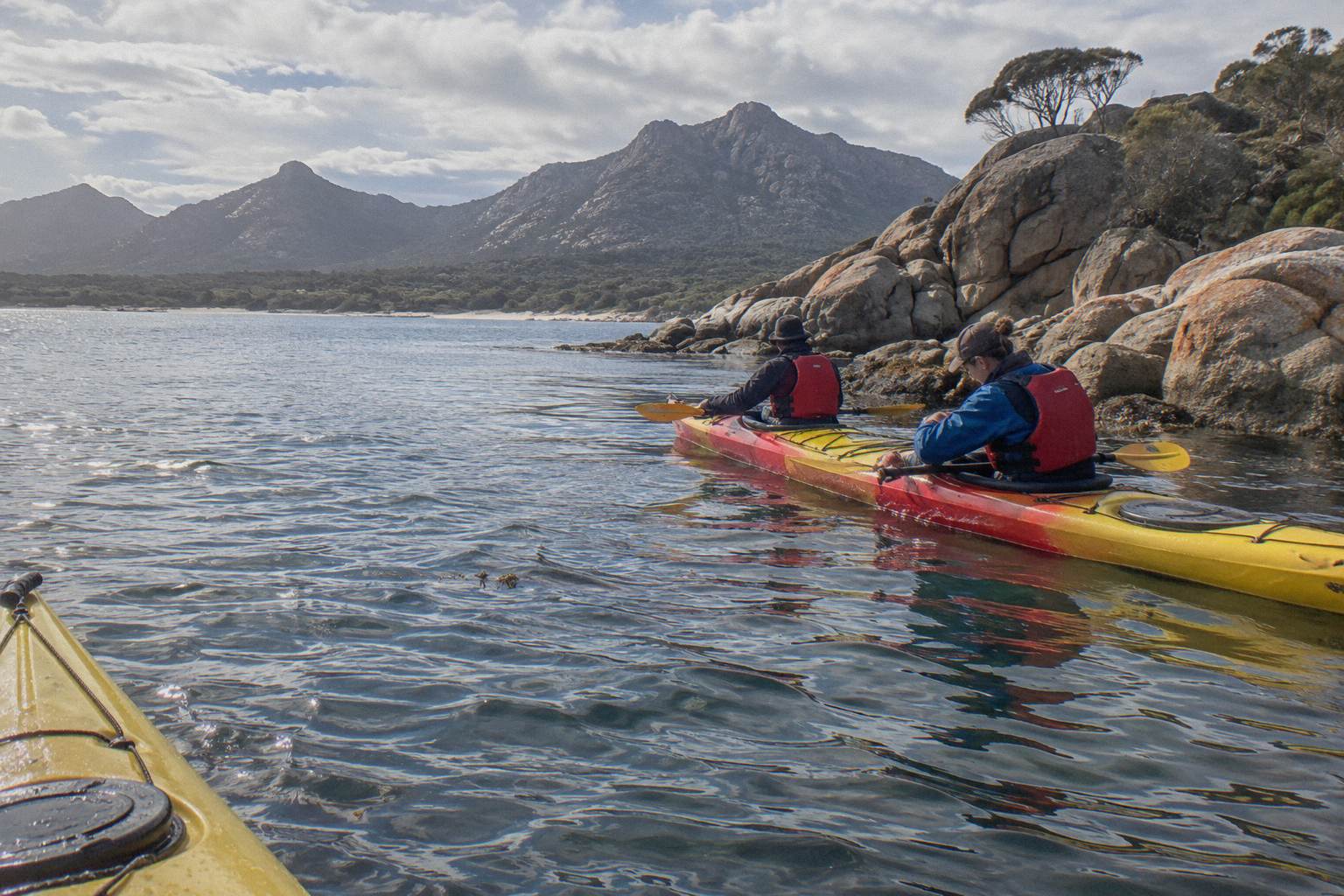
Camping at Honeymoon Bay is beachfront and bookable through PWS, alongside Richardsons Beach and Ranger Creek, with electric barbecues, tables, toilets and a drinking water tap on site. Camping fees and the booking process sit with PWS and are not held here. Drones are not permitted in Tasmanian national parks, native animals must be given 2 metres and never fed, and PWS asks that children be supervised on the unpatrolled beaches and near hazardous cliffs.
A night at the bay changes the whole calculus of paddle versus walk. Camp there and the sunrise paddle becomes a 2.5 hour excursion from, effectively, home, with breakfast included at the stop; the operator's FAQ page holds the booking and requirement details to confirm before locking in a campsite and a paddle on the same morning. The visitor centre, open daily 9am to 4pm, sells park passes and is the natural first stop on arrival.
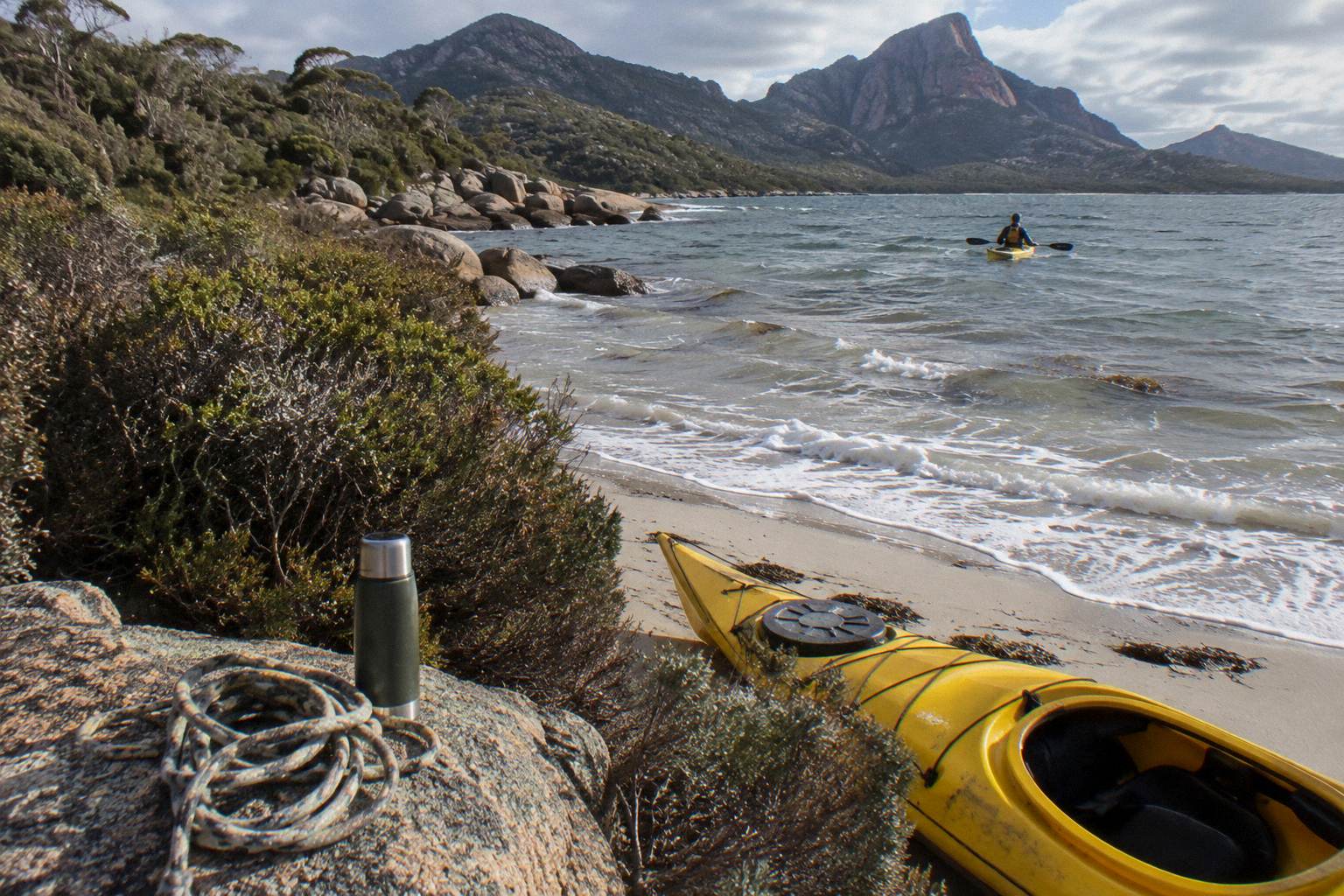
Wildlife rules are worth knowing before you launch or camp. PWS says the park's waters are regularly visited by whales, particularly humpbacks, during the winter months, and that seals may be spotted resting on rocks. For paddlers, NRE Tasmania's whale and dolphin viewing guidelines set the approach distances that apply to vessels: no closer than 100 m to a whale or 50 m to a dolphin, and 300 m and 150 m respectively for a vessel under steam. The guidelines do not name kayaks, so treat them as the standard the region works to and let the guide make every call.
What To Ask Before You Book Either Option
Ask the sunrise paddle desk about the seasonal departure time for your dates, the meeting point, whether the Honeymoon Bay stop shifts in weather, and the price, which is only quoted direct. Ask the day paddle's booking page about session times, the 24 hour cancellation window, and whether a parks pass is needed for the launch. For camping, ask PWS about fees, availability and whether your vehicle pass covers everyone in the car.
A short checklist, built from what each source states:
- For the Sunrise Breakfast Paddle: the exact departure time for your month, the booking cut-off 12 hours before, the meeting arrangement, and the price, which the operator quotes directly.
- For The Freycinet Paddle: whether the meeting point is Muirs Beach or the Coles Bay boat ramp in your conditions, the session times on your date, and the from price, which changes by date; weekend and public holiday surcharges apply on the operator's own bookings.
- For both paddles: confirm the swim requirement, the minimum age of 7 with under 16s accompanied by an adult, and the kayak fit guide, sit-in doubles suited to people up to 195 cm and around 120 kg per the operator's FAQ.
- For camping and the park: pass type, camping fees, and the taps, barbecue and toilet locations listed above.
Planning a first Freycinet visit around all of this? The Freycinet Kayaking homepage collects the paddle, cruise and walk comparisons in one place, and how much a Freycinet kayak tour costs breaks the money side down line by line.
Reaching the area at all takes about 2.5 to 3 hours from either Launceston or Hobart in PWS's wording, turning off the Tasman Highway onto Coles Bay Road 12 km south of Bicheno, then 28 km of sealed road to the township. Travelling without a car changes the options: the Hobart to Freycinet kayak day and the Hobart full day tour both cover that angle.
What Trips People Up When Planning A Honeymoon Bay Visit
The mistake that matters is booking The Freycinet Paddle and expecting the Honeymoon Bay breakfast stop, which belongs to the separate sunrise trip sold directly by the operator. Other common slips: assuming a parks pass is included with a tour before confirming, counting on same-morning sunrise bookings against the 12 hour cut-off, showing up in shoes that cannot get wet, and treating wildlife sightings, which the operator itself describes as on occasion, as a promise.
Each of those is avoidable with one question. Ask which trip you are actually holding a seat on. Ask whether the pass is needed for where you launch or camp, since the operator's walking tour page states it is required and not included there, while the kayak pages leave it to confirm. Book the sunrise paddle the day before at the latest. Pack footwear that can get wet, a hat, drinking water and a layer, since warm jackets are provided but wetsuits are not part of the stated kit. And hold the wildlife expectation the operator sets: sting rays, sea eagles, and dolphins, whales and fur seals on occasion, never guaranteed.
The final trap is timing. The paddle runs year round with seasonal departure times and no printed timetable, so a fixed plan built around an assumed start time will wobble. Confirm the session, confirm the season, and leave slack either side for weather, which the operator takes seriously enough to cancel for, with a full refund or reschedule when it does.
Common Questions About Honeymoon Bay At Freycinet
Can You Paddle To Honeymoon Bay On A Tour?
Yes, on one trip: the Sunrise Breakfast Paddle, 2.5 hours run directly by Freycinet Adventures, which stops at Honeymoon Bay for a continental breakfast with tea and coffee. It is booked through the operator, with departures from 7am depending on the season and bookings closing 12 hours ahead.
Does The Freycinet Paddle Stop At Honeymoon Bay?
No. The operator says the 3 hour day tour stops at a secluded sandy beach for a hot drink and a snack, and morning and twilight sessions follow the same route. Honeymoon Bay is the sunrise trip's stop only.
Can You Camp At Honeymoon Bay?
Yes. PWS lists beachfront camping at Honeymoon Bay, Richardsons Beach and Ranger Creek, with toilets, taps, tables and electric barbecues at Honeymoon Bay and Ranger Creek. Fees and bookings sit with PWS.
Do You Need A Parks Pass For Honeymoon Bay?
A valid parks pass is required for entry to all of Tasmania's national parks, and a Daily Pass costs AUD 49.15 per vehicle for up to 8 people. For the kayak tours, confirm with the operator whether the pass applies to your launch.
How Cold Is The Water At Honeymoon Bay?
Coles Bay's sea surface averages about 17 degrees Celsius in February at its warmest and about 13 degrees in August at its coldest, per seatemperature.org's long-run monthly data. The operator provides warm jackets on its paddles rather than wetsuits.
Can You Walk To Honeymoon Bay From Coles Bay?
The camping areas sit close to the Coles Bay end of the park, and the bay is a short walk from there. The bigger graded walks start nearby: the Wineglass Bay Lookout walk is 6 km return at Grade 3, and the Cape Tourville Circuit is a 20 minute, 600 m Grade 1 loop.