Can I Take A Phone Or Camera On A Freycinet Sea Kayak Tour?
Dry bags for phones and cameras are provided on the Freycinet Paddle, and here is how to carry, protect and actually use your gear on the water.
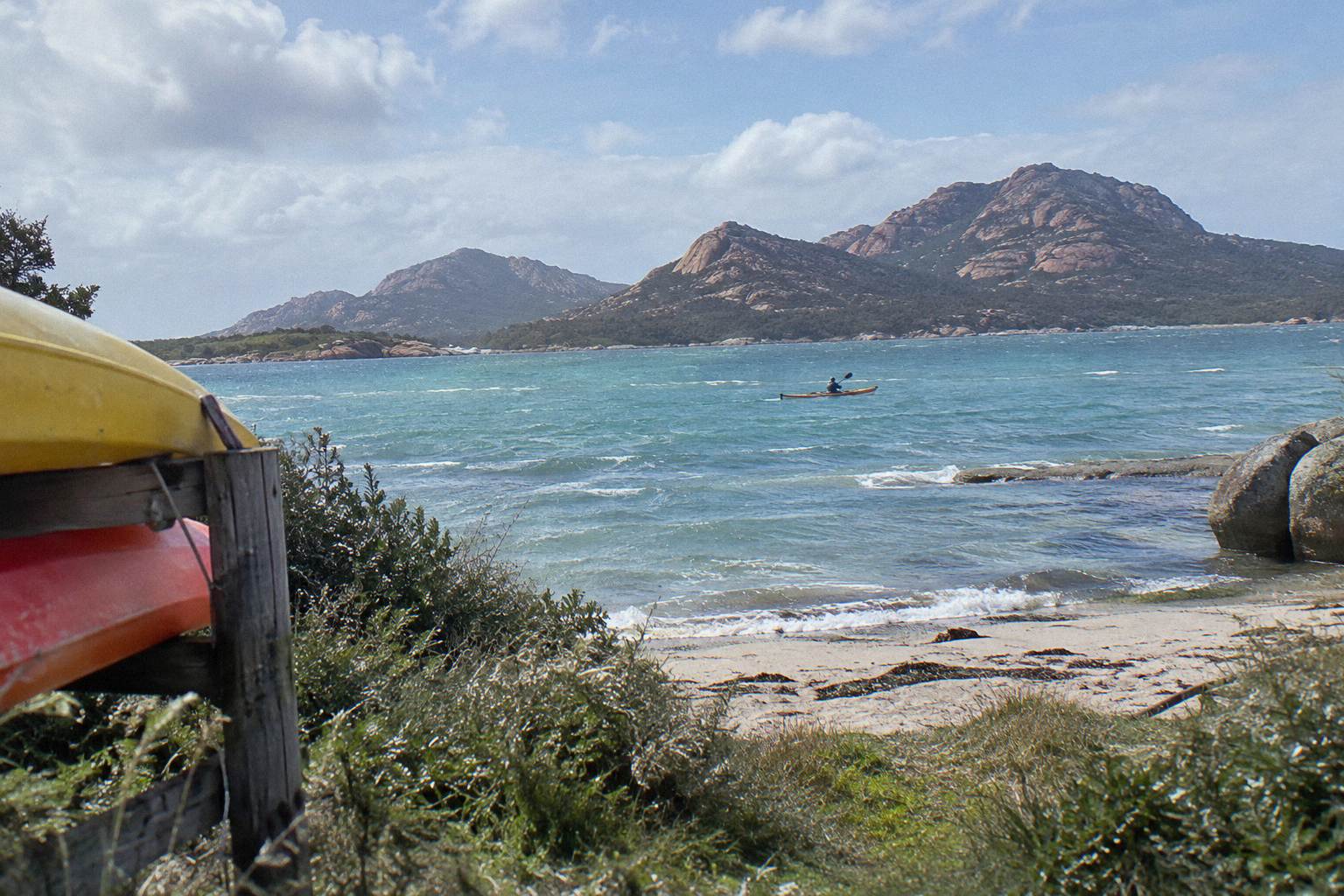
In short: yes, and the tour is set up for it. The booking page for The Freycinet Paddle, the guided sea kayak day trip run by Freycinet Adventures out of Coles Bay, lists dry bags for cameras and phones among the provided equipment, and the operator suggests them for both. A phone in a sealed bag rides in the cockpit with you. A bigger camera needs a little more planning, and the sections below cover the practical side: what is supplied, how a sit-in double kayak shapes your options, and what to ask before you pack a bag of glass.
Yes, you can take a phone or a camera, and you will not be improvising the dry storage. Sea kayaking around Coles Bay is a water activity by definition, and the operator treats camera gear as a normal thing for guests to carry: the booking page names dry bags for cameras and phones among the inclusions, alongside all the kayaking equipment, warm jackets, a hot drink with a gourmet cookie, GST, National Park fees and a professional guide. Hotel pick-up and drop-off, and transport to and from attractions, sit on the exclusions side of that page.
That matters for a photographer deciding whether to book. The usual worry, that a phone or camera will end up soaked or lost, is answered by the operator's own setup rather than by gadget shopping. The discussion below works through what is provided, how to actually use a phone on the water, what camera gear suits a tandem sit-in kayak, and what else to bring so the day runs smoothly. For the broader picture on what the tour includes, the companion piece on what a Freycinet kayak tour includes covers the full inclusion list.
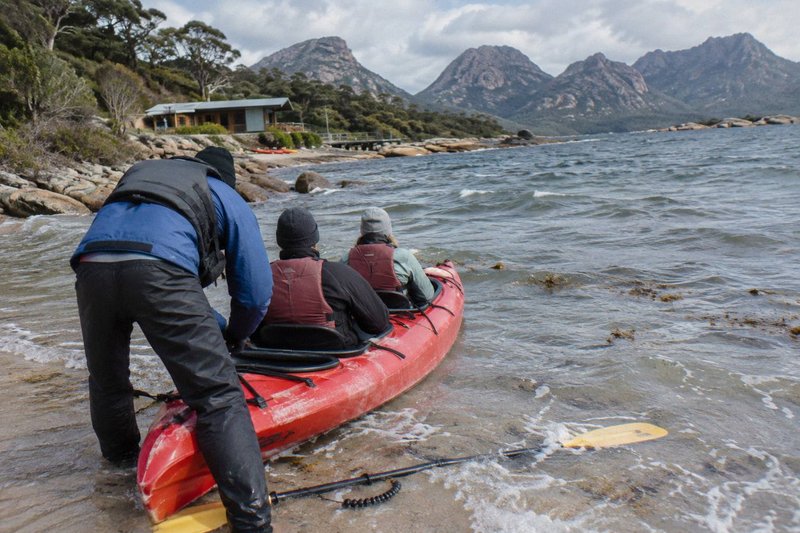
The tour itself is a 3 hour trip with about 2 hours of cumulative paddling and a rest break halfway on a secluded sandy beach, where the operator serves a freshly brewed coffee or another hot drink and a snack. The booking page words the snack as a gourmet cookie. That beach stop is the natural moment for photos: hands free, kayak stable, gear still in its dry bag while you paddle. Sessions run year round with seasonal departure times, and the route stays on Great Oyster Bay out of Coles Bay; it does not reach Wineglass Bay or Schouten Island.
The trip launches from Muirs Beach, Coles Bay, at the foot of the Hazards, with free public parking and public toilets nearby, as the operator's tour page records. Groups run small, with a minimum of 2 and a maximum of 16 per tour, and solo guests paddle with another guest or a guide in the double kayaks. The Freycinet Paddle is rated 4.8 across more than 1,000 reviews on its main booking page, with the price changing by date.
What Dry Storage The Operator Provides
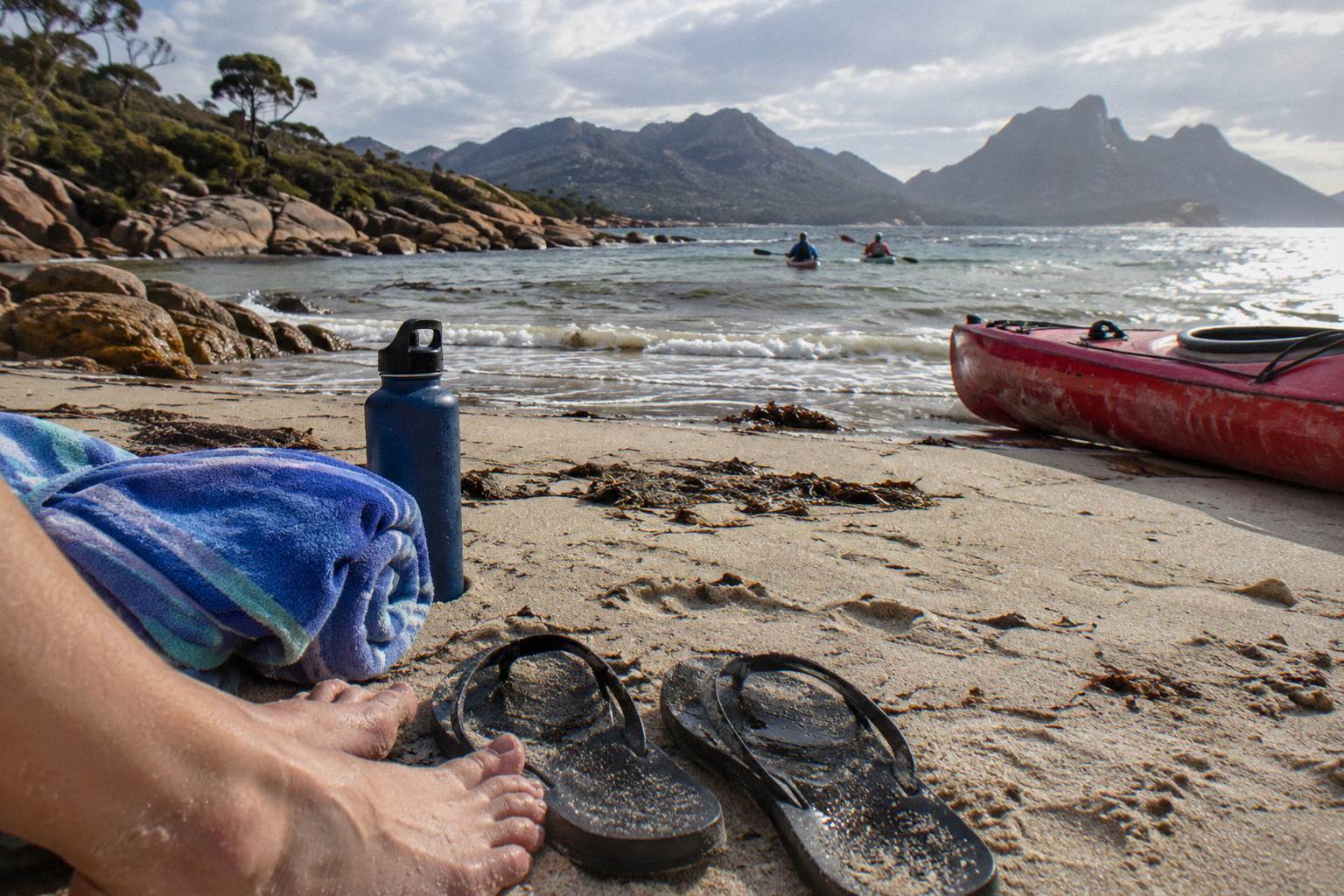
Yes, the operator provides dry storage on the tour: dry bags for cameras and phones are supplied, and the operator actively suggests using them for anything you want kept dry. In practice, that means any belongings you would prefer to protect from water can go into one of the provided dry bags rather than staying out in the open. That is the booking page's own inclusion for The Freycinet Paddle, and it answers the whole question for a phone: put it in the supplied dry bag, keep the bag within reach in the cockpit, and open it only when you want the device out for a photo. All sea kayaking equipment is provided too, including the stable double sea kayaks and warm jackets, so the only things you supply are the personal ones: drinking water, a hat or sunglasses, comfortable clothing, and footwear that can get wet, such as flip flops or bare feet on the sand at Muirs Beach.
The dry bag arrangement deserves a little unpacking, because it changes what you bring. A supplied dry bag means you do not need to buy one for the trip, and it means the operator expects guests to arrive with phones and cameras rather than asking them to leave everything ashore. The operator's own suggestion of dry bags for phone and camera, on its tour page, reads as an endorsement of bringing them. What the pages do not spell out is the size of the bags or how many each kayak carries; that is a question for the operator when booking, particularly if your camera body and a spare lens are bulky.
There is a limit worth stating plainly: no wetsuit is mentioned by the operator anywhere on the pages read, and the equipment list names kayaks, warm jackets and dry bags rather than individual electronics protection beyond the bags. If your kit needs hard-shell waterproof housing, bring your own. The operator's FAQ answers common questions on gear and clothing, and the tour page repeats the bring list: drinking water, hat or sunglasses, comfortable clothes, wet-tolerant footwear.
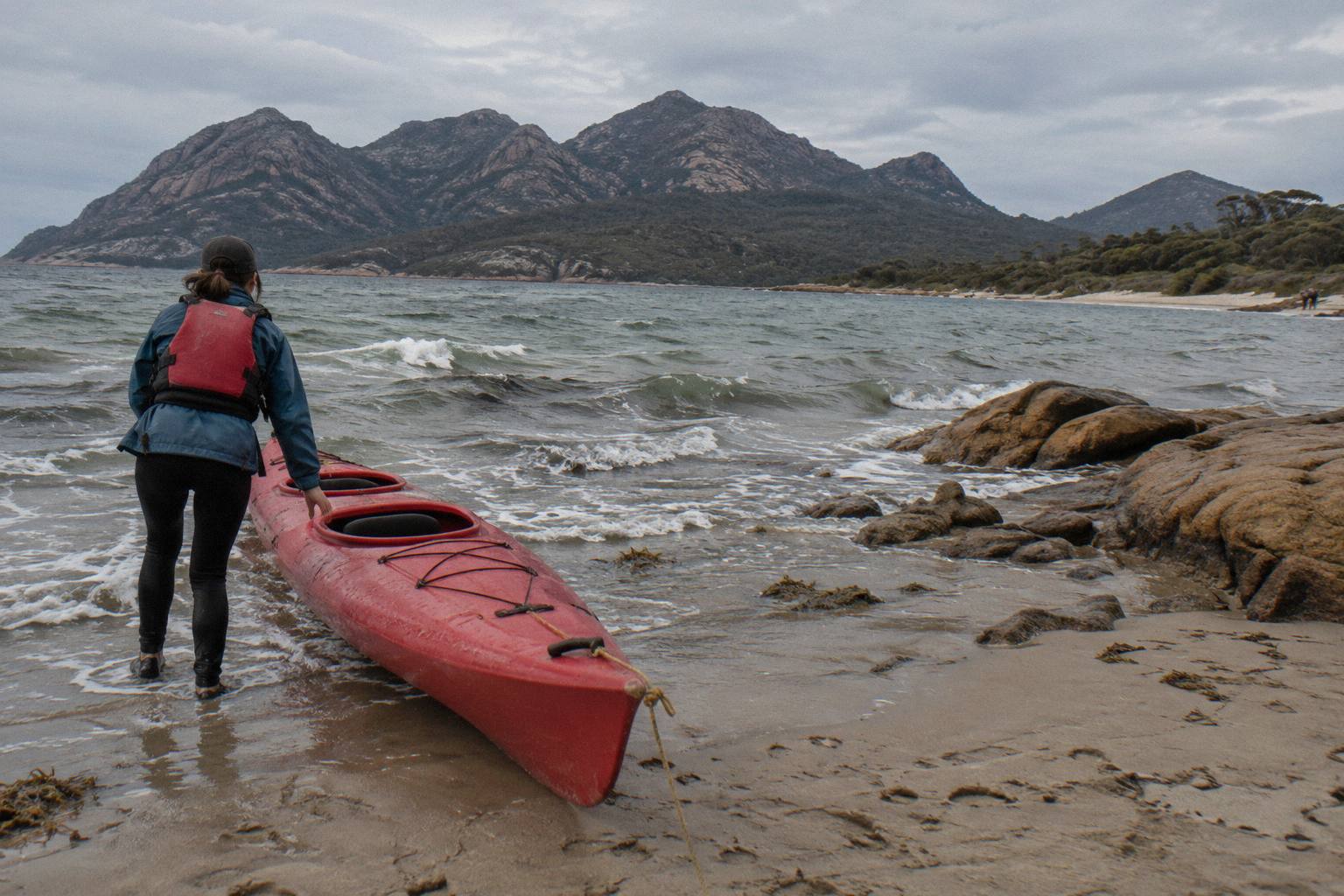
For the wider safety picture, guided tours supply their equipment, and Marine and Safety Tasmania requires a life jacket in a lightweight craft, which includes kayaks. The operator's equipment list does not name life jackets separately, only "all kayaking equipment", so treat the supplied gear as the baseline and ask the crew on the day if you want the itemised version.
How To Carry A Phone On The Water
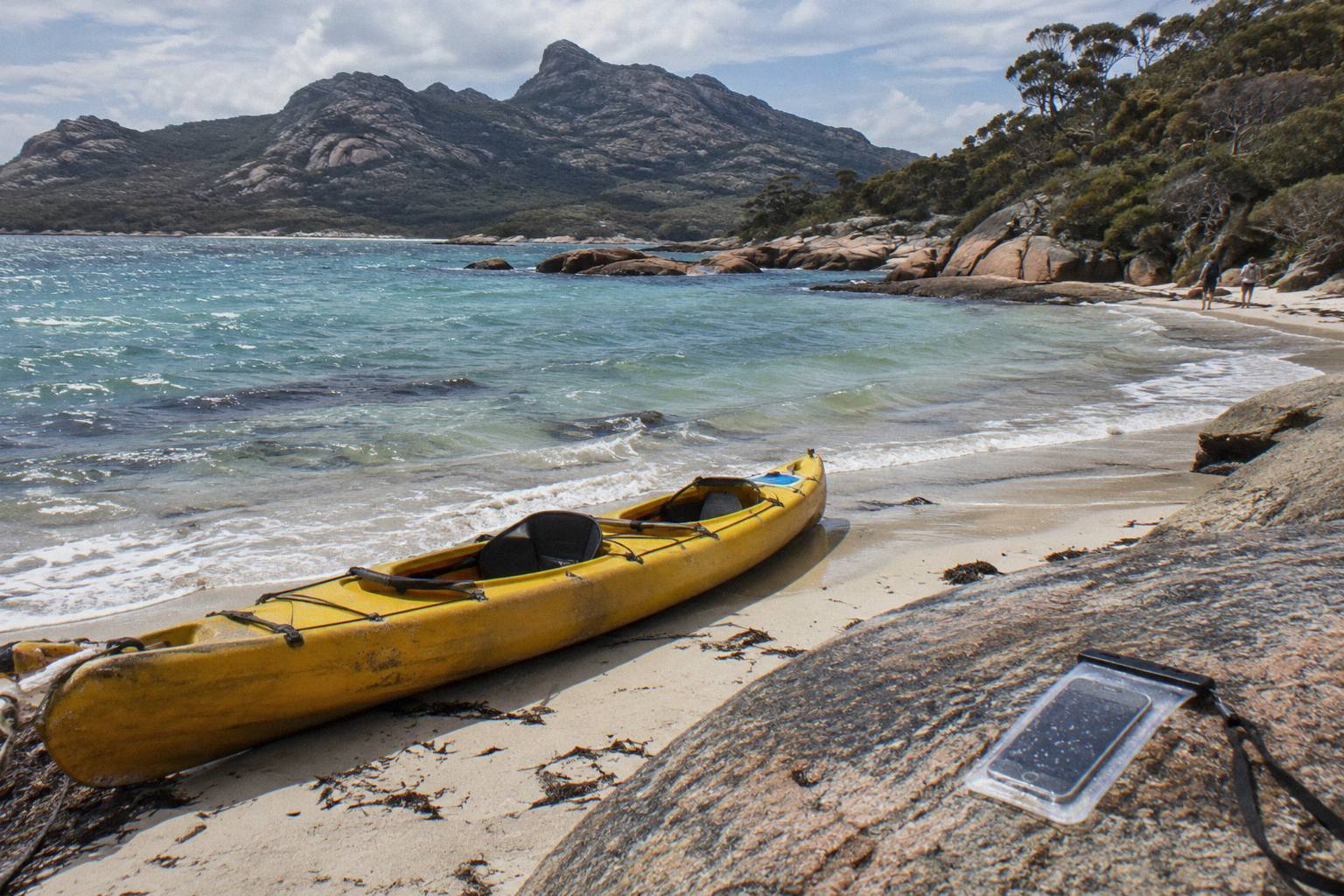
The safest way to carry a phone on the water is inside the supplied dry bag, kept sealed and opened only when you actually want it out. Pair that with a simple lanyard worn around your wrist or neck, and you have a second line of defence if the phone slips during a fumble. The booking page provides the dry storage; the habit of sealing it after every use is yours to keep. The paddle across Great Oyster Bay takes about 2 hours cumulatively across the 3 hour tour, with a safety briefing first and the halfway beach stop for coffee, so there are natural pauses for photos rather than any need to shoot while your paddle is still moving through the water.
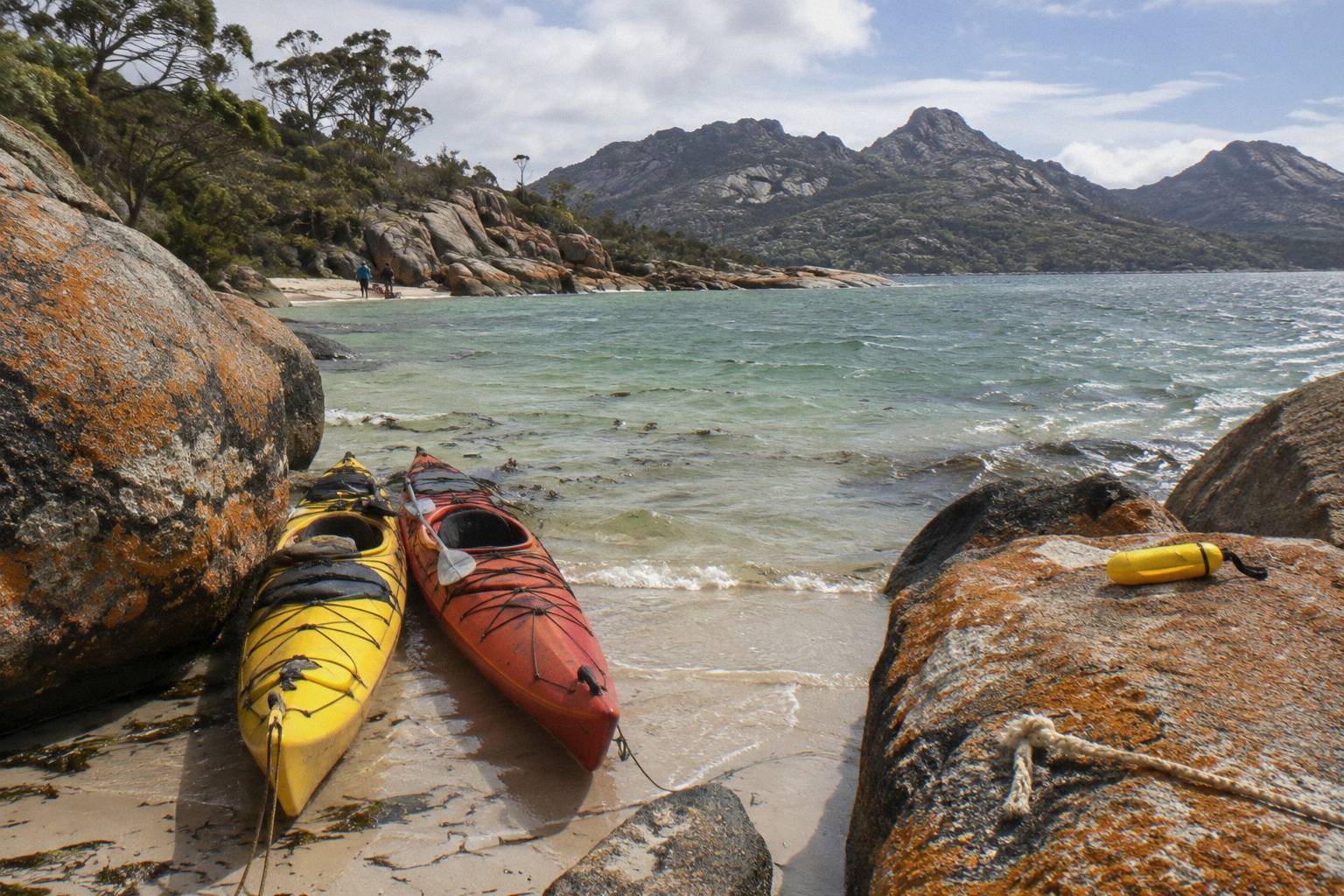
For independent paddling generally, MAST recommends a mobile phone in a waterproof pouch as part of its paddle craft guidance. That advice is written for people supplying their own kit, but the logic transfers: a sealed pouch or bag keeps the phone usable as a phone, not just dry as a brick. A clear pouch lets you frame a shot through the plastic; a fabric dry bag does not, so the rhythm on tour is unclip, unseal, shoot, reseal, stow.
A few habits carry most of the risk. Keep the phone on a wrist or neck lanyard while it is out of the bag, so a fumble on the water drops it against your chest rather than over the side. Shoot in bursts, then put the phone away rather than poking at menus with wet fingers. Use the beach stop for anything deliberate: group photos, video, the coffee cup against the Hazards. And before launch, ask the guide where they want dry bags stowed in the tandem; the sit-in cockpit has room beside the seat, roughly 45 cm across, but the guide knows the boat.
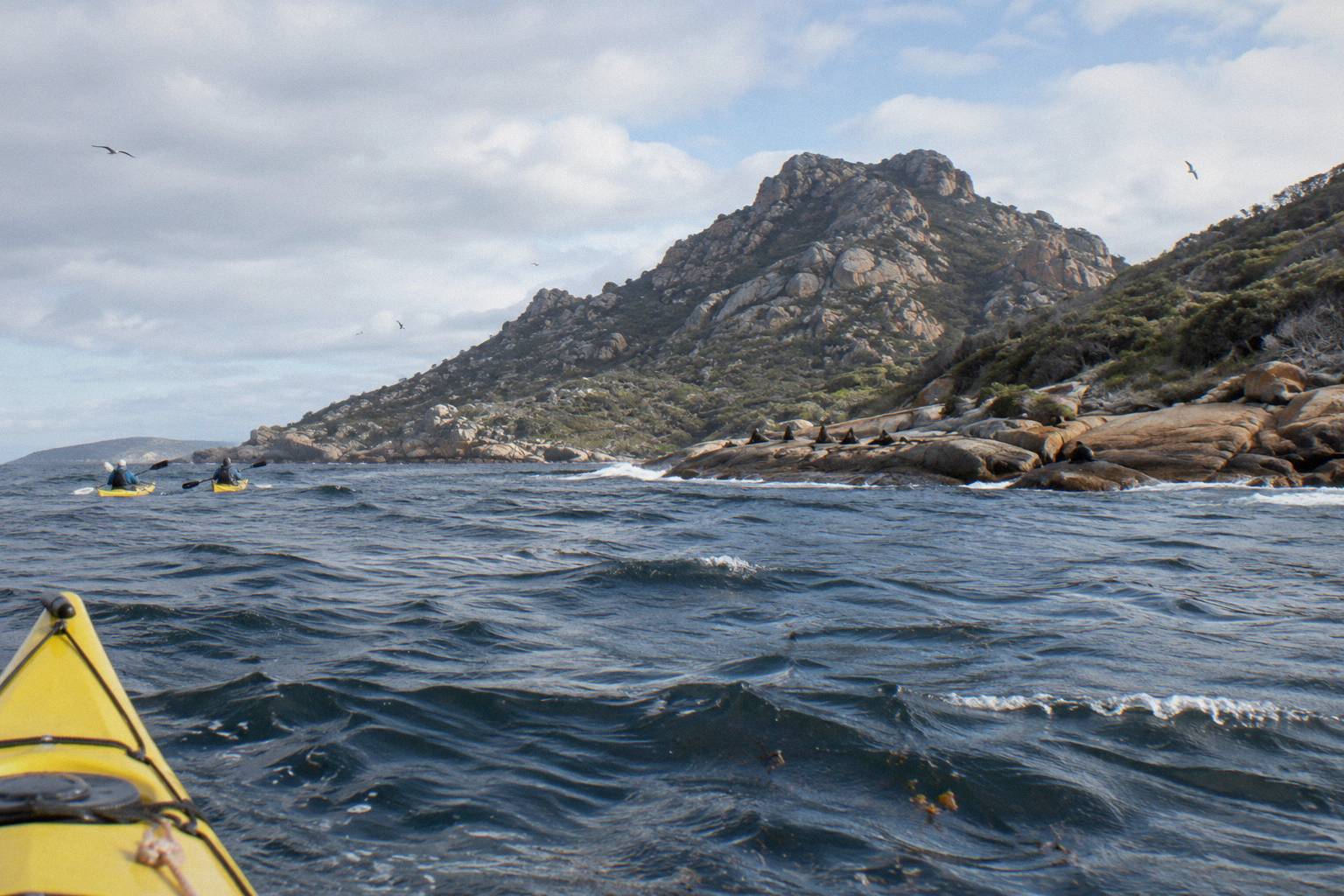
The sit-in design helps here more than a sit-on-top would. In a sit-in tandem sea kayak, your lap and the cockpit rim form a shallow basin, and a dry bag tucked forward sits below deck level rather than on an open tray. The tradeoff is that anything not clipped down can slide underfoot, hence the lanyard and the habit of resealing. If you want the deeper version of how wet the day gets, the post on getting wet or seasick on a Freycinet kayak tour works through splash, spray decks and the swim rule.
| Item | Provided on tour | Bring your own | Notes |
|---|---|---|---|
| Dry bag for phone | Yes, booking page inclusion | Optional extra pouch | Operator suggests dry bags for phone and camera |
| Dry bag for camera | Yes, booking page inclusion | Hard case if needed | Size not stated, ask when booking |
| Double sea kayak | Yes, all equipment provided | No | Sit-in tandem design, operator FAQ |
| Warm jacket | Yes, booking page and operator | Extra layer in winter | No wetsuit mentioned by the operator |
| Hot drink and snack | Yes, at the halfway beach stop | Drinking water for the paddle | Coffee and a gourmet cookie |
| Footwear | No | Yes | Will get wet, flip flops or bare feet |
Camera Gear: What Suits A Double Sea Kayak
A phone or a compact camera in the supplied dry bag is the natural fit for the day; a large interchangeable-lens kit needs your own hard case and a frank conversation with the operator before you arrive at Muirs Beach. The booking page provides dry bags, not padded cases, and the tandem cockpit offers a 45 cm wide seating area per paddler with no rack or mount for a camera body. The operator FAQ says the boats suit people up to 195 cm and around 120 kg, which gives a sense of the cockpit's scale, and guides may decline a guest whose body size does not fit the craft, though nothing in the operator's pages restricts camera gear specifically on any session.
Work from the day's structure. The safety briefing comes first, then roughly 2 hours of cumulative paddling split by the beach stop, where the operator serves coffee or another hot drink and a snack. Hands are busiest while paddling; the stop is when a bigger camera earns its weight. A photographer who accepts that rhythm, phone accessible on the water and the real kit reserved for the beach, carries less risk than one trying to swap lenses at sea. Some photographers simply book the boat as a viewing platform and pair it with a shore-based option; the details are laid out in whether a guided Freycinet paddle is worth it.
If you do bring a larger camera, three questions for the operator when booking cover the unknowns. How big are the supplied dry bags, and can one be dedicated to camera gear alone. Whether there is stowage space in the kayak's hatches beyond the cockpit. And whether the group size that day, up to 16 per tour with a minimum of 2, leaves room in the tandem for a dry bag between paddlers. None of these answers appear on the pages read, so ask rather than assume; the operator's tour page carries the contact details for the Coles Bay office.
Getting The Shot On A Great Oyster Bay Paddle
On a Great Oyster Bay paddle, count on three reliable photo moments: the halfway beach stop with its coffee and cookie, the cockpit view looking out across the water, and the Hazards seen from sea level. Wildlife appears on occasion too, though no operator guarantees any sighting. The operator describes the launch setting plainly: Coles Bay sits where Great Oyster Bay meets the Tasman Sea at the foot of the Hazards, a granite range the park service calls spectacular, rising from sheltered turquoise bays. The paddle stays on Great Oyster Bay; it does not reach Wineglass Bay or Schouten Island, and the operator's wildlife wording keeps dolphins, whales and fur seals firmly in the "on occasion" camp, alongside sting rays and white bellied sea eagles.
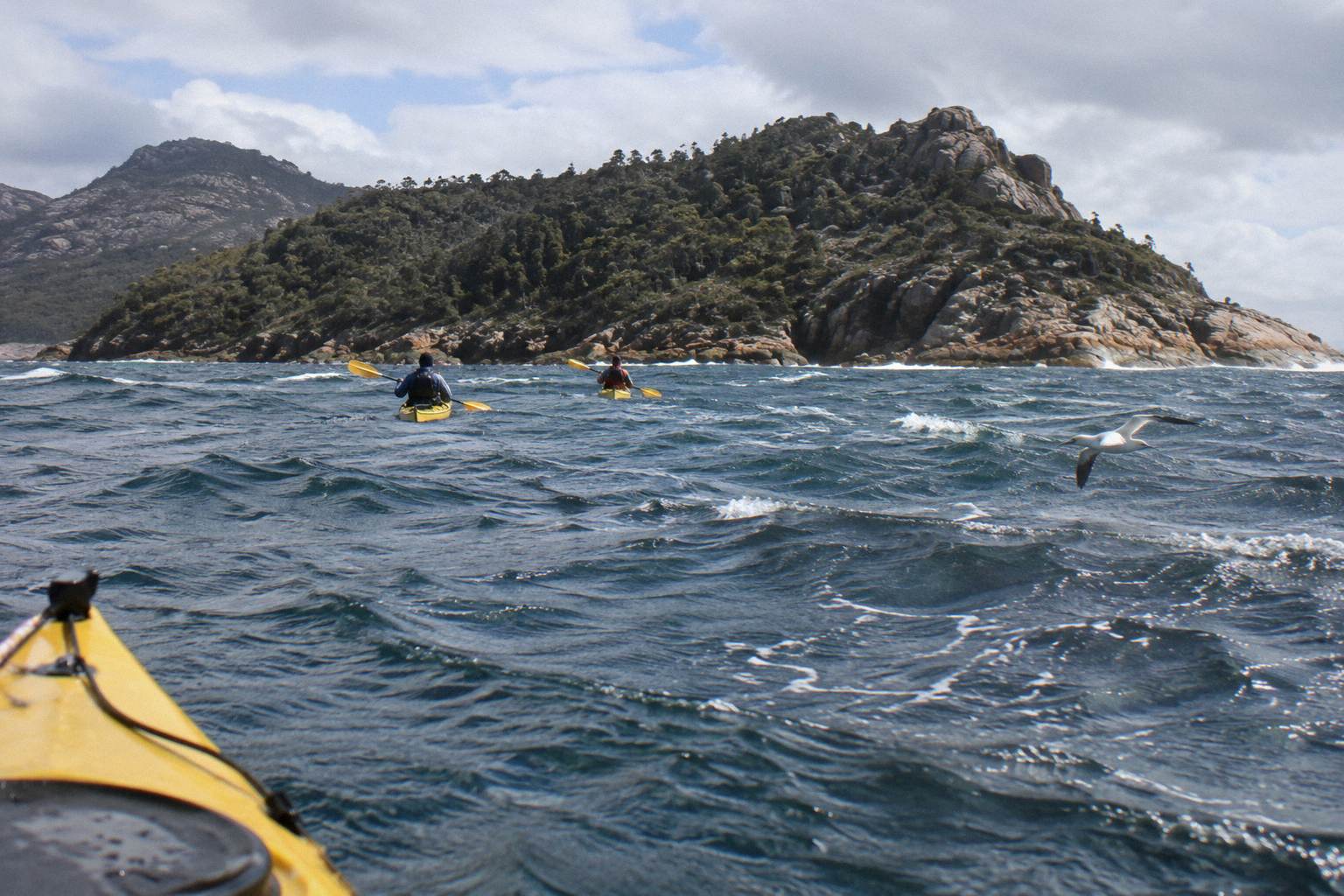
That wildlife wording shapes expectations for photographers. The operator's sunrise page lists those species as things seen on occasion, not as a schedule. Treat any animal as a bonus frame, keep the phone reachable rather than packed away, and let the guide's eyes do the scanning; they are on the water daily. Tasmania's wildlife agencies set approach distances for vessels, and the whale and dolphin viewing guidelines specify 100 m for whales and 50 m for dolphins, so a sighting on tour is watched, not chased. The paddle park service page echoes the spirit: keep distance and do not feed wildlife.
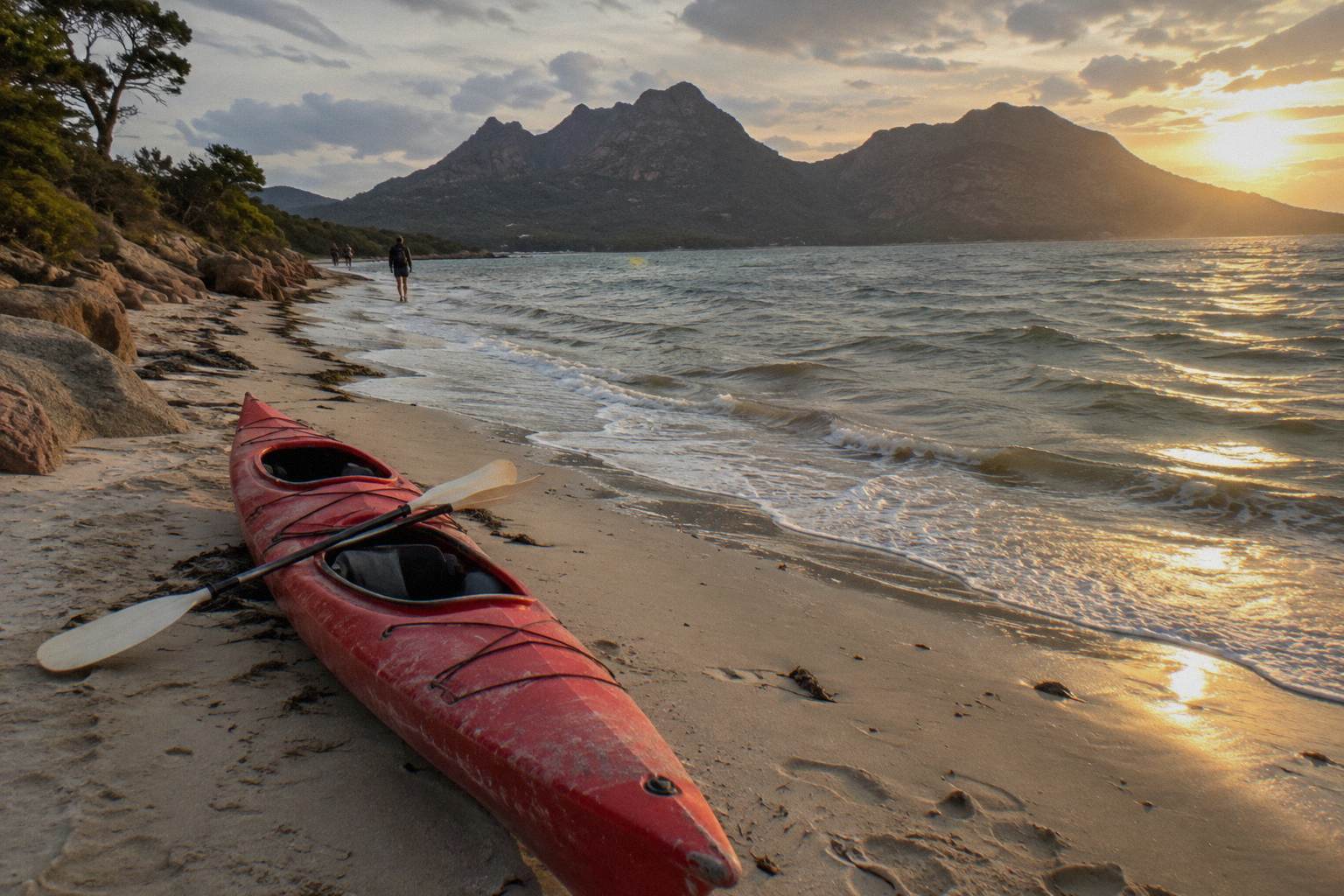
The light and the season are worth thinking about when you book. Morning and Twilight sessions follow the same route, the operator says, and the Twilight session finishes right on sunset, which for a photographer is a strong argument for the later start: the Hazards' pink granite does the heavy lifting in low sun, and the finish is timed to it. Departure times are seasonal and no timetable is published, so ask what time the session meets when you book, and remember online bookings close 3 hours before departure for the day paddle. If golden hour matters to your shoot, say so and book accordingly. The full index of guides sits on Freycinet Kayaking.
Winter paddles change the kit conversation more than the photo one. The water at Coles Bay runs colder in the middle of the year, with August averaging around 13 °C on the long-run sea surface data seatemperature.org publishes for Coles Bay, against a February average around 17 °C. Warm jackets are provided on tour, and the discussion of what a Freycinet kayak tour is like in winter covers the rest. For gear on your body, the post on wetsuits and jackets on Freycinet kayak tours settles what is supplied and what is not.
| Moment on the tour | Gear that works best | Why |
|---|---|---|
| Safety briefing and launch at Muirs Beach | Phone or camera out, hands free, dry bag open | Last easy access before paddling starts |
| The paddle across Great Oyster Bay | Phone in a clear pouch or the supplied dry bag | Reseal after each shot; lanyard while out |
| Wildlife on occasion | Phone reachable, zoom used from distance | Operator never guarantees sightings; guidelines set approach distances |
| Halfway beach stop with coffee and a cookie | Full camera kit, deliberate frames | Stable footing, hands free, Hazards backdrop |
| Twilight finish at sunset | Phone or camera ready near the end | Session finishes right on sunset, operator says |
Booking, Cancellations And Coming Back With Your Photos
Book ahead if photography is the point of your day: groups cap at just 16, and online bookings close 3 hours before departure, so reserving early keeps your place. Changes stay painless too, since free amendments or cancellations run to 24 hours in advance of your session, and once the tour wraps, you come back with your photos from the day. The 24 hour rule is the operator's stated policy for guest cancellations, with a refund; if the operator cancels for weather or safety, the choice is a full refund or a reschedule, and guides can call off a trip at any time for safety. In challenging wind the operator may contact guests beforehand and may require previous sea kayaking experience and moderate fitness, otherwise the refund or reschedule applies to your booking.
For a photographer, those terms are forgiving. You can lock in a date, watch the forecast, and change it inside the window without losing the fee, and a weather call by the guide is not a lost deposit. The practical read: book the date you want early, especially the Twilight session, since a sunset finish draws the same crowd every clear evening, and the 3 hour booking cut-off rules out the walk-up decision. The tour runs year round, so a return trip in a different season is always on the table.
Getting there is its own leg. The park service describes Freycinet as about 2.5 to 3 hours from either Launceston or Hobart, turning off the Tasman Highway onto Coles Bay Road 12 km south of Bicheno, then 28 km of sealed road through Coles Bay township. Travellers without a car have options laid out in reaching a Coles Bay kayak tour without a car, including the Hobart full day tour. Parking at the launch is free and public, with toilets nearby, which makes the pre-launch gear sort-out easy: camera in the dry bag, phone pouch checked, spare layer in the jacket pile, footwear ready to get wet.
The booking page's inclusion list is worth one last look before you commit, because it settles the money questions photographers tend to ask. GST and National Park fees sit among the inclusions, with a hot drink, a gourmet cookie and a professional guide; transport and hotel pick-up sit among the exclusions. On the pass question, confirm with the operator when booking, since the kayak pages do not state it either way.
What Trips People Up Before A Coles Bay Paddle
The common mistakes are all preventable with a small amount of planning: arriving at Muirs Beach with a loose phone and no bag plan, dressing for a beach walk rather than a boat, expecting Wineglass Bay from a kayak that never goes there, and booking too late for the session you actually want, whether that is a morning paddle or the Twilight finish on sunset. Each of those has a one-line fix. Use the supplied dry bags and a lanyard for anything electronic. Wear comfortable clothes with wet-tolerant footwear and take the offered warm jacket. Read the route: the paddle crosses Great Oyster Bay and stops at a secluded beach, and Wineglass Bay is seen from the cruise, the walk or the Hobart day tour, not from the kayak. Book days ahead, not hours, and note the 3 hour online cut-off.
A few smaller ones catch photographers specifically. Assuming the dry bag is a hard case: it is not padded, so a bare lens rides at its own risk. Planning lens changes on the water: the beach stop exists for that. Banking on wildlife: the operator says on occasion, and that is the honest ceiling. And forgetting drinking water and a hat: the operator's bring list names both, and neither is sold on the beach. Tell the operator when booking if you have a health question, check with your doctor where relevant, and mention any mobility concern, since the operator FAQ names the swim requirement and the cockpit size limits plainly.
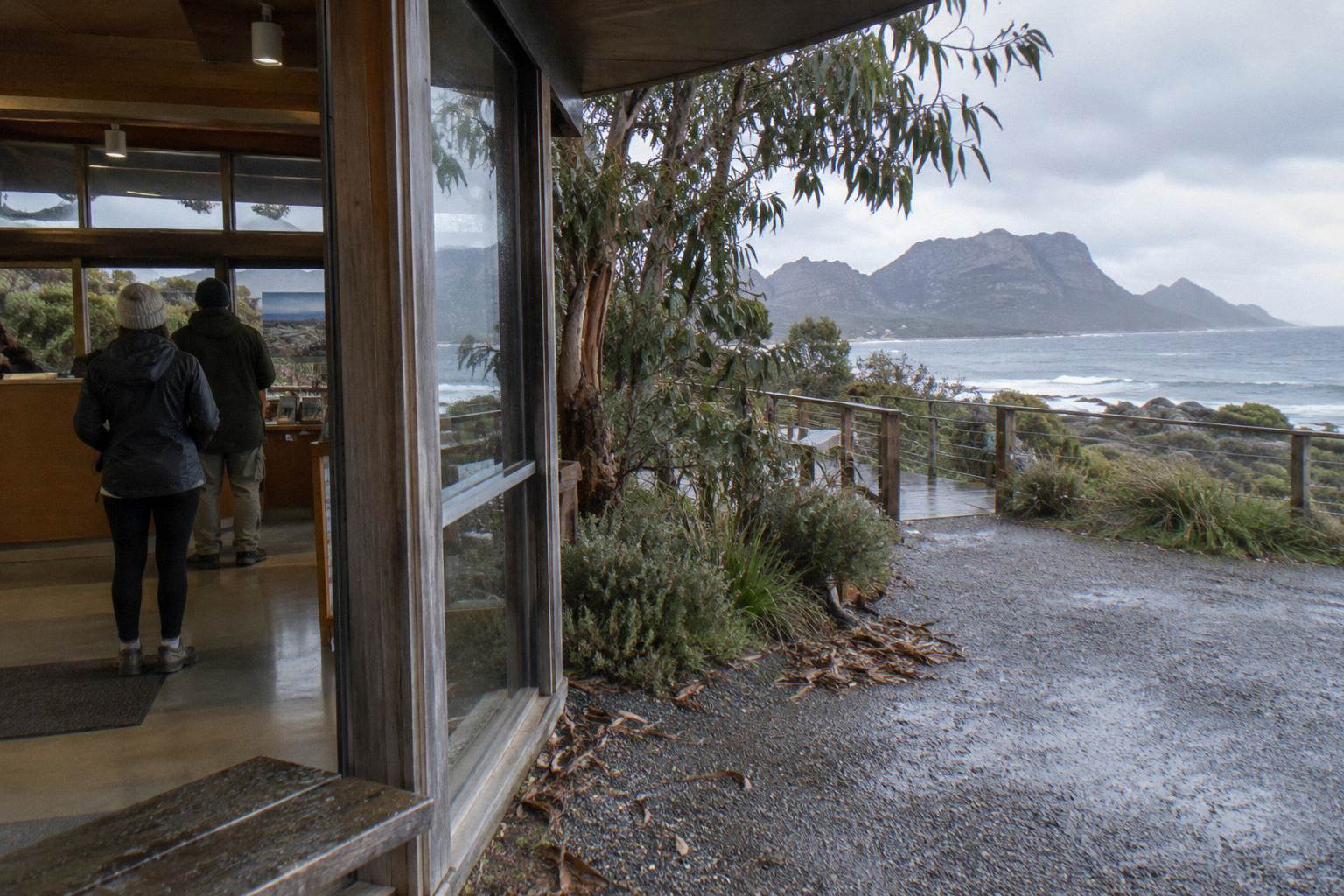
The last habit is the simplest: empty your pockets of anything that matters before the safety briefing. Keys, wallet and anything not needed on the water stay in the car at Muirs Beach's free public parking. What goes in the kayak goes in a dry bag. The tour is built so that a phone survives it, and the coffee stop is built so the photos are worth taking.
Common Questions About Taking A Phone Or Camera Kayaking At Freycinet
Can I Take A Phone Or Camera On A Freycinet Sea Kayak Tour?
Yes. The Freycinet Paddle's booking page provides dry bags for cameras and phones, and the operator suggests them. Keep devices sealed while paddling and shoot at the halfway beach stop, where the kayak is stable and your hands are free.
Are The Dry Bags Big Enough For A Camera?
The pages read do not state the bag sizes. A phone fits comfortably in the supplied dry bag; a larger camera body or spare lenses may need your own hard case. Ask the operator when booking if your kit is bulky.
Will My Phone Get Wet On The Kayak Tour?
Spray and splash are part of sea kayaking, and the operator's FAQ notes footwear will get wet. A phone in a sealed dry bag or pouch stays dry. Open the bag only when you want the phone out, and reseal it straight after.
Can I Take Photos While Paddling?
You can, with a phone in a clear pouch on a lanyard, but the easier rhythm is to shoot from the boat in calm moments and save deliberate shots for the halfway beach stop with its coffee and gourmet cookie.
What Should I Leave Behind Before The Tour?
Anything not needed on the water: keys, wallet and spares can stay in the free public parking at Muirs Beach. Bring drinking water, a hat or sunglasses, comfortable clothing and wet-tolerant footwear such as flip flops or bare feet.
Is A Phone In A Waterproof Pouch Recommended For Kayaking?
Yes, Marine and Safety Tasmania recommends a mobile phone in a waterproof pouch as part of its paddle craft safety guidance. The supplied dry bag serves the same purpose on the guided tour; a clear pouch adds the option to shoot through the plastic.