Are There Weight, Height Or Mobility Limits On Freycinet Kayak Tours?
The operator's stated height, weight, seat-size and mobility rules for the Coles Bay sea kayak tour, plus what to ask before you book.
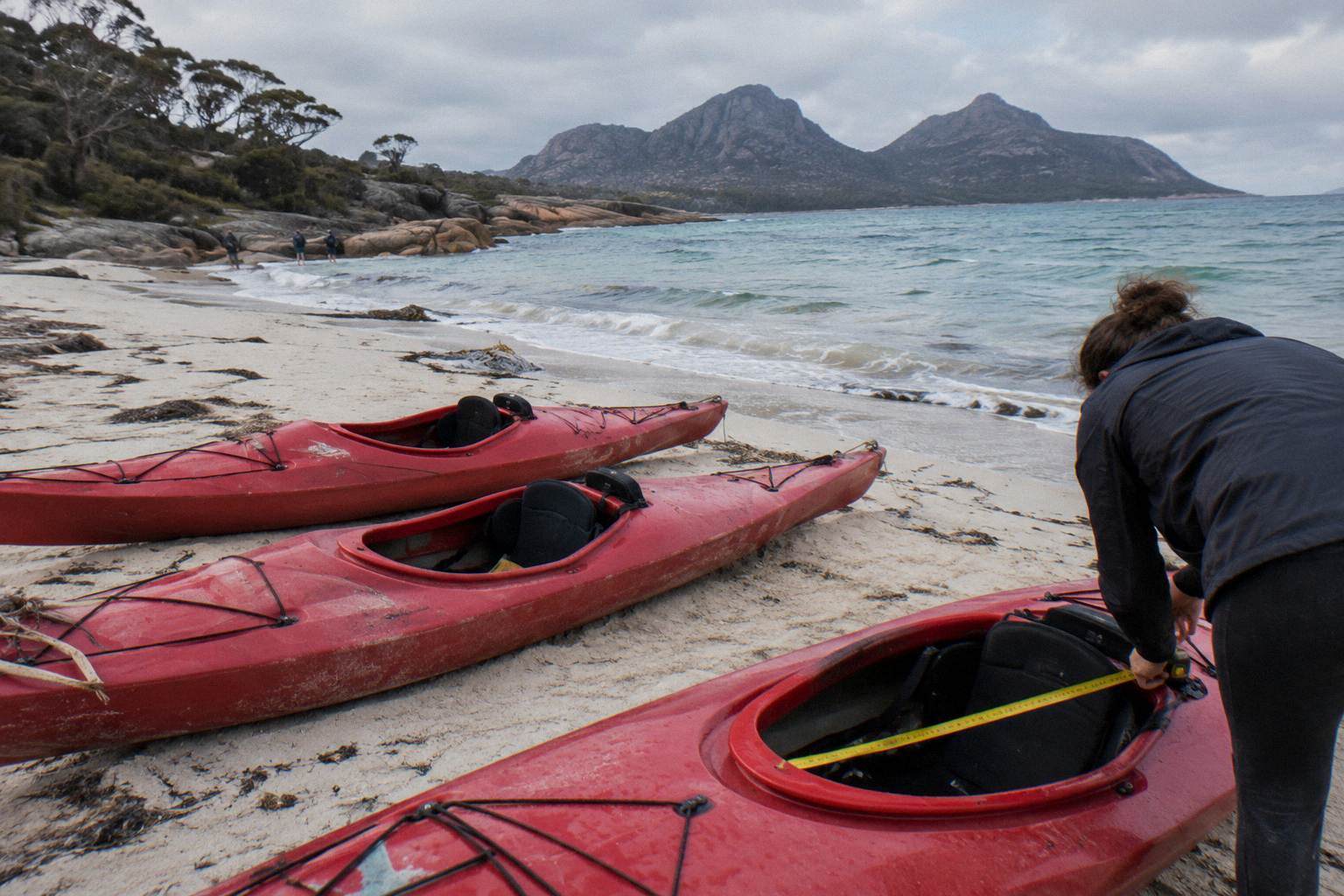
Yes. Freycinet Adventures says its sit-in tandem sea kayaks have a cockpit seat about 45 cm across and suit people up to 195 cm and approximately 120 kg. Guides may decline a guest whose body size does not fit. The booking page states the tour is not wheelchair accessible. The operator's FAQ also says you need to be able to swim, children must be 7 or older, and the booking page asks for a moderate fitness level.
Those are the headline numbers, and they matter more here than on many tours because the kayaks are sit-in doubles rather than open sit-on-tops. A sit-in cockpit surrounds your hips and lower back, so the fit question is about more than comfort: it is whether your body and the boat work together. The operator publishes the figures on its own FAQ and tour pages, which is genuinely useful, because many operators leave you to discover fit issues on the beach.
The tour in question is The Freycinet Paddle, the guided three hour sea kayak trip out of Coles Bay run by Freycinet Adventures. It is the only guided kayak day tour sold here. If a size or mobility concern applies to you or someone in your group, the single most useful move is to tell the operator when you book rather than hoping for the best on the day. You can read the operator's own FAQ and tour page at the Freycinet Adventures FAQ before you commit.
To be clear about scope: everything below comes from the operator's stated rules for this one tour. Other kayak operators elsewhere in Tasmania can and do set different limits, so none of these figures should be read as a general rule for kayaking in the state. For broader context on what a guided paddle involves, see sea kayaking for beginners at Freycinet.
Height, Weight And The 45 Cm Cockpit Seat
The numbers to work with: the cockpit seat measures about 45 cm across, and the operator says the kayaks suit people up to 195 cm tall and approximately 120 kg. Those are guidance figures rather than hard gates, but guides may decline a guest whose body size does not fit. The kayaks are tandem sit-in sea kayaks, which changes the fit calculation compared with a sit-on-top.
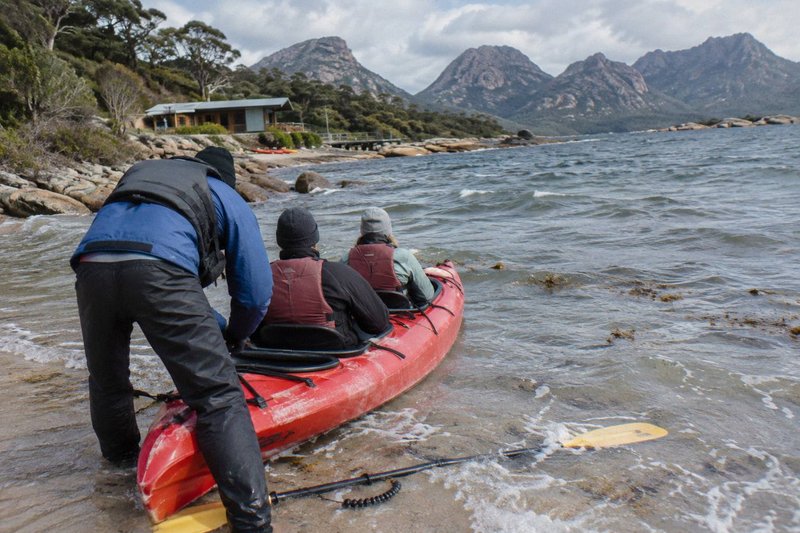
Sit-in versus sit-on-top is the part people often miss. In a sit-on-top you sit on a depression on the deck, and there is no cockpit rim around your waist. In a sit-in kayak you slide your legs under the deck and the cockpit surrounds your hips. That is why the operator quotes a seat width at all: a 45 cm cockpit seat is workable for most adults, but if your hips are wider than the opening, entry, exit and comfortable paddling all become difficult. The same applies to the 195 cm height figure, because leg length under the deck is finite.
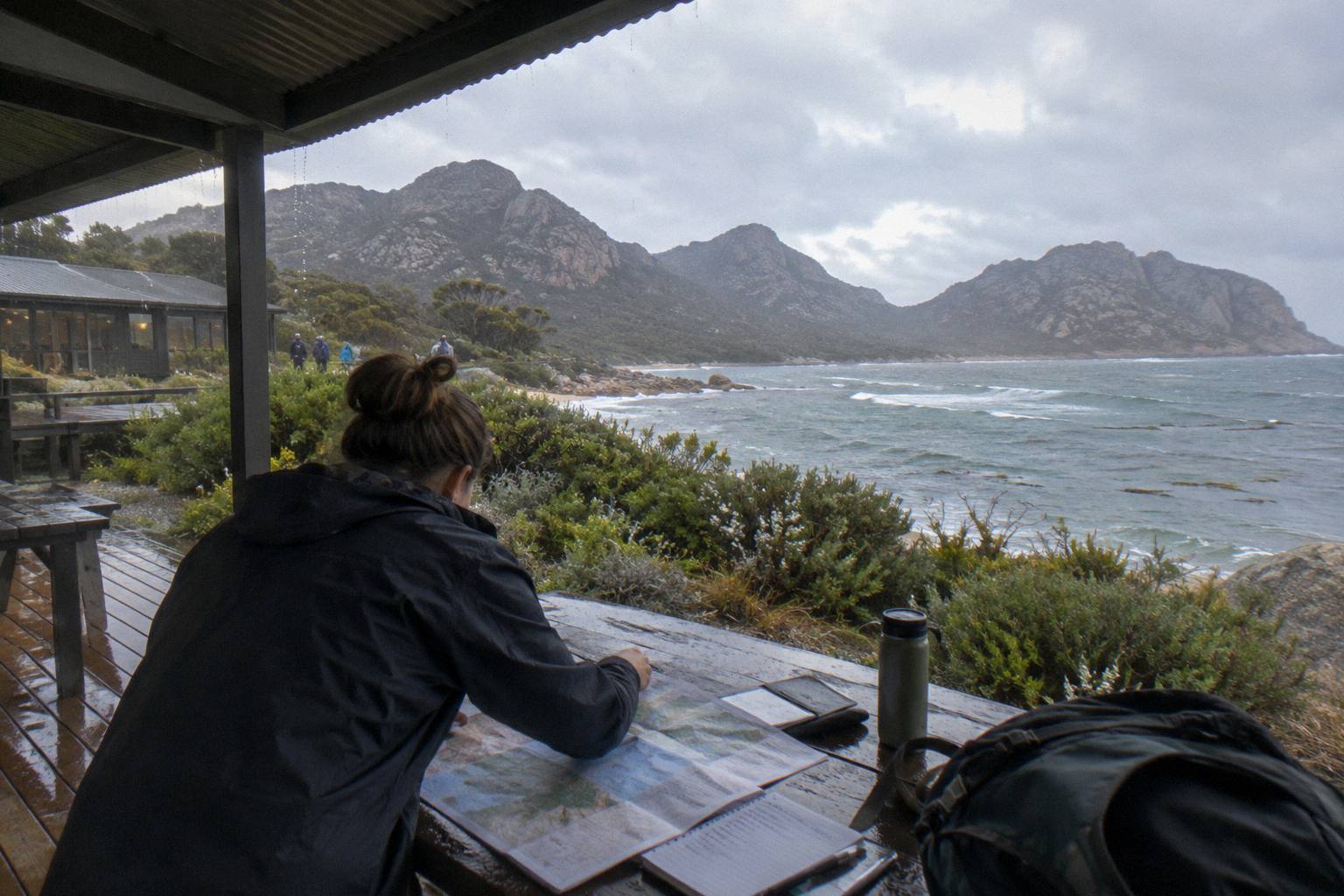
The 120 kg weight figure sits alongside the height figure as a combined guide to how the boat performs and fits. A tandem kayak carries two people, so the total load matters as well as each individual. The operator frames all of this as guidance its guides apply on the day, including the right to decline a guest whose body size does not fit. Nobody benefits from a kayak that cannot be paddled safely, and the operator would rather sort the question out beforehand.
A practical reading of the figures:
| Measurement | Operator's stated figure | What it means for you |
|---|---|---|
| Cockpit seat width | About 45 cm across | The space your hips sit inside; the tightest single measurement for many people |
| Maximum height | Up to 195 cm | Leg room under the deck is the limit, not headroom |
| Weight guidance | Approximately 120 kg | Combined with height as a fit guide, not a scale at the door |
| Who decides | The guides, on the day | Guides may decline a guest whose body size does not fit |
If you fall outside any of these figures, the answer is not automatically no. It is a conversation. Contact the operator before booking, give them your actual measurements, and let them tell you whether the tandem kayaks will work. The operator's contact details are on its own pages, and bookings can also be made through the booking page, where you can leave a note when you reserve. The booking page also describes the tour and its requirements in more detail, and it carries a rating of 4.8 across more than 1,000 reviews on its main page.
Who The Tour Suits: Age, Swimming And Fitness
Children can join from age 7 if they happily sit still for 2 to 3 hours, anyone under 16 needs an accompanying adult, under 7s are not accommodated, and you must be able to swim. The 3 hour tour includes about 2 hours of paddling with a halfway rest, so it suits anyone fit enough for a leisurely 2 hour recreation activity.
Take those one at a time. The swim rule is the operator's own safety precaution, stated in its FAQ, and it applies to everyone on the water, adult or child. The fitness framing is more generous than many people expect: the operator describes a cumulative two hours of paddling with a break, not a continuous endurance effort, and it says complete beginners are welcome. The booking page asks for a moderate fitness level, which sits comfortably with the operator's own description.
Age interacts with size and mobility in a practical way. A child from 7 paddles in a tandem kayak with an adult, so they need to fit the front cockpit and be able to sit for the duration. An older adult with limited mobility faces a different question: getting into a sit-in kayak usually means sitting on or near the beach and sliding legs-first into the cockpit, then launching. That is a real physical step, and it is exactly the kind of thing to raise with the operator in advance.
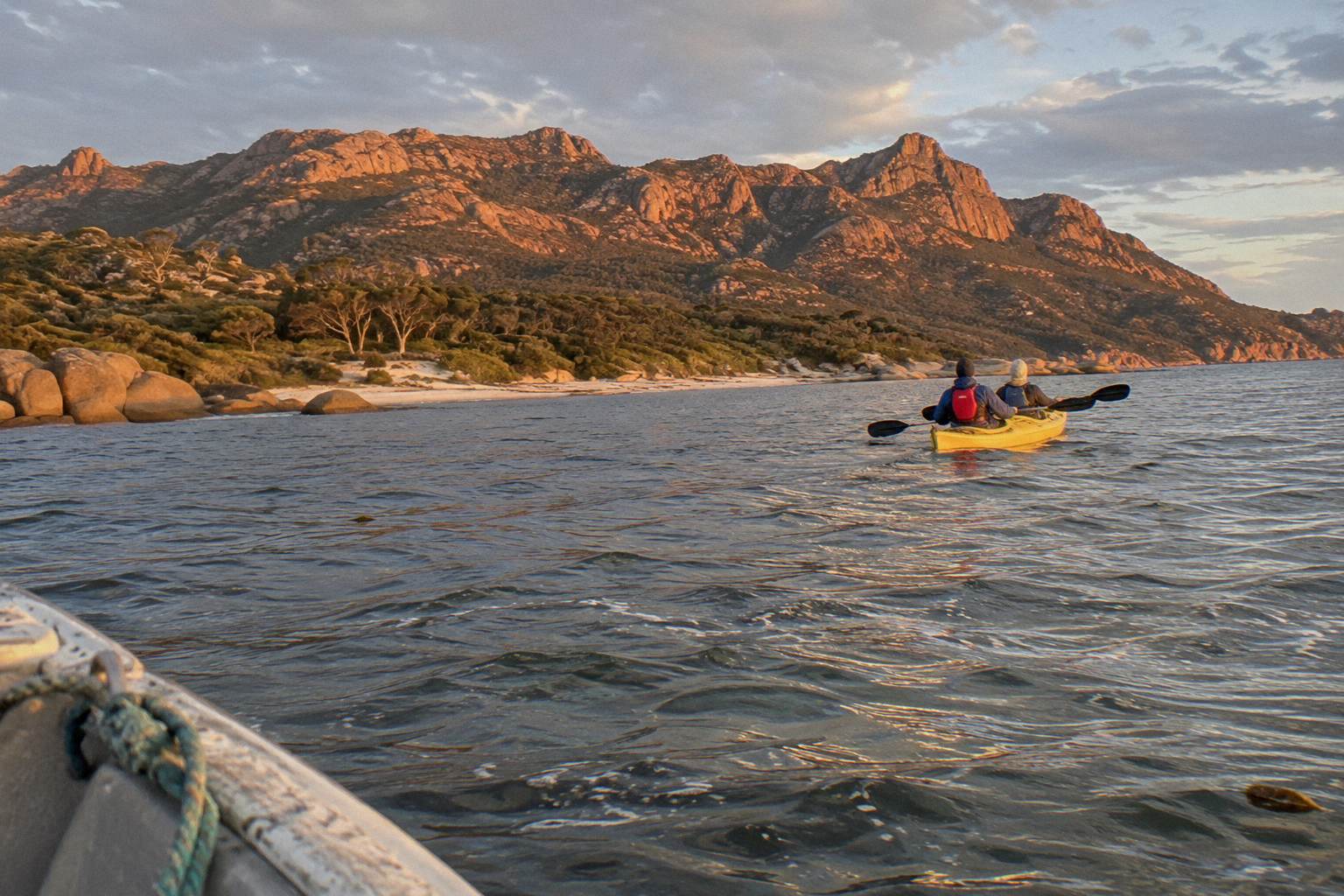
Solo travellers sometimes wonder whether any of this affects them differently. It does not change the limits, but it does change the seating: the kayaks are doubles, and the operator says solo guests paddle with another guest or a guide. So a solo traveller shares a boat, which is worth knowing if your concern is about relying on a stranger's paddling or about combined weight in one hull.
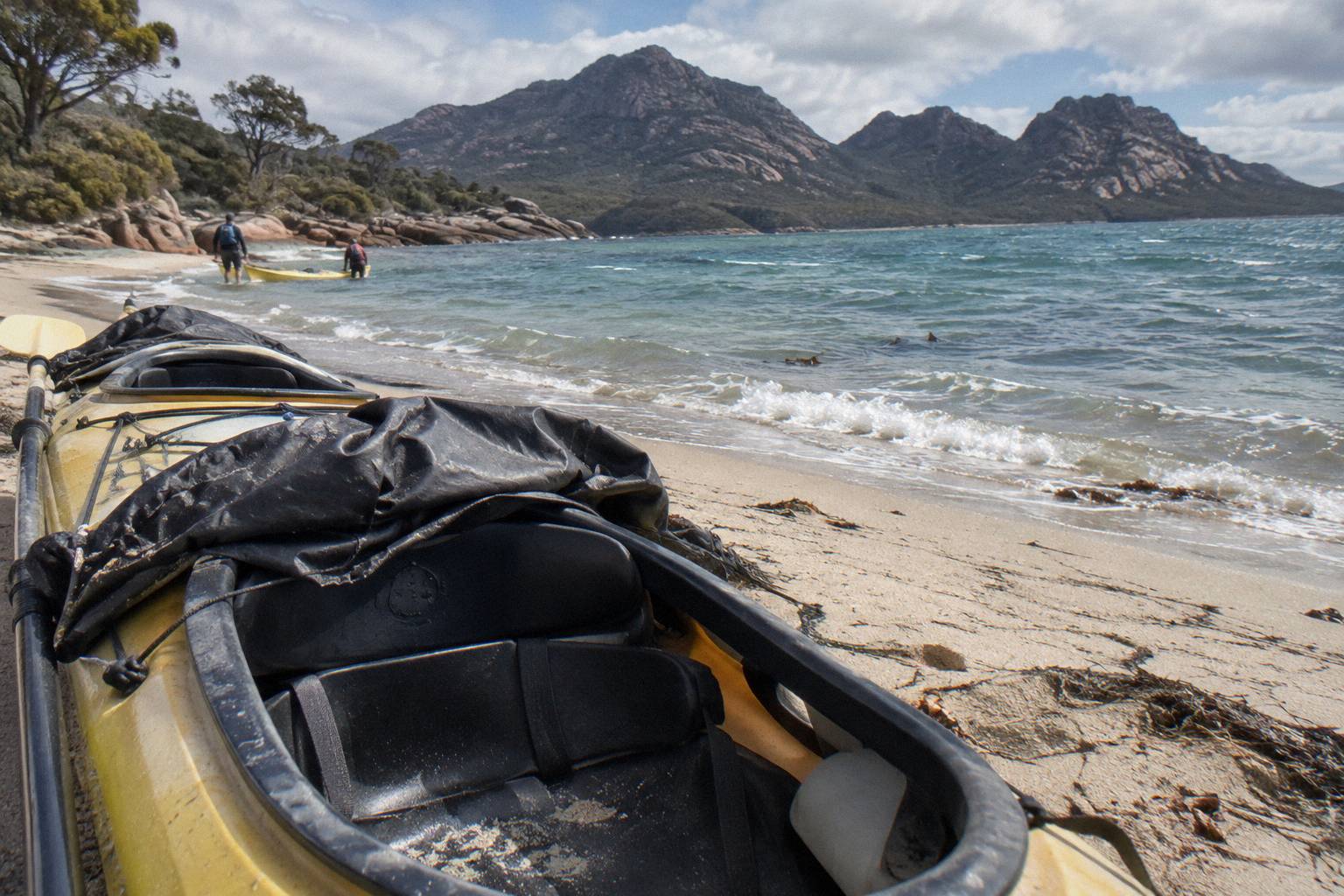
For a deeper look at the seating question, read tandem or single kayaks on a Freycinet tour, which works through what the double format means for pairs and solos.
Is The Tour Wheelchair Accessible?
The booking page states plainly that the tour is not wheelchair accessible. No other mobility details exist for this tour on the operator or booking pages, so anyone with a mobility aid or limited mobility should contact the operator directly before booking and describe their situation. The launch point, Muirs Beach at Coles Bay, has free public parking and public toilets nearby, according to the operator.
That is the shape of the information: one clear no on wheelchair access, and a gap everywhere else. Rather than guessing at what might be possible, treat the pre-booking conversation as the actual accessibility process. Operators can often tell you quickly whether a particular situation works on a particular day, and guides can plan a launch that suits a stiffer hip or a prosthetic limb if they know in advance.
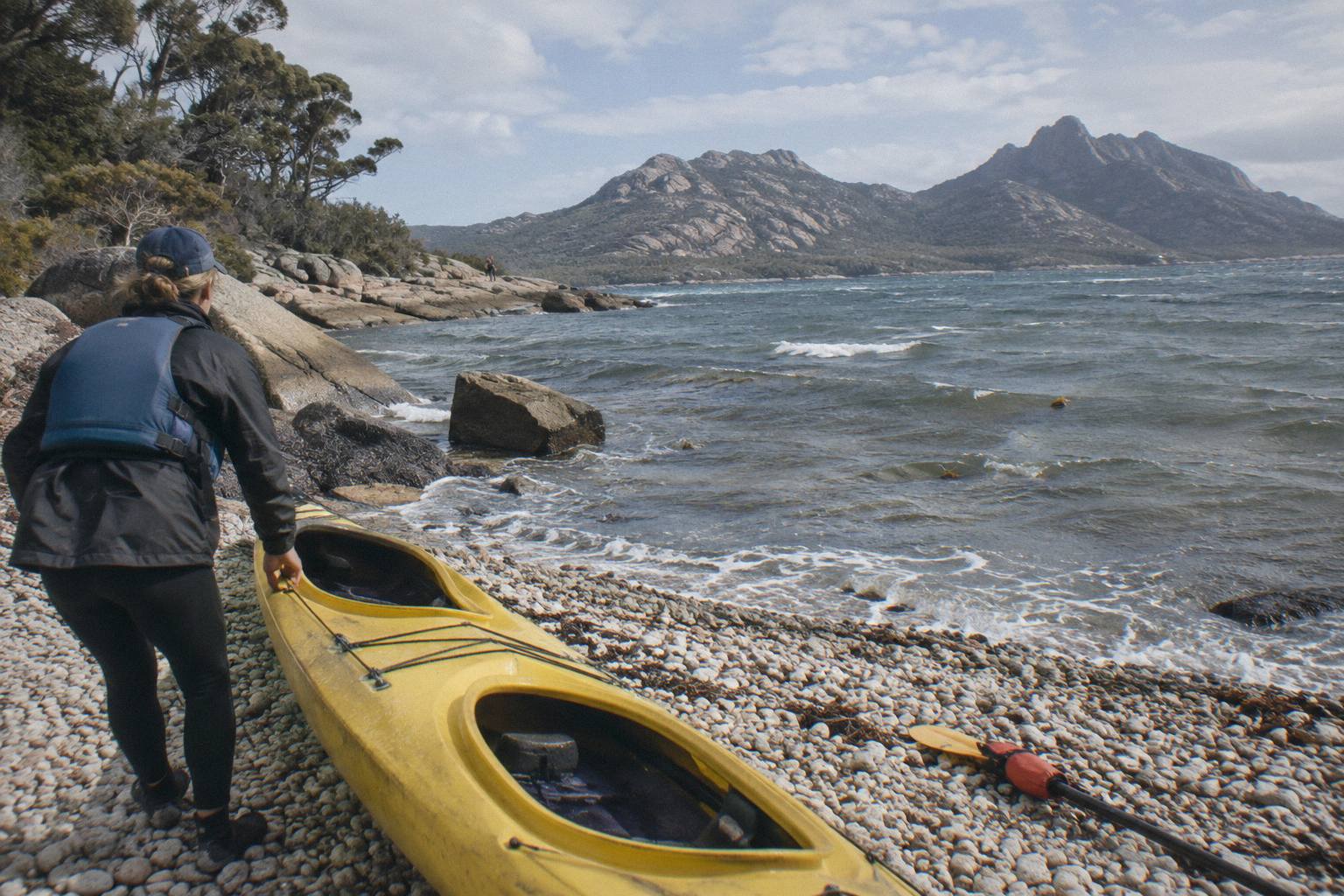
The physical sequence of the tour is worth describing so you can judge it against your own mobility. The tour starts with a safety briefing on land. Then you get into a sit-in tandem kayak, paddle for roughly the first half of about two cumulative hours, stop halfway on a secluded sandy beach for a hot drink and a snack, and paddle back. Entry and exit happen at the beach, where kayaks sit at the waterline. Sitting still in a cockpit for stretches of time is part of the deal, which is the same reason the operator asks that children be happy sitting for 2 to 3 hours.
What The Kayaks And The Tour Format Are Like
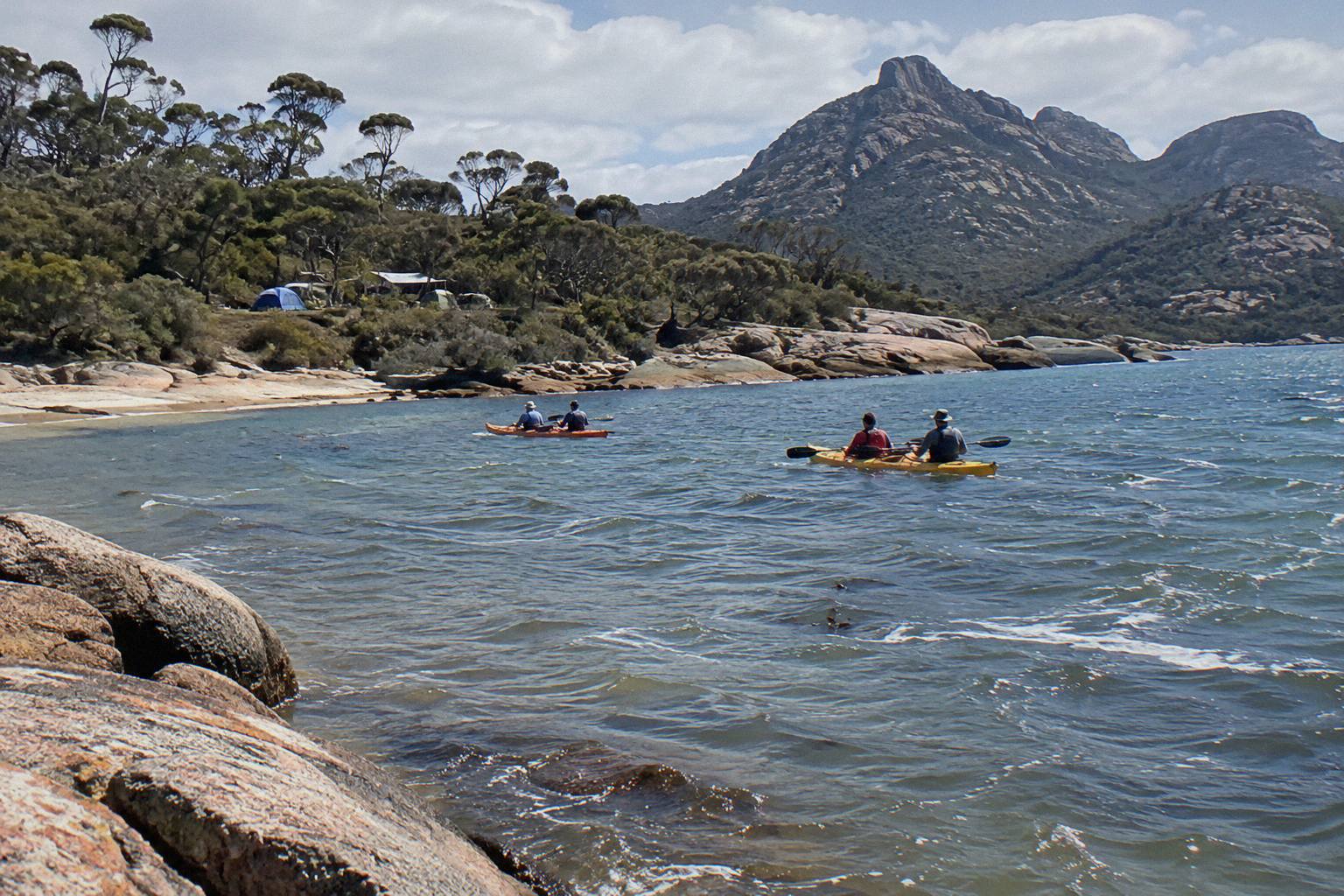
You'll paddle a double, sit-in tandem sea kayak rather than a sit-on-top, and the tour lasts 3 hours in total, with about 2 hours of paddling and a rest break halfway. Group sizes run from 2 to 16 guests, and you'll be on Great Oyster Bay out of Coles Bay rather than reaching Wineglass Bay or Schouten Island.
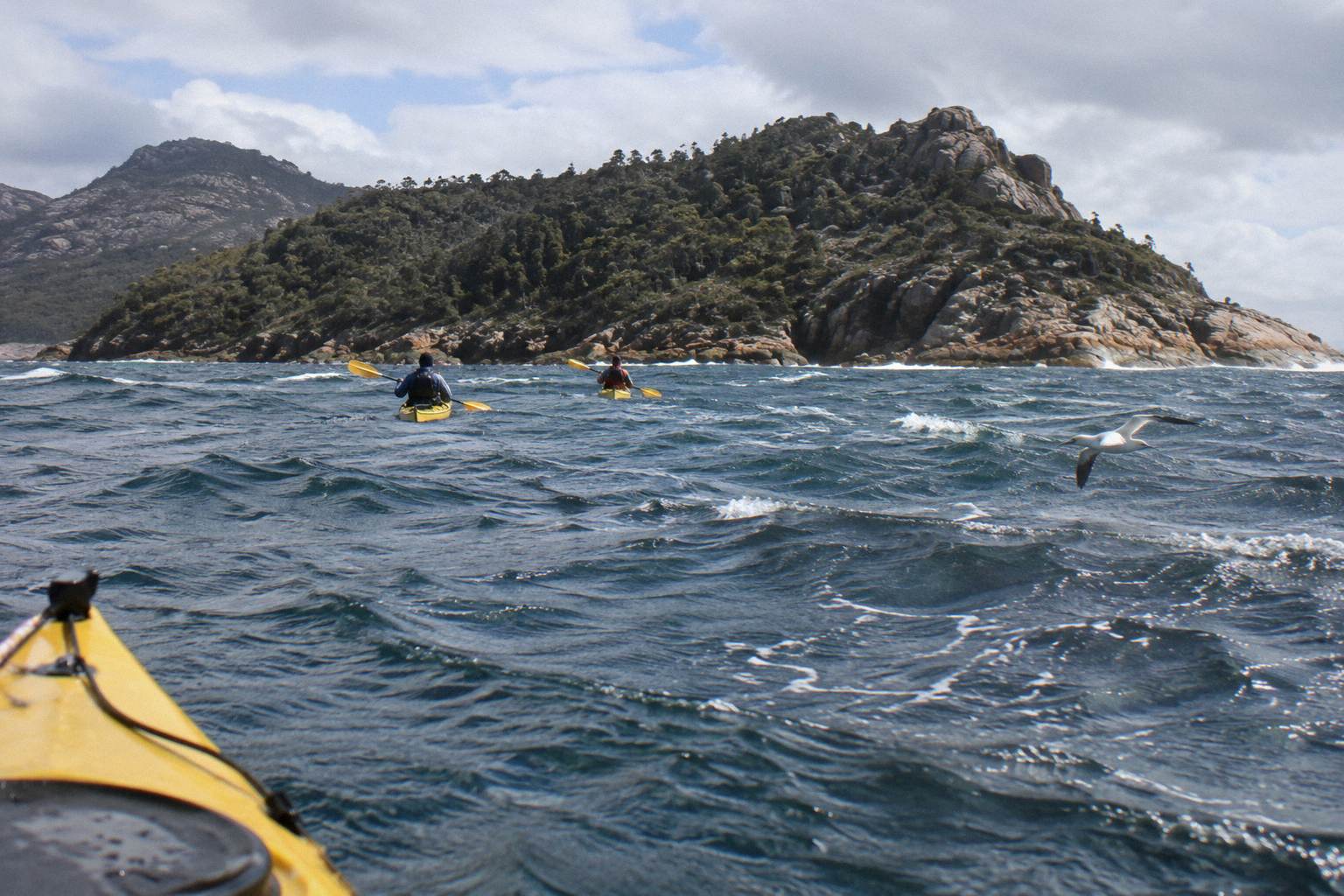
The format matters to the limits question in two ways. First, the tandem design means you are never solely responsible for moving the boat: two people paddle a double, and a guide is nearby. Second, the sit-in design means the cockpit fit figures from earlier in the article apply to every guest, adult or child. The halfway beach stop gives you a chance to stretch, warm up with a hot drink and, per the booking page, a gourmet cookie, before the return leg.
Sessions follow the same route regardless of when you go: the operator runs morning and Twilight options, with the Twilight finish right on sunset, and departures run year round with seasonal times. No fixed timetable applies, so ask about session times when you book. The tour includes a safety briefing before anyone gets on the water, and all kayaking equipment is provided by the operator, including warm jackets.
| Tour element | What the operator and booking page state |
|---|---|
| Kayak type | Double (tandem) sit-in sea kayaks; solo guests pair with another guest or a guide |
| Total duration | 3 hours, with about 2 hours of paddling cumulatively and a rest break halfway |
| Group size | Minimum 2, maximum 16 per tour |
| Minimum age | From 7, happy to sit still for 2 to 3 hours; under 16s with an adult |
| Swimming | You need to be able to swim, as a stated safety precaution |
| Meeting point | Muirs Beach, Coles Bay, with free public parking and public toilets nearby |
| Route | Great Oyster Bay out of Coles Bay; Wineglass Bay and Schouten Island are not part of the paddle |
What To Ask The Operator Before You Book
Before booking, ask four questions that cover nearly every size and mobility concern: confirm your height, weight and hip width fit the 45 cm cockpit seat, whether any mobility aid or condition changes beach entry and exit, whether a health condition requires a doctor's sign-off, and whether your group can stay together within the 16 person maximum. Operators take bookings with notes attached, so you can get answers before any money changes hands.
A short checklist works better than a vague hope. Write to the operator or add a note to your booking covering:
- Your height and weight, honestly stated, so the guide can judge the fit against the stated 195 cm and approximately 120 kg guidance.
- Hip width if you know a 45 cm seat will be tight, since that is the fixed dimension of the cockpit.
- Any mobility limitation, especially anything affecting getting down to beach level, sliding legs-first into a cockpit, or sitting for stretches.
- Any medical condition, for which the right advice is to check with your doctor and then tell the operator when you book.
- Whether children in your group are 7 or older and can sit happily for the duration.
- Whether anyone in your group cannot swim, since the operator requires every guest to be able to swim.
That last point deserves emphasis because it is a hard rule rather than a judgement call. A non-swimmer cannot be waved onto the tour with a stronger paddling partner; the operator's FAQ does not allow for it. If someone in your family does not swim, the sea kayak option is closed to them with this operator, and a different way of seeing the area, such as the Wineglass Bay cruise, which boards at 61 Jetty Rd, Coles Bay, may suit better. The question of whether a guided paddle beats going it alone covers the trade-offs in more depth.
Life Jackets, Safety Gear And Why Fit Matters
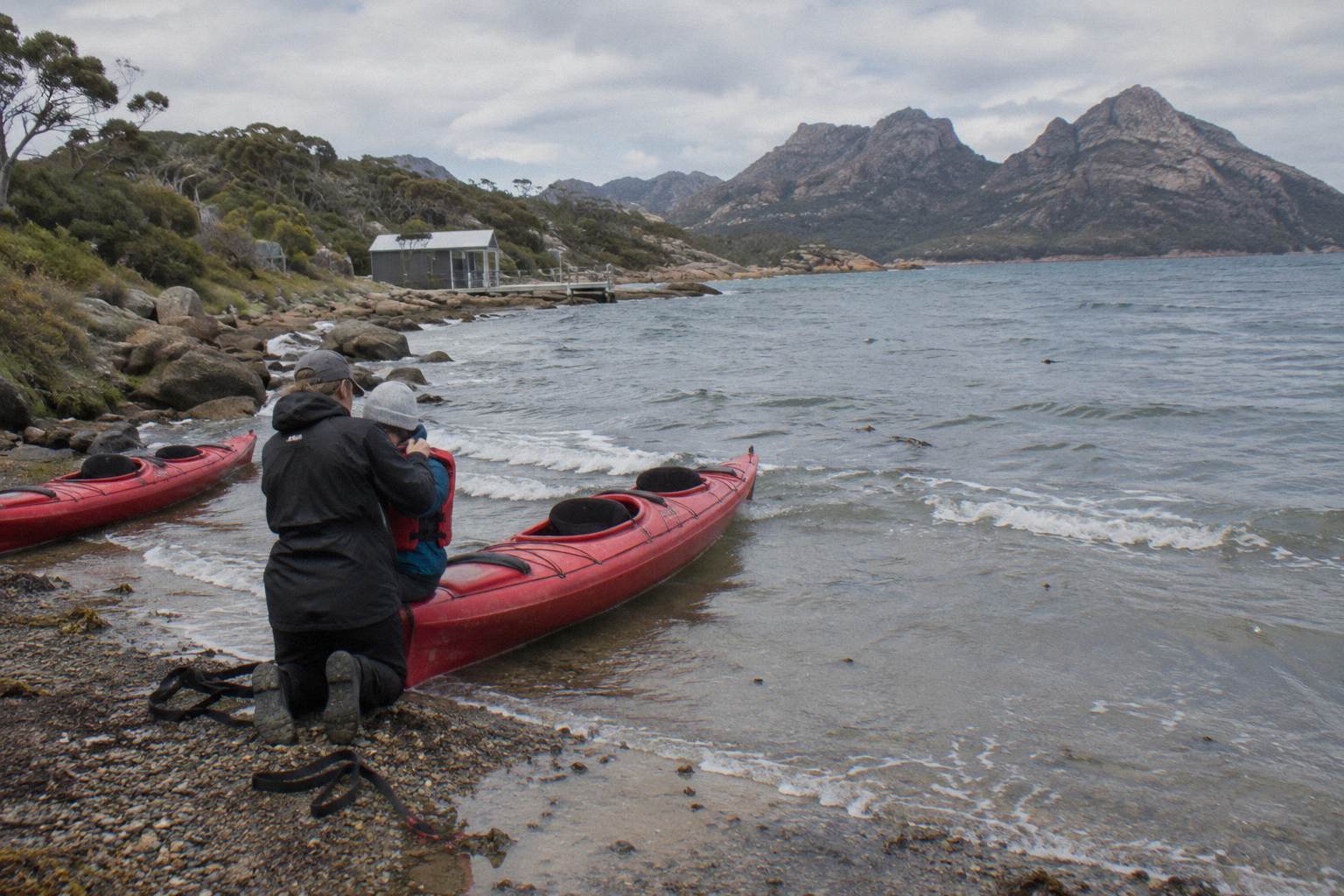
Marine and Safety Tasmania requires a life jacket in a lightweight craft, which includes kayaks, canoes and stand-up paddle boards, so every guest wears one, and the operator says all kayaking equipment is provided. Life jacket levels follow AS 4758: Level 50 and 50S jackets are accepted for kayak operators in sheltered waters only, while Level 100 or 150 covers sheltered and open waters. A jacket that does not fit is not protection.
The rules come from MAST's paddle craft safety page, which also covers equipment beyond life jackets: a white strobe or all-round light to be lit between sunset and sunrise and when visibility is limited, a tether when more than 200 m offshore, and a mobile phone in a waterproof pouch as recommended practice. Equipment requirements otherwise vary by water category. On a guided tour the operator carries and fits the equipment; the guest's job is to say if a jacket does not fit or feels wrong.
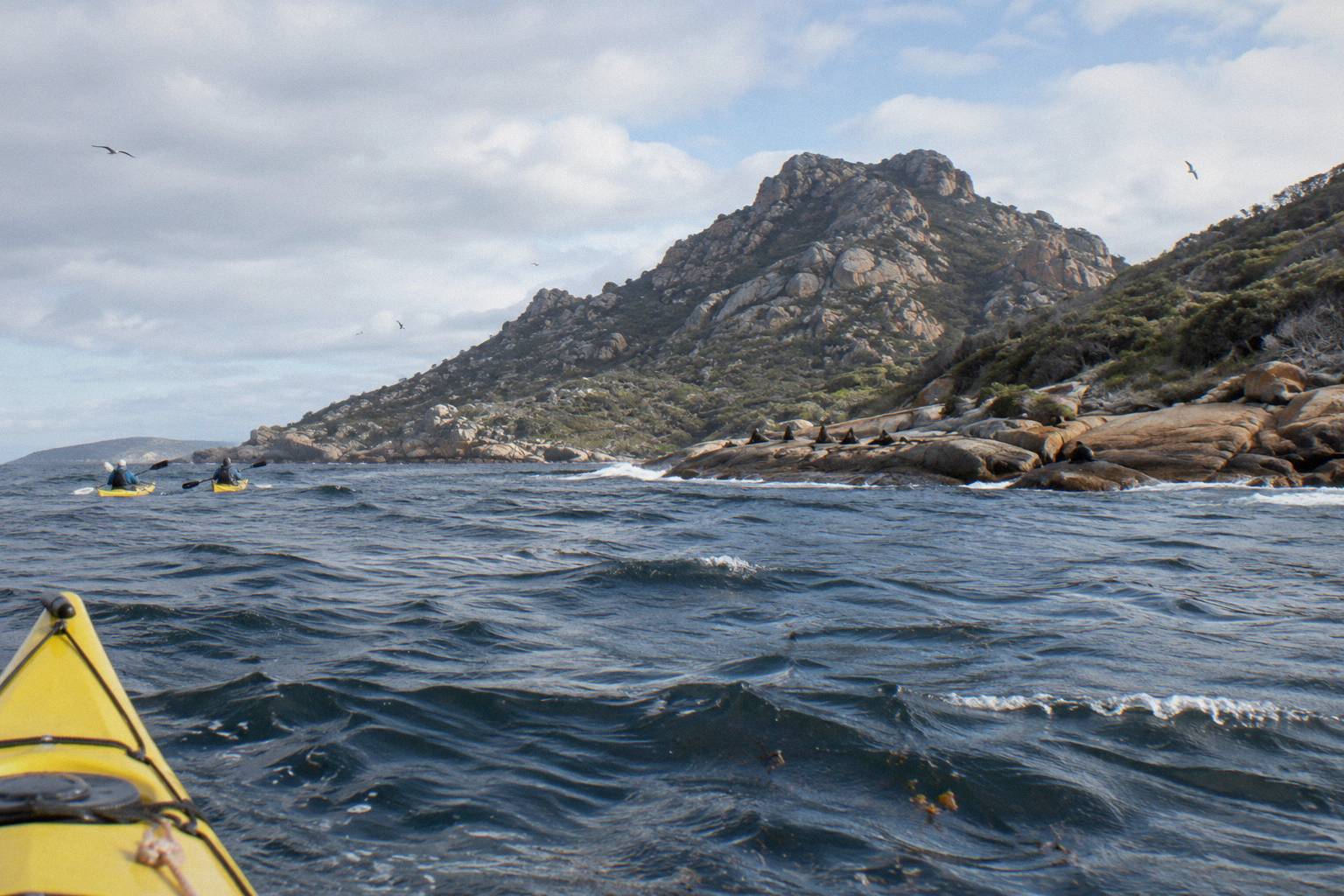
Fit is the quiet theme running through the whole safety picture. A cockpit that is too tight restricts your exit in a capsize. A life jacket that is too small will not close; one that is too big rides up. MAST's general advice to paddlers is blunt: never venture too far offshore, mind tides and wind, and unless you are an experienced surf paddler, stay out of the surf. A guided group on Great Oyster Bay with a briefing, a guide and a set route handles those judgements for you, but only if the equipment actually fits the people wearing it.
Common Mistakes When Booking With A Size Or Mobility Concern
The most common mistakes are assuming the limits are negotiable on the day, booking first and asking later, treating sit-in and sit-on-top kayaks as if they fit the same bodies, and staying quiet about a health condition out of politeness. Any of these can leave you at Muirs Beach with a kayak that may not work, and the operator reserves the right to decline a guest whose body size does not fit.
The sit-in versus sit-on-top mistake deserves a second mention because it drives wrong assumptions. People who have paddled wide, open sit-on-top kayaks at a resort often assume any kayak fits any adult. The operator's doubles are sit-in sea kayaks with a defined cockpit, and the 45 cm seat and 195 cm height figures exist precisely because that assumption fails at the edges. If you have only ever paddled a sit-on-top, halve your confidence about fit and double your questions.
The politeness mistake is the quietest and the most consequential. Nobody enjoys writing "I weigh more than your figure" or "I have a hip replacement" into a booking note. Do it anyway. The operator's guides apply the stated guidance rather than a secret stricter rule, and they can only apply it to information they have. For health questions, the right sequence is your doctor first, the operator second, and the booking third.
A final mistake is treating the 120 kg and 195 cm figures as a cliff edge. They are stated as guidance, approximately, which means the operator expects to use judgement. Two people with quite different builds can get different answers, because the cockpit seat is the fixed constraint. Give the operator real measurements and let their judgement work.
Common Questions About Size And Mobility Limits
Are There Weight, Height Or Mobility Limits On Freycinet Kayak Tours?
Yes. The operator says the tandem sit-in kayaks suit people up to 195 cm and approximately 120 kg, with a cockpit seat about 45 cm across, and guides may decline a guest whose body size does not fit. The booking page states the tour is not wheelchair accessible. You also need to be able to swim, per the operator's FAQ.
What Is The Maximum Weight For A Freycinet Kayak Tour?
The operator's stated guidance is approximately 120 kg, published alongside the 195 cm height figure as a combined guide to kayak fit rather than a strict limit enforced at the door. Guides may decline a guest whose body size does not fit, so contact the operator with your measurements before booking if you are near the figure.
Can I Join The Tour If I Cannot Swim?
No. The operator's FAQ states: as a safety precaution, you need to be able to swim to take part in the tours. That rule applies to every guest on the water. A non-swimmer in your group could instead consider a different way of seeing the area, such as the Wineglass Bay cruise, which is not a kayak trip.
Is The Tour Suitable For Older Adults Or People With Limited Mobility?
It depends on the individual, and the only way to know is to ask. Entry and exit involve getting down to beach level and sliding legs-first into a sit-in cockpit, then sitting for stretches of the 3 hour tour. The booking page states the tour is not wheelchair accessible and asks for a moderate fitness level. Describe your situation to the operator before booking, and check with your doctor about any health condition.
Do Children Face Different Limits?
Children can join from age 7, and the operator says they should be happy to sit still for 2 to 3 hours. Everyone under 16 needs an accompanying adult in the group, and under 7s are not accommodated. Children ride in the tandem kayak with an adult, so they must also fit the front cockpit.
Where Can I Check The Fit Figures Before Booking?
The operator publishes the cockpit, height and weight guidance on its own FAQ and tour pages, and the booking page carries the fitness and accessibility statements. Read the Freycinet Adventures FAQ for the seat width and body size wording, and add a note to your booking if any figure is close for you.
If the fit numbers work for you, The Freycinet Paddle is the guided kayak option out of Coles Bay, and you can check availability for your dates. The site behind it, Freycinet Kayaking, exists to answer questions like these before you commit, including how much a Freycinet kayak tour costs.